Showing posts with label Childlessness. Show all posts

Thursday, July 27, 2023

Mystery of the Houdinis baby (solved)


This photo tends to draw a lot of comments and curiosity when it appears online. The Houdinis never had any children, so who is this mystery baby? Could it be Houdini's niece, Marie Blood? His nephew, Harry Houdini Hardeen? Or could it be Houdini's daughter!?

I actually discovered the answer a while back via a notation on an original photo in the collection of Dr. Bruce Averbook. However, I recently found a newspaper clipping that confirmed everything and explains it as well as I can, so here you go:

Atlantic City Daily Press, August 13, 1908.


The Houdinis visited the Infant Incubators on June 22, 1908, which also happened to be their 14th wedding anniversary. This was before the exhibit had officially opened to the public on June 27. Houdini was playing a two week engagement at Young's Ocean Pier Theatre in Atlantic City at this time. You can see Houdini and the "Infant Incubators" sharing the bill below.

Atlantic City Daily Press, June 27, 1908.

Want more? You can unlock 20 newspaper clippings related to Houdini's eventful 1908 Atlantic City engagement as a "Scholar" member of my Patreon below.


Monday, April 25, 2022

Houdini fiction thrives in self-publishing

I've generally stopped collecting Houdini fiction. I just don't have the shelf space and I have enough work stripping the fiction from Houdini's real life! But I understand how people enjoying reading and writing Houdini fiction, and the genre is alive and well, especially in the world of self-publishing. Here are two relatively new self-published titles with interesting approaches.

Burning the Red Candle: The Life and Death of Harry Houdini by Carley Eason Evans tells the story of Harry and Bess with a unique approach.

Burning the Red Candle tells the story of The Houdinis: Harry, Bess and their imaginary son, Mayer tell their tale from their early days of medicine shows to their last days during which Harry participates in an ongoing battle with the famous Sir Arthur Conan Doyle. Harry insists he does not possess supernatural powers while Conan Doyle and other spiritualists claim that he must. Throughout their marriage, Harry's wife, Bess struggles with anxiety and depression. In an effort to cope with everyday life, she creates a son for the childless couple. Knowing Harry seeks to communicate with his dead mother, Bess promises him that when her husband dies, she will burn a red candle and wait for his message from beyond the grave. Imaginary Mayer is both playful child and dutiful companion, continually six years old for his mother, Bess while growing up for his father. Each Houdini speaks about the life and death of the greatest magician of all time, Harry Houdini.

The Houdinis imaginary child, Mayer Samuel, is rooted in fact. Ruth Brandon revealed the existence of "Mayer" in her 1993 biography, The Life and Many Deaths of Harry Houdini.

Another self-published work is Houdini's Return: The Metamorphosis of Ehrich Weiss by J.W Cross. As the title suggests, the book ponders the possibility of Houdini's return from beyond.

A strange occurrence in a small magic shop sets into motion a series of events that leads to the impossible. After all, it’s no easy task to return from the grave—even for Houdini. But with the help of a few hand-selected if unwitting accomplices and the guidance of a secret notebook penned years ago, the impossible could become reality. And when modern science finally catches up to Houdini’s vision, the legendary magician who once escaped from ropes, handcuffs and straightjackets, may finally escape the bonds of death. To help him accomplish this, however, the Great Houdini will have to rely on the person who doubts him the most.

Purchase Houdini's Return: The Metamorphosis of Ehrich Weiss at Amazon.com and Amazon.co.uk.

Purchase Burning the Red Candle: The Life and Death of Harry Houdini at Amazon.com and Amazon.co.uk.

Sunday, May 14, 2017

Bess Houdini: "If I Had A Son"

Here's one for Mother's Day from the collection of David Charvet. Enjoy.

Click to enlarge.

Thanks David. Happy Mother's Day to all the "Mamas" out there.

Related:

Saturday, June 20, 2015

The Brandon book

Continuing my examination of books about Houdini using images and insights from my own collection.

The 1993 biography The Life and Many Deaths of Harry Houdini by Ruth Brandon is maligned by Houdini buffs. This is largely due to Brandon's pet theory, as expressed in the book, that Houdini was impotent. Brandon admitted this notion was not based on any evidence, just a "guess." But she believed it was the best explanation of why the Houdinis never had children. This was promoted as the sensational revelation of the book, and the author repeatedly shared her theory on TV and in documentaries. It even found its way into popular culture via a mention on Seinfeld.

Of course, the reason the Houdinis didn’t have children had to do with Bess's inability to do so, something her niece, Marie Blood, said she would have shared with Brandon had the author shown any interest (I got the feeling that Brandon had rubbed Marie the wrong way). I’ve also heard whispers over the years that Brandon, who authored the 1984 book, The Spiritualists, had a pro-spiritualist agenda. However, I see no real evidence of this in the book itself. (Unless the idea of robbing the great debunker of his sexual power could be considered an attack?)

But if we move beyond the bedroom, I think The Life and Many Deaths of Harry Houdini has a lot to recommend it. Certainly in 1993 it was a very welcome book. It had been 24 years since the last major Houdini biography (Houdini The Untold Story by Milbourne Christopher), and while Brandon didn’t really break new ground, she nicely consolidated a lot of the important new research from smaller, individual studies. It provided Houdini buffs with a nice "everything we know up to now" biography while we waited for the great game changer, Houdini!!! The Career of Ehrich Weiss by Kenneth Silverman.

It's also a very well written book. In fact, for people who want an easy read on Houdini, it's still a biography I'd recommend, impotency theory and all.

Publication

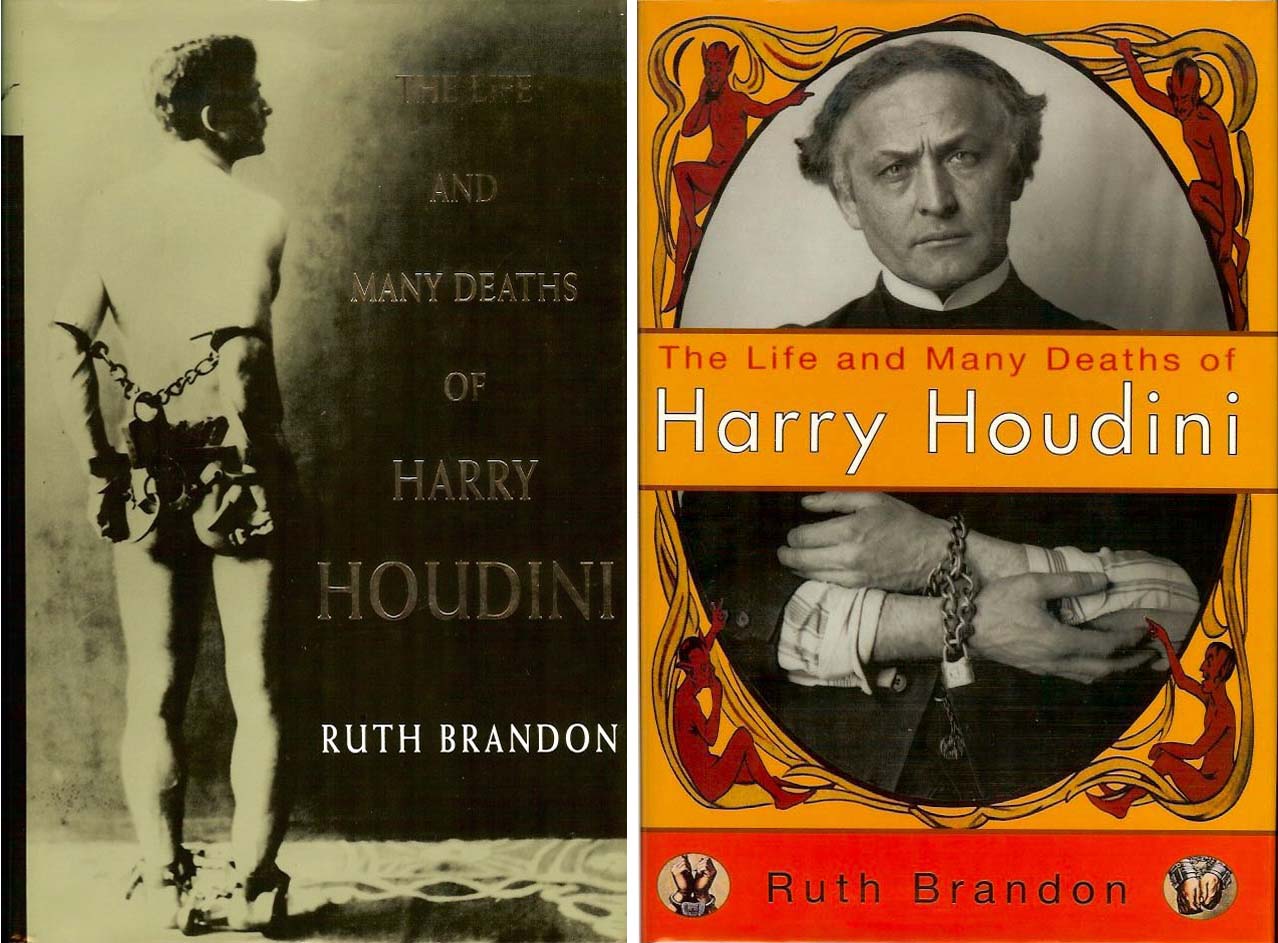
The Life and Many Deaths of Harry Houdini was first published in Great Britain by Martin Secker & Warburg Limited in 1993. It would take a year for the book to find its way "across the pond" to the U.S. where it was published by Random House in October 1994 (although the U.S. first edition shows only the 1993 copyright date). Both hardcover editions featured very nice cover art. The UK art was designed by William Webb with a photo credit to the Radner Collection. The U.S. cover was by Mike Lam with photo credit to UPI and poster images from the Granger Collection.

UK and U.S. hardcover first editions.

The Life and Many Deaths of Harry Houdini has so far seen two paperback editions in the UK. The first was published in 1994 by Mandarin and featured a shirtless Houdini on the cover. The second came from Pan Books in August 2001 and offered up more conventional cover artwork. This later edition also separated the photos into two sections instead of having all in one central section as in all other editions.

UK paperbacks.

The first U.S. paperback edition was published by Kodansha Globe in 1995. It had an attractive cover designed by Lilly Langotsky. A later reprint from Random House appeared in October 2003. It featured an entirely new cover design by Tamaye Perry, who made nice use of stills from Houdini's movies. This paperback is still in-print today and is available on Amazon.

U.S. paperbacks.

In my collection, I also have two U.S. pre-publication editions of the Brandon book. The first is a proof from publisher Random House. A very different cover concept is shown inside along with a review from the London Times. The second is a curiosity; a trade paperback edition featuring artwork that would appear on the U.S. hardcover. It's likely this is an early export edition, typically sold in airports and overseas markets, although there's nothing on the book to indicate it as such.

U.S. proof and early export paperback.

Despite the controversy, The Life and Many Deaths of Harry Houdini, "the Brandon book", is a worthy biography that deserves a place on any shelf of Houdiniana, if for no other reason than for these great cover designs.

Enjoy these other selections from the WILD ABOUT HARRY bookshelf:

Wednesday, April 8, 2015

Meet "Houdini's daughter"


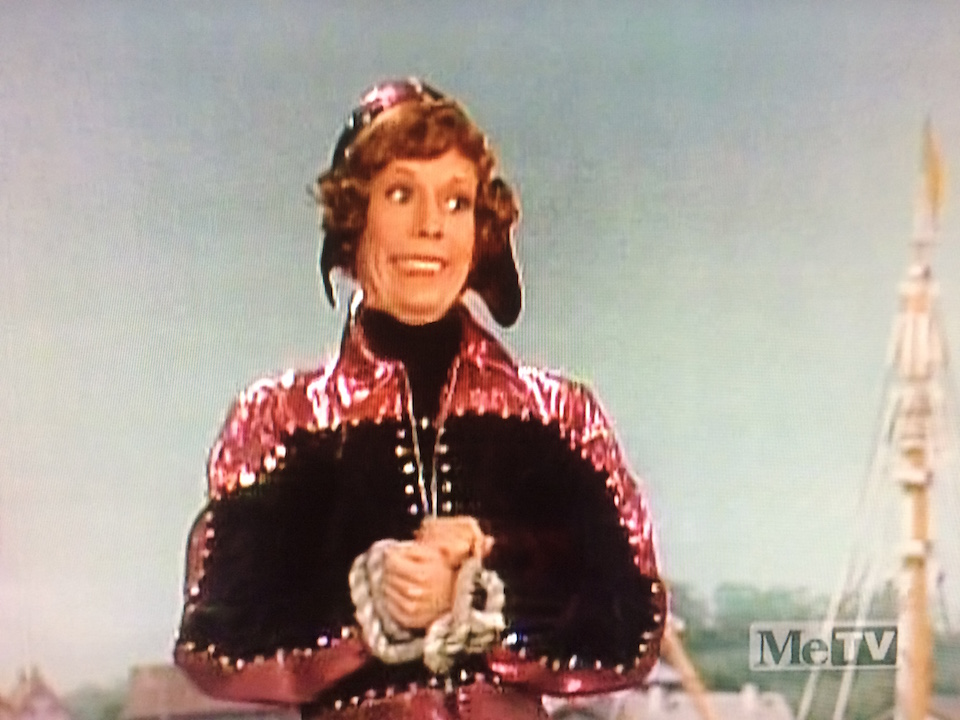
MeTV recently aired an episode of The Carol Burnett Show in which the great comedian played the daughter of Houdini, "Flo Ziegfeld Houdini." The sketch co-starred Harvey Korman and went wrong in a number of ways. In fact, Burnett gives a special intro to the sketch explaining exactly what went wrong (a packing crate failed to break, etc.), and how they decided to air the failed sketch instead of reshooting it. The sketch is already pretty funny and madcap, and the mistakes make it all the more so (The Carol Burnett Show was famous for having performers "break up" on camera).

The show first aired on March 9, 1974. It was Episode 22 of Season 7.


Of course, I don't need to explain that Houdini didn't have a daughter, right?

Monday, May 19, 2014

Houdini escapes Walden Media

Since 2006, Walden Media and director Mark Waters have been developing a kid-friendly Houdini movie. The last news on the project was in 2012 when Chris Fedak was hired to write a new draft of the screenplay. But now Waters tells Movies With Butter that he's shopping the project, now called The Houdini Inheritance, to other studios. Says the director:

Mark Waters
"The company that was developing the movie with us, Walden, went out of business essentially. They're no longer making movies. So we've taken it ourselves and we're trying to get it set up someplace else but we're still very interested in making it. Houdini is in the movie in flashback. It kind of posits a story where Houdini and Bess had a child that they hid from the world. We're talking about a kid who's 18 who's the great great grandchild of Houdini who has the master's gifts. He doesn't know where it came from but it's him discovering that he has a legacy."

The article reports that Walden Media "ceased funding its own productions last year" and this "left The Houdini Inheritance in limbo." Although looking at Walden's official website, it's clear the company is still in business.

Related:

Saturday, April 12, 2014

Why does Jerry Seinfeld think Houdini was impotent?


Seinfeld is a television classic that will probably run in syndication forever. This is not the best news for Houdini. Because in Episode #65, "The Mango", there is this exchange between George and Jerry on the topic of erectile dysfunction:

JERRY
You know it happens to everybody. Happened to Houdini, and he could get out of a trunk underwater with his hands in chains. But he had a problem with that.

Later George returns to the subject...

GEORGE
Hey, is that a joke about Houdini?
JERRY
No.
GEORGE
Well if Houdini couldn't do it, what chance do I have!?

So why does Jerry Seinfeld think Houdini was impotent?

The answer has everything to do with when this episode was made. "The Mango" was taped on Tuesday, August 17, 1993 (directly across the street from where I'm writing this now) and aired on September 16, 1993. At that time a new Houdini biography had just been released in the UK, The Life And Many Deaths of Harry Houdini by Ruth Brandon. This was the first major Houdini biography in several years, and in it Brandon engaged in some amateur psychology as to why the Houdinis didn't have children and why Harry wrote love letters to Bess. On page 52 the author states:

One can only conjecture as to the reason for this childlessness. […] Infertility is not uncommon. But my own guess, based on his effusive daily--sometimes thrice-daily--outpouring of love-declarations--is that Houdini may have been impotent. Why all those protestations? What was so wrong that he had to keep proclaiming his devotion? Was this constant need to reassure both Bess and himself?

This salacious "revelation" was used as a selling point and featured in book reviews and in interviews with the author. Brandon also shared her theory in the 1993 BBC documentary, Houdini, The Life of the World's Greatest Escapologist. It was in this environment that the Seinfeld writers wrote what at the time was a topical reference to Houdini's "impotency."

Of course, the reason the Houdinis didn't have children was because Bess suffered from a medical condition that prevented it, information that was shared with me by her niece, Marie Blood. (You can read more about that here.)

Brandon's theory received a dose of cold water just a few year after the publication of her book when Kenneth Silverman revealed evidence of an extramarital affair Houdini had with Charmian London in his own biography, Houdini!!! The Career of Ehrich Weiss (1996). Now the pendulum may have a swung a bit too far the other way with Houdini sometimes portrayed as a bit of a Lothario (we'll see how the upcoming Houdini miniseries handles all this).

It's too bad this blip in Houdini history had to be immortalized in pop culture. True or false, it's just not the kind of thing you want people to know!


Related:

Tuesday, June 18, 2013

After Houdini

It's funny how we're suddenly getting stories about fictitious Houdini offspring. Last week saw the release of a novel featuring Houdini's daughter. Now we have a preview of an upcoming independent graphic novel, After Houdini, starring Houdini's son. Of course, Houdini didn't have a son, but that's what makes it fantasy!


Author Jeremy Holt recently posted the above cover image on his blog and writes:

"I wanted to share a very special preview of the new cover for my series After Houdini. I’ve revised the title due to the fact that I don’t want readers to be confused with the fact that the protagonist on the cover is NOT Harry Houdini, but his son Josef.
We’ve received very strong interest from some big publishers, so check back here for further developments."

Here's hoping we'll all get to enjoy the adventures of Josef Houdini sooner than later. And if you're curious what the original cover looked like, just click here. You can also see some preview pages from After Houdini at Graphic Policy.

UPDATE: Amazon shows the book will be released in April 2017 and can be pre-ordered here.

Thursday, June 13, 2013

Houdini's daughter is 'Born of Illusion'

Here's a fresh new take on Houdini fiction. Born of Illusion by Teri Brown features the adventures of Houdini's illegitimate daughter, Anna Van Housen (not a real person). The novel has just been published in hardcover by Balzer + Bray. Here's the jacket description:

Anna Van Housen has a secret.

A gifted illusionist, Anna assists her mother, the renowned medium Marguerite Van Housen, in her stage show and séances, easily navigating the underground world of magicians and mentalists in 1920s New York. For Anna, the illegitimate daughter of Harry Houdini—or so Marguerite claims—handcuffs and sleight-of-hand illusions have never been much of a challenge. The real trick is keeping her own gifts secret from her mother: because while Marguerite's powers may be a sham, Anna possesses a true ability to sense people's feelings and foretell the future.

But as Anna's powers intensify, she experiences frightening visions of her mother in peril, which lead her to explore the abilities she's tried so long to hide. And when a mysterious young man named Cole moves into the flat downstairs, introducing Anna to a society that studies people with gifts like hers, she begins to wonder if there's more to life than keeping secrets.

As her visions become darker and her powers spin out of her control, Anna is forced to rethink all she's ever known. Is her mother truly in danger, or are Anna's visions merely illusions? And could the great Houdini really be her father, or is it just another of Marguerite's tricks?

From Teri Brown comes a world bursting with magic, with romance, with the temptations of Jazz Age New York—and the story of a girl about to become the mistress of her own destiny.

I don't have this book in hand yet, but checking out the Amazon preview I see that Houdini himself is an active presence throughout the book. At one point Anna goes and sees Haldane of the Secret Service:

"Mother doesn't know it, but I've been to all his movies. I missed this one the first time it came out and I'm torn, wondering if I should go inside. For me, watching a Houdini movie is like fouling up a trick onstage: It starts out great, then suddenly it's not, and you end up with a pit in your stomach, wishing you hadn't tried it at all."

Everybody's a critic!

You can purchase Born of Illusion by Teri Brown on Amazon.com.

UPDATE: Teri Brown has now published a sequel: Born of Deception.

Saturday, August 6, 2011

The problem with Bessie - a footnote

The Secret Life of Houdini author Bill Kalush points me toward corroboration for my (somewhat controversial) post about the medical condition suffered by Bess Houdini that prevented her from having children. On page 130 of Secret Life, Bill makes mention of an unidentified "medical issue" that "prevented them from conceiving." In his follow-up book of notes, The Secret Life of Houdini Laid Bare, we find this footnote sourcing that information:


Undeveloped or problematic ovaries is cited as one of the causes of Primary Amenorrhea, which is what I diagnosed -- per Marie Blood's own conversation with me -- as the problem with Bessie.

Thank you Bill Kalush (and Ken Silverman).

Sunday, July 31, 2011

Genii forum members dissect 'The problem with Bessie'

A pretty good discussion has sprung up on the Genii Forum about my blog this weekend regarding The problem with Bessie (finally one my posts gets some attention over there). Some buy it as the reason the Houdinis never had children. Some question its validity and reliability of Marie Blood. Some say X-rays and Houdini are still to blame. Others find the entire thing "distasteful" and would have preferred that I kept the information to myself.

If you care to join the discussion, just click on over to the Genii forums. There's also a thread at The Magic Cafe, but it hasn't really provoked conversation (or controversy) as it has on Genii.

Saturday, July 30, 2011

The problem with Bessie

I've been sitting on this information for a long time. Sixteen years, to be precise. It's something I've shared with fellow Houdini buffs over lunches at the Magic Castle, but because of the personal nature of it, I've never felt I should "publish" it online or elsewhere. It's the answer to why Harry and Bess Houdini never had children, and it was told to me by Marie Blood, Houdini's niece on Bessie's side. As far as I know, it's never been revealed in any book or article. Until now.

Why now? Well, anyone who's followed this blog knows I celebrate Bess here and find her fascinating. But she's even more elusive than her husband. We just don't know all that much about her. What I have here is an important (maybe even critical) puzzle piece that helps further complete her portrait. It's nothing bad, and it certainly doesn't diminish the memory or legacy of this great woman. If anything, it draws her more into focus and helps us understand all the demons she was fighting.

First, the backstory.

In July 1995, I traveled to Colorado Springs to hear the late Marie Blood speak. I was excited to hear the remembrances of Houdini's last living relative. I had exchanged letters with Marie, so she knew I would be there. Her talk was delightful, filled with first-hand memories of her Uncle Houdini and Aunt Bess, and she brought along a few precious artifacts, including a children’s book given to Houdini by his half-brother, Herman.

After the talk, I introduced myself. Marie said she was impressed that I had come all this way just to hear her speak and invited me to her hotel where we could talk more in private. We settled into the hotel lobby near a large fireplace and chatted for an hour or more. Interestingly, I found myself asking more questions about Bess than Houdini. Marie's memories of Houdini are limited as he died when she was still a child. But Bessie lived on for another 17 years and even lived with Marie and her mother (Bess's sister) for a while. Marie knew Bessie very, very well.
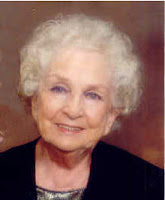
Houdini's niece, Marie Blood
One bit of bombshell info was that "Aunt Bess" smoked. In 1995, this was completely unknown, and it blew my mind. "Bess smoked!!!" I wrote it down at the top of my notes. Marie told me more things. She said Mrs. Weiss told Bess's mother that Houdini was "born on the boat" to America. (!) She said Bess died on the train in Needles while her sister (Marie's mother) was feeding her chicken gumbo. She said the dressing room attack on Houdini was not an accident; Whitehead (she called his Whitesville) just rushed in and "bam!" She also told me Houdini loved making Chicken Paprika, which made me smile because so do I.

I had brought along my copy of The Life and Many Deaths of Harry Houdini, then the first major biography on Houdini in 25 years, and asked Marie sign it for me, which she did. She said she wasn't really a fan of the book, particularly the author's pet theory that Houdini was impotent, which at the time was getting a lot of press (it even got a mention on Seinfeld). Marie said she knew why Harry and Bess didn't have children and would have told author Ruth Brandon had she asked. But she said Brandon simply looked over her collection and didn't show much interest in what she had to say about her uncle, so Marie kept the information to herself.

Of course, I had to ask, "So why didn't they have children?" Marie leaned close, patted my leg, and said she'd tell me.

Now, throughout our conversation, Marie continually emphasized just how small and "undeveloped" Bess was. This actually delighted Marie as a child because she could wear Aunt Bessie's shoes, which were a size one! Marie said Bess was very frail and often sick, and she never weighed more than 98 pounds. But part of this "undeveloped" nature was a lifelong health problem. Aunt Bess, she said, never had her period in her life. She never menstruated. Hence, she could never have children. That's why the Houdinis remained childless.

Doing some research online, it appears what Marie was telling me is that Bess Houdini suffered from a condition called Primary Amenorrhea. According to healthywomen.org, "Primary amenorrhea is diagnosed if you turn 16 and haven't menstruated. It's usually caused by some problem in your endocrine system, which regulates your hormones. Sometimes this results from low body weight associated with eating disorders, excessive exercise or medications. This medical condition can be caused by a number of other things, such as a problem with your ovaries or an area of your brain called the hypothalamus or genetic abnormalities. Delayed maturing of your pituitary gland is the most common reason."

Wikipedia says that "Primary amenorrhoea may be caused by developmental problems such as the congenital absence of the uterus, or failure of the ovary to receive or maintain egg cells. Also, delay in pubertal development will lead to primary amenorrhoea."

This is a pretty interesting revelation but also tragic. By all accounts, the Houdinis loved children and would have enjoyed having them. They poured their affections onto their pets and actually fantasized that they had an imaginary child (who grew up to become President of the United States). Bessie even told a reporter in 1911 that they had a daughter who was about to be married. Why they didn't adopt...well, that's a mystery I don't know the answer to.

Now, just because Bessie had a condition that made her physically frail, she was certainly not weak in mind and spirit. Bess Houdini, by all accounts, was as much a go-getter as her husband. She looked after a household filled with pets and family, kept Houdini focused onstage and off, wrangled the assistants for his full evening roadshow, and even made all the costumes. Houdini would say of his wife, "All my fights when she thinks I am right she is alongside, helping me load the machine guns."

One of my favorite quotes comes from a long-time Houdini hater, Guy Jarrett, who, after badmouthing Houdini in a letter to a friend, added, "Bessie is screwy too." Ha! Love it. They were two of a kind. The Great Houdinis.

I hope revealing this personal information isn't a terrible breach of family confidence. But if Marie was willing to tell Ruth Brandon (had she been interested), then she was presumably okay with it becoming public knowledge. Did she tell Ken Silverman or Bill Kalush? If so, they didn't include it in their biographies. But she told me, and now I've told you.

Also see:

Wednesday, July 27, 2011

Houdini's pets

Houdini & Charlie
Harry and Bess Houdini had no children. Maybe because of this, they lavished paternal attention onto their pets, particularly their dogs, Charlie and Bobby. We don't know too much about these fury members of the Houdini family, but what we do know is charming.

Charlie, a small white Pomeranian, was given to the Houdinis by the Grand Duke of Russia in 1903. Charlie accompanied the Houdinis on their first European tour. At certain points, the dog needed to be smuggled across international borders, which according to Ken Silverman in Houdini!!! The Career of Ehrich Weiss, Houdini accomplished "using one of Ching Ling Foo's conjuring methods." Houdini would write that he was "scared to death for fear of detection."

The Houdinis had Charlie for eight years and adored the animal. The dog appears in many family portraits, and when Houdini's mother visited him on tour in Cincinnati, Houdini noted that "Charlie the dog went wild for thirty minutes with joy." When Charlie died in 1909 they were both shattered. "Charlie, our dog, dying," Houdini wrote in his dairy. "Have taken him away from Surgeon Thompson so he can die at home. Bess crying. I don't feel any too good."

Houdini & Bobby
Charlie's successor was a fox terrier named Bobby. Bess later told the story of how she discovered Bobby in a Harlem butcher shop and tried to feed him a bone. When the butcher would not let her, Bess bought the dog in order to feed it. Houdini taught his "frisky" new dog how to escape from a pair of miniature handcuffs and a straitjacket and touted him as "Bobby The Handcuff King." He also claimed Bobby was "the greatest somersault dog who ever lived." Bobby's escape act headlined at the 14th Annual Society of American Magicians dinner in 1918 when Houdini was President.

Bobby died on December 15, 1918. As with Charlie, they had the dog for eight years. Houdini wrote an affectionate eulogy for his "good faithful Bobby" that was published in MUM Magazine. (It's reprinted in Gibson's Houdini on Magic.)

According to Ken Silverman, the Houdinis at one point also had another dog named "Eric", but I could find no info on that canine member of the family.

The Houdinis appear to be dog-less by the late 1920s, but they still kept a menagerie of other pets inside 278. Marie Blood recalls a six foot square aviary filled with birds, a talking parrot named "Laura" who lived in the Houdinis bedroom, and a pet turtle named "Petie" who she would "chase around the flower beds" behind 278. I've also heard mention of a parrot named Polly, a canary named Houdini, and a large rabbit named Rudy. And while not strictly a "pet", one cannot discuss Houdini and animals without making of mention of his famous vanishing elephant Jennie, whom Houdini said was "as gentle as a kitten." There was also his patriotic appearing American eagle, "Abraham Lincoln".

One final pet tale. After Houdini's death, when Bess was living with Ed Saint in California, she boarded their 25-year-old pet parrot named "Pat Houdini." But having "learned to pick locks while watching his master during his escape acts" (so claimed Ed Saint), Pat picked the lock of his cage and disappeared into the Hollywood Hills. According to the New York Times account of the daring escape, Pat was "singing as he soared away."

This post is in preparation for a much more serious blog that I will unleash on the issue of the Houdinis childlessness. It will reveal information that I don’t think has ever been revealed before. It's personal, and it might be controversial, so I'm working to present it in the just the right way. But, for now, I hope you enjoyed this look back at the Houdinis "kids", and watch for The problem with Bessie this weekend.

Monday, July 25, 2011

William Kalush discusses Houdini's enduring fame at the Skirball


William Kalush, author of The Secret Life of Houdini and director of the Conjuring Arts Research Center, gave a talk on "Houdini and His Enduring Fame" at the Skirball Cultural Center in Los Angeles on Sunday. The lecture was nicely tailored to general audiences, while still containing a lot of juicy tidbits for the Houdini hardcore (and there were a number of hardcore on hand, including Pat Culliton and Mike Caveney).

Bill proposed to show how Houdini's enduring fame was created by Houdini himself through a remarkably modern understanding of performance art and popular media. The public persona Houdini crafted was so strong, it still represents all that "mysterious" today. In fact, the common use of Houdini's name as an adjective actually started early in Houdini's own career, and Bill had the newspaper clippings to prove it. (Bill rejects the notion that Houdini's fame was due solely to the efforts of Bess and Ed Saint after his death, as well as the idea that magicians like Thurston were more famous in their day.)

I really can't do justice to his thesis here, but know that it was eloquent and intelligent and held the audience captive for the full hour. Bill even got a big laugh when, after describing in detail the Mirror Challenge, he said he's seen a lot of magic shows in his day, but never one that ended with the audience rushing onstage and carrying the magician aloft on their shoulders. But such was the power of a Houdini performance!

Bill used slides of Houdini challenge broadsides to show how Houdini used specific, crafty language to create a suggestion of failure or danger, while also controlling the circumstances of these very challenges. Many of these broadsides I've never seen, and I was struck by a large number that featured a challenge for Houdini to escape from his Milk Can while it was filled with milk (I always thought that was a one-off). Also amazing (and amusing) was how many featured provocative bold-type headings like "MURDER!" just to capture the public attention. Bill also pointed out how Houdini, the "arch skeptic", was happy to associate himself with the supernatural in his publicity, reading a specific article from a Master Mystery press kit that was both revelatory and pretty funny. (Another thing that made me sit up was when Bill showed a newspaper article about a bridge jump in 1898, certainly the earliest bridge jump on record.)

But it was during the very active Q&A session that Bill related a story that maybe best illustrated Houdini's enduring fame. While writing The Secret Life of Houdini, he and co-author Larry Sloman conducted a "highly unscientific" survey by sending an assistant into a park with instructions of ask people ages 18 to 24 if they had ever heard of Houdini. Not too surprising, 100% had, and they could even correctly identify him as being a magician, etc. But then they sent out the same assistant with a selection of photographs of moderately famous individuals of the time that included a photo of Houdini (and it was not an obvious photo of him in chains, just a portrait). Once again, 100% of the people could identify Houdini's photo, which Bill, and I, found pretty amazing.

A few other bits of random info I found new and interesting: Houdini would not allow Hardeen to do challenges. Bill said he thought the reason the Houdinis never adopted was because "Bess needed to be the child" in the relationship (I'm going to have something major on this topic later this week). Houdini had a method prepared to escape from a completely un-gaffed challenge Milk Can, but it's unclear if he ever did it. The box for the Double Fold Death Defying Mystery still exists and the "craftsmanship is beautiful". Bill is skeptical of the explanation that the Houdini birth date confusion has to do with the difference between the Julian and Gregorian calendars. Houdini's father was a lawyer who made a "terrible" rabbi (big laugh).

Afterwards, I was able to chat briefly with Bill as he signed my copy of his book: "For John, Keep up the amazing work! And thanks for coming to the lecture. Yours, Bill Kalush."

All in all, it was sensational Sunday afternoon of Houdini worship, and yet another terrific event hosted by the Skirball Cultural Center.

Monday, November 15, 2010

Did the Houdinis have a daughter?

This challenge announcement appeared in the Ohio State Journal on December 6, 1911. But what makes the particular article so intriguing is in it Bess Houdini states that she and Harry have a daughter?


Okay, obviously the Houdinis did not have children, even though they are said to have both wanted them (they made up for it with pets). While Ruth Brandon speculated in The Life and Many Deaths of Harry Houdini that Houdini may have been impotent (there’s also a theory that he made himself sterile by fooling around with his brother’s X-ray equipment), I was told by Marie Blood in 1995 that it was “aunt Bess” who couldn’t have children.

So what do we make of this quote?

Well, perhaps Bess was as much a myth-maker as her husband? While Houdini created tales that made him into an even greater superman, maybe Bessie on this day decided to make herself into what she always longed to be...(a) Mama.


Thanks to Adam Steinfeld of Adam Steinfeld Magic Live for the alert.

Translate