Preorders begin in 2 days.

Showing posts with label Vaudeville. Show all posts

Friday, January 24, 2025

Houdini, Frank Tate, and a $5 bill

Harry Houdini and Frank Tate

Here's a well-done video from HEC and historian Andrew Wanko about Houdini in St. Louis and Columbia theater manager Frank R. Tate, who famously told the Handcuff King, "You are not worth a five dollar bill to me."


I can add some more context to this unique time in Houdini's career. Houdini returned to America in 1905 and had been drawing large audiences and creating a sensation on the big-time Keith's vaudeville circuit. In 1907, he told his friend Dr. Waitt in Boston that he didn't want to do another tour of Keith's theaters "as I would like to give it a rest so as not to weary the public." Instead, he started making plans to return to Germany, where he hadn't appeared in three years.

However, Keith's made him an offer he couldn't refuse, $70,000 for 40 weeks, and he went back on tour. By early 1908, as feared, there were signs that audiences were tiring of him. Several managers, including Tate, took notice. The Milk Can helped, but it did not entirely solve the problem of escape fatigue in some cities. Houdini completed his tour and left for Europe. He would not play the U.S. for another three years.

Frank Tate died in 1934. As the video shows, his grave is located in the Bellefontaine Cemetery in North St. Louis. I'm looking forward to visiting St. Louis someday and visiting some of the Houdini sites. When I do, I plan to lay a five-dollar bill on the steps of Manager Tate's mausoleum.


Want more? You can view research related to Houdini's 1908 appearance in St. Louis as a "Scholar" member of my Patreon below. Included here is an original Columbia Theater program from the Fred Pittella Collection featuring the first advertisement for Houdini's Milk Can.


Friday, October 4, 2024

The Columbia was wild about Harry!


I've seen effusive Houdini advertising before, but this ad for the independently run Columbia Theatre in Cincinnati, Ohio, takes the cake. This was for Houdini's two-week run in January 1908. I love how it adds "And Houdini" after every other name on the bill.

Cincinnati Post, Jan. 6, 1908

I would love to know what exactly was displayed in Max Joseph's cigar store window. 

This was Houdini's third appearance at the Columbia. During his first week, he escaped from a cell at Cincinnati’s Central Station in 31 minutes. The cell had once held the infamous Scott Jackson (right), a murderer whom some believed had hypnotic power and was able to impose his will on victims using his steel blue eyes.

During his second week, Houdini featured a string of challenges: packing case (Monday), leather bag (Tuesday), iron-bound willow hamper (Wednesday), paper bag (Thursday), and a packing case built on the stage (Friday). He finished his run on Saturday with a straitjacket escape in eight minutes on a $100 wager.

Another nice detail about this engagement is that Houdini's mother joined him. Houdini recorded in his diary that, upon her arrival in Cincinnati, “Charlie the dog went wild for thirty minutes with joy.”

The Columbia Theater stood at 525 Walnut Street. It became part of the Keith circuit in 1910 and was renamed the B.F. Keith Theater in 1912. Houdini played the theater seven times. It closed in September 1965 and was demolished in July 1966. Today, it is the site of Fountain Square.


Want more? You can download research related to Houdini's 1908 engagement in Cincinnati as a Scholar member of my Patreon below. Thanks to my patrons for supporting content like this.

Wednesday, September 11, 2024

Deconstructing Houdini '53: America's Sensation

Continuing my scene-by-scene dissection of the 1953 biopic HOUDINI starring Tony Curtis and Janet Leigh. Last time, Houdini returned to America only to find himself ignored by the press. That's about to change.

Chapter 17: America's Sensation

We start in the bedroom of an unknown woman (Maxine Gates). She's in a nightgown and is clearly just waking up. The sound of a band in the street briefly draws her attention, but she shrugs it off. As a New Yorker, she's seen it all. She then raises her blinds to find Harry Houdini hanging upside-down in a straitjacket outside her window and flips out.

We then cut outside to the scene of a classic Houdini suspended straitjacket escape. There's a crowd watching as Houdini struggles high above what is later identified as Times Square. It's worth noting that Houdini is using the same style of straitjacket from the Magician's Club dinner scene. It's also fun to know that this was shot on the Paramount backlot on Halloween (1952).

In the crowd, a policeman on horseback briefly blocks Bess and Mama's view. I'm not entirely sure of this policeman's purpose. Are we supposed to be worried he will stop the performance? Houdini did famously have trouble with the New York police during two such stunts, so this might be a way to express the idea that New York police kept a close eye on Houdini street stunts. Or maybe it's just a way to draw our eye across the crowd.


The policeman moves on once Houdini sheds his straitjacket and the crowd applauds. Among them is a reporter, Simms (Douglas Spencer), who tells his companion, "Remarkable fellow. I'll interview him today."


The suspended straitjacket escape became Houdini's go-to outside stunt in 1915 and continued until the end of his career. Houdini only did the escape in North America, so its use here as Houdini's first big American outdoor stunt is perfect.

Houdini doing the suspended straitjacket in Times Square has its own interesting history. Houdini first attempted to do the stunt in Times Square in 1916, but police stepped in and stopped the performance. Not wishing to "break faith with the public," Houdini did the escape unannounced in Bowling Green Park the next day.

Houdini finally received permission to do the stunt in Times Square in 1917 to promote a war benefit at the New York Hippodrome. In 1923, he repeated the escape in front of the famed Palace Theater in Times Square. He got into the air before police could stop him and was later fined.

The movie now dissolves into a montage of Houdini's American success. This is the second montage of the film, and as I said in Chapter 13, I love a good Houdini movie montage! So let's break this one down.


We begin with a shot of B.F. Keith's Palace Theater in New York, where we see Houdini is held over for his "26th week." Houdini certainly played the Palace, but no vaudevillian would be held over 26 weeks! Houdini's longest engagement was 19 weeks at the New York Hippodrome with his Vanishing Elephant. And speaking of the Vanishing Elephant...


Houdini's most famous feat of magic is represented on the front page of Variety. We see two photos of the elephant vanish with Tony Curtis inserted into an actual photo of Houdini (see below). The date on the paper is August 12, 1919, which is a year after the vanishing elephant, but still close. This also re-establishes an in-movie chronology that I will track as we continue.


The montage continues with Houdini and Bess doing a levitation. The Houdinis did do a Trilby levitation early in their careers, but it wasn't a trick Houdini was ever known for. But it's another nice uncut magic trick for the actors to perform. However, Tony makes a small mistake that reveals the trick if you know what to look for.


Other material was shot for this montage that never made it into the finished film. This includes Houdini's plane-to-plane transfer from The Grim Game (shot in black and white and undercranked to look like a silent film), a cremation illusion (again, not something Houdini was known to perform), and the Milk Can escape. It's a shame to lose The Grim Game clip, as it would have been a nice nod to his film career. (Houdini's movies would not get acknowledgment until the 2012 Houdini Miniseries.)

However, the true heartbreaker is the loss of the Milk Can escape, which still did make it onto posters and promotional material. Photos from the scene show Houdini performing it at the Orpheum Theatre in Harrisburg, PA. At the start of the montage, we saw the B.F. Keith's name on the Palace marquee. This name-checks the two primary American Vaudeville circuits of Houdini's day. These names would have been familiar to 1953 audiences, and it's a great way to show that Houdini was a vaudevillian for much of his career. 


The montage concludes with a shot of Mr. and Mrs. Schultz (Sig Ruman and Connie Gilchrist) from the Dime Museum opening sequence sitting among Houdini's appreciative audience. They have a short and one-sided argument about who exactly fired him. It's a nice callback and a great way to end the scene.


Up to this point, Houdini has been a light, colorful, and celebratory movie. But it's about to shift tone and travel into darker waters with its most famous and frightening sequence.

Want more? The poster we see in the cut Milk Can scene is based on an actual poster from Houdini's appearance in Harrisburg in 1912. You can see that, as well as a review of his Milk Can escape, as a "Scholar" member of my Patreon below.


Related:

Thursday, June 20, 2024

High-Class Vaudeville in D.C.


Houdini played Washington, D.C., many times during his career. Starting in 1914, Houdini's regular Washington venue became B.F. Keith's Theater located in the Riggs Building at 1426 G Street and 615-627 15th Street. This was Washington's home for "High-Class Vaudeville."

Below is an unusually detailed vaudeville playbill from the September 20, 1924, Washington Times. This is a great way to see what kinds of acts shared the stage with Houdini during any given week.


Here's an ad for the following week. As you can see, Belle Baker, who once disrupted Houdini's act, was the new headliner. Note the reminder at the bottom of the page that Houdini would be closing out his engagement that night.


While B.F. Keith's Theater is long gone, the building facade survives. This is especially nice as it was also the site of a suspended straitjacket escape (in 1922). Today, what would have been the entrance to the theater is the Old Ebbitt Grill.


Related:

Tuesday, May 28, 2024

LINK: Happy National Vaudeville Day!

The great Trav S.D. is taking it upon himself to declare today, Tony Pastor's birthday, "National Vaudeville Day," and I'm on board! To really understand Houdini's career, one needs to understand the art and history of Vaudeville. So click over to Trav S.D.'s terrific blog Travelanche and explore his links related to Vaudeville.

Wednesday, November 29, 2023

Barbara's Vaudeville Scrapbook

I recently stumbled upon a remarkable Facebook page called Barbara's Vaudeville Scrapbook where the relatives of George Channing Eggleston, an electrical engineer and stage lighting man from the vaudeville era, share photos from a scrapbook they inherited.

In 1907, Eggleston traveled with the O Hana San & Co. and shared the bill with Houdini in San Francisco and Los Angeles. While there are no photos of Houdini himself, there are many photos of Franz Kukol and the Houdinis dog, Charlie (with a fresh haircut). I've never seen any of these images! Below is a sample shot of Franz and Charlie.


You can see more photos on the page itself. Unfortunately, it hasn't been updated since 2021. I reached out to page owners but haven't heard back. I've also shared all the Houdini-related images on my Patreon.

Related:

Sunday, April 2, 2023

Listen to recordings on two of the other wax cylinders

Okay, yesterday's post was, of course, an April Fools joke. But here's something I can share. The below recordings from YouTube are the same recordings we heard on two of the non-Houdini/commercial wax cylinders in the Copperfield collection. Houdini owned all these cylinders, so this is music that played in the Weiss family home. Enjoy.


Learn more about vaudevillians Billy Murray, Ada Jones, and Will Oakland.

Wednesday, March 29, 2023

ALL the Houdini wax cylinder audio has been saved!

This is news that I've long dreamed of being able to report. This may be the biggest news I've ever reported here on WILD ABOUT HARRY. Little did I dream that I would play a role in this moment of Houdini history, but a role I did play! But to share this news right, I need to tell the whole story.

One of the great treasures inside David Copperfield's International Museum and Library of the Conjuring Arts in Las Vegas are the original wax cylinders containing the only known recordings of Houdini's voice. These were discovered in 1970, and only two of the three Houdini cylinders were ever transferred to a playable media. (Only a short clip has ever been released.) The cylinder said to contain Houdini and his sister Gladys reading poetry written by their father was never transferred and has not been heard since 1970. There are also five other cylinders in the collection with no record of what's on them. So there's still a lot of mystery surrounding these cylinders.

For the past two weeks I've been doing work and research inside the museum. I shared some of my adventures here. But I was keeping a secret this whole time. Mike Caveney was also at the museum. Years ago Mike and I pitched David on the idea of making new digital transfers of all the wax cylinders. The purpose was to finally hear the fabled poetry cylinder, document what's on the mystery cylinders, and digitally preserve all the recordings for the future. David tasked us with investigating how this could be done safely.

It's been a long journey, years in fact, but all roads lead to Dr. Michael Khanchalian, aka "The Cylinder Doctor," who just happens to live 20 minutes from Mike. Not only can Michael repair damaged cylinders, but he has developed a player that can safely play old recordings. He was clearly the man for the job. So we once again pitched the idea to David.

Any reluctance on David's part was understandable. He has the original cylinders and the original tape transfers from 1970 (which, ironically, may no longer be playable), so why risk damaging the cylinders or discovering they had gone bad or, worse, that some slippery collector in the 1970s had pulled a switcheroo and he actually owned nothing. The value of these cylinders could be wiped out entirely. But David Copperfield is dedicated to preserving magic history, and if there was a chance of capturing a new piece of Houdini's voice, he would take the risk. He gave us the go-ahead and trusted us to get the job done.

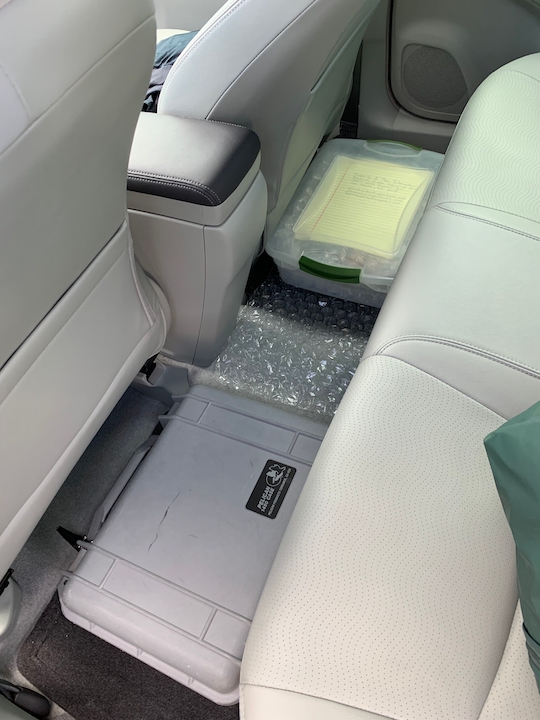
Lifting the heavy glass off the display case in the museum to retrieve the cylinders was pretty nerve-wracking. And it was about to get worse. Mike had left the museum by the time all the arrangements had been made, so it fell to me to bring the cylinders to Los Angeles. Without revealing what I was doing to anyone besides those in the museum, I loaded all eight cylinders into my car and made the trek back to LA, battling a three-hour traffic jam and two hellacious downpours along the way. But I made it!


The next day (March 16, 2023) Mike and I arrived at Michael Khanchalian's beautiful home. He has an amazing collection of players and cylinders and is clearly an expert and enthusiast in this field. "He's the John Cox of wax cylinders," joked Mike. After a fabulous tour of his collection, we got down to work in his "lab."


The first three cylinders, which had come from David's vault and were labeled as containing Houdini's voice, did not contain Houdini's voice. Michael knew this instantly as he could tell they were commercial recordings and not the type of "blank" cylinders one would use for recording. Instead what we heard were vaudevillians Will Oakland ("When You and I Were Young, Maggie"), Billy Murray & Ada Jones ("Whistling Coquette") and a musical march (Queen of Sheeba). It was fun to hear these sounds from the past, but it was a little disconcerting, and the switcheroo theory was dancing in my head. But we still had five cylinders to go.

The cylinder labeled "Pa's Poems" (in Houdini's handwriting) was up next. Michael was encouraged by what he saw. At least this was the correct type of "blank" cylinder. This was the moment of truth. Houdini history was about to be made, for better or worse.


Michael slid the cylinder on his player, carefully calibrated the needle, hit the record button (we were making direct transfers to CD, no computers or hard drives involved), and lowered the needle. Then this happened.


Houdini's powerful voice boomed out over the room in a recording that had not been heard in 53 years. He introduces "an original German recitation" of poetry written by his father, "Reverend Doctor Mayer Samuel Weiss," to be spoken by his sister, "C. Gladys Weiss." There is a fantastic candid moment when Houdini is about to state his father's birthday and he has to ask Gladys, "What was the year?" It's very faint, but it's there, and we all looked at each other in delighted disbelief at what we had just heard.

Gladys then recites the poem in German. Gladys was blind, so she's doing this from memory. As Houdini says on the recording, the poem was "taught to her" by their father. I believe she makes a mistake and starts over after a small gap in the recording. Houdini then comes back on and says he will repeat the poem "in case you did not understand it." This seems to be his true speaking voice and not the "presentational" voice he uses on the other recordings. He then proceeds to recite the poem also in German. He speaks faster and, to my ear, more confidently in German, with great flair and rolling R's. Gladys signs off with the date, October 30, 1914, which is a day after the other recordings were made. The fact that this recording was made on a different day has never been documented.

Next up were the two full recordings of Houdini's Water Torture Cell patter. As with the poetry cylinder, each of these run just over four minutes. The quality of these transfers is much clearer than what exists currently. For years I believed Houdini says "I, Houdini" as his sign off. I've been wrong. "Harry Houdini" is now sparkling clear. There was also a big surprise waiting at the end of the first speech. After Houdini signs off, the cylinder seems to end. But then Gladys comes back on and "certifies" that she heard her brother "make this record" on October 29, 1914. This certification was never transferred in 1970 nor have I ever seen any mention of it. It's possible it was missed or the machine they used couldn't pick it up.

Speaking of the machine(s) from the 1970s, our expert Michael said he was amazed the recordings weren't destroyed back then, as you can't play these Edison Blanks on a regular machine. They are much softer and the weight of the needle can wipe them clean. Several times he said it was miraculous that the recordings survive and in such great fidelity.

The final two cylinders were commercial recordings of German songs. It was still exciting to hear these as all the cylinders belonged to Houdini and it's wild to hear the music he played at home for pleasure.

Over the next few days I prepared notes and transcriptions of all the cylinders and reunited them with their correct cases. I was helped in this by magician Jessica Jane Peterson who became the fourth lucky person to hear the poetry recording.


I then drove the cylinders back to Las Vegas and played the new recordings for David. He was thrilled by what he heard. He instantly picked up on all the same moments that had so excited us in LA, especially the moment when we hear Houdini's more natural speaking voice. Even before the recordings ended he was working on the next steps. Audio work will be done to clean up the recordings and the German will be translated. It was mission accomplished and everyone was delighted and relieved!

I took myself out to dinner that night and thought about what had happened. Not only had I finally heard the "Pa's Poems" cylinder, but I now understood it was always the most precious and personal recording of them all. Houdini loved and and honored his father and you can hear that. He loved his sister and you can hear that. The family language was German and you hear that. If Houdini ever came back, this would be the cylinder he would want to hear. Preserving it was more important than I ever understood. I felt like I had done a service for both Houdini and David Copperfield, and I was overwhelmed with gratitude at the amount of trust that had been placed in me.

I then sent David a text with one last request. Could I share this momentous news? His response came back quickly: "Sure."

As I said, David didn't need to do this. This headline could have easily read, "The Houdini wax cylinders are no more." But this is what makes David Copperfield a titan of magic. He took the risk, extended extraordinary trust, and now deserves the credit for saving this important piece of Houdini history. Maybe even the most important piece. When and where the general public might hear these I can't say. But the fact that we can now hear them was the purpose of this incredible journey.


Thanks to David Copperfield, Mike Caveney, Michael Khanchalian, Jessica Jane Peterson, Glenda Wellendorf, and everyone who helped bring Houdini (and Gladys Weiss) back to life. 

Want more? You can view additional images from this adventure as a "Scholar" member of my Patreon by clicking below.

Sunday, January 1, 2023

Houdini in 1923

Let's kick off 2023 with a brief look back at what Houdini was up to 100 years ago.


The new year saw Houdini on the road for what would be his first coast to coast tour since 1915. At age 49 he was back hanging from high buildings, clocking an amazing 19 suspended straitjacket escapes in the course of the year. He once again appeared at all the major vaudeville houses in all the major cities. But he also opened himself up to the new chain of "Junior Orpheum" theaters. These required performers to do three shows a day instead of two and featured a movie as a main attraction. This brought Houdini to cities that had never experienced the escape king in person. He also toured Texas for the second time in his career.

If theater managers feared audiences had forgotten Houdini during his five year hiatus from vaudeville, those fears were quickly put to rest. Houdini was as popular as ever. His movies had provided an avalanche of publicity and audiences were thrilled to now see "Houdini in Person." What they saw was the same act he had presented years earlier; Needles, straitjacket, The Water Torture Cell, and challenges from local businesses. He did experiment with a few new feats, such as being tied to a post inside a ring of burning flames in San Fransisco. He also may have tried his Water Torture Cell escape in full view of the audience in a few select theaters.

The year would also see the release of his last film, Haldane of the Secret Service, with Houdini making personal appearances if an opening lined up with his tour. Haldane was released by F.B.O. who promoted the film as a cavalcade of Houdini's greatest escapes. That isn't what audiences got and the movie was received poorly. But Houdini seemed unfazed by the failure of his final Houdini Picture Corporation production. He had moved on from movies and was focusing more of his time energy on his new passion; spiritualism.

Having given spiritualistic debunking demonstrations as part of his The Man From Beyond roadshow the previous year, Houdini now presented a more fleshed-out lecture, compete with a slide show. He gave these in several cities on his tour as well as at colleges. Publicity for his lecture in Los Angeles eclipsed his regular act at the Hillstreet Theatre, especially as he had become embroiled in a bizarre spirit photograph mystery at the First Spiritualist Church. But Angelenos could still see the old Houdini in action with a suspended straitjacket escape from the Examiner building and an escape from a ball and chain at the bottom of the swimming pool at the Ambassador Hotel (possibly his last outdoor water escape).

Always quick to embrace new technology, Houdini began giving short talks on radio, spelling out his beliefs on spiritualism and giving magic lessons. He also became a Mason.

While appearing in Denver, Houdini met up with his friend Sir Arthur Conan Doyle, who was in town on his own lecture tour. The subject of spiritualism, which had initially bound them, was now putting a strain on the friendship. Doyle was especially troubled by a splashy multipart series of articles that appeared in the Oakland Tribune under the banner headline, Houdini Unmasks the Mediums. "It is so filled with errors that I don't know where to begin," said Doyle. The author felt compelled to write a detailed rebuttal in the paper, bringing their private debate into the public and putting more strain on their friendship.

Houdini's high profile position on Spiritualism earned him an invitation to join a committee formed by the Scientific American magazine that would investigate claims of true mediumship. This gave Houdini the opportunity to go head to head with notable mediums of the day, such as George Valiantine and Nino Pecoraro. These colorful encounters garnered headlines across the country. While Houdini may have started the year in his old guise of Mystifier, he ended it with a new identity; Debunker.

On Christmas Eve, Conan Doyle penned Houdini an angry letter, stating, "You can't bitterly and offensively--often also untruly--attack a subject and yet expect courtesies from those who honor that subject."

Houdini's answer might have best been expressed by the old show business axiom; You ain't seen nothing yet!

Want more? This month I'm offering patrons an exclusive PDF preview of my Ultimate Houdini Chronology, showing everything Houdini was up to in 1923. This is the first reward of the new year and a special one. Just click below to go.

Thursday, July 14, 2022

Before Beyond

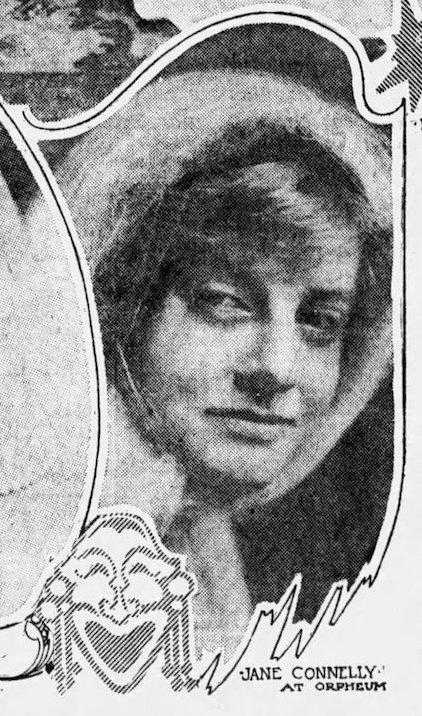
Recently I stumbled on an advertisement showing Houdini on the same vaudeville bill as his future co-star in The Man From Beyond, Jane Connelly. Jane had never appeared in a movie before, and I've often speculated that Houdini may have known her and her husband, Erwin, who also appears in the movie as Dr. Gregory Sinclair, from vaudeville. This clipping seemed to confirm that.

This led me to do a little investigation into Jane's career before she went Beyond. Here's what I found.

Jane and Erwin Connelly appear to have started their vaudeville careers around 1907. Their act was a presentation of the popular english sketch, "Sweethearts," written by W.S. Gilbert. Here's a review from the January 26, 1907 Birmingham News:

"Sweethearts," as presented by Mr. and Mrs. Connelly, seems really more than a vaudeville turn, for the audience feels, as the curtain slowly descends upon the reunion of sweethearts of long ago, true to each other for forty years, as though a drama of several acts was just closing. It is called a "dramatic contrast," for it shows not only the bashful lover filled with the vigor of youth pleading his cause with a maiden, for after forty years waiting they are united, showing a pretty picture, old as love itself. The sketch was written by W.S. Gilbert famous for his composition of "H.M.S. Pinafore."
The Fort Wayne Journal Gazette, Dec. 15, 1912.

Unlike Houdini, most vaudevillians did not change their act. That was certainly the case with the Connellys who toured with "Sweethearts" for over 10 years. The first time I find them sharing the bill with Houdini is at Shea's Theater in Buffalo in October 1911. They appeared together again at the Maryland in Baltimore in 1912 and at Keith's Theater in Rhode Island in 1915.

The Connellys on the bill with Houdini....

But it wasn't just Houdini who shared the bill with the Connellys. Check out this appearance by Hardeen at the Columbia Theater in Davenport in April 1916.

...and Hardeen...

You'll notice the act is now billed as Jane Connelly & Co. Ewrin was still part of the act, but Jane was now featured more prominently in advertising. (I can't help but be reminded here of Bess Houdini's belief that billing an act as husband and wife was a bad idea.) The photo at the top of this post is from San Fransisco in 1915 and is a good example of this. Interestingly, that engagement saw the Connellys on the same bill as the Marx Brothers.

...and the Marx Brothers!

Despite a story in The Man From Beyond press book that says Houdini cast Connelly because she perfectly matched a composite photo of famous "psychic types" (you can read about that here), I think it's pretty clear Houdini knew the Connellys from vaudeville and felt comfortable casting the experienced actors in these important supporting roles. It's even possible the Connellys would have been familiar to audiences of the time and that offered some additional appeal. This was their first appearance in a film, and the movie does provide them with a nice scene together.

Erwin and Jane in The Man From Beyond.

The Connellys continued to perform in vaudeville into the 1920s, broadening their repertoire with new comedic sketches written by Erwin such as "A Tale of a Shirt" and "A Strong Cup of Tea". The only other film Jane would appear in was Buster Keaton's classic Sherlock Jr. (1924), again with Erwin.

In 1925 Jane died at her home in Los Angeles. She was only 42. The below is from Variety. I'm not sure what to make of the cause of death being "a nervous breakdown."


After Jane's death, Erwin continued to appear in films, including an uncredited appearance as The Zouave in Rudolph Valentino's final film, The Son of the Sheik (1926). He died from injuries suffered in a car accident in 1931.

Chicago Tribune, Feb. 12, 1931.

Clippings: Newspapers.com

Monday, June 20, 2022

Houdini catches Belle Baker's "clacque"


Last week I posted the story of Houdini and Don the Talking Dog. Today I have a new tale of Houdini and a rascally fellow vaudevillian. This time its singer Belle Baker who shared the bill with Houdini at the Maryland Theater in Baltimore during the week of February 5, 1912.

Baker was known to employe the practice of "clacque." This means hiring audience members to provide an inordinate amount of enthusiasm and applause during your act. During her run at Hammerstein's in 1911, Variety called this out, writing: "Miss Baker did nothing with her voice, expression or gestures to merit this kind of applause. She became exceedingly painful in her labored efforts during the Italian selection. Miss Baker was one of the first in New York vaudeville to use a "clacque", and she soared for a while until vaudeville "got on.""

Here Variety is once again calling her out for the practice, but this time the situation ensnared Houdini.

Variety, Feb. 10, 1912

This was certainly embarrassing for all, but it does sound like Houdini took it in stride. I do love the idea of him standing "still for two minutes until the noise subsided." And despite her sneaky ways (or maybe because of them), Baker would go on to have a long and successful stage, film, and radio career. She died in 1957 at age 63.

Here's another fun detail about this engagement. Notice that "Mr. and Mrs. Erwin Connelly" are also on the bill this week. This is actually Jane Connelly, Houdini's future co-star in The Man From Beyond, and her husband Erwin who also appeared in the film. Do you think when they were on set they reminisced about the time Belle Baker gave Harry the clacque?

Translate