Showing posts with label William Kalush. Show all posts

Monday, September 30, 2024

William Kalush talks Houdini, Oct. 24

The great Bill Kalush will give a Houdini presentation as part of The American Museum of Magic's Magic Speaker Series on Thursday, October 24, at 7:00 PM ET. The talk is free for museum members and $15 for non-members. This online event will fill up, so I would act fast. To register, click the image below.


UPDATE: Bill says, "I'll be giving a talk about 3 of Houdini's greatest effects. I promise to reveal some details that are not in the books!"

Related:

Monday, September 23, 2024

American Museum of Magic restores Houdini display

The American Museum of Magic in Marshall, Michigan, has restored its iconic central Houdini display to its once-former glory. The museum had erected a small stage for children's magic shows on the spot and placed Houdini behind that. But now the Handcuff King is back in his proper place, greeting visitors as they enter the museum just as in Bob Lund's day.


The museum shared the above photo on their social media along with this message:

Houdini has returned to the American Museum of Magic! The Museum thanks both Lewey's Shoe Repair for his assistance in making this possible and the Board Members who assisted in this endeavor. Now our Houdini banner has a secret that only museum goers will be able to see!

Speaking of Houdini at the American Museum of Magic, the great William Kalush will be the feature of their next Speaker Series in October. Kalush talking Houdini can't be missed!

For more information and hours, visit the American Museum of Magic's website or Facebook.

Bob Lund in the original Houdini display.

Monday, May 13, 2024

Magic Collector Expo 2024 aboard the Queen Mary

Last week, I attended the Magic Collector Expo aboard the Queen Mary in Long Beach. What a sensational time I had! Bill Smith once again provided a first-class convention with excellent talks and terrific magic. It was great to see so many friends and the Queen Mary is always a delight to experience.

One highlight for me was spending some quality time with Bill Kalush—a Houdini heavyweight indeed! Also in the ring were Houdini Nuts: Arthur Moses, Joe Notaro, Fred Pittella, Joe Fox, Brian Verkuylen, Mike Strong, and Diego Domingo. I also made a new friend in Chris Goldman who has some wonderful Houdini rarities that he shared with me.

On Thursday, I gave a talk, "Houdini on the High Seas," in which I examined Houdini's ocean voyages and the various ships he sailed on. I covered every journey from the SS Frisia, which the Weiss family took to America in 1878, to Houdini's final crossing aboard the SS Imperator in 1920. One of the reasons I was excited to do this talk was it gave me the excuse to do the research. It was fun to finally nail down these ships (13 total) and find some untold stories. I think it went over really well.


At the end of my talk, I revealed the title and cover of the upcoming diary book, Escaping Obscurity: The Travel Diary of Harry Houdini, 1897-1899. Mike Caveney and I announced the book at the Magic Collector Expo in Cleveland last year, so I thought this was the perfect time and place to do this. I was pleasantly surprised how many people at the Expo asked me about the book. Michael Albright is still working on the design so we don't yet have a release date, but it will be worth the wait. You can get a look at the cover as a member of my Patreon below.


There was a lot to enjoy over the three days. Lance Rich gave an artful presentation, "Neptune's Sorcerers," all about magicians on cruise ships. David Charvet gave an excellent and well-researched talk on "The Golden Age of Magic in Southern California." It included several Houdini mentions and lots of Bess. I really enjoyed Chris Martin's talk on "John Rogers's The Traveling Magician" statue. It was fascinating to learn its history and why it is so celebrated today. Mike Caveney's Egyptian Hall talk and exhibit was first-rate. It was also a treat to see a reunion of The Long Beach Mystics and enjoy their show as the closing night feature.

For a more complete overview of the expo, I will refer you to Joe Notaro's excellent coverage at his site, Harry Houdini Circumstantial Evidence. Joe had a few outside Houdini adventures (some of which I was part of) so you'll want to enjoy those as well. Scott Wells provided his usual expert daily coverage at The Magic Word Podcast. I had the honor of being interviewed by Scott alongside Lance Burton.


Bill Smith announced that next year's Magic Collector Expo will be held in Las Vegas and will include a tour of David Copperfield's International Museum and Library of the Conjuring Arts! The number of attendees will be limited and those who attended Long Beach will get priority registration. Keep an eye on the official website.

Here is the list of thanks that I showed at the end of my talk. Thanks again to these folks and everyone who made this an expo to remember!


UPDATE: For my Scholar patrons, I've uploaded a PDF containing select slides from my talk showing all 13 ships I discussed. 

Thursday, September 30, 2021

Opening up 'Houdini's Lost Diaries'


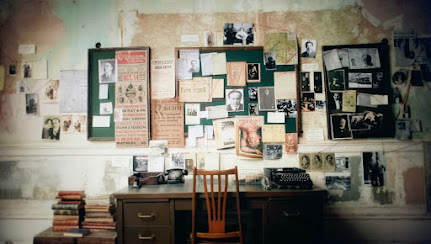
The BBC produced Houdini's Lost Diaries appears to have been very popular with those who caught its debut on History's Greatest Mysteries last Tuesday. (Thanks to everyone who sent me kind words about my own small part.) If you're a cord-cutter like me and missed that initial airing, know you can now stream the episode free for one week at the HISTORY website. You can also buy the episode on Amazon Prime, which is exactly what I did last night.

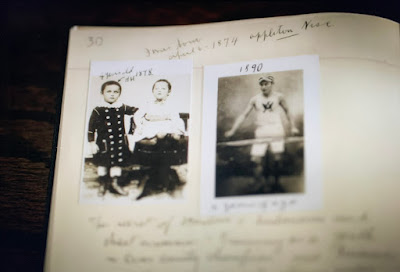
Even though I'm not a fan of the quick-cut, sound-clipy style of HISTORY shows (and that bombastic music), I thought this documentary was cut above in every other aspect. It really does feel we get something new here. There are several photos I've never seen before. They eschew all the easy mythology and work to get their facts right. I especially liked how they characterize Ehrich Weiss as making a conscious effort to transform into the mythic HOUDINI. It's a well told story.

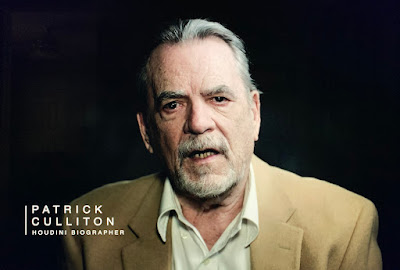
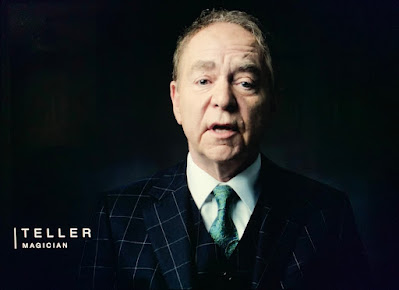
The line-up of talking head experts is also impressive. But it's Teller who steals the show by not only speaking on-screen for the first time in a Houdini documentary, but tearing up twice. It's also a joy to see the great Patrick Culliton, "Houdini's Ghost", back in front of the camera talking Houdini.


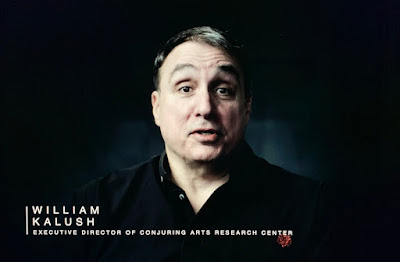
So what about the diaries? While offering no real bombshell revelations, there is still gold. The fact that Houdini paid some challengers isn't new, but I love that he apparently coded these payments in the diaries as "be quick." The diaries are really used more to provide the kind of deep character insight that you don't get in other Houdini documentaries. Many pages are shown on-screen, and you can bet I'll be doing some pausing! Bill Kalush, who also gives a rare on-screen interview, is described as "the custodian of the diaries."


I was a little surprised by the sparse use of film footage. Instead they relied heavily, maybe too heavily, on reenactment photographs. And where the heck is Bess!? They also fall into the familiar narrative trap of jumping from Mama's death to spiritualism, ignoring Houdini's war work and movie career. However, they do not conflate his mother's death with spiritualism and correctly root it in his relationship with Sir Arthur Conan Doyle. Spiritualism comes in for the harshest treatment of any Houdini documentary, with Penn Jillett taking off the gloves and likening it to organized crime. Sounds right.


In the end, they do amp up the sensationalism around Houdini's death and hint at possible murder, which I guess is just de rigeur for anything that airs on HISTORY. But they ultimately come down on the side of reason and discount any conspiracy.

Houdini's Lost Diaries is definitely one to watch. The option to stream free or buy on Amazon Prime appears to only be available to U.S. viewers at the moment. But as this was made by the BBC, I expect it will be getting a UK airing sooner than later. Below is an extended preview.

Tuesday, July 2, 2019

Hungarian Kalush

The 2006 biography The Secret Life of Houdini: The Making of America's First Superhero by William Kalush and Larry Sloman has been released in Houdini's native Hungary as Houdini titkos élete (translation: Houdini's Secret Life). Below is the cover art.


You can buy Houdini titkos élete at lira.hu.

Related:

Monday, June 3, 2019

Happy Birthday Tony Curtis


Two other Houdini notables also have birthdays today. I'll let my tweets do the talking.


Related:

Friday, June 29, 2018

Bill Kalush has been to the mountaintop


It's official. William Kalush now knows more about Houdini that anyone living (if he didn't already). That's because Bill, who co-wrote the 2006 biography, The Secret Life of Houdini, was recently granted unique access to Houdini's private diaries.

Last weekend Bill gave a talk about the diaries at the Cincinnati Magic Collectors conference (aka "Gathering of the Vultures"). I've only heard snippets about what Bill shared, but what I've heard has blown my mind!

The diaries start in 1904 and are handwritten with some typed inserts. Houdini appears to have added to his original entries over time. Bill showed several photos from the diaries, many that featured images of unknown posters. One photo shows Bess sitting at wheel of Houdini's Voisin bi-plane. Bill also showed ads that Houdini placed trying to sell the plane in 1910. There was also photo of a cabinet that Bill described as a possible precursor to the Water Torture Cell.

The diaries also revealed the existence of two hitherto unknown assistants; Thomas Clarke Pendrigh, who worked with Houdini for two years, and Harry Wittaker, who stole Houdini's secrets and went out on his own (and failed miserably). Houdini supported a female escape artist known as Oceana. He had gaffed cuffs made by Froggatt & Company. He once struggled 80 minutes inside a U.S. Navy boiler. And Bess once left £40,000 worth of jewelry in a cab in England. (Later recovered.)

One bombshell was the revelation that Houdini might have had a half sister named Peppi (possibly a daughter of Mayer Samuel before his marriage to Cecilia). Also, Chung Ling Soo told Houdini he had three wives, including a Jewish one.

During the Q&A, someone asked Bill if the diaries contained any information about Houdini being a spy. They did not.

While Bill said he could not reveal who owns the diaries, it's pretty well known that the family of Bernard M.L. Ernst, Houdini's lawyer, have held a collection of diaries since Houdini's death. So I'm assuming that's what Bill saw. The family have only provided limited access to select researchers in the past. In fact, Bill could not even get access to the diaries when he was writing his own book.

Here's hoping Bill will share what he learned in some larger way, perhaps in an upcoming issue of Gibecière, the journal of his own Conjuring Arts Research Center. But, for now, I'm perfectly happy knowing that someone has been to this particular mountaintop, and confirmed it is indeed a place of special knowledge.

Thanks to an attendee tipster, Bill Kalush, and Phil Schwartz at the excellent Thayer Magic forums for the info.

Related:

Tuesday, March 6, 2018

Brad Meltzer is out peddling the myth that Houdini was a spy


The last time we heard from Brad Meltzer was when he "investigated" whether Houdini was murdered on his show Decoded. Among the many, many untruths perpetuated in that episode was the allegation that Bess Houdini murdered her husband because he suppressed her own show business ambitions. It was preposterous and offensive, but typical of the conspiracy-laden pseudo-scholarship of "reality" TV which is Meltzer's specialty.

Now Meltzer is back with a new novel, The Escape Artist, in which he once again wraps Houdini with conspiracy. This time he's reviving the idea that the great magician worked as a spy. Now, I don't mind having Houdini doing spy work or even fighting vampires in fiction. And as with David Saltman's recent Houdini Unbound, which also features Houdini as a spy, I was going to do a post today recommending Meltzer's book as a fun new bit of Houdini fiction.

However, on Late Night with Seth Meyer, Meltzer said "it's true" that Houdini was a spy, and even trotted out the specific details that he was recruited into the Secret Service by John E. Wilkie in 1898. I expect he will continue to say this in promotional appearances, so I now feel compelled to a write a different kind of post to help clear the air about where this whole spy idea came from and why people like Meltzer continue to perpetuate it. I really hope this doesn't offend people I respect, but it's time I say here what I've been saying in private when this topic arises, so here it goes.

The notion that Houdini worked as a spy comes entirely from the 2006 biography The Secret Life of Houdini: The Making of America's First Superhero by William Kalush and Larry Sloman. Among some excellent new research, the book also resurrects long ago discarded Houdini mythology (ringing the bells of the Kremlin) and conspiracy theories (Houdini poisoned by his doctors). But the spy angle was new and was touted as the sensational revelation of the book. So was it?

It is true that Houdini was friendly with law enforcement and took a great interest in the methods and practises of criminals and con-men. He even penned a book on the subject in 1906 called The Right Way To Do Wrong. It's also true that he had a relationship with Superintendent William Melville of Scotland Yard, who did operate an early version of British Intelligence (formal intelligence agencies as we know them did not exist at this time). Houdini appears to have written Melville on two occasions when he was performing in Germany in 1900 and 1902, which Melville called "reports." If Houdini was indeed providing intelligence information, even just gossip, then technically this would classify him as a "spy." But two vague mentions of "reports" by someone with the initials "HH" isn't much, yet that's the entire factual foundation of the Houdini spy theory and industry.

Now, I don't know the authors hearts and minds, but I do know that the economics of writing non-fiction are not great (it's one of the reasons I've yet to produce a Houdini book myself). A sale to Hollywood is pretty much the only way a non-fiction work makes money for the author and publisher. So tickling Hollywood's buying bone can become a corrupting influence. There can be pressure to showcase a sensationalistic and cinematic angle, and turning Houdini into 007 certainly fit that bill, even if the facts were not really there to support it

So it's possible the authors felt compelled to enhanced the spy idea using broad speculation and generate fanciful scenarios in which Houdini interfaces with famous figures in intelligence, like Wilkie. Upon publication, most Houdini buffs largely rejected the spy theory as unfounded, and felt it undermined what should have been a great new Houdini biography. At the time, the authors said more evidence would come forward. It never did. But in 2009, the book sold to Summit Entertainment and a franchise of movies featuring Houdini as "part Indiana Jones and part Sherlock Holmes" were announced (they've yet to appear). So the publisher achieved their economic goal, but the Houdini world was left with a gigantic new piece of mythology to contend with.

Okay, I should stop here and say that I know and greatly respect Secret Life author Bill Kalush, as does everyone in the magic world. With his Conjuring Arts Research Center and Ask Alexander online archive, he has done extraordinary things for magic history and researchers. My own conspiracy theory is that he was led down this path by his writing partner and publisher Simon & Schuster. I also have a mad dream that one day Bill will write a wholly fact-based Houdini biography for a specialty magic publisher like Mike Caveney's Magic Words. If he did, I have no doubt it could be the finest and most accurate Houdini biography of them all.

Happily, the Houdini spy theory hasn't had the same traction as other myths. Yes, Hollywood now has their teeth into it, and even the 2010 Houdini Miniseries with Adrien Brody featured Houdini doing spy work. But reviews uniformly qualified this as speculative, and even the filmmakers admitted the spy portion of the story was dramatic fiction.

But now here comes Brad Meltzer, reviving this idea in his own work which, again, I don't object to in itself. But to go on Late Night and state unblinkingly that it is "true" shows Meltzer has not done his research or facts don't matter to him. And after what he did on Decoded, I suspect it's the latter. Meltzer trades in the world of pseudo-history and "fake news" -- a conspiracy theorist historian peddling half-truths and titillation. I'm sure the goal here, once again, is to sell a book to Hollywood, and I'm sure he will.

But that doesn't mean we have to buy any of it.

Related:

Sunday, May 28, 2017

Magic comes to the McCord Museum in Montreal


This weekend magic came to the city of Montreal with the opening of the McCord Museum's "ILLUSIONS: The Art of Magic" exhibition and "The 44th Magic Collectors Weekend." There was plenty of Houdini to be found during the 3 days of events. Houdini biographer and weekend honoree William Kalush gave a talk in support of the idea that Houdini was as great a magician as he was a showman and escape artist (now that's a Bill Kalush theory I can get behind). There were also several original Houdini posters on display at the McCord exhibition.


The McCord museum is housed in a building that was once the McGill University student union. This is where Houdini spoke in 1926, the day before the fateful dressing room encounter with McGill student J. Gordon Whitehead (and where he is also said to have successfully demonstrated his ability to take a punch). 

Magic Collector's Weekend attendees were treated to a private display of original Houdini artifacts in the very room where Houdini spoke (which has since been subdivide). In 2015, the McCord received a large bequest of magic memorabilia, including over 1000 individual items related to Houdini. 


Other weekend speakers included: Andrew Pinard ("Jonathan Harrington"), Dr. Joe Culpepper ("Doctoring Magic"), David Ben ("Downs' Masterpiece"), Max Maven ("Torn Roots"), Michael Grandinetti ("A Young Person's Guide to Doug Henning"), Lesley Fitzpatrick-Walker  ("Metamorphosis: The Last Unicorn"), Brian Lumley ("According to Plan") and Mike Caveney ("Egyptian Hall").

The 44th Magic Collectors Weekend was hosted by David Ben and Julie Eng of Magicana. I'm story I wasn't able to attend this year. Looks like it was a great event in a location steeped in Houdini history.


"ILLUSIONS: The Art of Magic" runs through January 7, 2018. For more information visit the McCord Museum. A book devoted to the exhibition is available at Amazon.com (U.S.) and Amazon.co.uk (UK).

Thanks to magician and Houdini lecturer William Pack for the photos. Lecture information thanks to Phil Schwartz of the great Thayer Magic.

Related:

Thursday, May 11, 2017

ARTE Houdini documentary now on YouTube


The Houdini documentary produced in 2014 by ifage filmproduktion is now available to view on YouTube. This is the version that aired on the Franco-German TV network ARTE and is dubbed into French.

Directed by Jens Monath, the documentary contains several well-made reenactments with various actors playing Houdini and Bess at different ages. The documentary also features escapes by Jan Rouven (with a textbook straitjacket fail), and interviews with Bill Kalush and magician Murray SawChuck.

Below is the YouTube embed. I'm not sure if this is licensed, so you might want to watch now before it disappears.

Update: It has disappeared.


Thanks to Tom Interval for the find.

Related:

Thursday, May 19, 2016

Bill Kalush to receive 2016 Milbourne Christopher Award

William Kalush, co-author of The Secret Life of Houdini: The Making of America's First Superhero and founder of the Conjuring Arts Research Center in New York, will receive the Milbourne Christopher Award for Literature at the upcoming 2016 Milbourne Christopher Awards on June 25.


The Milbourne Christopher Foundation was established by Maurine Christopher in 1989, and was created to perpetuate the memory of her husband and his lifelong interest in encouraging excellence, originality, and leadership in the art of magic. The award categories reflect Milbourne Christopher’s own diversified career. Among his many works, Christopher wrote Houdini: The Untold Story (1969).

The 2016 Milbourne Christopher Awards will be held at 6:00 PM on June 25 at the Garde Arts Center, 325 State Street, New London, Connecticut. Tickets can be purchased here.

Related:

Wednesday, October 28, 2015

The Secret Life of Houdini Boxed Set 50% off for Halloween

The Conjuring Arts Research Center is offering a special Houdini Halloween deal. By using the code HOUDINIHALLOWEEN at check out you can save 50% on all Houdini eBooks as well as the magnificent The Secret Life of Houdini Boxed Set.


The Secret Life of Houdini Boxed Set includes a special edition of The Secret Life of Houdini: The Making of America's First Superhero by William Kalush and Larry Slomon with a colored frontispiece signed by both authors. But what makes the set a must is the companion book, The Secret Life of Houdini Laid Bare, which compiles all of the author's notes and sources aloha with material edited out of the biography and more than seventy additional photographs. Each book is numbered and only 1,000 sets have been produced. If you didn't get this back in the day, this would be a great time to grab one.


Use the code HOUDINIHALLOWEEN at check out.

Sunday, May 31, 2015

REPORT: Houdini-Hardeen Milk Can reappears on stage

The Man (Hatari) and the Can.
History was made last night at the Franke Center in Marshall, Michigan, when escape artist "Hatari" (a.k.a. Joseph Patire) freed himself from a genuine Houdini-Hardeen Milk Can on-stage in front of a live audience. The can belongs to the collection of the American Museum of Magic in Marshall, and was part of the International Stars of Magic show that concluded the Midwest Magic History Weekend.

I was honored to be among the committee that locked Hatari into the can. It was a thrill (and a little nerve-wracking) to handle and snap shut a real Houdini-Hardeen padlock. Also on stage was mega-collector Arthur Moses. Among the many magic luminaries in the audience that witnessed the escape were Bill Kalush, author of The Secret Life of Houdini, and legendary illusion maker John Gaughan. The show was emceed by the great Mike Caveney.

Before the escape, a video was played that explained the history of the escape, as well as the history of the Houdini-Hardeen can that was to be used that night. One bit of historical serendipity was that the night happened to be the 70th Anniversary of the last night that Hardeen himself performed the escape. Believe to or not, this was not known by organizer David Charvet when all this was planned! Just another one of those spooky Houdini coincidences.

The theme music from the horror classic Halloween played while the can was concealed by a raised curtain. A large stage-side clock counted down the minutes. A loud screen by Hatari's assistant helped bring the drama to a crescendo. Hatari freed himself in just under two minutes and received a nice ovation.

Now, I need to let you know that the Milk Can was not actually filled with water. The museum decided that would pose just too much risk to this important Houdini artifact. While this wasn't announced to the audience in advance, it also wasn't kept secret. Following the escape, host Mike Caveney quipped, "Not only did Hatari escape, but he was able to blow-dry his hair -- a feat not even accomplished by The Great Houdini!"

I think leaving the can empty was the right call. The performance was staged very effectively, with Hatari clad in a period bathing suit on a stage filled with nice "undersea" lighting effects, and it all worked as beautiful recreation of this historic escape without posing any real danger to the can or Hatari himself.


Immediately after the escape (which occurred mid-show before the intermission), the Milk Can was whisked back to the American Museum of Magic under the constant care of the museum's administrator, Keli Spears Hindeach, who seemed very happy and relieved to have her can back safely "at home."

It was a truly magical night and a wonderful tribute to this classic Houdini-Hardeen escape.

Events at the Franke Center are still going on today with a Potter & Potter auction of rare magic books and memorabilia. You can continue to follow my live tweets from Marshall HERE.

I'll have a full report on the Midwest Magic History Weekend later this week.

UPDATEREPORT: The Midwest Magic History Weekend 2015.

Related:

Sunday, November 2, 2014

The Official Houdini Seance 2014

This year The Official Houdini Seance was held at the Glen Magna Farms in Danvers, Massachusetts, the country estate owned by the Danvers Historical Society. Once again, it appears to have proven itself to be the Rolls Royce of Houdini seances, and another great success for co-directors William Radner and Thomas Boldt.

Pre-seance entertainment was provided by magicians Evan Northrup and Eric Robitaille, who both came via the recommendation of Vince DeAngelis, owner of Diamond's Magic, who also helped organize this year's event. Dr. Gene and Jennifer Yee closed the evening with Metamorphosis. "They were great," says Bill Radner. "The viewers were blown away and clapped with intensity seldom seen at this type of event."

The medium this year was Anastasia Zimeris from Salem who, according to Bill, "captivated the audience with emotion." The Inner Circle was made up of: Tom Boldt; William Radner; Vince DeAngelis; William Kalush; Evan Northrup; Fred Pittella; Eric Robitaille; Robert Somerdin; and Jennifer Yee.

While Houdini himself didn't attend, Bill felt this was a seance to remember: "Glen Magna is on a farm away from civilization and it created an intimacy that recreated the feeling that existed in the early 1900's. We had a cozy room occupied by a little over 30 people eager to indulge in the aura of Houdini. The regular Inner Circle members were not able to make contact with Houdini, but Tom Boldt and I along with Rob Somerdin, Fred Pittella, Jennifer Yee and Bill Kalush knew Houdini (and my father) would have been proud."

Here are some photos of the evening courtesy of Bill Radner and Robert Somerdin.

Psychic Medium Anastasia Zimeris.

Heavy hitters: Rory Feldman, Robert Somerdin, Fred Pittella, Bill Kalush.

Pre-seance magic by Evan Northrup.

Escape artistry by Eric Robitaille.

Will the seance cuffs finally open?

Are you here, Harry?

Gene and Jennifer Yee close the evening with Metamorphosis.

Ghost hunters channel lunch at Turner's Seafood in Salem.

"Eyes of Memory Never Sleep."

You can read a detailed account of the evening in The Salem News: Houdini's spirit summoned to Danvers. Also read this article in the Appleton Post Crescent about seance co-director and devoted Houdiniphile Tom Boldt: Boldt CEO spends Halloween in search of Houdini.

Official Houdini Seances past:

Wednesday, September 3, 2014

REVIEW: History gets a C- in Houdini

The Houdini miniseries is a strange confection of fact and fantasy that is stylish and breezy enough to be entertaining to general audiences, but will disappoint and confound anyone with even a basic understanding of the real life of Harry Houdini.
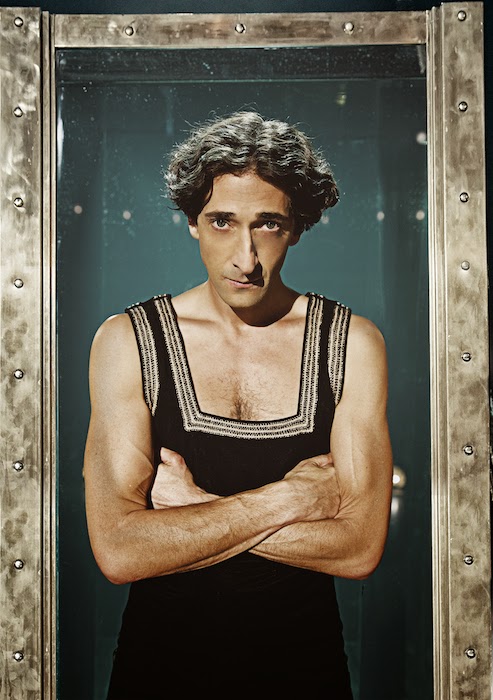
Houdini star Adrien Brody.
Anyone who has spent any time reading this blog knows that I am forgiving to a fault about inaccuracies in Houdini biopics. I love the 1953 Tony Curtis Houdini movie, despite the fact that Houdini biographer Milbourne Christopher correctly pointed out that, "If any phase of Houdini's life is shown on the screen you can be sure it didn't happen the way it's pictured." My favorite biopic is The Great Houdinis (1976), even though it invents a family triangle that made David Lustig, who knew Houdini personally, "feel nauseated."

I don't have a problem with these movies. Because at the end of the day, they still adhere to the basic superstructure of Houdini's life and career. Their dramatizations do not really change anything that is vital to our understanding of the Houdini story. A basic summary of these biopics will still give you the story of Houdini. That's because they had screenwriters who did their research, and even though they had to work within the Hollywood machine, and create conflict and drama, they showed respect for the notion of a biopic and respect for Houdini.

Screenwriter Nicholas Meyer is a hero of mine. He wrote what I consider to be the best Sherlock Holmes novel, The Seven-Per-Cent Solution. He wrote and directed the best Star Trek movie, Star Trek II: The Wrath of Khan. And don't even get me started on the awesomeness of Time After Time and, yes, I even kinda LOVE Volunteers. So when I heard he was writing the Houdini biopic, I was very excited. Sure, it would have fictionalizations, but that's the nature of the medium, and like the screenwriters who came before, Meyer would find a balance. I spent a better part of a year pre-explaining this.

Screenwriter Nicholas Meyer.
Well, it kills me to say that if any screenwriter can and should be sued for malpractice, it is Nicholas Meyer for his work on Houdini (at least in the first night). Meyer's script is not "artistic license," it's negligence, and at times Houdini is so bad it's actionable (I will explain later). When Houdini's life doesn't fit his fictions or lazy assumptions, he changes the life. How, when, and where Houdini finds fame and success -- a key component in the life story of any entertainer -- is completely thrown out the window for a version that is straight out of Meyer's imagination. Here, Houdini rockets to worldwide fame via a single "Johnson County" jail break in 1896. That's it. No Martin Beck. No trip to Europe. No Alhambra debut. No Scotland Yard challenge. Houdini springs fully formed (complete with Water Torture Cell) and is already the "most famous man in America" by 1900. This is so far from the truth it's shocking.

Now, I don't think I'm being nit-picky here. I'm not counting rivets on the Milk Can. I'm talking about something that is as fundamental to the story of Houdini as Pearl Harbor is to a story of World War II. Some things you cannot change, and it doesn't matter if you're the guy who made Star Trek II. Doing so shows a brazen disrespect for the subject and for the audience, and you will lose the world's most forgiving and supportive Houdini fan -- me.

Meyer's other offenses are more fundamental and just plain sloppy. He misspells Houdini's real name as Erich (it's Ehrich). He portrays a deep rift between Ehrich and his father, but never explains it. He presents the Water Torture Cell as Houdini's first major escape ... in 1900! Not just horrendously wrong, but it effectively erases the entire progression of Houdini's art and career. He places Houdini's home in Brooklyn instead of Harlem, seemingly for no reason other than personal taste? Houdini was a cinema pioneer. Meyer makes him a cinema holdout. Houdini was a famous teetotaler. Meyer shows him drunk. Houdini created an act and an identity for his brother as Hardeen in 1900. Meyer shows Hardeen performing successfully in the 1890s while Houdini is still struggling to make his own name. What kills me is Meyer just seems to take the approach that the truth doesn't matter. The truth is what works for him at the moment. The entire thing feels lazy, arrogant, and even amateur.

But it soon becomes clear why Meyer so badly mangles the facts of Houdini's early life, and to be fair, he may have been forced into this by producer Gerald W. Abrams, who bears as much responsibility for what we see here as Meyer. Because at minute 40, Washington D.C. comes a'calling and sends Houdini off to Europe as a secret agent! Now, this 2006 theory that Houdini did "spy" work for the U.S. and UK is HIGHLY dubious (and more so with each passing year of total silence on the subject from the authors who first proposed it) and should never have been included in something that purports to be a biopic. But Hollywood cannot resist a spy movie, and it dominates Night One. Suddenly, Houdini's career is sidelined and the miniseries turns into "Harry Houdini of the Secret Service," with Brody taking orders from "M" (get it?), running across embassy rooftops, and using his magic act only as a "cover." What was that about feeling nauseated?

Once the floodgates have been opened, more fictionalizations come pouring forth, supplanting real events in Houdini's life that would have provided much better drama. Instead of standing trial in Germany and proving himself by performing escapes in a courtroom (as really happened), Meyer substitutes a scene of Houdini doing a bullet catch for the Kaiser (never happened). Instead of his dramatic escape from the Siberian Transport Prison Van in Russia, we get a magic performance for the Royal family and a disapproving Rasputin (who, by the way, would not arrive on the scene for another two years). We also get to see Harry having a kinky affair with British painter Lady Butler which, of course, is pure kinky fiction. This all threw me so badly that I found Night One pretty hard to watch, even though it was nice to see things like Houdini's aviation career finally included in a Houdini movie (notice I didn't use biopic).

However, as I said, much of Meyer's machinations are so the silly spy elements will fit the narrative. This is why Night Two, which is finally free of the spy element (thank you, World War I!) is MUCH better. In fact, Night Two shows us what could have been, and goes a long way toward redeeming the disaster of Night One. Sure, artistic license and time compression are employed, but there finally seems to be an effort to tell Houdini's story accurately and respectfully. Meyer even resists the temptation to go directly from Mama's death (incorrectly dated as 1914 -- a year Meyer assigns to just about everything) to spiritualism, and therefore is able to give Houdini's movie career its due. This is the first time any biopic has done so and what a joy to see Harry and Bessie sitting in a Hollywood screening room watching The Grim Game with Brody dangling from the plane.

The best scenes in the miniseries are among the last -- Houdini's death in Grace Hospital in Detroit. Here the actors finally get to play dramatic scenes without the incessant voice over and hyperactive editing effects (more on that later). Houdini's bedside conversation with his doctor is right out of real life. The details of Houdini's death, while dramatically time compressed, are largely accurate. Houdini does not die in the Water Torture Cell in HISTORY's Houdini, which is a first. This shows that Meyer did do his research and, yes, might even care. And if you've made it to the very end without throwing a shoe through your TV screen, there is real footage of Houdini's graveside funeral that has never been shown before, including a look at the large "Mother Love" floral arrangement. Wonderful.

Meyer also has his moments of brilliance. After failing to seduce Houdini in his hotel room, Margery, nicely played by Megan Dodds, turns to him and says, "When you die, we will make you say whatever we like." That's a great piece of dialogue and shows just how good a Houdini biopic can and should be. I just wish whatever hand guided this second night was present during the first.

Producer Gerald W. Abrams.
Stylistically, Houdini is a very mixed bag. Producer Gerald W. Abrams said his inspiration was the Robert Downey, Jr. Sherlock Holmes (oh, why could it not have been Boardwalk Empire?). So Houdini strains to ape director's Guy Ritchie's filmmaking style with hyperactive speed ramping and frenetic editing. This works well ... when it's done by Guy Ritchie. It doesn't work here. It feels desperate, dated, and distracting. So does much of John Debney's bombastic score. Also, the entire 4 hour miniseries (3 without commercials) uses Harry's voice over to explain motivation and make transitions. There's some nice dialog in here -- "Most people escape life, I escape death" -- but voice over is a lazy narrative device that generally works to keep the viewer removed from the drama. It all feels like exposition. You keep waiting for the real story to start. Superimposed titles are used throughout to locate the action, yet not a single one is accurate. Why use locators if they are not identifying something real? It's just all part of the masquerade of a biopic.

The beautiful breakout talent of Kristen Connolly (House of Cards) is criminally under-used as Bess. Meyer writes Bess as somewhat dim and present largely to nag Harry into doing things like giving up his escape career (which, of course, never happened). At one point she even blurts out, "I'm just a dumb girl who married a Jew." This is a horrendous thing to put into Bess's mouth and disrespectful to her memory. Nevertheless, Connolly is still able to punch her way through this surprisingly chauvinistic script and deliver a feisty, funny, and very likable Bess. She also delivers heartbreakingly honest moments, such as the aforementioned scene when she talks Houdini out of performing escapes, and her death bed scene with Brody is perfection.

Speaking of the women in Houdini's life, call me crazy, but is there a weird sexual energy between Mama, played by Eszter Ónodi, and her son from their first scene to their last? More than once an object of Harry's sexual interest morphs into his mother. And mama's fixation on her son, both in human and spirit form, comes off as downright creepy. Is this the unstated problem between Houdini and his father? Even the official press material teases: "Houdini and his mother Cecelia had a close and loving relationship, some would say too close." Hmmm... Let's change the subject.

Magic! The magic and escapes in Houdini are beautifully recreated and staged, especially the cannon escape, and Houdini could only wish his own Vanishing Elephant was as effective as it is here. Kudos to technical advisor David Merlini. But its also here that Houdini commits its worst offense, and this is no joke. Houdini freely and cavalierly exposes secrets for no plot reason whatsoever. And these aren't small tricks: Metamorphosis, the Milk Can, the Bullet Catch, Walking Through A Brick Wall (although in this case it does serve the narrative and I would give it a pass). This is the first Houdini biopic to cross this line, and it's a shame to see cinema betray the art that was part of its birth. This is especially distressing as Adrien Brody started out as a magician and still has a deep interest in the art of magic. You'd think the Oscar winner could have had some say in stopping this. I'm hoping that the S.A.M., IBM, and AMA officially condemn this miniseries for this serious transgression.

On the topic of actionable issues, while the movie credits as its source Houdini: A Mind In Chains by Bernard C. Meyer (screenwriter Nicholas Meyer's father), it clearly isn't. There's nothing here about Leo and Sadie Weiss which is key to the Meyer book. Instead, Houdini is clearly adapted from The Secret Life of Houdini: The Making of America's First Superhero by William Kalush and Larry Sloman. Houdini's "spy" activities and Bessie's marijuana use (sigh) are only found in the Kalush/Sloman book. And there are dozens of other examples. Possibly the inclusion of Lionsgate as a producer means some kind of deal was made to use this exclusive material (they acquired the book when they bought Summit Entertainment in 2012), so maybe the only offense here is that on-screen credit was denied Kalush and Sloman so it could be given to the screenwriter's father. But this just adds to an overall feeling that something untoward is going on at the screenwriting level.

Okay, the script has problems, but what about the other aspects of the film, Mrs. Lincoln? Well, that is also a heartbreaker, because the technical work on Houdini is simply breathtaking! Shot entirely in Budapest, Houdini had a talented crew who clearly gave it their all. Costume and production design by Patrizia Von Brandenstein is phenomenal. The almost 300 special effect shots give the movie scale and scope. Uli Edel did a find job directing, and all the supporting cast deliver excellent performances. Even Adrien Brody, a poor physical match for Houdini, delivers a pitch perfect performance and projects a charisma that he surely shares with The Handcuff King. He's a great Houdini.

In fact, if you make your peace with the inaccuracies and watch this as Houdini fiction -- a tale told by an unreliable narrator "with just enough truth to make you believe the lies" -- it can be very enjoyable indeed. And I think it will be just that for general audiences. Because it's possible that I'm now Milbourne Christopher, watching the Tony Curtis movie and finding it impossible to see the value of something that doesn't follow the facts. And it's also just as possible that there is a 10-year-old version of me out there who will watch this miniseries, as I watched the Curtis movie, and find themselves captivated by the story of Houdini and will want to discover for themselves the truth of this amazing man. And in that way, this modern version of Houdini might just be magical after all.

Thank you and goodnight.

Read my Fact Checks of NIGHT ONE and NIGHT TWO. Houdini will be released in an extended edition (26 additional minutes) on DVD and Blu-ray on October 7.

Translate