Showing posts with label Ray Stark. Show all posts

Thursday, July 7, 2022

James Caan's Houdini moment

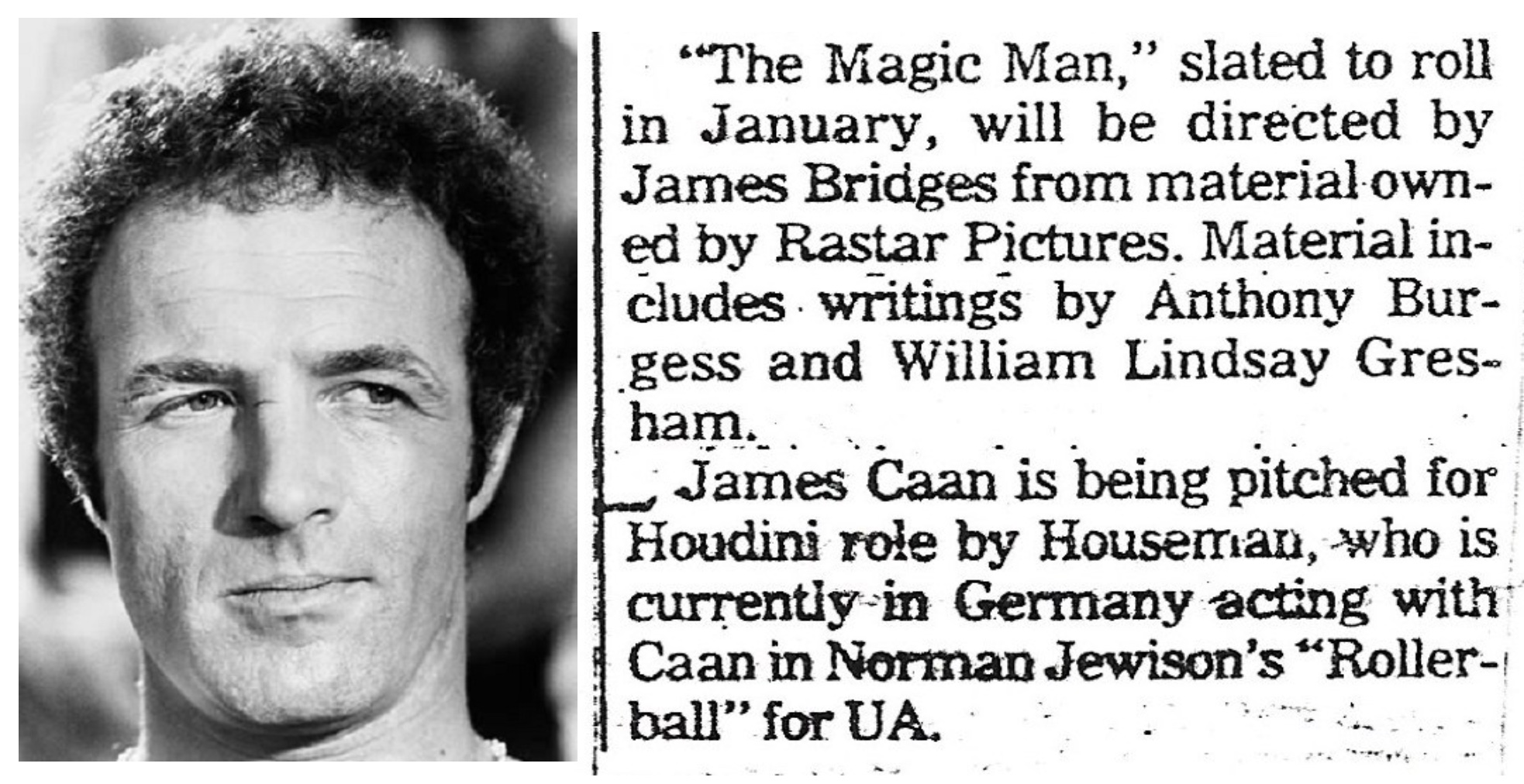
I'm sorry to learn today of the passing of actor James Caan. While Caan is well-known for a myriad of famous film roles, I always think of him as one of the actors touted as a possible Houdini. In 1974 Caan was favored by producer Ray Stark for what was then called, The Magic Man: The Story of Houdini.

Variety, Sept. 18, 1974

At this time Caan was on everyone's short-list of leading men, so it's hard to know how seriously he considered the part. Ultimately, Caan never played Houdini and Stark never made his Houdini film. But it's always fun to think about what might have been!

Sunday, May 29, 2022

My choice for Houdini is still Tom Cruise

This Memorial Day weekend Top Gun Maverick roars into movie theaters and is already setting box office records. I loved the movie and think it deserves all its success and more. Tom Cruise still knows how to make a movie for everyone.

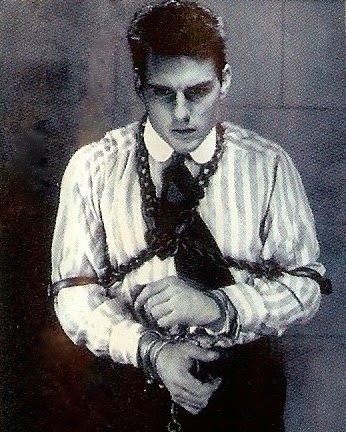
But all this just reminds me of how close we came to having a big budget Houdini movie starring Tom Cruise. Cruise was interesting in, and may have even been attached, to the Houdini project producer Ray Stark tried for many years to launch at Columbia.

The one Ray Stark commissioned script I've read was written by Stephen J. Rivele and Christopher Wilkinson. It's excellent and on every page you can envision Tom Cruise in the part. An early scene in which Houdini is filming the rapids action for his movie The Man From Beyond, doing his own stunts and demanding perfection from his crew, seems right out of the Tom Cruise playbook. So does Houdini's drive, his intensity, his fearlessness, and his sense of moral justice. 

I really feel like Tom Cruise and Houdini are cut from a similar cosmic cloth and that Cruise would embody Houdini better than any other actor. And Cruise's compact 5' 7" frame is a nice physical match. Yes, I know he's now older than Houdini ever became, but have you seen Maverick? Apparently not an issue

Recently Paramount announced they were developing a new Houdini movie. Of course, Paramount is also the home base for Tom Cruise's production company, Cruise/Wagner. While the Paramount movie is being developed by a different producer, maybe the two can get together? Although, personally, I'd love to see them just go back and shoot the Rivele and Wilkinson script.

Oh, wait, Houdini and Tom Cruise....both pilots! So how about a movie dramatizing Houdini's race to be the first man to fly in Australia?


Click the links below to read more about the Houdini movies that never were. And see Top Gun Maverick. Trust me.

Thursday, January 10, 2019

Mystifier, First Quarter 1996

Continuing my issue by issue look back at the Mystifier, the newsletter of the Houdini Historical Center that ran from 1991-2003.


The First Quarter 1996 Mystifier kicks off with the announcement of a special exhibit called Mind Over Magic set to open in Fall.

Mind Over Magic represents a fresh approach to Houdini in both its interpretive content and its exhibition techniques. Interpretively the exhibit will place Houdini's career in the broader context of the master magicians who preceded him. Whereas the Houdini! exhibit surveys Houdini life and career, Mind Over Magic will examine how Houdini came out of and transformed the classical magic tradition.

[Mind Over Magic would ultimately be shelved in favor of an exhibition devoted to The Master Mystery.]

The newsletter continues with an article by Dr. Morris N. Young about Houdini's "haunted" bust in the collection of the HHC. The museum's bust is a clay copy of the original acquired by Sidney Radner from Hardeen. Young notes the mysterious destruction of other Houdini busts and asks: "Will it share the same fate as others? Or is there a supernatural element that is now content with its current location?"

This newsletter also contains an article by myself chronicling the many attempts by producer Ray Stark to mount a Houdini biopic. At the time this on-again off-again project was on-again. I was excited to have something published in Mystifier, which I now see as a forerunner and inspiration for my blog. The article was later published in MAGIC Magazine. I posted an updated version HERE.

The museum shop reports that a new book, The Importance of Harry Houdini by Adam Woog, is now in stock. So too are a set of 12 new Houdini postcards. Among the New Members are the familiar names of Ian McColl and Joseph M. Notaro.

In his "Backstage" column, Sid Radner talks about his recent trip to Las Vegas where he saw both David Copperfield and Lance Burton. He was also able to visit the early Copperfield collection. Sid writes:

A real highlight of our trip was being guests of David Copperfield at his "wearhouse," which houses his magic collection, offices, living quarters, exercise rooms, rehearsal rooms, etc. David has what must be the most complete collection of magic memorabilia in the world. He has an especially fine Houdini collection which includes some great posters.

Sid then reveals a scoop ("only in the Mystifier do you get information like this!") that the Houdini Picture Corporation is back in business and collectors will be able to acquire stock certificates in their names. While Sid doesn't detail it here, the company was reincorporated by Geno Munari who was establishing his "Houdini Magic Shop" chain in Las Vegas at this time.

Sid concludes with the news that Ken Silverman's still untitled Houdini biography is due for an October release from Harper Collins.

Mystifier
Volume 6, Number 1
First Quarter, 1996
6 pages

Contents:
New Exhibit Opens Oct. 25
'Haunted' Statue Taunts Skeptics
New Book at Museum Shop
Hollywood Still Looking for Houdini
Backstage with Sid Radner


Related:

Thursday, November 8, 2018

Mystifier, Third Quarter 1995

Continuing my issue by issue look back at the Mystifier, the newsletter of the Houdini Historical Center that ran from 1991-2003.


The Third Quarter 1995 Mystifier begins with an article by curator Benjamin Filene about Houdini's first partner Jacob Hyman and his continued use of the "Houdini" name during his own solo career. The matter came to a head in February 1903, as covered in the Springfield Republican:

The paper reported that Hyman, performing as "Houdini" had, as usual, challenged members of the audience to bring him handcuffs from which he would break free. When a pair was produced and locked onto his wrists, however, he could not extricate himself –– and for good reason. The handcuffs had been submitted by Dr. Leopold Weiss, Harry Houdini's brother. Weiss and his lawyer had come from New York expressly to foil Hyman. The Republican reported that Leopold "is said to have threatened to follow [Hyman] and bring him unopenable handcuffs until he drops the name Houdini."

The newsletter continues with an article about Dorothy Young's appearance at the 57th Houdini Club of Wisconsin Convention, held that year in Appleton. It also includes a very nice photo of Houdini with Dorothy and his other females assistants in 1925 (one that I've not seen reproduced elsewhere).

Wisconsin researcher Larry Wilden returns with "sequel" to his terrific look at Houdini in Milwaukee from First Quarter '95 issue. This time Larry covers Houdini's appearances in the city in 1912 and 1923. But he also includes a terrific gem about Houdini's boyhood from a 1912 interview:

During his engagement, Houdini was the darling of the press, granting numerous interviews, and conducting tours of his boyhood haunts. He told reporters about stealing eggs with his brother Theo and cooking them over a makeshift fire on the roof of the Plankinton House hotel. He also recalled selling issues of the Milwaukee Sentinel featuring stories of the disastrous Newhall House fire in 1883.

A report on the production of a new Houdini documentary by Gene M. Gamache and Coyote Pictures follows. The crew came to Appleton to interview Dorothy Young. The Museum shop also announces a new "Free Houdini" puzzle created by the The Magic Box Company, and a Houdini Historical Center watch.

Sid opens his "Backstage" column reviewing the Houdini Club of Wisconsin Convention. He also shares an item from Variety about Ray Stark's big budget Houdini movie beginning production in Spring 1996. This news was submitted by yours truly, and Sid adds:

John, who has an insider's view of movie making, cautions that "all news of a Houdini movie must be taken with a grain of salt. I've been disappointed in the past." [And I was again.]

Sid then announces that the Official Houdini Seance will be held in Holyoke inside the very building that once housed a police station where Houdini broke out of manacles in 1895. (Sid always characterized this as Houdini's very first police challenge, but it was not.) He wraps up with the news that Ken Silverman is finishing up his biography with an eye towards a Fall 1996 release. "It will be the most definitive book ever written about Houdini, with lots of previously unknown information." True enough!

Mystifier
Volume 5, Number 3
Third Quarter, 1995
6 pages

Contents:
Other Houdini
Dorothy Young Unveils Houdini
Houdini's Return to Milwaukee
Houdini Documentary Filmed
Museum Shop
Backstage with Sid Radner


Related:

Saturday, March 17, 2018

Center Stage (Mystifier), First Quarter 1992

Continuing my look back at the Mystifier, the quarterly newsletter of the Houdini Historical Center that ran from 1991-2003.


The second issue of what would eventually become known as the Mystifier is devoted largely to Houdini's first scrapbook. The scrapbook was donated to the Houdini Historical Center by Sidney Radner under the condition that is undergo professional preservation (at a cost of between $5000-$10,000). The book is described as thus:

The scrapbook appears to be sub-divided into two sections. The front 116 pages are a collection of clippings chronicling performances between June 22, 1894 and April 24, 1900, telling the story of the Houdinis two runs with the Welsh Brothers Circus and other shows. The rear 31 pages are a hodgepodge of miscellaneous clippings in memorabilia some mold at a later date. This latter portion include such items as the April 10, 1894 letter from Jacob Hyman to Houdini dissolving their partnership, an 1890 letter from the U.S. Amateur Athletic Union reinstating Ehrich Weiss' victory in a race, and a photograph portion of Houdini's plane packed in a crate.

Some clippings from the scrapbook are reproduced along with a transcription of the "Risey in the Box" article from the Coney Island Clipper, June 22, 1894, the day Harry and Bess were married. This is oldest news-clipping from the scrapbook.

In "Queries", Christopher Miller is still seeking info on Houdini's Milk Cans; Diane Kromm of Milwaukee seeks information on Houdini's posters; and Moira Thomas of Appleton seeks "references, stories, anecdotes, legends, etc., about Houdini's life on the vaudeville circuit."

In his "Backstage with Sid Radner" column, Sid tells a story about Houdini and Arthur Lloyd, "The Human Card Index", related to him by Walter B. Gibson. He recommends Patrick Culliton's article about Jack Hayman in the October issues of Genii. He notes that Pulitzer Prize winning biographer Ken Silverman recently visited the HHC "researching a book on Houdini." He concludes with this:

My wife Helen and I recently attended a workshop which presented the beginning of a Houdini musical–hopefully for Broadway. Finally, I have also seen stories in the press about a new Houdini movie. HOUDINI LIVES!

The play Sid is talking about is likely the musical that ultimately appeared at the Goodspeed Opera House in 1997 (it didn't make it to Broadway). The movie was almost certainly the on-again off-again Ray Stark project, which was in the news at this time as on-again.

The newsletter concludes with the news that the 1992 Magic Collectors Association convention will be held in Appleton May 7-9, the first time the convention was to be held outside Chicago, and that a special expanded Houdini exhibit would be created especially for the weekend.

Center Stage
Volume 2, Number 1
First Quarter, 1992
6 pages

Contents:
Scrapbook Presented to Center
Clipping from the Scrapbook
Queries
Membership Form
Backstage with Sid Radner
Magic Collectors Coming to Appleton


Related:

    Saturday, February 11, 2017

    Ken Ralston remembers the unmade Houdini movie

    In an interview with Cartoon Brew, Academy Award winning visual effects supervisor Ken Ralston remembers his involvement with an unmade Houdini movie that was to be directed by Robert Zemeckis.

    Having worked on these big films, were there any other productions you were involved with that perhaps didn’t get made, that you wish had been?

    Ken Ralston: Actually there’s several. I can name three right now. Two of them were for Zemeckis that I was really excited about. One was, he was thinking of a very interesting way of telling the story of Houdini, and also he was playing with the idea of a story about Tesla. And I just thought that would be so cool. Especially in Bob’s hands. But who knows why things happen or don’t happen.

    All I remember is, I was kind of in the Houdini mode and thinking about how I might design some shots, and I got a call from Bob and he said, ‘So a woman falls down a flight of stairs and she gets her head twisted around a hundred and eighty degrees. How would you do that?’ And I was just kind of like, I didn’t say anything, and then I just said, ‘So we’re not doing Houdini, huh?’ He goes, ‘No, we’re going to do Death Becomes Her.’

    Ralston was recently presented with the Lifetime Achievement Award at the 15th Annual VES Awards.

    For more on the unmade Houdini movie, check ot my post from 2014: Ray Stark's 35 year Houdini conundrum.

    Thanks to Neil Bulk for this one.

    Related:

    Wednesday, January 6, 2016

    Elizabeth Swados passes away at 64

    Broadway World reports that Elizabeth Swados, composer of the Broadway hit Runaways and five-time Tony nominee, has died at age 64.

    Swados worked with producer Ray Stark on an unproduced Houdini theatrical musical in the 1970s. In 2009, she published a book of poetry that explored the life of Houdini and the idea of escapism titled The One and Only Human Galaxy.

    You can read more about the life and work of Elizabeth Swados in this 2005 profile.

    Related:

    Friday, December 19, 2014

    A scene from Ray Stark's 'Houdini'

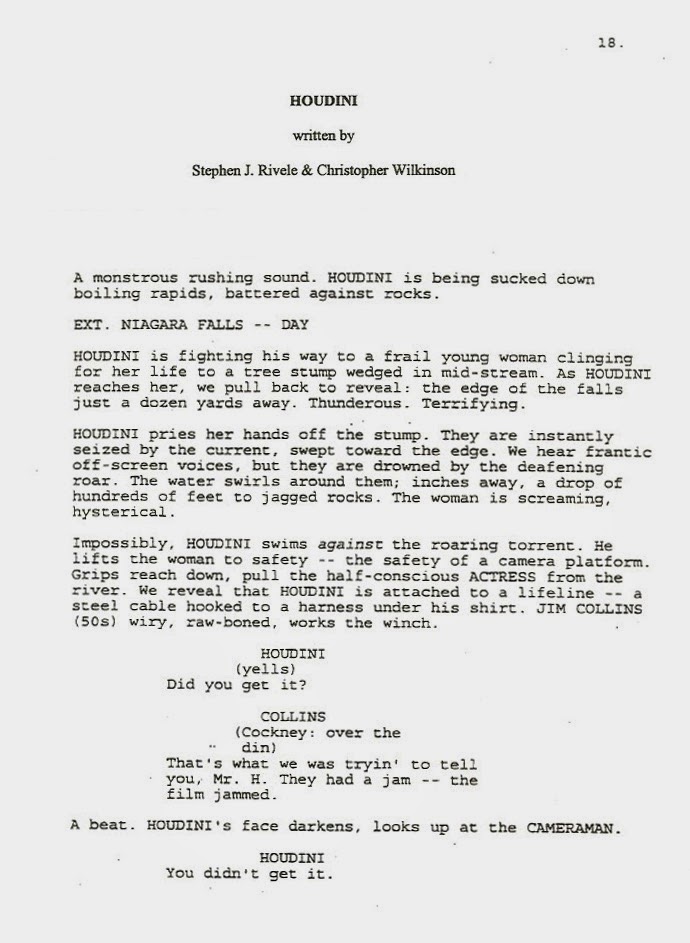
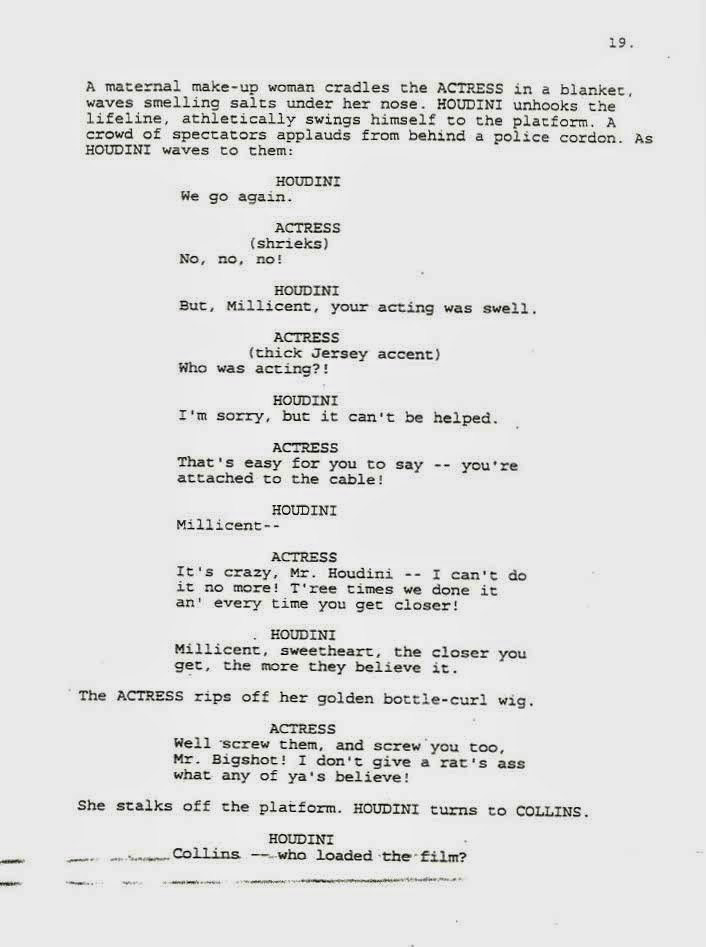
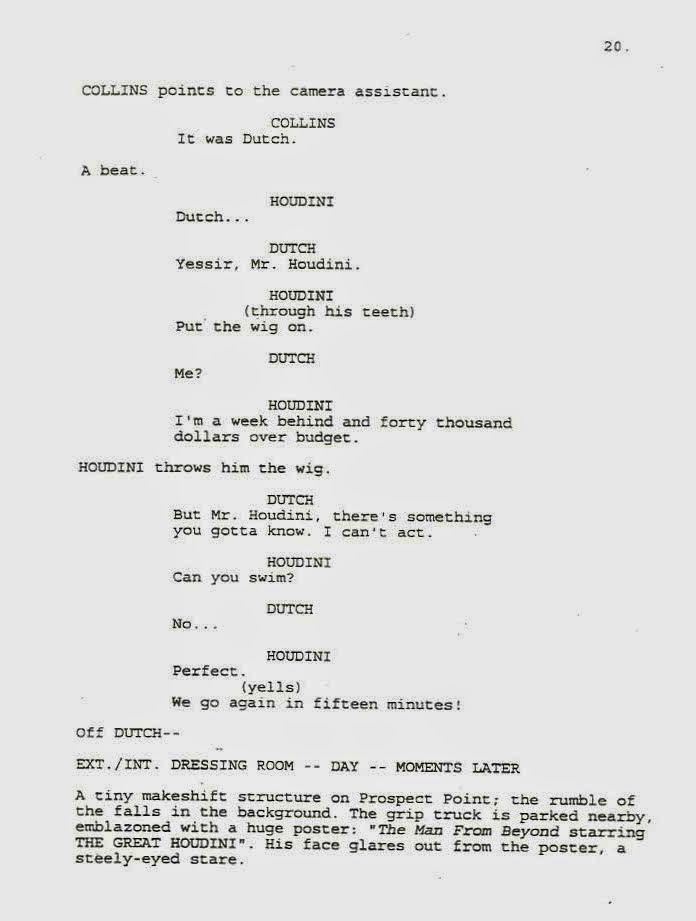
    Until the Houdini miniseries aired earlier this year, no Houdini biopic had ever acknowledged his movie career. But that would have been different had the big-budget Ray Stark Houdini movie been made in 1998 as planned. That film, which may have starred Tom Cruise, featured a scene set at Niagara Falls during the making of Houdini's The Man From Beyond. Here is that scene from the original screenplay by Stephen J. Rivele and Christopher Wilkinson.


    In real life, Houdini's leading lady was Jane Connelly, who gamely did all the Niagara stunts required of her. It is true that Houdini employed a safety line during shooting. Dummies were also used in some shots, and even sent over the falls in a canoe.

    You can read more details about Houdini's Niagara Falls shoot and Ray Stark's unmade Houdini movie via the links below.

    Related:

    Wednesday, December 17, 2014

    Ray Stark's 35 year Houdini conundrum

    No Hollywood producer tried harder or longer to make a movie about Houdini than Ray Stark. For more than three decades, Stark struggled to bring Houdini back to life on the big screen. Because he never succeeded, Stark's efforts and various approaches have gone largely unrecorded. So I thought it would be interesting to share details of the Ray Stark-Houdini saga in this update of an article I first penned for the Houdini Historical Center's newsletter "Mystifier" back in 1996.


    Ray Stark scored his first great success as a producer with the Broadway musical, Funny Girl, the story of Vaudevillian Fanny Brice (who happened to be Stark's mother-in-law). The 1964 musical jettisoned a then unknown Barbra Streisand to stardom. Stark would go on to produce a film version of Funny Girl (and a sequel, Funny Lady) and dozens of other acclaimed films, such as: The Way We Were, The Goodbye Girl, The Sunshine Boys, Robin and Marian, Smokey and the Bandit, Murder By Death, Annie, and Steel Magnolias. But one of the projects Ray Stark most wanted to make was a movie about Houdini.

    Stark's first foray into the world of Houdini was in 1969 when he announced he would follow-up Funny Girl with a Broadway musical based on the life of Houdini called Hocus Pocus. Stark purchased the rights to William Lindsey Gresham's biography, Houdini: The Man Who Walked Through Walls, and commissioned Byron Cufnah to write a treatment and Bob Merrill to write the songs. Sam Denoff and Bill Persky would write the finished book. Stark called the production an "extravaganza" because of the size of the cast and complexity of the effects. It would even include a full size vanishing elephant. Then, as it was to do again and again, Ray Stark's Houdini project escaped the production charts. Hocus Pocus simply disappeared.

    The '70s Houdini: James Caan.
    Five years later, Stark was back. Buoyed by his recent film successes, Stark decided to abandon the Houdini stage musical idea and instead turn the magician's life into a major motion picture. Stark teamed with producer John Houseman, who hired writer-director James Bridges (The Paper Chase) to develop The Magic Man: The Story of Houdini. Anthony Burgess, who once developed a Houdini musical with Orson Welles, was hired to pen the screenplay. James Caan, fresh off his success in The Godfather, was touted as the lead. On the strength of the talent involved, Columbia Pictures agreed to distribute the film.

    Stark's reappearance was not without its careful timing. Only a week before, Paramount Pictures had announced a plan to make their own Houdini movie. Called simply Houdini, the film was to be based on the Harold Kellock biography Houdini, His Life Story, as had been their 1953 star vehicle for Tony Curtis. This time the Paramount film would be produced by William McCutcheon and RSO Films; shooting was set for early 1975. On Sept. 18, 1974, the showbiz trade paper Variety announced the rival projects with the headline, "Col Joins Par in Houdini Pic Race." Both pictures promised to be in production within the year.

    A year came and went, and Paramount's Houdini never materialized. Meanwhile, Stark was having his own troubles. The producer was unsatisfied with the Burgess-Bridges drafts of The Magic Man, so he turned to screenwriter Carol Sobieski. However, Stark found her efforts too similar to the other scripts, all of which told Houdini's story in linear terms. Looking to break out of this form, Stark hired William Goodhart, a Broadway playwright and screenwriter with an interest in theology and the occult. Goodhart delivered what was said to be the most unusual of all the Houdini scripts, The Death/Birth of Houdini. But the studio feared the new script was too similar to Bob Fosse's semi-autobiographical All That Jazz, then in development across town at 20th Century Fox. Stark also found Goodhart's script unsatisfying.

    Stark then decided to take a bold new approach. He would abandon the biopic concept entirely and create a fictional Houdini adventure. To do so, Stark hired William Hjortsberg who turned in two film treatments. One was a metaphysical time travel fantasy; the other a murder mystery similar to the Sherlock Holmes vehicle, The Seven Per-Cent Solution. Neither of the Hjortsberg treatments were turned into full scripts. (In 1994 Hjortsberg published the book, Nevermore, in which Houdini and Sir Arthur Conan Doyle track a serial killer in New York.) Stark then returned to his original idea of doing a Houdini stage musical. He supplied test funds to New York-based director and choreographer Elizabeth Swados, but the results were discouraging.

    Why was it not working? How could so many talented writers fail to break Houdini free of what Hollywood calls "development hell"? In a private memo, Stark confessed his fear that magic and escape artistry may not register alongside modern special effects. Journalist Jeffrey Wells -- hired by Stark to author a critical overview of the Houdini project -- suggested that maybe Houdini's life "simply doesn't add up to strong drama, or that his character is too prudish and Victorian to find favor among today's audiences."

    But in a letter to the LA Times, James "the Amazing" Randi argued that finding an exciting plot in the life of Harry Houdini was "about as demanding as discovering a sports theme in the Babe Ruth story." He argued that Stark "would do well to represent the true story of Harry Houdini, a story that needs no Hollywood fabrications."

    Stark and his efforts to make his Houdini movie went dormant for much of the 1980s. One writer-director Stark did meet with was Nicholas Meyer, who had scored great success with Star Trek II: The Wrath of Kahn. But Meyer told the producer he would only do his Houdini project if Stark optioned his father's book, Houdini: A Mind in Chains. Stark was not interested in the quid pro quo deal and nothing ever came of their meetings. (Meyer would eventually make that deal with producer Gerald Abrams and write the Houdini miniseries in 2014.)

    The '90s Houdini: Tom Cruise.
    In the early 1990s, Ray Stark and his Houdini project made a dramatic reappearance when director Robert Zemeckis signed aboard what was now called The Great Houdini. Screenwriters Peter Seamen & Jeffrey Price would pen a new script that would tell Houdini's story as "a magical special effects-laden adventure." Tom Cruise was the favorite for the lead. The film's huge budget was to be split by Columbia Pictures and Universal -- Columbia getting the U.S. distribution, and Universal the foreign. The project at long last appeared on production charts as a "go" picture. It finally looked like Houdini was free.

    But on September 23, 1992, a headline in Variety spelled out Stark's worst nightmare: "Houdini Eludes Zemeckis." Even though the director called the Seamen and Price script "the most interesting, dynamic, and most filmic of all the versions," he admitted he wasn't "100 percent certain what direction the project needs to take." Stark himself was less diplomatic: "We are not satisfied with the script that was developed, but I assume we will be working on a new draft very shortly with Zemeckis." His assumption was wrong. Zemeckis went on to direct Forrest Gump and win the Academy Award, while The Great Houdini went back to "development hell."

    Variety: September 23, 1992.

    Hoping to persuade Zemeckis to return, Columbia chairman Mark Canton made reviving the Houdini project a top priority. Sean Connery had just agreed to star as Robert-Houdin in the action/adventure-oriented Smoke & Mirrors, and HBO had purchased the new Ruth Brandon biography The Life and Many Deaths of Harry Houdini for possible adaptation. With rival projects looming, Stark's production company Rastar worked overtime to create a new Houdini screenplay. Eager screenwriters churned out Houdini "spec" scripts (scripts written without a contract in an attempt to make an outright sale) -- but none sufficiently captured the essence of the great magician for Stark. (Even I took a general meeting with Stark's company in my early screenwriting days. I recall a copy of the Silverman biography on their coffee table). Finally, screenwriter Anna Hamilton Phelan (Gorillas in the Mist) was commissioned to take a crack at the story.

    After meeting with renowned San Francisco medium Carter Austremuhl, Phelan came back with an approach to tell Houdini's story as a battle with the mystical -- how his obsession with death and the unknown traced back to his strict rabbinical father, "who forbade discussion of all things magical." In August, Michael Fleming reported in his Variety "Dish" column that Phelan had "pulled a rabbit out of her hat and turned in a script that Stark and the studio execs love" and that a spring 1996 start was anticipated. But the truth was Phelan hadn't even turned in a draft. The article was just a clever bit of misdirection by Stark to scare away the competition and buy time for a fresh approach.

    The writers who would eventually deliver that fresh approach, and a finished script, were Stephen J. Rivele and Christopher Wilkinson. The veteran scribes, who had tackled Nixon for Oliver Stone in 1995, focused their story on Houdini's famous confrontation with the medium Mina "Margery" Crandon. The thrilleresque script blended fact with fiction and offered some dramatic recreations of not only the Margery sittings, but also the Water Torture Cell, Buried Alive, and the Russia Transport Prison Van escape. The movie opened with a dramatic depiction of Houdini's famous sea monster challenge (below).

    First pages of the Rivele and Wilkinson's Houdini screenplay.

    The Rivele and Wilkinson script captured the attention of director Paul Verhoeven who signed aboard the project in September 1997 after two months of negotiations. "I'm not a fan of Houdini, but not an anti-fan, either," said the director. While it had been reported the studio would "go right to Tom Cruise to play the master magician," now it was said that studio was in discussions with "two or three major stars." An optimistic Columbia Pictures announced their intentions to begin production in early 1998 for a Christmas release that same year.

    However, a year after Verhoeven joined the project, he suddenly departed, explaining to trades, "Houdini's spiritual life was all about his mother when she was alive and when she was dead, and I just couldn't solve that and make it a movie."

    Undeterred, Columbia announced that Ang Lee was now at the top of their list to replace Verhoeven on the "high-profile biopic." However, a deal with Lee was never made. Meetings with screenwriter David Webb Peoples also proved unfruitful. But Stark was not giving up. In 2004, he was still talking about his Houdini movie and claimed that he still had Tom Cruise attached as the lead.

    On January 17, 2004, Ray Stark passed away in his home in West Hollywood of heart failure. He was 89. With Stark went his dream of making a big budget Houdini movie.

    Sources:
    • "Col Joins Par in Houdini Pic Race," Daily Variety, September 18, 1974.
    • Fleming, Michael. "'Houdini' makes escape," Daily Variety, August 24, 1995.
    • Fleming, Michael. "Verhoeven eyes 'Houdini'," Daily Variety, July 10, 1997.
    • "Houdini needs helmer," Daily Variety, June 2, 1998.
    • Marx, Andy. "Houdini Eludes Zemeckis," Daily Variety, September 23, 1992.
    • Petrikin, Chris. "Col may tie Lee to 'Houdini'," Daily Variety, July 15, 1998.
    • Randi, James. "The Magic Man" (Letter to the Editor) Los Angeles Times, October 1992.
    • Ray Stark Plans Broadway Musical On Harry Houdini," Hollywood Reporter, August 4, 1969.
    • Voland, John. "Verhoeven will helm 'Houdini,' Daily Variety, September 30, 1997.
    • Wells, Jeffrey. "Houdini, the Movie: Many Have Escaped Already," Los Angeles Times, October 11, 1992.
    • Tom Cruise mockup photo from Movieline May 1998.

    Monday, December 15, 2014

    Nicholas Meyer's mind in chains

    This interview with Houdini miniseries screenwriter Nicholas Meyer appeared on Collider back in October. The website was one of several invited to a special Houdini Seance press event with the screenwriter at The Magic Castle. It gives insight into why Meyer took the job (which had everything to do with his father's book, Houdini: A Mind in Chains), and also why he never became involved in any of the Ray Stark Houdini projects. Below is an excerpt:

    COLLIDER: With this project you were adapting your father’s biography on Houdini. So, I have to ask, how was that experience?

    MEYER: First of all it was a thrill, also somewhat daunting to adapt, or at least translate in some way, my dad’s book. The saddest part of this for everyone in his family is that he died in 1988, and the book – for which he had high hopes – was not a commercial success. And I think it’s a very good book and a penetrating study. The whole subject of biography has changed in the twentieth century. Up til then, Herodotus or Plutarch something could make a laundry list of what someone did. But post-Freud we want to know why he or she did it. So that opens up a whole new avenue of inquiry, and as my dad’s book said there are many book that will tell you about Harry Houdini, there are many books that will tell you what he did, and some will tell you how he did it, but I think that my dad’s book was the only one that got interested in the subject of why.

    COLLIDER: So did they approach you with your dad’s book to get you interested in doing this project? 
    MEYER: No my partner and close friend Gerry Abrams, who produced this movie, sold this to the history channel and when they asked who should write it, he said my name not knowing. When we spoke I said “This is a real coincidence because my dad wrote a book about the life of Houdini, you option the book and I’ll do the movie.” They’ve been trying to make a Houdini movie for years. Ray Stark tried for years to get one made and I used to have these conversations with him. I’d say “Option my dad’s book, and we’ll be in business.” For whatever the fifteen hundred bucks or whatever, but he couldn’t be bothered.

    COLLIDER: Did you start on this when it was possibly a movie? 
    MEYER: I only came to grips with it when they said a two night event. And in my mind and in the script it was called “Becoming Houdini” and “Being Houdini” but they didn’t use the two titles. Though the division is the same.

    COLLIDER: In adapting your father’s material, did you feel closer to him? How much did you re-read the book? 
    MEYER: I certainly re-read the book, I hadn’t read it in years. It was a bittersweet experience knowing that this was happening and he wasn’t there to see it. I’ve had a lot of conversations about it with my mother and my sisters. It’s strange, to be honest.

    While this is the best Meyer interview I've read, it still doesn't answer the question of how The Secert Life of Houdini by William Kalush and Larry Slomon factored into his creation of his screenplay. The Houdini miniseries is clearly adapted from that book, much more so than Houdini A Mind in Chains. Still a mystery.

    Sunday, December 14, 2014

    Coming soon

    It's "The Saga of Ray Stark and Houdini" co-starring Tom Cruise, James Caan, Robert Zemeckis, Paul Verhoeven, and a cast of thousands (of writers). Learn all about the big-budget Houdini movie that wasn't.


    Friday, June 28, 2013

    When Houdini escaped the belly of the beast


    In the late 1990s Columbia Pictures planned to make a big-budget Houdini movie starring Tom Cruise. The film was to be directed by Paul Verhoeven (later Ang Lee) from a screenplay by Stephen Rivele and Christoper Wilkinson. Had that movie ever been made, it would have started like this:

    Cape Cod, Halloween 1924: We are at a masked ball at a Cape Cod mansion. A young couple steals away from the party and walks down to the beach, holding hands. At the breakwater's edge, they kiss -- oblivious to the fact that something large and bulbous is racing towards them, its dorsal fin slicing through the surf...

    Suddenly, a large wave heaves the creature onto the beach. It spills out onto the sand beside the startled couple where it lays unmoving in the moonlight. The frightened woman asks, "What is it?" As they step closer, the creature suddenly rolls over, its jaws opening with a death rattle. The woman's scream brings us...

    Hippodrome Theater, Boston: The beached creature -- a narwhale -- is now center stage, flanked by men with axes. Its belly is convulsing, as if it's about to give birth. The audience watches, mesmerized, as the beast suddenly breaks open with a sucking ripping sound and THE GREAT HOUDINI emerges from within, covered in viscera and holding chains. "Liberated, commanding, radiating primal power. Like a figure from mythology. Like a god."

    Not a bad way to start a Houdini movie. What makes it even better is this is all based on fact. Houdini did indeed escape from the belly of a beached sea creature at Boston's B.F. Keith's Theater on September 26, 1911. It remains one of Houdini's most famous and bizarre challenges.

    The "freak sea monster" was news in New England even before Houdini became involved. The carcass had either washed up on shore or was caught by local fisherman, depending on the newspaper account. The press claimed it weighed 1500 pounds and was "estimated to be about 500 years old." Papers struggled to describe it. One called it a "turtle-tortoise-fish or whatever it is." Soon the press simply dubbed it the "What is it?"

    What exactly the "What is it?' was is still a mystery today. Houdini called it a "mongrel breed of whale and octopus." Ken Silverman in Houdini!!! The Career of Ehrich Weiss suggests that it could have been an elephant seal. For the purposes of their screenplay, Rivele and Wilkienson decided it was a narwhale. But Patrick Culliton in Houdini The Key says it was actually a giant leatherback turtle. From the existing photo, it does appear to resemble a turtle more than a whale or octopus.


    Houdini was playing the B.F. Keith's Theater in Boston when the "What is it?" was discovered, and soon it was announced that ten prominent Boston businessmen (one of them a taxidermist) had devised a challenge in which Houdini would be shackled in "extra strong handcuffs and leg-irons from police headquarters" and sewn up inside the belly of the beast. References to Houdini as Jonah were not discouraged.

    The drama of the challenge was teased out for days. Newspapers reported that "[Houdini] concedes that it will be the most difficult test he has ever attempted." One paper noted that "Houdini has received a telegram from his family in New York telling him not to enter the monster." Houdini's only condition was that he be provided ventilation inside the creature. In turn, he signed a waiver releasing the ten challangers of any responsibility.

    On the day of the challenge, "several thousand people" lined the streets of Boston to watch as the "What is it?" was carried through the streets. The journey took it from Long Wharf to the Keith's stage entrance on Mason street. Originally the challenge was to have taken place during the evening performance, but was changed to the matinee because "of certain conditions which have presented themselves." (Perhaps the carcass was not going to keep until evening in a warm theater?)

    Massachusetts Lieutenant-Governor Louis Frothingham was watching from the wings as Houdini took the stage at Keith's where the sea monster and his ten challengers awaited. The auditorium was said to be "choked to the doors." It's not recorded what Houdini was wearing, but one would think a bathing suit would have been his uniform for this challenge. Houdini was shackled hand and foot and then climbed with "much difficulty" into the creature, sprinkling perfume where his head would lay. The carcass was then laced up tightly with chains run through steel eyelets three inches apart. It was then wrapped entirely with chains and concealed inside a curtain cabinet.

    After 15 minutes, Houdini stepped forward, "greasy but grinning." The sea monster was then revealed to be still laced and chained exactly has it had been. Houdini is reported to have asked for a window to be opened so he could take some fresh air. What the audience didn't know was that Houdini had almost been suffocated by fumes from the arsenic used to embalm the carcass. What Houdini and press had exploited as a dangerous escape turned out to be just as dangerous as they promised.

    That evening the Lieutenant Governor invited the Houdinis to his home. The next day the papers delighted in pointing out that Houdini had bested Jonah himself -- "[Houdini] took only 15 minutes to gain freedom while it took the old sailor of the Bible three days to get free."

    Years later Houdini claimed in an article for Colliers that he had actually escaped from the sea monster underwater. In this version, said to have taken place before the Keith's test, Houdini said that in his struggle to get free he overturned the creature and the full weight of the carcass pinned him. Quick thinking on the part of his assistants, who started raising the carcass, took the weight off, allowing Houdini to escape. It's a great story. But like Houdini's under the ice adventure, it's doubtful it really happened.

    In 2010 Patrick Culliton published in Houdini The Key the method he believed Houdini used to escape from the Sea Monster at Keith's that day. It's ingenious (even obvious), but I don't reveal Houdini's secrets here.

    However, I am happy to reveal Hollywood's secrets. So here are the opening two pages from the never-made Houdini movie by Rivele and Wilkinson. A little overwrought and overwritten in my opinion, but I suspect Houdini (and Mr. Cruise) would be fine with that.

    Click to enlarge

    Here are some other articles online about Houdini and his Sea Monster:

    Tuesday, August 23, 2011

    The men who almost played Houdini

    The list of the men who have played Houdini on screen is impressive: Tony Curtis, Paul Michael Glaser, Harvey Keitel, Guy Pearce... But even more impressive is the list of actors who at one time or another have been considered for the role of the master magician, but ultimately never saw the inside of the straitjacket. Here is a list of actors who almost played Houdini.
    Paul Muni
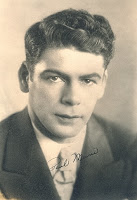
    Paul Muni - Best known for the Howard Hughes hit Scarface, Paul Muni was considered for the lead in the 1932 RKO biopic, Now You See It, based on a story treatment by Houdini's friend and ghost-busting colleague, Fulton Oursler. Because the studio had acquired no life-rights, the script would call the main character Harry Pinetti, but it was clearly the story of Houdini, and even included a sequence in which Pinetti/Houdini gets trapped under the ice during a bridge jump (later used in Paramount's 1953 HOUDINI). Now You See It went through several drafts, including one that suggested "a musical treatment" before being shelved indefinitely in 1936.

    UPDATE: Actor Adolphe Menjou was signed to play Pinetti/Houdini when the movie came close to production in late 1932.
    John Calvert
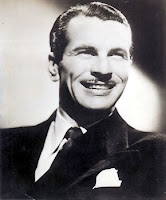
    John Calvert - Magician and actor John Calvert knew Bess Houdini and Edward Saint when they lived in Hollywood in the 1930s. When Bess saw Calvert's show, she is reported to have said, "Calvert plays the part of a magician better than any actor I have ever seen, except for Harry, of course." Bess would send a letter to Calvert, who had a seven year contract with Columbia, saying, "In my opinion, you are the only actor capable of portraying the life of my late husband, Harry Houdini. Are you interested?"

    Calvert was interested. Unfortunately, the head of Columbia, Harry Cohn, was not, complaining that Houdini's story was "lacking in romance and needed a better ending than a punch in the solar plexus."
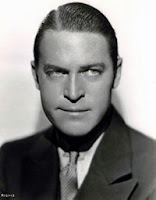
    Chester Morris
    Chester Morris - After years of effort, Bess Houdini and Edward Saint finally set-up a Houdini biopic at Paramount in 1936. The film would be based on Houdini His Life Story by Harold Kellock. Bessie is said to have insisted on a stipulation in the contract that no secrets would be revealed in the film. But who would star as Houdini?

    Not long after the sale, Arnold Furstenberg in The Linking Ring announced an "Exclusive Scoop" that Chester Morris was being considered for the lead role in The Great Houdini (later called Houdini The Great). Apart from being an actor, Morris was an amateur magician and a member of the IBM. "He is by far the most logical man for the role," said Furstenberg.

    Houdini The Great would languish in development for many years with drafts written by Frank O' Conner and Pierre Collins. Despite Chester's lobbying for the role ("He spent time and money" reported George Boston in Genii), the studio never gave the project the green light.

    Cary Grant
    Cary Grant, Joseph Cotton, Garry Moore - In 1944 producer David O. Selznick (Gone With The Wind) pitched the idea of a Houdini biopic to Alfred Hitchcock "with either Cary Grant or Joe Cotton" in the lead role. Said Selznick, "I think [it] can be an outstanding and enormously popular picture with very great opportunity for treatment by you."

    Hitchcock turned down Houdini, and Selznick eventually cast radio personality and future television star Garry Moore as his Handcuff King. But like so many other proposed Houdini biopics, Selznick's Houdini failed to materialize.

    Lee Cobb
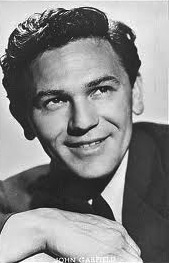
    John Garfield or Lee Cobb - In 1950, a former drug store operator, Joseph Raboff, and a real estate man, Earl Cohen, acquired the film, radio, and TV rights to Kellock's Houdini His Life Story. Teaming with a former Paramount executive, Endre Bohem, the indie producers announced production of The Life Story of Harry Houdini with "either John Garfield or Lee Cobb" in the lead role. There was also talk of a half-hour TV series following the film's release.

    It's unclear what happened to Film Producers, Inc. ambitious project, but it's likely Raboff and Cohen found they had bitten off more than they could chew and used Endre Bohem's connections to sell their valuable Houdini life rights to Paramount.
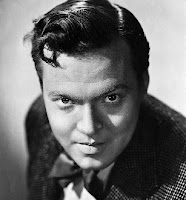
    Orson Welles
    Orson Welles - When Paramount announced renewed plans to make a Houdini biopic in 1951, names such as Edward G. Robinson and Glenn Ford were mentioned. But influential gossip columnist Hedda Hopper lobbied in print for Orson Welles to play the lead.

    Did the studio ever seriously consider Welles? This isn't known, but I agree with Hopper that Welles would have been an inspired choice, and it's somewhat amazing the actor, who was a magician and had seen Houdini in his youth, never played Houdini on stage or screen. However, Paramount did pretty well when they ultimately cast Tony Curtis in the part.

    Welles would later collaborate with Another Burgess on a Houdini stage musical, but it's not clear if he had plans to star in the show himself.
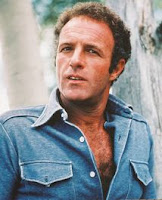
    James Caan
    James Caan - In 1974 producer Ray Stark, fresh off his success with Funny Girl (a musical biopic of Vaudeville star Fanny Brice), announced plans to make The Magic Man: The Story of Houdini based on William Lindsay Gresham's, Houdini: the Man Who Walked Through Walls. Stark teamed with producer John Houseman (who would also appear in the film a Sir Arthur Conan Doyle) and hired James Bridges to write and direct. Variety announced that James Caan, who had rocketed to fame in The Godfather, was the top choice to play Houdini.

    On the strength of the talent involved, Columbia Pictures agreed to distribute the film, which promised to be in production within a year (it was in a race with yet another Paramount Houdini project). Unfortunately, Stark's Houdini movie would never emerge from development hell.
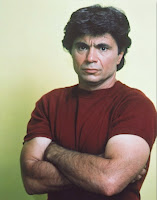
    Robert Blake
    Robert Blake or Charles Bronson - In 1976 NBC developed a Houdini TV movie that would air on the 50th Anniversary of Houdini's death on Halloween. The project was called, The Heart Is Quicker Than The Eye, and would be produced by Playboy productions from a script by Jean Holloway. The network was actually in a race with rival ABC, who had similar plans to air their own Houdini TV movie written by Melville Shavelson.

    Patrick Culliton, who worked as a technical advisor on the project, says two names producer Bill McCutchen mentioned to him to play Houdini were Robert Blake and Charles Bronson. Bronson was a big movie star at the time so that was probably wishful thinking, but Robert Blake was a real possibility and pretty good choice. Blake was the star of the hit TV show Baretta at the time.

    The Heart Is Quicker The Eye never made it beyond the script stage and NBC lost it's race with ABC, which aired The Great Houdinis in October of 1976 with another TV star in the lead, Paul Michael Glaser.
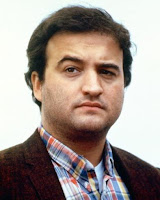
    John Belushi
    John Belushi - In 1980 it was reported that comedy star John Belushi was the favorite to play Houdini in the big screen adaptation of E.L. Doctorow's bestselling novel, Ragtime. It's not known how close Belushi came to getting the part in the Milos Forman directed film (he was starting to branch out into dramatic roles at that point), but Belushi did bare a resemblance to Houdini and his intensity could have been interesting. However, Houdini's role in the movie would be greatly reduced from what it was in the novel, and when the film was released in 1981, Houdini was played by Jeffrey DeMunn in just a few cameo appearances.
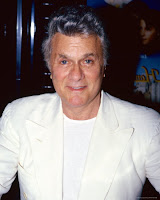
    Tony Curtis in the '80s
    Tony Curtis - No, this isn't a mistake. While Tony Curtis did play Houdini in the 1953 classic HOUDINI, he almost played Houdini for a second time in a sequel of sorts called, Harry's Back! Written by David Simon & Michael Norrell for CBS, Harry's Back! was a comedy that had Houdini suddenly appearing in present day New York, where skeptics must decide if it's the real Houdini come back from the grave or just some nut.

    The project was announced for production in Fall of 1988 with Curtis reprising his famous role. Unfortunately, Harry never came Back.

    Don Ferguson - In 1986 it was announced in The Linking Ring that a new "Magical Music Show" called HOUDINI LIVES AGAIN! was headed to Broadway. With a book by Walter B. Gibson and music by Scott Joplin, the ambitious $2,500,00 musical would feature a cast of twelve "portraying forty-seven different roles" and star "magician-escape artist illusionist, Don Ferguson, in the title role as Houdini." Houdini Lives Again! never saw life, and Don Ferguson would later cause controversy when he claimed to be a blood relative of Houdini.

    Tom Cruise
    Tom Cruise - In 1992 Ray Stark and his Houdini project made a dramatic reappearance when mega-director Robert Zemeckis signed aboard what was now called The Great Houdini. The new movie promised to tell Houdini's story as "a magical special effects-laden adventure" and would be a Colombia/Universal co-production. Tom Cruise was the favorite for the lead.

    But Zemeckis would suddenly leave the project in September of '92, saying he wasn't "100 percent certain what direction the project needs to take". Director Paul Verhoeven signed aboard in 1997, but dropped out a year later, also citing difficulties with the script. Stark would continue to try and get his Houdini/Tom Cruise movie made until his death in 2004.

    Hugh Jackman
    Hugh Jackman - In 2008 development of a major Houdini Broadway musical was announced. The show would be produced by Scott Sanders and David Rockwell with music by Danny Elfman and a book by Aaron Sorkin. In 2009 Hugh Jackman confirmed plans to star in the play. He described his fascination with Houdini, saying, "He was a showman basically. He was probably the first rock star. A master manipulator of the media and a showman through and through."

    Periodically news about the Houdini Broadway musical surfaces, but as of yet, there is no firm date for when we might see Jackman's Harry. (UPDATE: Jackman dropped out of the project in 2014.)

    Jeremy Piven
    Jeremy Piven - In 2009 Entourage star Jeremy Piven said in an interview that he would like to play Houdini. "He was a fascinating guy," said Piven. "He was one of the first hard working artists and magicians. He was one of the first real icons, ever. And he died tragically and he just blew people away all over the world. There is a tremendous story there and I'd love to do that one day."

    With all the recently announced Houdini movie and TV projects in development (no less than five are currently making their way through the Hollywood machinery), maybe Piven will get his wish?

    Thanks to Bill Goodwin of The Magic Castle's William Larsen, Sr. Memorial Library for helping me nail down the date of 'Harry's Back'. And thanks as always to Patrick Culliton for the information on 'The Heart Is Quicker Than The Eye'.
    Friday, April 15, 2011

    Tom Cruise was set to play Houdini in 2004

    In a new interview on Who's Hoo at the Magic Castle, actor and magician Steve Valentine tells an interesting story about the time he was invited to producer Ray Stark's home for a dinner party. After the party, Stark showed him a script for his new movie: HOUDINI.

    Of course, I've written about Stark's 30+ year struggle to produce a movie about the great magician in MAGIC magazine (October 2006), but what Steve adds to the story was something Stark said to him directly:

    "We've got Tom Cruise to play Houdini."

    Cruise had long been rumored for the role (the photo mock-up here comes from Entertainment Weekly), but I've never been able to nail down whether he was committed, or if it was just media speculation. Now we have confirmation that Cruise was, indeed, set for the role.

    Steve adds that Stark wanted him to be a magic consultant on the film, but that he died "like a week later", which would put this in 2004.

    Is Cruise still open to playing Houdini, I wonder?

    Steve Valentine recently set-up his own Houdini project at the Syfy channel called, Among the Spirits. Unfortunately, the proposed Houdini and Conan Doyle "stempunk" series wasn't discussed during the interview, but you can read about it here.

    Who's Hoo at The Magic Castle is the online talk show created by Rob & Tommi Zabrecky and hosted by Fitzgerald. The show is taped before a live audience in the Inner Circle and is available for AMA members to view on the Magic Castle website.

    UPDATE: Check out the full story of this never-made Houdini movie: The saga of Ray Stark and Houdini.

    Wednesday, October 4, 2006

    MAGIC goes in search of the Houdini movie

    The October issue of MAGIC magazine (with Robert-Houdin on the cover) features an article written by yours truly about the many aborted attempts to make a new big-budget Houdini movie. Here’s a preview from the MAGIC website:

    It's been over 50 years since Hollywood produced a feature film about Harry Houdini, the greatest escape artist and daredevil who ever lived. On the surface, this seems remarkable. Houdini's life story is rife with theatrical drama: from his death-defying escapes, to his battle with spirit mediums, to his deathbed promise to return from the grave. So where is the big-budget Harry Houdini feature film?

    Visit www.magicmagazine.com to subscribe or buy this individual issue.

    Translate