Showing posts with label Metamorphosis. Show all posts

Thursday, July 24, 2025

Houdini plays Boston in 1895


Boston was wild about Houdini from the start. We are all familiar with his record-breaking runs at Keith's Theatre on Tremont Street during the height of his Handcuff King days. However, Houdini had appeared in Boston years earlier, well before he became famous and received positive reviews.

In October 1895, the American Gaiety Girls, a burlesque show that Houdini starred in and co-managed, played the Palace Theater on Court Street. This review from the Boston Post gives an excellent idea of what the show was like and singles out The Houdinis and their "European illusion or box trick" for special attention. 

Boston Post, Oct. 29, 1895.

Notice that "dashing burlesquer" Flo Harvey is part of the show. Years later, Flo came to see Houdini when he got his big break in vaudeville at the Omaha Orpheum. Houdini mentions her attendance in his diary, which you can read for yourself in Escaping Obscurity: The Travel Diary of Harry Houdini 1897-1899.

The American Gaiety Girls returned to the Palace in Boston in March 1896 and once again received good reviews.

Want more? You can see a rare handwritten letter from Houdini this time, read more reviews, and see images of the Palace as a "Scholar" member of my Patreon below.

Wednesday, February 5, 2025

The Brothers Houdini at the Imperial Music Hall


In 1936, Hardeen wrote an article for The Sphinx entitled "Houdini––as his brother saw him." In it, he talks about the beginnings of The Brothers Houdini.

My debut (and the debut of the Brothers Houdini) was in the big time of the day in the Imperial Music Hall in 29th St., New York City. The act started, I recall, with the flower in the buttonhole––Harry's buttonhole, of course. It included the trick of taking a handkerchief out of the flame of a candle, and some card tricks––Harry's card work was excellent even then. The act wound up with the substitution trunk––Harry called it Metamorphosis. I still think we have a pretty good act.

It's exciting to see Dash identifying a specific theater here. The Imperial Music Hall opened on October 24, 1892. I could not find the Brothers Houdini listed among Imperial performers in 1893-94 when this would have taken place. However, an explanation might be found in Milbourne Christopher's Houdini's The Untold Story. I don't know Christopher's source for this, but it's great stuff.

“The Brothers Houdini” increased their efforts to get engagements. They performed at neighborhood socials, lodge meetings, and Manhattan beerhalls. When an opening act didn’t arrive at the Imperial Music Hall, a harried booker called them in.

There were few people in the audience for the first show. Harry touched his magic wand to the buttonhole of his jacket. A flower appeared. He reached in the flame of a candle and produced a red silk handkerchief. He began his card tricks. They were not as effective on a big stage as they had been in more intimate surroundings. Then Houdini announced his feature mystery “Metamorphosis.” Theo’s hands were bound behind his back. He was put in a sack, the mouth of the sack was tied, and the sack, containing Theo, was placed inside a large wooden box, which in turn was locked and doubly secured with rope. Harry then pulled a cabinet—a frame covered with cloth—around the box.

“When I clap my hands three times—behold a miracle!”

He darted into the cabinet. The audience waited expectantly.

There were no handclaps—and no miracles. Instead, after what seemed an interminable stage wait, the theater curtains swung closed and the orchestra struck up the music for the second act on the bill.

Inside the cabinet, a baffled Houdini had discovered that his brother was still a prisoner in the box. He worked feverishly untying the outer ropes, opening the two padlocks. He threw up the lid. A red-faced Theo, free of the sack, gasped that he had left the device which opened the box from the inside in his dressing room. The act was canceled. Thereafter, it was Harry, who was tied and locked in the box and Theo, who made the “Behold a miracle!” announcement.

Since the fiasco at the Imperial had obliterated their chances for other theater dates in New York in the near future, “The Brothers Houdini” left town to tour dime museums in the Midwest.

The fact that the brothers were engaged at the last minute and canceled after their first night could explain why they don't appear in any newspaper ads at this time. However, the Imperial didn't always list all their performers, opting instead to just promote "Vaudeville" as their week's attraction, which could also explain it.

Now, there are issues with both of these accounts. History records that The Brothers Houdini started with Harry and Jacob Hyman. Dash came later. So this could not be the debut of the act itself, as Hardeen says. And if we are to believe that Dash was the one making the escape, then Hyman did as well. So while I'm not sure of the details here, the fact that the Imperial is cited as the location in both accounts makes me think that much is true. I just wish I could nail down the exact date. (If any sleuths want to take up the challenge, please do!)

In 1896, the Imperial was leased by the popular comedy team Weber & Fields and became the Weber & Fields' Music Hall. When the act broke up in 1905, it was renamed Weber & Ziegfeld’s Music Hall. It was converted into a movie theater in the teens and demolished in 1917. Today, you'd never know this area once hosted The Brothers Houdini.

Related:

Friday, December 6, 2024

Off to see Harry...


I'm going to wrap up 2024 with a speculative journey. I often think about time travel. Well, more specifically, I think about time traveling to see Houdini. I know I'm not alone in this. So if time travel were possible, and, say, you could select 3 specific days in the past in which to see Houdini, what days would those be? Here are the 3 days I would program into my flux capacitor:

Saturday, May 14, 1898
On this day, the Welsh Bros. Circus was playing in Harrisburg, Pennsylvania. The young Harry and Bess Houdini were traveling with the circus performing Metamorphosis in the circus concert tent, where Bess would also do her seriocomic songs. It's also possible I could find Harry doing his King of Cards act in the sideshow. While all this would be enough, this day marked Houdini's debut as a "clown on bars" in the Big Top show. "Went big and funny," he wrote in his diary. So, yeah, a chance to see so many aspects of the young Houdini and Bess and experience the entire Welsh Bros. show... What a day! Also, if the rules of time travel allow, it would be easy to approach and talk to him.

For my second date, it's very hard to not select March 17, 1904, as that was the day of the famed Mirror Handcuff Challenge in London. Very hard! But the Mirror Challenge was just one performance, and I want to maximize my Houdini time. Besides, I know Joe Notaro will choose the Mirror Challenge, so I can learn all about it from him. Instead, I'm going to...

Saturday, March 2, 1918
This time, I'm landing in New York City to see Houdini vanish his elephant and escape from an underwater packing case at the Hippodrome. In fact, I could see it twice as the Hippodrome had a matinee (at 2:15) and an evening show (at 8:15). After the evening show, I could zip over to Martinka's magic shop and, using a 1918 S.A.M. card borrowed from one of my collector friends, I could attend the 174th regular meeting of the S.A.M. which Houdini presided over as President. But there's more! This was the week Houdini was giving World War I soldiers lessons on how to escape from German handcuffs. So, disguised as a soldier, I could get a lesson in escapes from the Handcuff King himself! Although, a 60-year-old private might seem a bit suspicious. He might think I'm an imitator come to steal his secrets! Maybe I need to rethink this one.

My last choice has to be a performance of the 3 Shows in One. But which one? While it is tempting to see Houdini's final show in Detroit, I think it would be too upsetting. So I'll leave that to others. Instead, I'm going to...

Thursday, September 30, 1926
This was when Houdini was playing his 3 Shows in One in Worcester, Massachusetts. This is also the day of the Summerfield's Department store test, in which he was sealed in a glass casket for an hour propped up on view. Unlike his other outdoor stunts, which were over relatively quickly, this is one I could savor. I'd get to stand and look at the 52-year-old Houdini for an hour! Heck, maybe I could even strike up a conversation with Jim Collins. Maybe get a backstage pass to the show that night! And speaking of that show, Houdini was doing the onstage Buried Alive in Worcester at this time. So I can see exactly how he presented this still largely mysterious escape. Yes, this means I would not see the Water Torture Cell, but I want to learn during each jump. I would also get to see all the new and improved magic for the 1926-27 season, including Slicing a Girl. And how poetic to see Houdini at age 52 doing his King of Cards routine, just as I had seen him do it three days and 28 years earlier.

How about you? What would your three days with Houdini be? Let us know in the comments below. I've also launched a POLL on my Patreon.

Thank you for your patronage and support this year. It was a big year for centennials and celebrations, and I expect more of the same in 2025. Happy holidays. I'll see you all in the future!
The Houdinis 1924 Christmas Card.

2024 in Review:
January (23 posts)
February (20 posts)
March (20 posts)
April (20 posts)
May (21 posts)
June (19 posts)
July (11 posts)
August (18 posts)
September (19 posts)
October (22 posts)
November (19 posts)
December (8 posts)

Most Viewed New Post of 2024

Tuesday, April 2, 2024

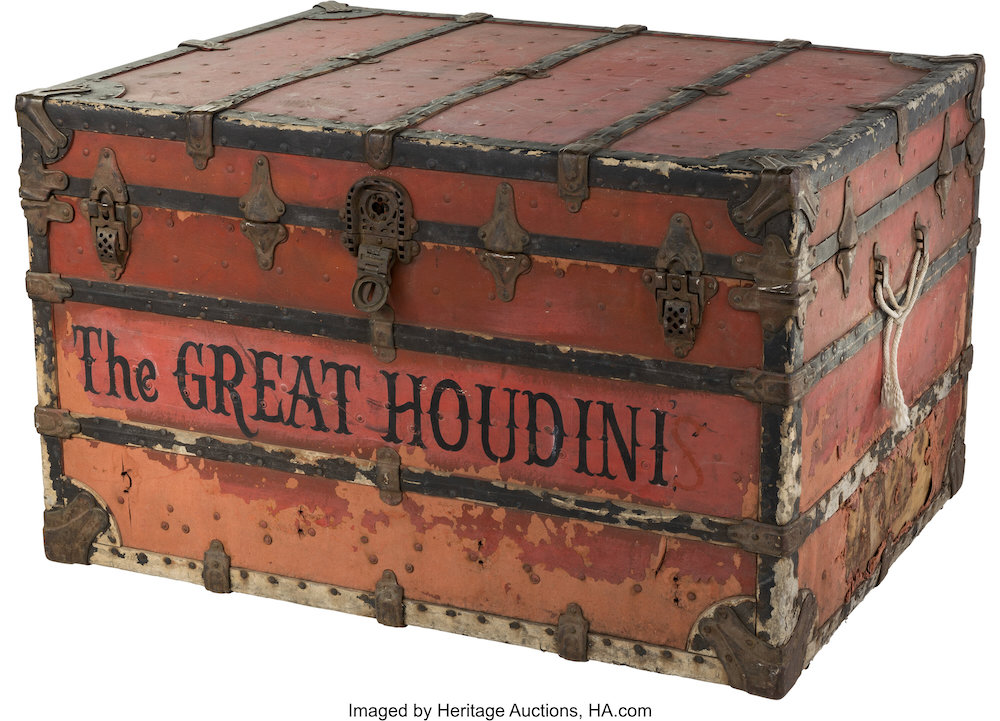
Trunk from The Great Houdinis sells at auction

The original Metamorphosis prop trunk used in the 1976 television biopic The Great Houdinis sold at Heritage auctions on March 20 for $2,625.00 (including Buyer's Premium). Below is the trunk and auction description.


The Great Houdini (ABC Circle, 1976), Paul Michael Glaser "Harry Houdini" Escape Trunk. Vintage original trunk made of wood and covered in painted cardboard, featuring metal latches and accents. "The Great Houdini" is hand-painted on the front in black lettering. The back of the trunk includes a panel attached with metal hinges that can be detached, enabling the illusion of an escape trunk. It measures approx. 51" x 25" x 20". This trunk appears in the early part of the film during one of Houdini's (Paul Michael Glaser) performances. Displays production wear and age. Much of the cardboard has eroded and there is paint chipped throughout. Special shipping arrangements will apply. Comes with a COA from Heritage Auctions.

Here's the scene from the movie in which you can see the trunk. The idea of Bess getting stuck in the Metamorphosis trunk comes from a real-life incident (read: Boxed Bess).


Tuesday, April 11, 2023

Houdini, Delprade, and the origin of Metamorphosis

In his early days, Houdini had trouble selling managers on his handcuff act. His card work, while excellent, was not novel. His other magic was largely stock. And while his Second Sight and spiritualism could always draw an audience, the morality of it troubled him. But there was one sure-fire effect that guaranteed bookings and always drew favorable notices: Metamorphosis.

Houdini has been credited (by myself and others) as the inventor of Metamorphosis. But if you look closely at his billing in these early years, it shows he and Bessie as the Introducers of Metamorphosis. Not quite the same thing. But if Metamorphosis wasn't Houdini's creation, where did it come from?

While I was at David Copperfield's International Museum and Library of the Conjuring Arts last month, I might have come across the answer in a letter to Harry Kellar. On July 2, 1920 Houdini attended a magic show in Paris featuring Professor Robertson and Italian magician Tournees Benevol. A few days later he penned a lengthy letter to Kellar describing the entire show, which didn't impress him ("Your flower production he murdered."). It's near the end of that letter that we find this remarkable sentence:

“When this was over, he did my old trunk trick, the one I did for many years with Mrs Houdini, and which Delprade brought to America.”

This appears to be Houdini acknowledging the source of Metamorphosis as a magician named Delprade. I had never heard of Delprade, but it didn't take much of an internet search to turn up the below poster which shows a 3 second "Substitution" trick of some kind. This is from 1889, so two years before Ehrich Weiss first appeared as Houdini.


I threw out a request for help on Facebook in finding a description of Delprade's effect. Our friend Charles Greene III, author of Ionia - Magician Princess Secrets Unlocked and an expert in magic posters, was able to provide the following review of Delprade's "Mystere!" in Rouen in September 1889:

"The great event of the week was, without a doubt, the passage of Mr. Delprade. Very appreciated in his imitations of birds, Mr. Delprade then invited us to a brand-new attraction with which he has just made all of Paris run - It is a question of substituting, in three seconds, a lady for a gentleman in a bag and in a hermetically sealed trunk. This exercise, of great originality, is carried out with such speed that it becomes a real puzzle. We can only urge all our fellow citizens to realize, by themselves, this strange curiosity."

This certainly sounds like Metamorphosis to me! So the next step was finding when Delprade brought his Substitution to America and if it was at a time and place where Houdini may have seen it. Again, it didn't take much of an internet search to find the answer to both questions. Check out the below from the April 15, 1893 New York Evening World:


The Eden Musée was very much part of Houdini's world and there can be little doubt that he would have seen Delprade do his Substitution here. So it seems almost certain this is what Houdini is referencing in the Kellar letter. The earliest mention of Houdini doing Metamorphosis (that I have found) is a review of The Brothers Houdini at Miner's Bowery Theatre in New York on July 8, 1893. This is only a few months after Delprade's debut at the Eden.

Did Houdini make a deal with Delprade? Probably not. He didn't need to. It doesn't appear Delprade had any ownership of the illusion. While you will sometimes see Maskelyne credited as being the originator, according to Charles Greene, it was Charles de Vere who invented "La Malle des Indes" in France in 1873. This became the substitution trunk performed by Delprade.

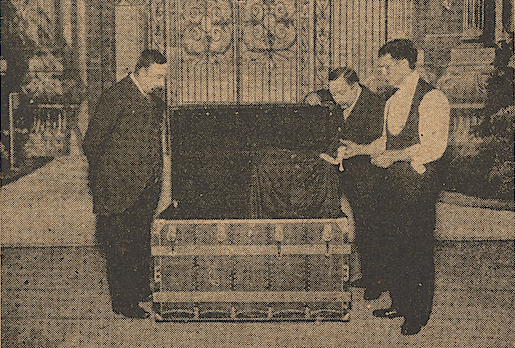
According to Walter Gibson in The Master Magicians, Houdini learned that a substitution trunk and sack was being offered by a supplier of spiritualist effects in Chicago named Sylvestre. But the $50 price was too steep. He then discovered "a performer who had an old outfit for sale cheap, so he bought it." While Gibson doesn't name that performer, he told Patrick Culliton it was Joe Godfrey. The image at the top of this post, which comes from Patrick's Houdini The Key, shows the young Houdini with that first sub trunk.

Of course, Houdini made some key changes. Instead of substituting assistants as Delprade had, he inserted himself into the effect. He also appears to have introduced the bound hands and borrowed coat exchange. These effects were inspired by the cabinet trickery of spirit mediums. And as far as I know, Houdini came up with the name Metamorphosis.

This timeline does mean letting go of the long held assumption that The Brothers Houdini featured Metamorphosis from the very start. If evidence of the trick can be found that pre-dates Delprade's April 1893 performance, that assumption can be restored. But the evidence at this moment points to a later adoption.

So while we can no longer credit Houdini with inventing the substitution trunk, I think we can still credit him with recognizing its potential and pioneering the modern presentation which remains the version magicians still perform to this day.

Thanks to David Copperfield, Charles Greene III, Michael Pascoe, and Patrick Culliton for helping unravel this tale.

Want more? You can check out related research and more images as a Scholar member of my Patreon by clicking below.

Friday, April 7, 2023

Deconstructing Houdini '53: Metamorphosis

Continuing my scene by scene dissection of Paramount's classic 1953 biopic Houdini. Last time Harry and Bess had a blow up that sent them to Europe. Today we join them in London...

Chapter 11: Metamorphosis

"Ladies and gentlemen, my latest invention, the Metamorphosis."

So begins the next sequence of Houdini (1953). Harry could be talking about himself here. Last time we saw him he was working as "Oscar the Sea Serpent" in a Coney Island sideshow. Now he's standing proudly on the stage of the Alhambra Theatre in London performing one of his most famous feats of magic. Metamorphosis!

This sequence actually begins with an establishing shot of London and the exterior of the Alhambra Theatre. Once again the movie is pulling from real Houdini history. Houdini's first engagement in London was at the Alhambra and Metamorphosis was part of the act. Although it was hardly a new invention. Houdini had been performing it from the start of his career.

The real Houdini performs Metamorphosis at the Alhambra.

The only historical fumble is the billing we see on the Alhambra playbill: "The Great Houdinis." By the time Harry and Bess arrived in England, the act had been well established as "Houdini, King of Handcuffs." But that's a quibble.

Real Alhambra playbill for July 2, 1900.

As with all the magic in the film, Metamorphosis is performed beginning to end with minimal cuts. It's also presented in a contemporary way. The real Harry and Bess made their three second switch inside of a cabinet. Here a collection of fan dancers shield the trunk as Harry stands on top. 

Standing atop the trunk is how Metamorphosis is done today and it's surprising to see this presentation as early as 1953. It's also a modern approach to have the assistant locked in the trunk first. It's said this is so the magician is the one to receive the final applause. But it is certainly not how Houdini did it. Presenting it this way also robs Houdini of an "escape" which is important to what follows. (In case you've never noticed, Houdini escapes his handcuffs during the applause.)


Amidst the applause we suddenly hear a cry of "fake" from the audience. A man (Michael Pate) stands and identifies himself as Dooley from the London Examiner. He believes "that's a trick trunk" and challenges Houdini to "get out of something real." Of course, Houdini did not get out of the trunk. Bess did, so...


After exchanging barbs, Houdini throws out a £100 challenge "to anyone who can lock me in anything I cannot escape from." This challenge was a big feature of Houdini's first UK tour so once again the movie is on target. Dooley notes that Inspector Marlick (Barry Bernard) of Scotland Yard is in the audience and challenges Houdini to try and escape from one of their jails. With a bit of prodding from Houdini, Marlick agrees to the contest, but insists Houdini remained locked up for 24 hours if he fails to escape. Houdini invites the audience to come back and see him tomorrow. "You won't be here!" shouts Dooley.

Confrontations and challenges hurled at Houdini from the audience were a regular occurrence. In fact, on Houdini's opening night at the Alhambra he was challenged from the audience by another Handcuff King, Cirnoc. It's also true that Houdini's challenges were frequently "bets" with some sort of humiliating consequence for Houdini should he fail. (When challenged to escape from a mail bag in Los Angeles, he would need to be "delivered" to the post office to be set free.) Just another great example of how this movie dramatizes Houdini's exploits using established facts.

Following the performance, Dooley comes backstage to the Houdinis dressing room. Turns out their confrontation was staged. No other Houdini biopic has dramatized his close and sometimes complicit relationship with the press. But while the drama behind Houdini's challenges might be staged, the escapes themselves were legit, which is also established here. "My end of the bargain was to get you into jail," says Dooley. "You promised me two pounds. I want it now because tomorrow you might not be here to pay me."


Houdini pays Dooley and has complete confidence he will escape. "I can open the locks of these old English jails with a button hook," he assures Bess. But then Dooley says, "Oh, by the way, I forgot to tell you. But in our jails the cells are built differently than in the states. The locks aren't in the doors. Good luck, yank!"

The reporter leaves Harry now looking far less confident. Has he bitten off more than he can chew? Can he escape? We'll find out next time.

Saturday, March 4, 2023

The story behind Hardeen's outdoor Metamorphosis

Today I have a treat to celebrate Hardeen's 147th birthday. Below is the famous film of Hardeen doing Metamorphosis on an open street. If you've not seen this, it's pretty terrific. So let's start with the show!


I've always enjoyed this footage for what it is. But I've also often wondered if this was a typical Hardeen street stunt. Houdini never did Metamorphosis as an outdoor stunt as far as I know. So I decided to do a little digging and discovered the full story!

Turns out this was a one-shot performance in answer to a challenge (of sorts). This is when Hardeen was appearing at the Prospect Theater in Brooklyn during the week of April 21, 1929. The story begins in the pages of The Standard Union:

Click to enlarge.

Hardeen took up the challenge! In fact, if you look closely in the film, you can see a sign that says "Standard Union Challenge." His street performance took place on April 24, 1929. The Standard Union provided coverage the following day:

Click to enlarge.

So there we go. Turns out this footage shows Hardeen not only doing Metamorphosis, but saving magic itself!

Still can't get enough Dash? Click on over to my Patreon and listen to his famous 1939 radio interview on WNYC. As a birthday gift, I'm unlocking this post so anyone can listen for FREE.


Happy birthday Hardeen!

Friday, January 22, 2021

Mark Wilson, 1929-2021

Yesterday saw the passing of yet another magic legend, Mark Wilson. Mark Wilson was a big part of my early discovery of magic, appearing in just about every magic magazine I purchased and always on television. In my mind he was the model magician.

Wilson was no stranger to the Magic Castle's Houdini Room. He also created the "Aquarian Illusion," a cross between Houdini's Water Torture Cell and Metamorphosis. You can watch him perform it on the 1981 HBO special Mumbo Jumbo. It's Magic! on YouTube.

It was always a thrill to see Mark, his wife Nani, and son Greg at Magic Castle functions. I never got over the fact that I was in the same room with a legend.

R.I.P. Mark Wilson. One of the greats!

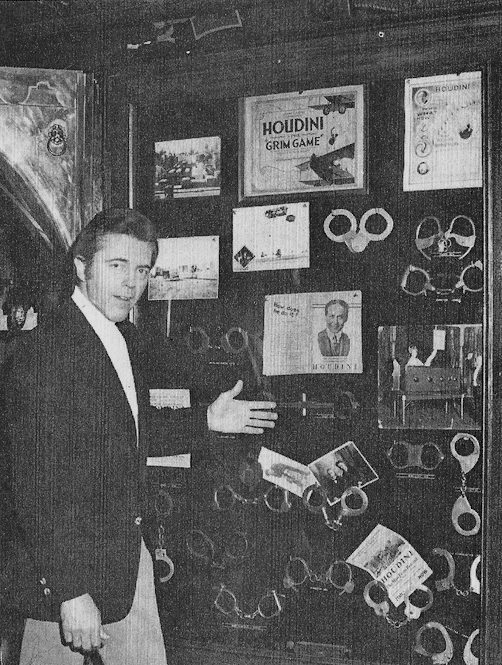
Photo from 'The Original Houdini Scrapbook' by Walter B. Gibson.

Tuesday, September 15, 2020

Mystifier, Fall 2003 (final issue)

Concluding my issue by issue look back at the Mystifier, the newsletter of the Houdini Historical Center that ran from 1991-2003.


It seems fitting that the final issue of the Mystifier consists of a single article about Houdini's Last Will and Testament by Curator Kimberly Louagie. As with all of Louagie's work, it's well researched and thorough.

Sidney Radner did not provide his regular "Backstage" column this time. Instead, the back page contains a letter from Executive Director Terry Bergen explaining the current situation and future of the HHC.

I'm sure many of you have heard rumors about the changes at the Houdini Historical Center. It has been a most interesting and enlightening year! 
For fifteen years, we have been fortunate to be able to lease the Radner collection of Houdini artifacts. This opportunity has allowed the Outagamie Country Historical Society to develop the Houdini exhibit, as well as temporary exhibits, and the Houdini Historical Center. The original contract expires at the end of this year, and the economy has conspired to prevent us from extending the lease. Our county appropriation was cut 25% in 2003 and another 25% will be cut in 2004. The county funding is what has paid for the Houdini lease for the past 15 years.

Mr. Radner and other generous donors have provided the museum with a number of artifacts which will allow us to create a new exhibit about Houdini called "a.k.a. Houdini". The new exhibit will open in June 2004, and will be double the size of the current Houdini! exhibit. The Society plans an exhibit that will be a dynamic and exciting as the man Harry Houdini. The new exhibit will display fewer artifacts that the one which has featured Mr. Radner's extensive collection, but it will tell the story of Houdini's life images, interactives and artifacts.

Many of our HHC members have asked about the future of the Houdini Historical Center, now that the Radner Collection will be leaving the museum in Appleton. The Houdini Historical Center will continue, however, due to loss of staff caused by budget cuts, the Mystifier will be discontinued for 2004.

Bergen goes on to say that a new HHC website with a special "Members Only" section will be created. If this happened, it was only temporary. With the end of the Mystifier came the end of the Houdini Historical Center and the museum was renamed The History Museum at the Castle. And when the much touted new Houdini exhibit opened in 2004, magicians were shocked to see it exposed Houdini's Metamorphosis.

Despite criticism from magicians such as David Copperfield, the museum refused to change the exhibit, and any hope of the Radner collection ever returning to Appleton was dashed. (Sid said he was planning to bequeath his collection to the HHC.) Sid singled out Bergen for the turn of events, telling the New York Times, "She doesn't know Houdini from Liberace. She just knows dollars."

Sid's collection was auctioned in 2004. Terry Bergen remained director of The History Museum at the Castle until 2013. The a.k.a. Houdini exhibit can still be visited today.

I hope you enjoyed my look back at all 48 issues of the Mystifier. You can start all over or select an issue of your choice via the links below.

Monday, June 29, 2020

Metamorphosis sculpture reappears in Appleton

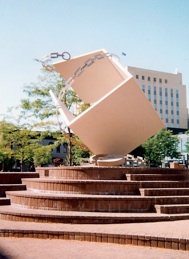
I just received some wonderful news from our friend Tom Boldt in Appleton, Wisconsin. This morning the City of Appleton re-installed Richard C. Wolter's "Metamorphosis" sculpture after a 9-year absence. The sculpture now sits on a pedestrian trail along the Fox River near the site Houdini claimed to have almost drowned as a child.


"Metamorphosis" was donated to the city in 1985 by Boldt Development Corp. (yes, as in Tom Boldt). It stood in the center of Houdini Plaza until 2010, when it was removed because the base was deteriorating. Houdini Plaza underwent a major renovation in 2013 with a new centerpiece. A Houdini bust was added in 2015.

I've always loved this sculpture and I'm thrilled to know it is once again on view in Houdini's hometown.

Thank you Tom for this tribute, and the great news today!

Related:

Monday, February 3, 2020

The Houdinis are Rogers' Orpheum Stars of 1897


During their early years, Harry and Bess Houdini joined an assortment of traveling performance troupes. Their stints with the Welsh Bros. Circus, the California Concert Co, the Marco Co. and the American Gaiety Girls are well documented. But what never gets mentioned is the "Rogers' Orpheum Stars Co." which Harry and Bess toured with in Wisconsin in March and April of 1897.

The Rogers' Orpheum Stars Co. was a self-contained traveling vaudeville show with 14 acts that ran 2 1/2 hours. The "Orpheum" in the name is not the same thing as the big time Orpheum Vaudeville circuit controlled by Martin Beck, but I'm sure the Rogers' Stars were happy for any confusion!

Below is an advertisement for the troupe at Rhode’s Opera House in Kenosha, Wisconsin. You'll note Harry and Bess appear three times on the bill. Once together as "The Houdinis" doing Metamorphosis ("Hindoo box mystery"). "La Petite Bessie" then does her "character vocalist" singing act. Finally we see "Mysterious Harry" doing magic as "the only rival to Hermann the great."


Below is a review of the show at the Belle City Opera House in Racine, Wisconsin. Notice that Houdini seems committed to "Mysterious Harry" being his solo stage name at this time. Yikes.


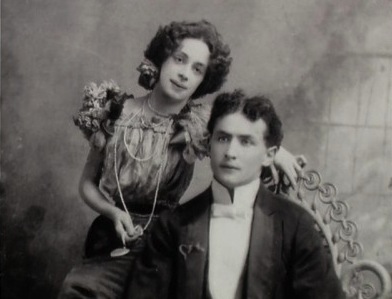
Here's one last thought. I have seen evidence in Ken Trombly's collection that the famous photo below, frequently misidentified as being Houdini first theatrical photo (far from it), was taken around the time of the Houdinis tour with the Rogers' Orpheum Stars in 1897. In fact, this photo might have been taken expressly for this tour. So should we stop thinking of this image as being "Houdini" and instead consider it a rare pic of "Mysterious Harry"?


Below are more links related to The Houdinis early career.

Related:

Saturday, June 8, 2019

The oldest surviving Houdini poster?

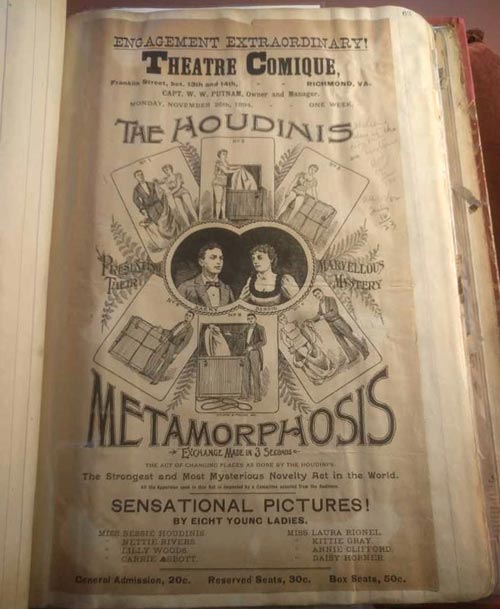
QA Specialist and Houdini buff Matt Hilgers has written article for Tessitura Network about Houdini, QA, and You. It's well worth the read. I especially like how he talks about exploring the Houdini collection at the Library of Congress. He also shares the below image from an LOC scrapbook that is pretty wild.


This poster for The Houdinis at the Theatre Comique in Richmond, Virginia, during the week of November 26, 1894, is one of their earliest known engagements. My current chronology only lists one earlier engagement at Barton's Theatre in Newport, Virginia, in October.

This goes a long way in confirming that this particular image was The Houdinis very first piece of pictorial advertising; their first poster. And because I don't know of any surviving "Brothers Houdini" material, I'm thinking this may be the earliest surviving Houdini poster still in existence.

Thanks to Matt Hilgers.

Related:

Wednesday, January 23, 2019

Bess leaves the act in 1908

Today is Bess Houdini's birthday. She was born January 23, 1876 in Brooklyn, New York. For the occasion, I thought I'd share a piece of information I only recently discovered. I've always wondered when Bess officially left the act. This clipping from the June 13, 1908 issue of Variety finally provided the answer.

Variety June 13, 1908

Bess made a brief comeback in 1914 doing Metamorphosis in the short-lived Grand Magical Revue. Houdini wrote in his diary that she was "magnificent" and "working as though she never retired." Bess would then periodically return to assist her husband on special occasions, such as a 1922 S.A.M. banquet attended by Sir Arthur Conan Doyle where the Houdinis used his coat during Metamorphosis.

In 1925, Bess returned and became a full-time part of Houdini's 3 Shows in One. In fact, she was so much a part of the show, she even had her own poster.


Happy birthday Bess!

Related:

Thursday, August 2, 2018

Doug Henning marks Houdini's 100th

Houdini once told an interviewer, "I am going to live as long as I want to and on my 100th birthday I am going to do my upside-down strait-jacket escape hanging from the tallest building in New York City."

Houdini did not live to be 100. However, New York City was the site of an outdoor Houdini feat to mark his 100th birthday in 1974. Doug Henning--at the time a largely unknown Canadian magician--marked Houdini's centennial by doing Metamorphosis in front of the Plaza Hotel on Fifth Ave. and 59th St. with his assistant Dale Soules. As you can see from the photos in the Daily News account below, he drew a nice crowd (click to enlarge).


Henning was in New York preparing The Magic Show at the Cort Theater. The musical opened two months later and became a Broadway hit, kicking off what we now consider the Second Golden Age of Magic. Maybe we can say it all started on Houdini's 100th!

For all things Doug Henning related, be sure and check out Neil McNally's terrific blog The Doug Henning Project.

Related:

Wednesday, July 4, 2018

John Calvert's Tribute to Houdini

John Calvert had several things in common with Houdini. Not only was he a magician and sometimes escape artist, but he was also an aviator and an actor. He was also good friends with Bess Houdini, who touted Calvert as her choice to play Houdini in a Hollywood biopic.

In 1987, Calvert released a video called A Tribute to Houdini. It's a strange confection of random clips with Calvert the only constant. Calvert is very much a 1940s style magician wrapped into a very 1980s production, which makes this tape pretty weird and also kinda wonderful. The version I have must have been a later release. While the copyright is 1987, it contains a sudden segment about the fall of the Berlin Wall in 1989, with shots of Tammy Calvert flying through the skies above Berlin via video magic.

But what about Houdini in all this? The tape does open with photos and film footage of Houdini under synthesized '80s rock before introducing Calvert as the continuation of the great escapist. It also makes comparisons between the men throughout.

But probably the most interesting Houdini-related element is when Calvert and an uncredited assistant (a fine escape artist herself) do an "underwater Metamorphosis in reverse." Calvert says that Bess Houdini told him this was an effect that Houdini had been developing himself. I've never heard of this before, but it's pretty impressive, and this tape is worth owning just for a record of this unique feat.


The final half of the video are excerpts from Calvert's stage show "Magicarama" at the Orpheum Theater in Memphis, which at one point Calvert characterizes as a tribute to Dante (hey, wasn't this about Houdini?). But with a stage overloaded with assistants clad in every kind of conceivable costume, his show really does evoke Sim Sala Bim, and also reflects the anything and everything esthetic of this tape.

So while this is barely a "tribute to Houdini," this is still a worthy piece of Houdiniana and some weird '80s fun.

Thanks to Bill Goodwin at the Magic Castle Library for providing me with this VHS.

Related:

Friday, June 15, 2018

See inside the 'Summer of Magic' exhibition in NYC

This AP video gives great look inside the New-York Historical Society's Summer of Magic: Treasures from the David Copperfield Collection exhibition. You'll see many of the Houdini rarities on display, including the Mirror Handcuffs and a one-of-a-kind Overboard Box poster, which I believe is being exhibited for the first time ever.


For more information on the exhibition and the many related special events -- including my own appearance on July 13 -- visit the New-York Historical Society's website. The exhibit runs through Sept. 16, 2018.

Related:

Monday, February 26, 2018

Early Houdini letter sells for $18,720

An early handwritten Houdini letter from 1897 sold for a whopping $18,720 (including 17% premium) at Haversat & Ewing's Winter Magic Auction this weekend. This shattered the $4,750-5,000 reserve price. The letter is written on early stationary promoting "The Houdinis" and their signature trick, Metamorphosis.

The Houdini's Metamorphosis Stationary. Handwritten and signed by Houdini June 10, 1897. Content includes Houdini and Bessie performing at Fairview Amusement Park in Dayton, Ohio on June 14, 1897. Reverse contains a full page of vignettes of The Houdini's Metamorphosis! Only other known example is in the Library of Congress, but trimmed and without handwriting of Houdini. This may be the only known example with handwritten correspondence directly from Houdini. $4,750-5,000.

As high as this price is, it's actually not the highest I can recall for a Houdini-related letter. In 2011, a letter from Harry Kellar to Houdini congratulating him on his vanishing elephant sold for $32,500.

An original screenplay for Houdini (1953) sold for a surprisingly high $4,504. Another early (1900) handwritten Houdini letter fetched $3,685.

Related:

Sunday, November 12, 2017

Houdini mystery sack sells in auction

A green canvas sack said to have been used by Houdini sold last week in a Bloomsbury auction for £1,500 ($1,978). Below is the auction description.

A green, oversized, canvas sack used by Harry Houdini (1874-1926) as a prop for some of his escapology tricks. The sack, which measures 76" x 46", is thought to have been used by Houdini circa 1915. The sack was a gift from Houdini's brother, Theo to a mutual friend following Houdini's death; then in possession of the mutual friend's family; Christie's "Pop Culture: Film & Entertainment Memorabilia" sale, 23 November 2011

So is this really a Houdini prop? Could it even be the sack Houdini and later Hardeen used in Metamorphosis? We now know the trunk Hardeen used was Harry's, and that was also green. And a straitjacket owned by the same gentleman who originally owned this sack was positively identified as being the straitjacket Houdini used in many of his suspended straitjacket escapes. (Both the straitjacket and this sack sold at Christie's in 2011, see link below.)

However, all the known images of the Houdini and Hardeen doing Metamorphosis show their sack did not have drawstrings as this one does. The Metamorphosis sack was tried shut with a small length of rope or cloth that was marked for later identification. So this doesn't appear to be a Metamorphosis sack. But could it have been used for something else? I can't recall any other Houdini escape or magic effect that involved a sack. Unless this is gaffed, my best guess would be this was used behind the scenes...as a sack.

The mystery remains.

Hardeen doing Metamorphosis.

Thanks to Joe Long for the news.

Related:

Friday, September 15, 2017

Future of Appleton's "Metamorphosis" still uncertain


The Post-Crescent reports that the future of Richard C. Wolter's sculpture "Metamorphosis" -- which once stood in the center of Houdini Plaza in Appleton, Wisconsin -- "is about as certain as Houdini's return from the grave."

The sculpture is currently lying on its side outside the Appleton parks and recreation facility at Memorial Park.

The iconic sculpture anchored Houdini Plaza from 1985 to 2010, when it was removed because the base was deteriorating. Houdini Plaza underwent a major renovation in 2013. A Houdini bust was added to the plaza in 2015.

"There's been talk off and on about bringing it back out," said Chad Doran, Appleton's communications coordinator. "There's some people in the arts community who are really pushing to have it brought back out. I don't know that anything is imminent."

Alex Schultz, president of Sculpture Valley, a nonprofit arts advocacy group in the Fox Cities, said Appleton made a mistake by removing "Metamorphosis" from Houdini Plaza. He wishes the 2013 renovation of the plaza would have reserved a spot for the piece.

"Everybody recognized it as being part of the plaza," he said. "Having taken it out and not incorporated it into the redesign, I think, was just shortsighted."

Schultz recommends restoring the sculpture and mounting it in the center of the roundabout at the east end of the College Avenue bridge. He said the location was proposed to the city but wasn't met with much enthusiasm because of safety considerations.

Related:

Sunday, September 3, 2017

The Prison Cell & Barrel Mystery...or misfire?

The "Prison Cell & Barrel Mystery" has to be the least discussed original Houdini effect. In most biographies it receives only a few lines, if it's mentioned at all. In fact, if it weren't for the often reproduced UK poster (right), I think this effect might have become lost to Houdini history. Why is that? Is it because Houdini didn't do it for long? Or is it because the Prison Cell & Barrel Mystery was a rare case of a Houdini misfire. Let's explore.

The origin of the Prison Cell & Barrel Mystery goes back to Houdini's earliest days as a performer. Harry's first partner in The Brothers Houdini, Jacob Hyman, left the act and was replaced by Houdini's real brother, Theo. After a short stint in the army, Hyman got back into show business as J.H. Houdini. Having co-created the name, Jacob believed he had as much right to use it as Harry. His feature was an escape from a barrel that he called The Barrel Mystery.

Jacob Hyman a.k.a. J.H. Houdini
When Harry began achieving great fame in Europe, Jacob continued to tour small time American Vaudeville as "Houdini". This caused confusion in the press and with the public (and can still trip up researchers today). By 1903, the idea of two Houdinis became intolerable to Harry. After waging a war of words in the press, Harry dispatched his brother Leopold and a lawyer to confront Jacob. Exactly what was worked out is not known, but from that day forward, Harry became the only Houdini and also acquired Jacob's featured barrel escape. It seems likely Houdini simply bought out his former partner, as Jacob would go to medical school and become a Beverly Hills physician. (He and Harry remained good friends.)

Now in possession of Jacob's barrel, Houdini developed a new effect to replace Metamorphosis. The effect would see him locked in the barrel and then "triple-locked" into a portable prison cell. In "less that 2 seconds", Houdini would make his escape and his assistant, Franz Kukol, would be discovered inside. It's interesting that it was not Bess who played this substitution role as she had for 10 years with Metamorphosis. But it appears Bess was ready to leave the act, at least as a regular participant. The Prison Cell & Barrel Mystery offered her that...escape.

The first performance of the Prison Cell & Barrel Mystery was at the Regent Theatre in Salford during the week of October 3, 1904. Houdini offered £100 to anyone who could find trap doors within the jail cell. (The barrel is apparently not part of the deal.) But a review of his act the following week at the Empire Palace of Varieties in Bristol describes the effect is being performed with a curtain cabinet instead of the jail cell, much in the style of Metamorphosis. Perhaps there was a problem with the cell that night. Or might this be the first sign that something wasn't quite working?

Advert in the Houdini Museum of New York.

On paper, the Prison Cell & Barrel Mystery seems like a winner and an improvement over Metamorphosis in every way. First off, a barrel seems even more confining than a large steamer trunk. Instead of a curtain cabinet, meant only to conceal the exchange, a locked prison cell adds another layer of difficulty, while also nicely evoking Houdini's famous prison breaks. And the appearance of an assistant in the barrel provides the same surprise finale as Metamorphosis.

However, it's clear from the notices that the new feat did not pack the same punch as Metamorphosis. Newspapers frequently praised Metamorphosis as "clever" and a "neat trick." But descriptions of the Barrel Mystery tend to be somewhat dispassionate, such as this November 15, 1904 review of Houdini’s act in Leeds:

Houdini, in addition to his handcuff business, at which he is a past master, showed a packed house at the Tivoli last night a model of a prison cell. Enclosed and locked in a sort of barrel, he was duly placed in the cell, which was triply locked outside. In a minute or so, he was outside the cell and the barrel, when opened, contained an attendant.

So what was wrong? The Prison Cell & Barrel Mystery had it all. But maybe that was the problem. Was it an escape or a magic trick? It seemed designed to be both, but in doing so, it becomes neither. The set-up is pure escape, and a sacred one at that. This is "The Jail Breaker" after all. But the appearance of an assistant at the end reveals it to have been "just a trick" all along. One could see this as being confusing for the audience. It could have the unintended effect of undercutting the legitimacy of all of Houdini's escapes. Because if Houdini could secrete an assistant inside his escape apparatus whenever he liked, well...

It's also been suggested that the appearance of a male assistant lacks the poetry of man into a woman, husband into wife. Hardeen himself noted the improvement in Metamorphosis when Harry replaced him with Bess. Said Dash, "The exchange of one young man for another who looked a lot like him could not be as dynamic as the virtual transformation of a woman into a man."

This is probably why, despite the posters he had made touting the exchange, Houdini appears to have dropped the substitution element, at least on occasion. The Sunderland Echo on May 23 1905 describes the Prison Cell & Barrel Mystery as a straightforward escape, with Metamorphosis back in the act as the closer. But even as an escape, it doesn't seem to have always wowed the crowds. As Houdini explained the workings of his prison cell one night in Hastings, someone in the upper part of the house repeatedly shouted, "It is faked."

Nevertheless, Houdini took the Prison Cell & Barrel Mystery to America and featured it during his triumphant return tour of 1906. Despite having a fresh poster created that now billed it as "The Prison and Barrel Transposition" (right), he again appears to have presented it as a straight escape, as suggested in this April 19, 1906 review in the Hartford Courant:

In Salem, Mass, he was locked in a stout barrel with four locks and many straps, and placed in a facsimile of a German cell. In a few moments he was free.

But not all the reviews were dispassionate. When Houdini played the American Theater in New York in May 1906, the NY Clipper records:

His "prison cell and barrel substitution" was new to most of the audience, and was a tremendous success, being one of his best offerings.

Houdini was doing the Prison Cell & Barrel Mystery as late as December 1906 (when the above photo was taken), so it's likely it continued as a periodic feature right through his 1907 tour. But with the coming of his next original invention in 1908, the undeniably successful Milk Can escape, the Prison Cell & Barrel Mystery vanishes from the record. Metamorphosis returns as Houdini's preferred substitution illusion, and never again would Houdini so mix magic and escape into a single effect.

There is no known photo of Houdini performing the Prison Cell & Barrel Mystery, and none of the apparatus survives (as far as I know). One can see the barrel in photos of Jacob Hyman, and it's likely its secret is revealed in Walter Gibson's Houdini's Escapes (page 212). Unfortunately, there are no photos or even a sketch of the prison cell. That part of the effect remains a mystery.

Today Metamorphosis stands as Houdini's great substitution trick, and is still performed to acclaim. The legacy of the Prison Cell & Barrel Mystery remains a poster, and perhaps a rare example of when Houdini got it wrong.

Information critical to my understanding of the Prison Cell & Barrel Mystery appears in Derek Tait's terrific new book, The Great Houdini: His British Tours. Also thanks to Joe Posnanski and Bill Mullins for finding me reviews in America. The photo of Jack Hyman with the barrel is from The Secret Life of Houdini Laid Bare. The original belongs to Roger Dreyer. U.S. poster pic comes from HHCE.

Related:

Translate