Showing posts with label Manny Weltman. Show all posts

Saturday, July 5, 2025

Speaking of diaries

Here's a curiosity I just stumbled across in the December 11, 1951, issue of the Toledo Blade.

Toledo Blade, December 11, 1951.

I believe this could be a reference to Houdini's 1916 diary (one diary), which somehow escaped the others. The "Hollywood lad" is likely Ray Muse, who wrote in the October 1950 Genii that he had received the diary as a "recent gift." Did he ever show it to Houdini (1953) producer George Pal? That I don't know, but I'd like to think that he did.

The diary was eventually acquired by Manny Weltman, who owned it for decades. (I got a look at it in 1980.) After Manny's death, it was auctioned by Swann Galleries in 2002. Today it resides in The Averbook Magic Art Museum and Library. Yes, Dr. Bruce Averbook owns two Houdini diaries!

While this 1916 diary is still under wraps, Houdini's precious first diary is now published as Escaping Obscurity: The Travel Diary of Harry Houdini 1897-1899, available exclusively from Mike Caveney's Magic Words.

Related:

Monday, January 20, 2025

The Man From Beyond haunts Hollywood in 1971

Here's a treat I discovered this weekend. In August 1971, a double feature of The Cabinet of Dr. Caligari and The Man From Beyond played at The Bijou Theatre on Hollywood Blvd. Both films featured "sound accompaniment" and a magic show by "the master of the magic lamp, Jim Christopher."

While The Man From Beyond (and The Master Mystery) would occasionally screen at the nearby Silent Movie Theater on Fairfax, it's cool to see it playing on Hollywood Blvd. Also, check out the terrific illustrated ad from the Los Angeles Times. This is an uncommon photo of Houdini, and even more so in 1971!

Advertisement for The Man From Beyond in the The Los Angeles Times showing Houdini kneeling with open handcuffs..
The Los Angeles Times, Aug. 20, 1971.

Around this time, Houdini collector Manny Weltman was selling 8mm and 16mm prints of The Man From Beyond. I wonder if this print was rented from Manny? That might also explain where they got the photo.

The Bijou stood just a few blocks from Grauman's Chinese Theater. It started as an adult film theater in 1969 called the Athena and later the Avon. In 1971, it reopened as a 16mm revival house under the Bijou name. It played an assortment of classic films before turning back into an adult film theater in 1974.


In the photo below, you can see the round sign and arrow that points to the Bijou's entrance. This pic comes from a terrific overview of the Bijou at Los Angeles Theaters. I recommend checking it out.


This was still a few years before my Houdini awakening, but oh how I would have loved to have attended one of these showings!

I also discovered that The Man From Beyond appeared on television in 1980. But that's a story I'll save for another time.

Related:

Wednesday, December 1, 2021

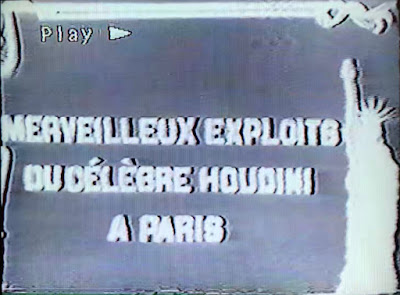
Title card for Houdini's Merveilleux Exploits (1909)

Recently while scanning through some video tapes from the Manny Weltman collection, I spotted this image. The quality is poor and it only lasted a few frames, but it still knocked me out! That's because this appears to be the original title card for Houdini's 1909 film The Marvelous Exploits of Houdini in Paris. I've never seen this among any of the surviving fragments of that film. I love that it features the Statue of Liberty.


Houdini made Marvelous Exploits for Cinema Lux in Paris in 1909. This was his first foray into narrative film and it shows Houdini in his prime. With the discovery of this title card, I can now say with confidence that the complete film does exist; but in disassembled fragments of varying quality. Still, a restoration is possible.

UPDATE: I've not come to believe that the reason this card features the Statue of Liberty is because it was the logo of the distributor, Film Lux.

Tuesday, November 23, 2021

Manny and Me

In the summer of 1980 a local newspaper, The Valley News, ran a story about me headlined, "Teen Obsessed With Houdini." It was pretty exciting to see my picture in the newspaper and I enjoyed my fifteen minutes of fame at age 15. But that article did something more. It led to my meeting Manny Weltman and entering a larger world of Houdini fanatics from which I've never emerged. I've never done a post about my first Manny meeting. But I recently had an experience that brought it all back for me. So I think it's time to tell the story.

It was shortly after my newspaper article appeared that I received a message to visit the office at my Junior High School. I went thinking I was in some kind of trouble. But it turned out that a man had called the school and asked if he could get a message to me. He left his name (written down incorrectly as Wellman) and a phone number. And to prove he was legit, he said his name could be found in the acknowledgments of the recently published Doug Henning book about Houdini.

I brought the message home to my parents. My mother was always leery of strangers, especially after my newfound notoriety, but my dad was always up for an adventure, so we called this mysterious Manny Weltman.

Manny explained that he had seen the article in the newspaper and I reminded him of himself. He said he had large collection of Houdini memorabilia that he showed no one. But if we were interested, he would be willing to show me. He gave us his address in nearby Van Nuys and we made a plan to visit.

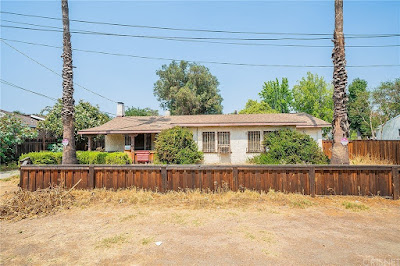
The day was June 8, 1980. My memory of that day is spotty, but what I can recall I recall vividly. It was a small house on a large plot of land -- a type of home that had been common in the San Fernando Valley, but even then were beginning to vanish into tightly packed suburbs. As we arrived I immediately noticed a car out front with a license plate that read HUDINI. Good start!


Manny invited us inside and there we met his wife Nanette. I instantly spotted an original Houdini King of Cards poster hanging on the wall of his dining room. It was my first time seeing an original and I was surprised to see the colors were not as vibrant as the Lee Jacobs reproduction handing on my bedroom wall at home. But this one was framed and it was real! My education had begun.

We sat around the dining room table and Manny, who was very friendly, again stressed that he never showed his collection to anyone. He also said the bulk of it was "in storage," but he had a lot there to show us. Even then I was pretty sure his only "storage" was the back bedroom where he would periodically disappear and come out with a fresh box filled with Houdiniana.

His collection was not organized as far as I could tell. Everything was held in cardboard boxes that we dug through. But there were treasures to be found, such as an original invitation to the Final Houdini Seance. At one point Manny gave me a reproduction photograph which I still have today. But the real show stopper was when he brought out Houdini's diary. This was the famous 1916 diary that had somehow escaped the Ernst archive and wound up with Manny. We paged through it and read several passages, including the famous passage in which Houdini reflects on the death of his father. Needless to say, this was an incredible thing to be able to see, and to this day it remains one of the most precious Houdini artifacts I've ever held in my own hands. And at age 15!

Nanette served us lunch and Manny explained that his other great passion was opera. He wrote a newsletter on the subject. He was also very excited to share that he had uncovered proof that Houdini was not the first man to fly in Australia and he would soon publish this information. I privately wondered why Manny would be excited to prove Houdini didn't do something. Ultimately he never did publish the story.

We then settled into the living room where Manny had a projector and screen setup. Manny was a go-to source for Houdini film footage at this time, and this was a big part of his collection. He began running film for us. I wish I could better recall all that I saw that day, but I know I was overwhelmed. I'm pretty sure I saw The Grim Game plane crash (likely this was the "Desperate Chances" short). But what I remember most was the sound footage of Bess Houdini from Religious Racketeers. I had no idea such a thing existed and to hear Bess speak really knocked my socks off!

Now, my dad was (and is) a shrewd businessman, and he sensed there was an ulterior motive here -- that Manny might be interested in selling us some items from his collection. So he asked Manny about this. In my Houdini-fueled brain I didn't believe a collector would ever part with anything. A collection was sacred. But to my astonishment, Manny was open to the idea. However, he said he could never sell any items piecemeal; it would need to be the entire collection as one. Manny and my dad agreed to keep talking.

So began my decades long comradeship with Manny Weltman. He became my first mentor in the Houdini world. He would frequently call to share a new Houdini find. I'll never forget the day he called excited to tell me he had just acquired a recording of Houdini's voice. He played it for me over the telephone and that was the first time I ever heard Houdini's voice. In 1986 Manny helped organize the 50th Anniversary reenactment of the Final Houdini Seance and he made sure I was invited.

As far as buying the collection.... It was an on and off negotiation for years. One problem was we never really knew all that he had. Even as a kid I wondered why I hadn't seen bookcases packed with Houdini books in their original dust jackets, etc. In fact, I never saw any books! But there was no question there was great value in some to the rarities he did have, and at one point my dad offered him $30,000. But Manny felt the collection was worth "millions." My dad confessed he suspected Manny never intended to sell. But he never gave up and Manny would frequently call and ask if there was still interest. We never made that deal. But I still got a lot from my friendship with Manny Weltman.

I lost touch with Manny in the 1990s when Houdini took a back seat to my first jobs in the entertainment industry. I was saddened to learn of his passing in May 1994. His son, actor Leo Weltman, inherited the collection, and much of it was sold at a Swann auction on Halloween 2002 (the auction catalog cover featured his King of Cards poster). The diary sold to my friend and new mentor, Dr. Bruce Averbook.

Leo Weltman passed away last year. (Please visit The Leo Weltman Project website.) And that brings me to why Manny has been much on my mind lately.

Last July I was invited back to that same Van Nuys house to help sort some remaining Houdini items that hadn't sold in the Swann auction. It was quite an experience to return after 31 years. I was amazed that the house hadn't changed. Except now it was my car in the driveway with the HOUDINI license plate.

Inside was the same dining room table where I had paged through Houdini's diary. There were also still the cardboard boxes filled with Houdiniana. For my efforts I was able to buy a few items, including Manny's mockup of the Houdini Shrine used at the 1986 seance and a small cache of photos that I have been sharing over the past few months. (Several high-end rarities discovered that day will appear in an upcoming Potter & Potter auction.)

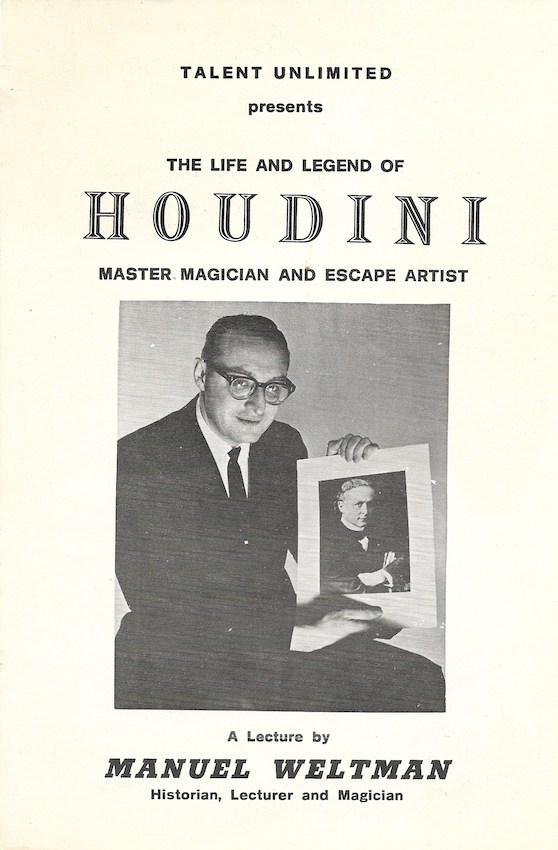
Before I left I was able to see that phantom back bedroom. There in a box I found a lone flyer for Manny's Houdini lecture (shared at the top of this post). It struck me that this is the same type of lecture I now give. I understand now that Manny was not really a collector of Houdini memorabilia. He was a collector of Houdini information. A seeker of the truth about Houdini. So Manny was right. We really are similar. In that moment I once again felt special and selected. I'll never forget that day nor the generosity of Manny Weltman.

Thursday, November 18, 2021

Steve Canyon's Grim Game

Steve Canyon was an adventure comic strip written and illustrated by Milton Caniff that ran from January 13, 1947 until June 4, 1988. Below is an installment from 1984 with a signed notation thanking the late great Houdini collector and historian Manny Weltman for his help with a reference to The Grim Game.


I don't think I need to explain that what Steve is recalling is the climatic airplane action from Houdini's 1919 film. You can read more about that via the links below. And watch for my own personal remembrance of Manny Weltman coming soon.

Thanks to Joe Fox.

Related:

Saturday, August 14, 2021

The "Houdini Shrine" has been found (kinda)

One of the great lost Houdini artifacts is the so called "Houdini Shrine" that belonged to Bess Houdini and featured as a centerpiece of the Final Houdini Seance of 1936. The shrine can also be seen in the movie Religious Racketeers and several photos of Bess in her later years. But after Bess's death in 1943, the shrine vanished without a trace.

Well, I'm happy to report that the "Houdini Shrine" is now part of my collection! Okay, so it's not the Houdini Shrine. It's a reproduction created by Manny Weltman for the 50th anniversary recreation of the Final Houdini Seance held at the Variety Arts Center in Los Angeles on Halloween 1986. For that occasion Gerrie Larsen played Bess and Stefan Krayk played Edward Saint. (You can read more about that seance HERE.)

How I came across this is a story I will share another time. For now, I just wanted to share this particular "Houdini Shrine" as it was also somewhat lost to time. Gives one hope that maybe one day the original might surface!

The Houdini Shrine on the seance table in 1986.
The 1986 Houdini Shrine today.

Thanks to Joe Fox.

UPDATE: Bill Schulert has shared this photo from the Jon Oliver collection. Is this Bess's original Houdini Shrine?

Thursday, July 16, 2020

Dissecting Quincy's 'The Death Challenge'

Recently our friend Janet Davis drew my attention to an episode of Quincy, M.E. with a magic and escape plot. I have the original TV Guide ad for this in my scrapbook, so I suspect I saw it when it first aired on March 24, 1979 (yes, Houdini's birthday). But I don't remember a thing about it.


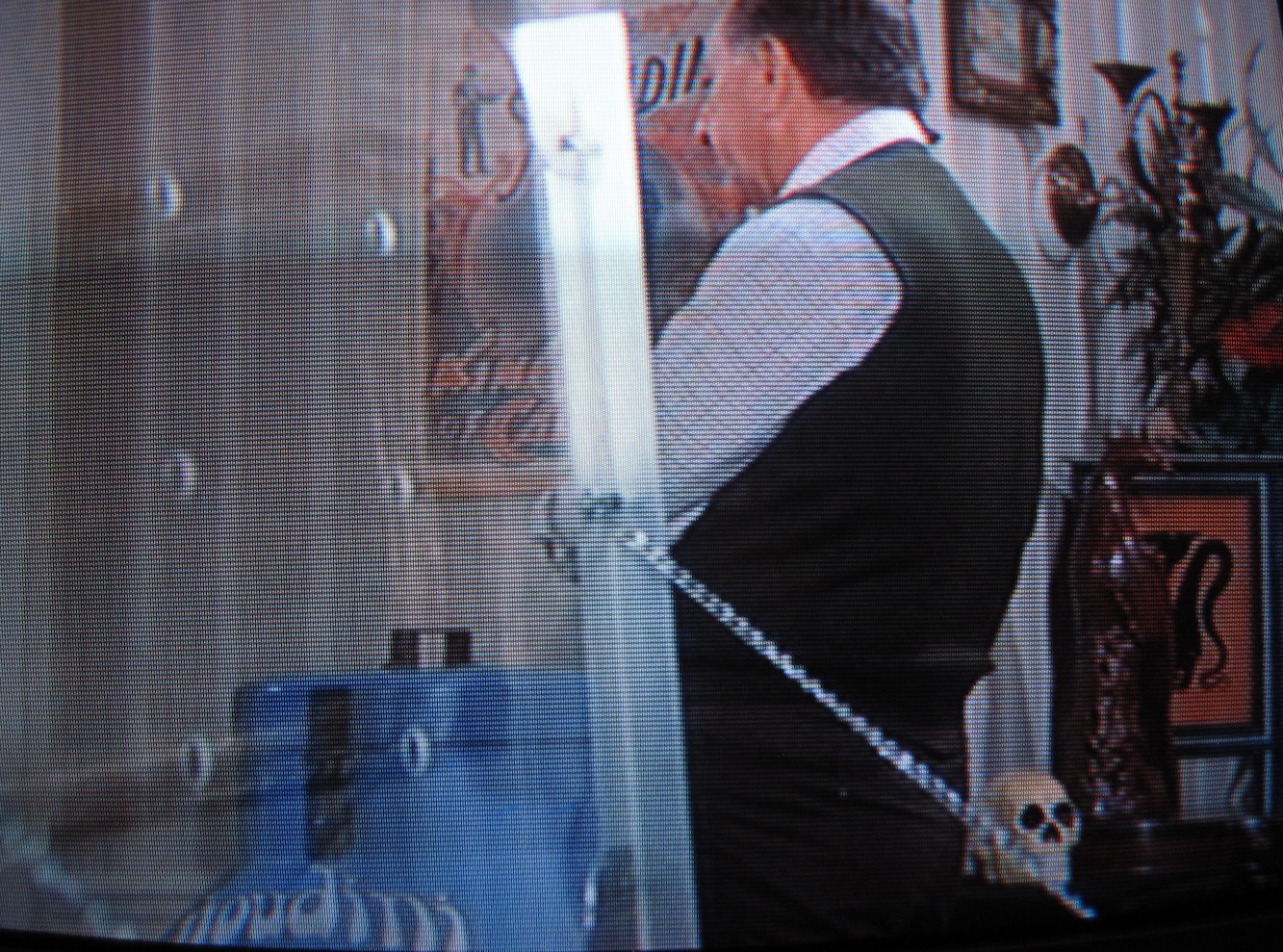
Happily, I was able to find the episode, called "The Death Challenge," on YouTube. It's great fun and contains several nods to Houdini. Don Ameche plays a magician named Harry Whitehead, which can't be a coincidence, can it? Houdini is name checked several times as being Whitehead's mentor. We even get to see a (sky blue?) Milk Can with Houdini's name written on it in groovy '70s script sitting below what I suspect is a Lee Jacobs reproduction King of Cards poster. There are also several scenes filmed inside the Magic Castle in Hollywood.


Finally, I'm pretty certain that's Houdini historian and collector Manny Weltman as an extra in the audience calling out for the magician's release. This is right around the time I first met Manny, which is a story I've yet to share.


So who done it? That you'll have to discover that for yourselves!

For an excellent overview of this episode and it's guest stars Don Ameche and Ann Blyth check out Another Old Movie Blog.

Thanks to Janet for the pics and tip.

Related:

Sunday, July 12, 2020

Mystifier, Winter 2002

Continuing my issue by issue look back at the Mystifier, the newsletter of the Houdini Historical Center that ran from 1991-2003.


The now single color Mystifier for Winter 2002 begins with what would appear to be great news; a major expansion of the Houdini exhibit and new displays coming in 2004. In reality this was the beginning of the end for the "Houdini Historical Center" and the Mystifier under the new leadership of Executive Director Terry Bergen. (I've found it's never a good sign when a museum announces its displays will become "interactive.")

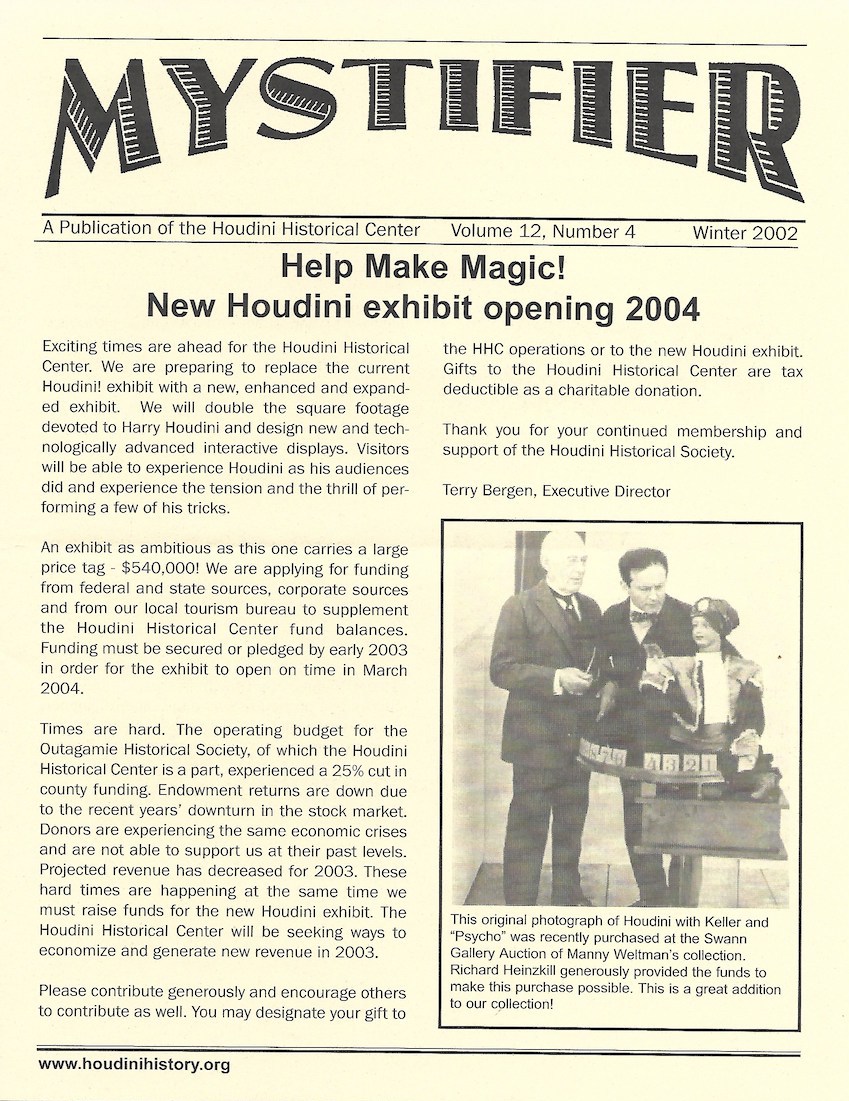
In addition to Bergen's opening article, which is largely a plea for donations for her vision, the cover of the newsletter features a nice photo of Houdini and Harry Kellar with the "Psycho" automaton. The caption says the HHC acquired the original photo at the recent Manny Weltman Swann Auction with funds provided by Richard Heinzkill.

Inside the newsletter is an obituary of Dr. Morris N. Young, who passed away on November 20, 2002 on his way to a magic convention in which he was the honoree. As a child Young saw Houdini perform and even shook his hand! He later co-authored the book Houdini Fabulous Magic with Walter B. Gibson. Young was also on the HHC board and regular contributor to the Mystifier.

The newsletter also contains an insert questionnaire asking members what aspects of Houdini's life should be highlighted in the new exhibits. The insert is meant to be mailed back to the HHC (which technically makes this a 4-page newsletter). Ominously, one question asks: "Would you like information on how Houdini performed his tricks?" This is followed by a full page ad for the HHC's new Houdini envelopes.

Sid Radner devotes his entire "Backstage" column to the 2002 Official Houdini Seance held in the Brooklyn Room of the New York, New York Hotel and Casino in Las Vegas. The seance was conducted by the "famous" Reverend Ray Fraser and his daughter Wendy Fraser-Baily from Detroit. The famous Houdini stayed away.

Sid then asks readers for suggestions about where future seances should be held, saying they are seeking "some special location at which he previously entertained." He then lists his Holyoke and Palm Beach addresses. He also announces (again) that he will soon acquire a computer to make communication easier.

Mystifier
Volume 12, Number 4
Winter 2002
6 pages

Contents:
New Houdini Exhibit Opening in 2004
R.I.P. Dr. Morris N. Young
Survey on a New Houdini Exhibit
Houdini Envelopes Available To Members
Backstage with Sid Radner


Related:

Sunday, January 19, 2020

Bahl Yahn the Strong Man. A Good Night Story by Harry Houdini

One of the more curious and unknown aspects of Houdini's career is that he published several works of short fiction. The first of these stories, "Bahl Yahn the Strong Man," appeared in the May 26, 1907 edition of the New York Sunday World. It was then syndicated in newspapers across the country. Below is the story transcribed in full from the June 2, 1907 St. Louis Post Dispatch along with the original illustrations. Enjoy.


This is the story of Bahl Yahn who was a giant such as you see each year at the circus. More than that, he was a strong man, which many giants are not. And, last of all, he was swarthy, deep-eyed and mysterious looking — just the sort of fellow that all boys and girls like to see at the circus. 
Many, many years before Bahl Yahn came to America, a band of Hindoo musicians was giving shows upon the streets of a seaport town in the East Indies where there were many soldiers of good Queen Victoria. With the musicians was a young girl who smilingly held out her hand for coins. She was so light and slim that one of the officers in gay uniform, a strapping fellow, whose strength was the envy of all the other soldiers, picked her up, tossed her high in the air and caught her as she came down. The girl thought this was great fun to go flying through the air, and it is hard to say who was more pleased with the applesauce of the crowd, the girl or the big officer, whose strength all admired.
But perhaps they played too long at this dangerous game, for the last time he failed to reach far enough out to catch the flying figure, and when the girl woke up from what seemed to her like a long and troubled sleep she learned that never again would she walk. But she was as brave as she was pretty, and by and by the young officer, who I promised her people that she should never want for good care, found that he loved her for her bravery and patience, and so they were married. 
To their home came little Yahn – little only for a short time. He soon outgrew his pretty mother’s arms and promised to be as big and strong as his father. And his father would say to him, when the two bathed and road and exercised together: “You must grow strong and tall and always take care of your mother if anything happens to me.” And then Bahl Yahn would stand very straight and salute his father. When the latter was killed in a battle the boy was willing and able to care for his tiny, crippled mother. 
They had no money, so he went away from the city to where he could till a farm. This lay on a bay in which ships often anchored, and Bahl Yahn’s mother loved to go with him into the field and watch the ships come and go. So Bahl Yahn made for her a cunning little seat of rushes which hooked over his shoulders, and there she sat like a queen on his back while he worked, for he was strong enough to carry her and work, too. 
Thus it was that some red-faced men found him one day. They had come ashore for fresh water and, seeing how strong he was, they offered Bahl Yahn much money to carry the barrels of water on board the vessel. He could not carry both his mother in the barrels on his back, so he sat her carefully under a tree when he made trips to and from the vessel. It was hard work, and the captain of the boat, who could speak a bit of Hindoo language, kept telling Bahl Yahn what a wonderful man he was, which pleased the young Hindoo mightily. Also after each trip the captain would give Bahl Yahn a sweetish, spicy drink that tasted very good, but which finally made the young man feel rather strange. Never before had his knees felt so shaky, his hands so uncertain, and on the last trip he had to sit down to rest on the ship’s deck. And that was the last Bahl Yahn knew until he woke up far out to sea, with the stars shining over his head and ropes tied around his wrist and ankles. 
My! How Bahl Yahn did try to fight! And after the wicked sailors were tired of watching his struggles they gave him more of the spicy drink and again he fell asleep. When he woke they put him to work doing the heaviest labor about the ship, and Bahl Yahn worked, for he found that when he did not work he was lashed and when he did work he received the sweetish drink that made him stop worrying about his poor mother sitting alone under the tree. 
Thus was Bahl Yahn brought to America and delivered to the manager of a circus. He received new, fine clothes, plenty to eat, and, above all, as much of the liquor, for which he had formed a habit, as he asked for. Gradually he forgot the little mother under the tree and his promise to his father to care for her always. There is no telling whether the little mother would ever see him again if Ned Green and his grandmother had not gone to the circus. Ned was big for his age and straight and his grandmother was little in bent and white-haired, and Ned was as careful of her as if she had been a piece of thin, fine china. They stopped a long time before the platform in the side show where Bahl Yahn, the Hindoo giant, sat, and Ned told his grandmother what wonderful things he would buy and do for her if only he were as big and strong as Bahl Yahn. 
Bahl Yahn listen to the boy’s chatter, and something stirred in his heart and there came to his dull eyes a light that had not been there since he had begun to drink so much of the spicy liquor. Neither that night nor the next day did he sleep and on the third day there came to the circus an old Hindoo who lived in the city’s foreign quarter, and Bahl Yahn leaned forward and grasped the old man's hand and they became friends. After that Bahl Yahn drank no more liquor, but every day he practiced the exercises his father had taught him, and the circus people were very much pleased and had his picture taken doing the exercises, and more and more boys and girls came to see him. No longer he sulked in his chair. He smiled and was always busy. 
Then came a night when Bahl Yahn could not be found, and the next day the papers told of the wonderful contest of strength in which the Hindoo giant had wrestled with a strong man at a dime museum for a purse of $500, and how when the victory was won he had slipped away with an aged Hindoo and the $500, to be seen no more. But what the papers did not know was that Bahl Yahn was far out on the Atlantic Ocean while yet the circus people did not know that he had run away. 
It was many weeks before Bahl Yahn reached a little farm overlooking the bay. There was his mother in the care of neighbors, desolate, older and white of hair, but still praying for him to come back. The next day he returned to work in the fields, with his mother on his back. When they sat down to eat their frugal lunch she cried a little and said: "Oh my son, it is good to feel your strong back beneath me, your strong arms around me.” 
And Bahl Yahn held her tiny hand in his big, powerful fingers, and, looking far across the blue water, murmured: 
"Yes, little mother, it is good to have a strong back and a strong arm, but there are other kinds of strength that a man or a woman needs more – it is to refuse that which tastes good to the tongue but eats out the heart and makes one forget duty and promises.” 
But the little mother, who had never heard of the spicy drink which had stolen her son from her, just smiled and stroked his hand happily.

Unlike his later ghostwritten stories (one by H.P. Lovecraft no less), I believe Houdini really did write "Bahl Yahn the Strong Man". His psychology, values, fears, and predilections are just all over this tale. It's really a snapshot of his interior world -- his sense of duty to his father, his guilt over leaving his mother for extended periods, his love of physical fitness and hard work, and his disapproval of alcohol for men and women (a veiled message for Bess who may have developed her taste for the "sweetish drink" by now?). And the mysterious "old Hindoo who lived in the city’s foreign quarter" appears to be a substitute father figure, the likes of which Houdini would seek approval from his whole life.

One puzzle remains the identity of "Ned Green" who is mentioned by name when no-one else in the story is given a name besides Yahn. It's almost as though this "good-night story" is intended for young Ned.

Once when asked what his greatest ambition was, Houdini answered: "To live a life and die being worthy of the mother who bore me." Words that could have come from mighty Bahl Yahn himself.


According to Patrick Culliton, who collected Houdini's fiction in his book Houdini's Strange Tales (1992), "Bahl Yahn the Strong Man" was first uncovered by Manny Weltman.

Related:

Saturday, January 11, 2020

The A&E Houdini Biography

For some reason I'm feeling nostalgic for the documentary Houdini: The Great Escape, which first appeared as part of the popular A&E Biography series in 1994. But this doc, which was once so ubiquitous, is now among the hardest to see (unless you held onto your VHS machine).

Launched in 1987, A&E's "Biography" series offered up hour long profiles of famous figures in history. The series was hosted by Peter Graves and later Jack Perkins. It took them a while to get to Harry, but they finally did so with Houdini: The Great Escape, first airing on June 20, 1994.

The documentary is well written by Alan Goldberg and is narrated by Jack Perkins. It includes interviews with Patrick Culliton, Harry Blackstone, Jr., James Randi, John Bohannon, Charles Reynolds, Penn & Teller, Mark Edward, Dorothy Young, and Marie Blood. It's especially nice to see Marie as she did not do many onscreen interviews. There's plenty of Houdini footage and photos to enjoy. It's also interesting to see Ken Silverman in the credits as this was well before the release of his book. The documentary was dedicated to Manny Weltman, "In memoriam for his extraordinary archive and love for Houdini." Manny had passed away a month before the first airing.

A&E released select episodes of Biography on home video in the 1990s, and Houdini was among the first. I always felt the photo they used on the box (above) was an odd choice--certainly they could have found something more iconic? But I was also happy for this odd choice as it was a pic I had never seen. And if there's anyone out there who collects VHS, know there was an earlier release with a plain purple box with just Houdini's name on the cover.


With many repeats on cable and the home video always in stock in big bookstore chains like Barnes & Noble and Borders, Houdini: The Great Escape was inescapable. I suspect for many it was their introduction to Houdini's (non-fictional) story. It was later revamped with new narration for the Biography Channel's "Bio 4 Kids" series.

But the doc did not make the jump to DVD, and as far as I know, it has yet to appear on any streaming platform. And while some of the Biography episodes can be found on YouTube, Houdini is not among them. So now seeing this classic documentary is a magic trick in itself.

Here's a bit of related trivia. In a May 1998 interview in Movieline magazine, actor Jim Carrey was asked, "If you could dine with any group of people who have been featured on A&E's Biography, who would you choose?"

Carrey's answer: "Harry Houdini. Benjamin Franklin. Gandhi, I suppose. Jesus."

Related:

Monday, August 20, 2018

Mystifier, Third Quarter 1994

Continuing my issue by issue look back at the Mystifier, the newsletter of the Houdini Historical Center that ran from 1991-2003.


The Third Quarter 1994 Mystifier features a lengthy review of the biography Barnum by Morris R. Werner, written by Houdini for the May 1923 Literary Digest International Book Review. It's pretty interesting to hear Houdini discuss his great predecessor in self-promotion. He even says that he read Barnum's autobiography as a youth. Here's a taste:

It would pay every one, in an educational way, to read Barnum's "Life" and then pick up Mr. Werner's book and see how hard the latter tries to show us Mr. Barnum as he really was. He does it very ably, but there is one curious oversight: he seems to have forgotten entirely the publicity promoters of Barnum. I was fortunate enough to become acquainted with Kit Clark, one of the original "abusive bill writers." No one man, without lieutenants, I believe, has every projected a publicity campaign to equal that which Clark carried through for Jenny Lind. Outside of the presidential campaigns, in my humble estimation, the Jenny Lind exploitation will rank with the greatest ever seen in this country.

By the way, Houdini's copy of the Werner book, inscribed to Houdini by the author, is today in the Harry Ransom Center collection. [see update below]

The newsletter continues with the news that "Harry Houdini and Family" will be added to the Ellis Island "Wall of Honor" in New York, thanks to the sponsorship of HHC member Paul Rosen. Rosen said he elected to use the name Houdini instead of Ehrich Weiss as Houdini "is how the public knows him." The newsletter says the name is expected to be added to the Wall in 1995. (It's worth noting that the Weiss family likely came through Castle Garden at the Battery, not Ellis Island.)

Benjamin Filene is announced as the new curator of the Houdini Historical Center. Filene says he's "eager to immerse himself in Houdini lore." A fundraising campaign for repairs to Houdini's grave is also announced. The grave site was vandalized on May 25, 1994.

In "Backstage with Sid Radner," Sid welcomes to the HHC Raymond Corbin, a great proponent of the Spook Show genre. "It's too bad the new generation of magicians and the public can't experience the thrilling piece of Americana that was the midnight spook show," says Sid. He also thanks Arthur Moses and the late Manny Weltman for uncovering the Houdini Barnum review.

Sid then reports that he, David Baldwin, and Henry Muller of the Houdini Magical Hall of Fame have acquired the Walter B. Gibson/Great Raymond Collection. He says it took nine people an entire weekend to clear it out of the barn in which it had been stored. Among the treasures is an original Miss Undina poster, said to have been the very poster used by Houdini in his 1912 trial against her. Sid promises more about the collection in a future issue of Mystifier.

Mystifier
Volume 4, Number 3
Third Quarter, 1994
6 pages

Contents:
Houdini Discusses P.T. Barnum
Houdini Name on Ellis Island Wall
Curator Welcomed at HHC
Funds Needed to Repair Houdini's Gravesite
New Book at Museum Shop
Backstage with Sid Radner


UPDATE: Our friend Eric Colleary of the Harry Ransom Center has tweeted images of the book itself. Dated on Houdini's birthday! Check it out here.

Related:

Wednesday, August 1, 2018

Mystifier, Second Quarter 1994

Continuing my issue by issue look back at the Mystifier, the newsletter of the Houdini Historical Center that ran from 1991-2003.


The Second Quarter 1994 Mystifier kicks off with the news that Morris N. Young has donated his collection of books and materials related to cryptography to the HHC. Young had penned and article in the Fourth Quarter 1993 Mystifier about Houdini's own fascination with the subject. An article by Arthur Moses about The Master Mystery follows. This piece originally appeared in the Texas Magic Collectors Newsletter.

We then get a surprise; an obituary for Houdini's nephew, Samuel M. Weiss. This is a family member I had not heard of before. The obituary is short enough to reproduce in full here:

Houdini's Nephew Passes Away
Samuel M. White (Weiss), age 86, passed away on April 4, after a battle with cancer. Samuel was born in New York in 1908, and was named after his grandfather, Rabbi Samuel Mayer Weiss [sic]. The son of William Weiss, Houdini's brother, Samuel was the last of the second generation of Houdini's family.
A a young man, Samuel attended medical school and became a cardiologist. His schooling was sponsored by another Weiss brother, Leopold. The young Samuel Weiss changed his name to "White" when he joined the United States Army.
Samuel was known to have been very fond of his uncles Theo and Ehrich (Houdini). As Manny Weltman, an acquaintance of Samuel's, recalled during a May phone interview, "Samuel said that throughout his childhood, he always referred to Houdini as 'Uncle Houdini,' never 'Uncle Harry' or 'Uncle Ehrich'." Samuel also remembered fondly an occasion upon which Houdini gave him a military outfit. The young boy would march for and salute his "Uncle Houdini." We extended our sympathies to his wife, Barbara.

The issue continues with another obituary, this one for the great Houdini historian, author, and collector Manny Weltman, who died on May 16, 1994. It chronicles Manny's many varied interests and achievements, and includes a nice photo of Manny with Patrick Culliton, Sidney Radner, Stanley Palm, and Diego Domingo at Pat's home in Laurel Canyon. (Some day I will do post about my own memorable first meeting with Manny in 1980.)

A very good article from the 1989 Delavan Enterprise by W. Gordon Yadon about Houdini's connection to the Flitcroft family of Delavan follows. The Flitcrofts famously took in the 12-year-old "Harry White" during his runaway days. The article includes a letter, reproduced in full, that Houdini wrote to Mrs. Flictcroft in December 1907. It also states that their house at 328 S. Sixth Street is still standing!

Benjilini contributes a fine article called "What Houdini Means to Me," which includes a poem by 11-year-old Yaniv Amar, a member of The Great Benjilini Society of Young Magicians, Assembly 33.

A Clio Award winning poster designed for the HHC by Birdsall Voss & Kloppenburg, Inc. of Milwaukee is showcased. The poster features the iconic 1903 image of Houdini in loincloth and chains with the superimposed text: "Handcuffs, Chains and Leather Restraints. No, It's Not Another Madonna Video." (For context, this was during Madonna's controversial S&M period.)

In "Backstage with Sid Radner," Sid tells the story of Mario Cockrell who saved 20 trapped miners in South Africa by using a trick "he had learned from a book by Houdini." Cockrell was able to make his body rigid, creating a bridge that allowed the miners to cross to safety. Sid says, "Of course, all Houdini buffs know where Houdini described this stunt." Do we? Miracle Mongers and Their Methods, I'm guessing?

Sid then reports on the annual Magic Collectors Convention, held this year in Eureka Springs, Arkansas. "Houdini items disappeared first, as always." He then reflects on the sad news of Manny Wetlman's passing, and thanks Arthur Moses and Benjilini for their contributions to the newsletter. He finishes with his usual sign off: "Houdini Lives!"

Mystifier
Volume 4, Number 2
Second Quarter, 1994
6 pages

Contents:
Code, Cipher Collection Comes to HHC
Each Week a New Title
In Memoriam: Manny Weltman
Houdini Came to Delvan
What Houdini Means to Me
Backstage with Sid Radner


Related:

Monday, July 2, 2018

Mystifier, Fourth Quarter 1993

Continuing my look back at the Mystifier, the newsletter of the Houdini Historical Center that ran from 1991-2003.


The Fourth Quarter 1993 Mystifier starts with an article  by Morris N. Young about "Houdini's Journeys into Code-Breaking." Who knew? Says Young:

Early in his career as a magician, Houdini discovered that the secret arts of magic extended into unsuspected fringe realms. When presented with a challenge to decipher a group of scrambled letters, he succeeded in doing so.

By relating his knowledge of cryptography to the performing arts, Houdini was able to fathom methods used in training animals to respond to questions, as well as the mysteries of second sight, mentalism, and alleged communication with the spirit world.

The issue continues with Houdini's own unedited draft of article he wrote for the March 1926 Aeronautic Review called "Flight and Magic." This was provided by collector Manny Weltman. One interesting tidbit is that Houdini says he regrets not leaving his plane in a museum in Australia "for it was the first successful plane to fly there." He also claims to have held the first insurance on an airplane.

An article by Library of Congress curator Joan F. Higbee Ph.D. describes the two major collections housed at the Washington institution; one willed by Houdini himself and the McManus-Young collections donated in 1956.

An update on the museum shop ("Business has been booming!") notes the arrival of a "Special limited edition" of the graphic novel Batman-Houdini: The Devil's Workshop. I'm not sure what made this edition special, but the article states it's a "a one-time printing."

Finally, Sid Radner in his "Backstage" column discusses the 1993 Official Houdini Seance, held that year in Cincinnati at the Union Central Insurance Company--the company that held Houdini's life insurance at the time of his death. The inner circle attendees were: Henry Muller, Moira Thomas, Tom Boldt, Dr. Morris Young, Dr. Bernard Dolenz, Dorothy Young, Ken Klosterman, Marie Blood, and Tom Rozoff. Sid notes that the seance this year received world-wide news coverage via CNN.

The newsletter concludes with Christmas poem reprinted from the Dec. 15, 1923 The Sphinx.

Mystifier
Volume 3, Number 4
Fourth Quarter, 1993
6 pages

Contents:
Houdini's Journey into Code-Breaking
Flight and Magic
Magic at the Library of Congress
New Books at the Museum Shop
Backstage with Sid Radner


Related:

Thursday, May 24, 2018

Mystifier, Second Quarter 1993

Continuing my look back at Mystifier, the quarterly newsletter of the Houdini Historical Center that ran from 1991-2003.


The Second Quarter 1993 Mystifier begins with an article by HHC Curator Moira Thomas celebrating the second year of The Harry Houdini Assembly of the Society of Young Magicians. Says Thomas:

Because our SYM chapter is sponsored by the HHC, we feel a real commitment to helping our members understand the history of magic. In addition to teaching Houdini's life story, we present information about other great magicians like Kellar, Thurston, Ching Ling Foo, and Robert-Houdin.

The newsletter goes on to announce that four new poster reproductions, struck from originals in the Radner collection, are now available for purchase in the gift shop (one is pictured on the front page above). This is followed by an extended excerpt from Zen Karate by Randall Bassett called "Houdini's Health and Fame." In the introduction to the piece, Dr. Morris Young writes:

In his book, Randy cites Houdini as a prime example of someone who developed the physical and mental concentration necessary to acquire advance karate skills. During his research, the author questioned me about Houdini and examined the Houdini diaries which the Bernard Ernst estate has retained from the magician's estate.

This is, as far as I know, the first time Houdini and karate have been linking. And how about that confirmation that Houdini's diaries are still held by the Ernst estate? [Shhhh.] Page three features a section of photos from the Radner collection. While familiar to us today, these images would not have been as familiar to 1993 readers.

In his "Backstage with Sidney Radner" column, Sid discusses his belief that, had he lived, Houdini would have launched a new crusade exposing the tricks of professional gamblers. Sid talks about his own exposures of cards cheats while he was with the Criminal Investigation Division (CID) of the U.S. Armed Forces. He then goes on to say that a special steel engraved panel commemorating Houdini will be placed on a wall at Ellis Island in New York, thanks to the efforts of HHC menber Paul Rosen of Lawrenceville, N.J. (Except the Weiss family came through Castle Garden in Battery Park, not Ellis Island.)

In this extra long column, Sid announces the publication of Manny Weltman's important work, Houdini: Escape into Legend, The Early Years 1862-1900. He also tells of how Hardeen got his nickname "Dash" (at least the story Hardeen told him); that David Copperfield recently did a suspended straitjacket escape over fire; and that bottles of "Houdini Beer" are now collector's items as the Appleton based brewery that produced it has lost in least.

Mystifier
Volume 3, Number 2
Second Quarter, 1993
4 pages

Contents:
Center Sponsors SYM Chapter
Houdini's Health and Fame
Photos from the Radner Collection
Backstage with Sid Radner

Thanks to Jay Hunter for supplying me with a scan of this issue. If anyone is willing to part with an original, this is one of only two issues that I do not own, and I'd love to complete my set.


Related:

Monday, May 7, 2018

Mystifier, First Quarter 1993

Continuing my look back at Mystifier, the quarterly newsletter of the Houdini Historical Center that ran from 1991-2003.


The First Quarter 1993 Mystifier kicks off with the reproduction of an article called "Card Tricks Exposed" from The New Penny Magazine (No. 120, Vol. X). It doesn't provide a date, but it appears to be from very early in Houdini's first european tour (similar to his "Wizard Exposed" articles of 1901).

I recently asked the "Mystical Man" if he would mind enlightening the readers of The New Penny Magazine as to how certain tricks are performed–those shown in public, and others indulged in by "sharps" at card tables. He readily responded to this invitation, and also consented to go before the camera in order to illustrate pictorially his various explanations. These photographs, I think it will be admitted, are quite unique, and form a remarkably interesting feature of the expose.

This is actually a pretty major exposé, revealing card moves practiced by card sharps and also magicians. The newsletter notes that this article comes from Houdini's "jail breaker" scrapbook, given to museum by Tad Ware of Excelsior, Minnesota.

The newsletter continues with a reproduction of an unintentionally amusing article from a 1913 Variety headlined, "Magic on Decline". The article rings the death knell of the magic art and puts the blame on exposure acts and "the lack of a master performer of the calibre of Herrmann or Kellar." (Ah, hem.)

Many magicians have given up the fight and entered other occupations. At this very time New York has two former magicians of high ability performing in its first class theaters. One is a dancing comedian and the other a comic ventriloquist. I know another magician upon whom great hopes were placed, but he has given it up and is studying law.

Also reprinted from 1913 are two oddities: "Some Passing Thoughts" by George Schulte, and "What to Wear While Performing Magic Stunts" by Harry Palmer, both from The Sphinx.

In his "Backstage with Sidney Radner" column, Sid praises Frank Koval's newly published Illustrated Houdini Research Diary. He also states that "Ken Silverman is writing what I predict will be the most complete biography of Houdini to date." And he says Pat Culliton's Houdini's Strange Tales and accompanying cassette tape are "first class all the way."

Sid goes on to say that his interview with Dorothy Young has to be postponed to the next issue due to the death of Dorothy's husband in December. He also promises to reveal a photo of Dorothy coming out of the Radio of 1950 illusion from the collection of Manny Weltman. At the time, that was an unpublished image. He finishes by announcing his upcoming visit to the Library of Congress and librarian John Higbee. Organizing the McManus-Young collection, which he complains "is not what the magic fraternity would like", appears to have been one of Sid's major efforts at this time.

Mystifier
Volume 3, Number 1
First Quarter, 1993
6 pages

Contents:
Looking Through Scrapbooks
New Houdini Books at Museum Shop
Magic on Decline
Some Passing Thoughts
Fashion Tips for Magicians
Backstage with Sid Radner

Thanks to Gary Hunt of Handcuff Queens for supplying me with this issue. 


Related:

Sunday, April 8, 2018

Mystifier, Third Quarter 1992

Continuing my look back at the Mystifier, the quarterly newsletter of the Houdini Historical Center that ran from 1991-2003.


The first issue to carry the new Mystifier name was released in the Third Quarter of 1992. The newsletter kicks off with a terrific article by William M. Doerflinger who, as a boy, saw Houdini do his vanishing elephant at the New York Hippodrome. What a memory! Here's an excerpt:

To a round of applause, Houdini and the ponderous elephant appeared from the wings, walked to center stage, and saluted the audience. A very large, slightly rectangular cabinet, curtained along one of its long sides, had been pushed on stage by assistants. It was shown to be empty. The docile elephant lumbered up a short ramp and into the cabinet. The curtains were drawn. The cabinet was then slowly rotated, and left with its curtained side toward the audience. Houdini walked to the cabinet and whisked apart the curtains. We looked into an empty cabinet and through a circular opening, much too small for the elephant to pass through, in its rear wall. The elephant was gone.

The newsletter continues with "A Tale of Two Trunks" by Morris N. Young in which he examines a second trunk Houdini used to carry his escape tools. The HHC Endowment Fund is then discussed. We then get a lengthy first draft article by Houdini on "Historical Lock Pickers", edited and annotated by collector and manuscript owner Manny Weltman.

In his "Backstage" column, Sid Radner reports on the success of the recent Magic Collectors' convention in Appleton, saying, "we had the greatest every gathering of Houdini experts ever assembled one area!" He also notes that "six or more books by convention attendees are in the works, the first of which, by Pat Culliton, had a September publication date." That book was Houdini's Strange Tales.

The newsletter concludes with news of new postcards in the museum shop.

Mystifier
Volume 2, Number 3
Third Quarter, 1992
6 pages

Contents:
Seeing the Elephant Vanish
A Tale of Two Trunks
HHC Endowment
Queries
Historical Lock Pickers
Backstage with Sid Radner


Related:

Wednesday, September 20, 2017

See the Magic Castle's lost Houdini display case

The Houdini Seance Room at the Magic Castle currently has two large display cases filled with various escape restraints and Houdini memorabilia. But it used to have three. This third case was removed several years ago to make way for a fireplace.


As the Castle does not allow photos (the above photos came from the AMA Newsletter), exactly what that third display case contained has been somewhat lost to time. The best we have is a photo of Mark Wilson standing in front of the case on page 219 of The Original Houdini Scrapbook.

But now I've stumbled on a sensational color image of the full display case on the stock photo website alamy.com. Unfortunately, the site charges $50 for limited website use, so I'm just going to refer you to THIS LINK where you can see the photo on the site itself (click it to enlarge).

Some of the items in the case have been spread around the Houdini room, so they are still on view. However, the photos of Houdini's Machpelah plot (which appears to be this recently discussed Oscar Teale photo) and the photo of Houdini and Dorothy Young I've not seen in the Castle. Too bad, because they appear to be originals and would offer much better resolution than the images we have today.

UPDATE: According to our friend Joe Fox, the items in the case belonged to the late Manny Weltman.

Related:

Translate