Showing posts with label Screenplays. Show all posts

Friday, August 14, 2026

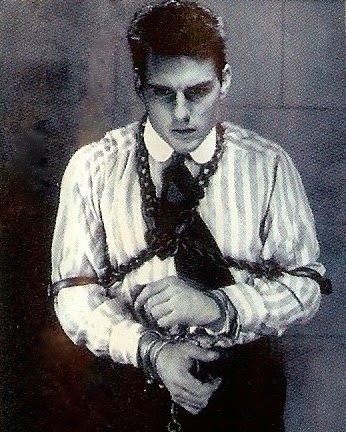
Reading the wild first draft of Houdini (1953)

Yesterday, I had the pleasure of visiting the Motion Picture Academy Library with Diego Domingo and reading several drafts of the Houdini (1953) screenplay, including Philip Yordan's first draft.

I feel like first drafts are when a screenwriter puts his heart into his work, and this first draft of Houdini, while still recognizable as the movie we have today, has some notable differences. Overall, is a very different and much more intense Houdini movie experience. It really got under my skin and is still haunting me today. 

This is the kind of thing I share on my Patreon these days, so if you're wild about Houdini (1953), you might enjoy the below.


Monday, April 14, 2025

Philip Yordan, the man who wrote Houdini (1953)

While working on a recent installment of Deconstructing Houdini '53, I realized that I rarely mention screenwriter Philip Yordan by name, even though the series is basically all about his work on the movie. In fact, I never even looked him up to see what else he may have done. As it turns out, Yordan had a very full career with over 100 credits, including Dillinger, El Cid, King of Kings, and Broken Lance, for which he won an Oscar. But there was one factoid that instantly jumped out at me.

Philip Yordan died on March 24, 2003. Houdini's 129th birthday!

I also found an excellent profile of Yordan in the Nov/Dec 2009 Noir City Sentile. I've shared that on my Patreon.


Check out my series Deconstructing Houdini '53, in which I bring to light the many hidden accuracies of this first and, IMO, still the best Houdini biopic.

Related:

Monday, August 7, 2023

Houdini and The Mummy's Hand

My bedtime reading these days is Tom Weaver's latest "Scripts from the Crypt" series about Universal's The Mummy's Hand (1940). I'm a big fan of Universal horror (an interest that pre-dates Houdini) and I love these books just as I loved Philip Riley's MagicImage Filmbooks that inspired them. But what does this have to do with Houdini, you ask?

The other night I popped in The Mummy's Hand and I was surprised to hear Houdini get a name check when the character of Steve Banning says, "This hopeless Houdini is Babe Jenson." (In the the script he says "fumbling Houdini".) 

Normally this wouldn't warrant a post as Houdini gets name checked in many movies. However, it struck me that this is the earliest mention I've yet encountered in a film made after Houdini's death (Cops would be the earliest movie overall). I also tend to think of the 1940s as a decade in which Houdini went into a bit of cultural eclipse, so that made this reference all the more surprising.

If you know of an earlier mention, please share in the comments. And if you want to pick up Tom Weaver's The Mummy's Hand, you can do so on Amazon.com.

Related:

Tuesday, December 13, 2022

The Boy Houdini makes The Black List


Deadline Hollywood has posted this year's Black List, a roundup of Hollywood’s "most-liked unproduced screenplays." Coming in under #11 is a Houdini project.

THE BOY HOUDINI 
Matthew Tennant 
New York, 1889. When young street urchin and aspiring magician Harry Houdini discovers a mysterious puzzle-box, he must use his talent for illusion and escape to unlock the box’s powerful secrets and keep it from the hands of a vengeful occult sorcerer hot on his tail. 
MANAGEMENT: ECHO LAKE ENTERTAINMENT 
MANAGERS: NICK ARNSTEIN, KARA HUME, KEGAN SCHELL 
PRODUCERS: IAN BRYCE PRODUCTIONS, OLIVE BRIDGE 

Sounds similar to Simon Nicholson's Young Houdini series or Marty Chan's The Ehrich Weisz Chronicles. Also sounds like the kind of thing Hollywood loves. Congratulations to screenwriter Matthew Tennant and his representation for making this list. Maybe this will help bring The Boy Houdini to the screen.

Sunday, May 29, 2022

My choice for Houdini is still Tom Cruise

This Memorial Day weekend Top Gun Maverick roars into movie theaters and is already setting box office records. I loved the movie and think it deserves all its success and more. Tom Cruise still knows how to make a movie for everyone.

But all this just reminds me of how close we came to having a big budget Houdini movie starring Tom Cruise. Cruise was interesting in, and may have even been attached, to the Houdini project producer Ray Stark tried for many years to launch at Columbia.

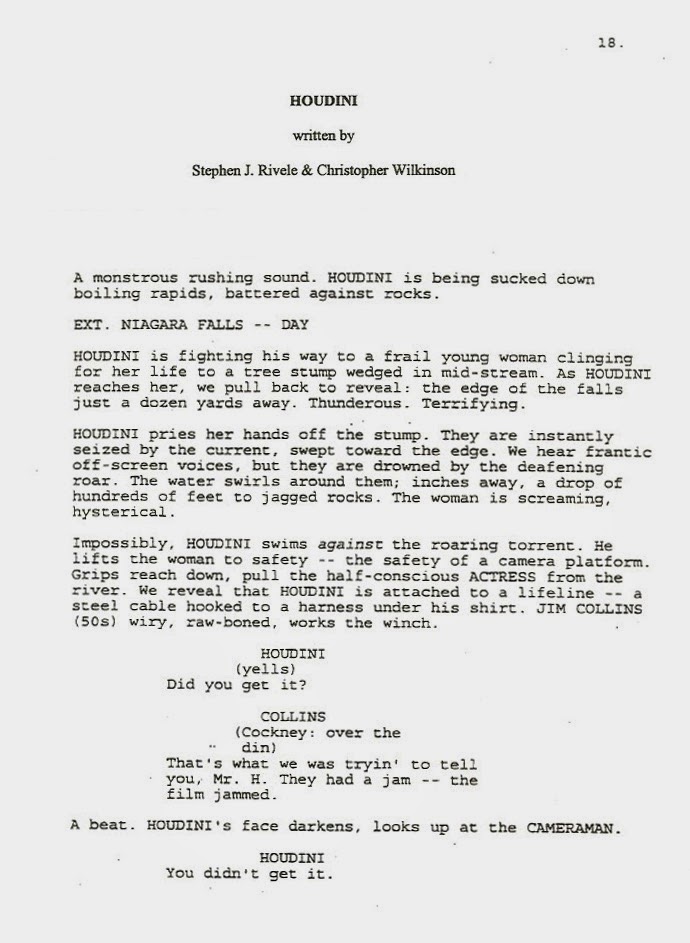
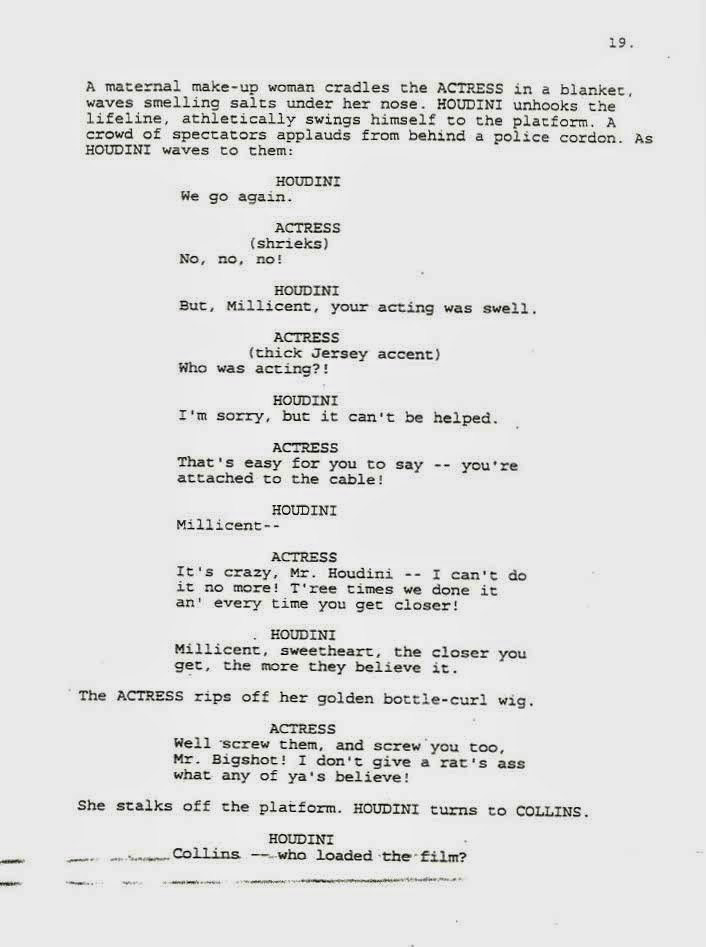
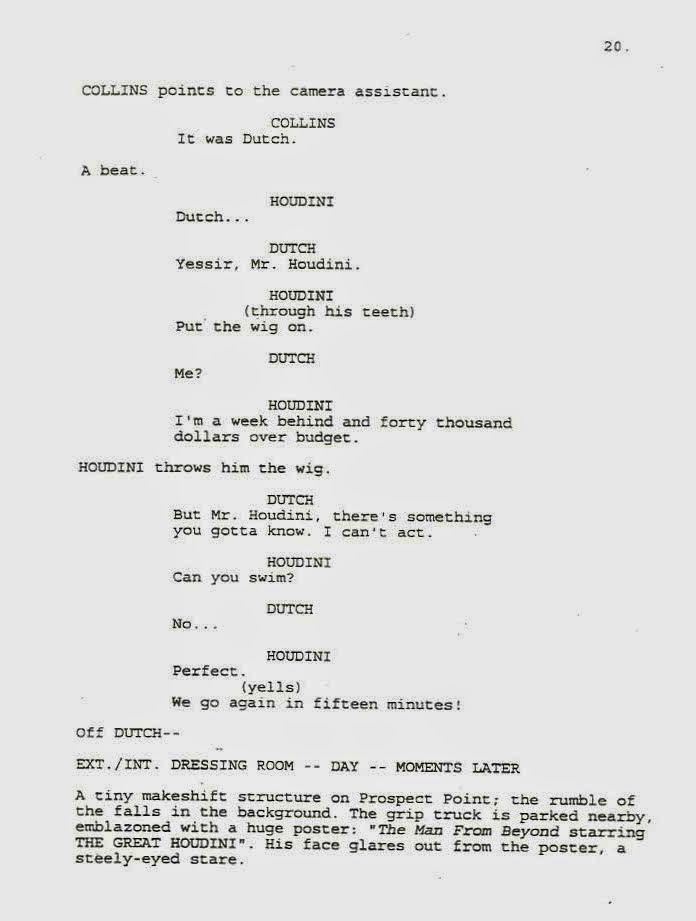
The one Ray Stark commissioned script I've read was written by Stephen J. Rivele and Christopher Wilkinson. It's excellent and on every page you can envision Tom Cruise in the part. An early scene in which Houdini is filming the rapids action for his movie The Man From Beyond, doing his own stunts and demanding perfection from his crew, seems right out of the Tom Cruise playbook. So does Houdini's drive, his intensity, his fearlessness, and his sense of moral justice. 

I really feel like Tom Cruise and Houdini are cut from a similar cosmic cloth and that Cruise would embody Houdini better than any other actor. And Cruise's compact 5' 7" frame is a nice physical match. Yes, I know he's now older than Houdini ever became, but have you seen Maverick? Apparently not an issue

Recently Paramount announced they were developing a new Houdini movie. Of course, Paramount is also the home base for Tom Cruise's production company, Cruise/Wagner. While the Paramount movie is being developed by a different producer, maybe the two can get together? Although, personally, I'd love to see them just go back and shoot the Rivele and Wilkinson script.

Oh, wait, Houdini and Tom Cruise....both pilots! So how about a movie dramatizing Houdini's race to be the first man to fly in Australia?


Click the links below to read more about the Houdini movies that never were. And see Top Gun Maverick. Trust me.

Sunday, May 1, 2022

LINK: The Marvelous Adventures of Houdini (1917)

Our good friend Joe Notaro at Harry Houdini Circumstantial Evidence kicks off a new series today in which he'll look at the 12 known film treatments written by Houdini. Some became movies (The Man From Beyond) and some did not (Yar, the Primeval Man).

Joe starts with Houdini's first treatment, The Marvelous Adventures of Houdini, The Justly Celebrated Elusive American. This almost became Houdini's first feature film in 1917...but I'll leave it to Joe to tell the tale.

Wednesday, June 10, 2020

The Heart Is Quicker Than The Eye – the unmade Houdini biopic of 1976


It's not generally known that when Melville Shavelson was preparing his 1976 TV biopic The Great Houdinis for ABC, a rival Houdini movie was in the works at NBC called The Heart Is Quicker Than The Eye. Produced by Paramount and Playboy Productions, the aim was to air the film in October to commemorate the 50th Anniversary of Houdini's death. Of course, this was also the proposed air date for the ABC film.

When asked about the coincidence of two Houdini projects, Edward L. Rissien, executive VP of Playboy Productions said, "There are many instances where a personality lends itself to two different treatments. We are proceeding as announced for NBC."

Patrick Culliton, who worked as a technical advisor on the NBC project, says two names producer Bill McCutchen mentioned for the role of Houdini were Robert Blake and Charles Bronson. Bronson was a big movie star so that was probably wishful thinking. But Robert Blake was a real possibility and a good choice. Blake was the star of the hit TV show Baretta at this time. Actress Joan Hackett was mentioned as a possible Bess. While no casting was finalized, production was announced to begin March 15, 1976.

A copy of the screenplay by Jean Holloway resides at the The William H. Larsen Sr. Memorial Library at The Magic Castle. What's most striking is how close this script follows the Harold Kellock book, Houdini His Life Story. It's almost as though Holloway had the book opened in front of her and transcribed it beat for beat. But this means The Heart is Quicker Than The Eye would have been the most accurate of all the Houdini biopics. Hardeen, Martin Beck, Margery, and Sir Arthur Conan Doyle all feature in the film. And while Houdini does break his ankle in the Water Torture Cell, he does not die in it. In fact, his death is for the first time depicted accurately.

But somehow all this doesn't make for a better movie. The script is plodding, repetitive, and strangely dull. "I suffered through a treatment and three drafts of Jean Holloway's script as a research man," says Patrick. "I hated them all."

One original aspect Holloway introduces is the suggestion that Bess possesses true powers of extra sensory perception that she does not fully understand. But she is able to foretell events and successfully warn her husband off danger (when he'll listen). This is pretty interesting and I love the irony that Bess is the Houdini with the true powers. But it isn't developed far beyond the first act, and Bess's role in the film is largely to be a worried wife.

A fun detail is when Houdini is examined by a doctor for a burst blood vessel in his kidney (a regular source of pain for him in this script as it was in real life). The doctor's name is Larsen. Is this a nod to the famous Larsen magic family of Magic Castle fame? Could they have even considered having Bill Larsen Jr. play the role? Remember Bill was in Houdini (1953) as the S.A.M. head chopping magician, so this would have been a fun nod to this first Houdini biopic.

So what happened to The Heart Is Quicker Than The Eye? Despite Playboy's assurance that they were moving ahead, it appears the announcement of The Great Houdinis was enough to give the network cold feet. Says Patrick, "At that time, a decision to go with our Houdini movie took NBC a year, the decision for ABC to go with Mel Shavelson's project seemed to have been made in a week. Bill McCutchen was trying to save his project, but, it was over. We'd been scooped."

Patrick went on to work on The Great Houdinis, and even appears in the film as Franz Kukol.

The novelization for The Great Houdinis says it is a co-production with Playboy, so it's possible some kind of agreement was worked out between the networks and production companies. Whatever the case, The Heart Is Quicker Than The Eye was shelved and ABC's The Great Houdinis was the sole Houdini film to take to the airways that anniversary year.

Related:

Monday, October 1, 2018

FINAL WEEK to catch Houdini on Catalina Island


This is the final week to see the exhibition Houdini: Terror on the Magic Isle at Catalina Island Museum in Avalon. The last day will be this Sunday, October 7.

Housed in the museum's standalone SAPAP Gallery, the exhibit tells the story of Houdini second Hollywood feature, Terror Island, from its conception, through its filming on Catalina, all the way to its opening at the local Catalina Island movie theater in 1920.

Among the treasures on display are original letters penned by Houdini while on location; pages from the original screenplay (above); original stills; lobby cards; magazines; the pressbook; a pair of authentic Polynesian spear handles, said to be the only known surviving props from the movie (right); and recently discovered issues of The Catalina Islander newspaper from 1919 covering the filming of the movie as well as Houdini's infamous near drowning incident in front of the Hotel St. Catherine. An authentic 1910 diving helmet, identical to the one seen in the film, is also on display.

Almost all the artifacts are being displayed for the first (and likely only) time. Among the contributors are: Arthur Moses, Mark Willoughby, Fred Pittella, Joe Notaro, Chip Romero, the Motion Picture Academy Library, and myself.

Catalina Island can be reached using the Catalina Express, which runs boats to and from the island all day long. The ride takes about an hour. Just watch out for cannibals!

Houdini, wizard of the stage and screen, was reported to have declared that Santa Catalina Island was the most ideal spot that he had ever come across, and that when he had finished his work before the footlights that he intended to come back to the island and build a magnificent home.
- The Catalina Islander, 1936

For more information visit the Catalina Island Museum website.


Related:

Saturday, May 5, 2018

Houdini is back on 'Terror Island' starting TODAY


Today sees the opening of Houdini: Terror on the Magic Isle at the Catalina Island Museum in Avalon. The exhibit is devoted to Houdini's second Famous Players Lasky-Paramount feature film, Terror Island, which Houdini filmed on Catalina in November and December of 1919. It runs through October 7, 2018.

Last night the museum held its First Friday "Magic at the Museum" event featuring World Champion Magician Johnny Ace Palmer, preceded by a short Houdini talk by myself. The event was very well attended and offered everyone a first look at the exhibition. I can tell you, this is something very special.

Housed in the museum's standalone SAPAP Gallery, the exhibit tells the story of Terror Island from conception to its opening at a local Catalina Island movie theater in 1920. Among the treasures on display are original letters penned by Houdini while on location; pages from the original screenplay (showing the original title, SALVAGE); original stills; lobby cards; magazines; the pressbook; a pair of authentic Polynesian spear handles, said to be the only known surviving props from the movie; and recently discovered issues of The Catalina Islander newspaper from 1919 covering the filming of the movie as well as Houdini's infamous near drowning incident in front of the Hotel St. Catherine. An authentic 1910 diving helmet, identical to the one seen in the film, is also on display.

Almost all the artifacts are being displayed for the first (and likely only) time. Among the contributors are Arthur Moses, Mark Willoughby, Fred Pittella, Joe Notaro, Chip Romero, the Motion Picture Academy Library, and myself.

The story of the making of Terror Island on Catalina is told with screen captures and photos of the locations as they exist today (this information has never appeared before). The museum also reconstructs the missing Reels 3 & 4 in an audio-visual presentation using stills and text from the original screenplay.

There is great artistry in how the exhibit is laid out, making this one of the most unique and special Houdini exhibitions that has ever been offered. And it's on Terror Island itself! That's magical. Credit is due hard work and skills of curator Julie Perlin Lee (who has become a bit of a Houdini nut herself during this process), assistant curator Jessica Zumberge, Gail Fornasiere, and all the staffers who clearly take pride in their beautiful island museum.

Of course, what would a Terror Island exhibition be without a screening of the movie itself? So on May 19th, the museum in conjunction with the annual Silent Film Benefit will screen Terror Island in Avalon's famous Art Deco Casino with live musical accompaniment by Michael Mortilla. Tickets can be purchased HERE.

And if you need a further inducement, the museum also has a fantastic exhibit devoted to the movie JAWS. The city of Avalon is also festooned with advertisements for the Houdini exhibition and the upcoming Terror Island screening. It's just so cool that after 99 years, Houdini back as a star on Catalina Island.


Catalina Island can be reached using the Catalina Express, which runs boats to and from the island all day long. The ride takes about an hour. Just watch out for cannibals!

Houdini, wizard of the stage and screen, was reported to have declared that Santa Catalina Island was the most ideal spot that he had ever come across, and that when he had finished his work before the footlights that he intended to come back to the island and build a magnificent home.
- The Catalina Islander, 1936

For more information on Houdini: Terror on the Magic Isle, visit the Catalina Island Museum website. I will also keep you updated on upcoming screenings and related special events. The summer of Terror has begun!


UPDATE: Joe Notaro has a nice report on Friday's event at his blog, Harry Houdini Circumstantial Evidence.

Related:

Monday, February 26, 2018

Early Houdini letter sells for $18,720

An early handwritten Houdini letter from 1897 sold for a whopping $18,720 (including 17% premium) at Haversat & Ewing's Winter Magic Auction this weekend. This shattered the $4,750-5,000 reserve price. The letter is written on early stationary promoting "The Houdinis" and their signature trick, Metamorphosis.

The Houdini's Metamorphosis Stationary. Handwritten and signed by Houdini June 10, 1897. Content includes Houdini and Bessie performing at Fairview Amusement Park in Dayton, Ohio on June 14, 1897. Reverse contains a full page of vignettes of The Houdini's Metamorphosis! Only other known example is in the Library of Congress, but trimmed and without handwriting of Houdini. This may be the only known example with handwritten correspondence directly from Houdini. $4,750-5,000.

As high as this price is, it's actually not the highest I can recall for a Houdini-related letter. In 2011, a letter from Harry Kellar to Houdini congratulating him on his vanishing elephant sold for $32,500.

An original screenplay for Houdini (1953) sold for a surprisingly high $4,504. Another early (1900) handwritten Houdini letter fetched $3,685.

Related:

Sunday, March 12, 2017

The Secret Life of Houdini screenplay reviewed

Here's one that's a spoiler if Lionsgate's The Secret Life of Houdini movie ever gets made. If not, then we have a record of what might have been. Either way, if you're curious to know what the Hollywood brain trust has cooked this time (at least as far as a draft dated May 13, 2011), here's a taste from the website Scriptshadow:

Houdini starts out like you think any biopic would start out. We get one of those oft-used cross-cuts between the present (Houdini trying to salvage a buried-alive trick gone wrong) and the past (Houdini as a child stealing a loaf of bread for his starving family). I figured I was in for one long biopic retread. 
But then things get weird. President Woodrow Wilson calls Houdini and tells him that his 28 year-old daughter, Margaret, has been kidnapped by someone in France. Wilson believes Houdini’s unique talents make him the perfect agent to go and retrieve his daughter. 
Looking for a new challenge, Houdini teams up with Wilson’s stuffy lackey, Andrew Day, and the two seahorse their way to La Francoise. Once there, Houdini calls upon old friend (and rival) Chung Ling Soo, a famous magician who’s been known to publicly roast Houdini. But no worries, it’s all for show, as is Chung himself, who’s actually, under all the make-up, a white American!

If you want to read on, then check out the full review at Scriptshadow HERE. The site also has a review of a 2003 script called The Book of Magic that teams Houdini and H.P. Lovecraft.

Related:

Friday, December 19, 2014

A scene from Ray Stark's 'Houdini'

Until the Houdini miniseries aired earlier this year, no Houdini biopic had ever acknowledged his movie career. But that would have been different had the big-budget Ray Stark Houdini movie been made in 1998 as planned. That film, which may have starred Tom Cruise, featured a scene set at Niagara Falls during the making of Houdini's The Man From Beyond. Here is that scene from the original screenplay by Stephen J. Rivele and Christopher Wilkinson.


In real life, Houdini's leading lady was Jane Connelly, who gamely did all the Niagara stunts required of her. It is true that Houdini employed a safety line during shooting. Dummies were also used in some shots, and even sent over the falls in a canoe.

You can read more details about Houdini's Niagara Falls shoot and Ray Stark's unmade Houdini movie via the links below.

Related:

Wednesday, December 17, 2014

Ray Stark's 35 year Houdini conundrum

No Hollywood producer tried harder or longer to make a movie about Houdini than Ray Stark. For more than three decades, Stark struggled to bring Houdini back to life on the big screen. Because he never succeeded, Stark's efforts and various approaches have gone largely unrecorded. So I thought it would be interesting to share details of the Ray Stark-Houdini saga in this update of an article I first penned for the Houdini Historical Center's newsletter "Mystifier" back in 1996.


Ray Stark scored his first great success as a producer with the Broadway musical, Funny Girl, the story of Vaudevillian Fanny Brice (who happened to be Stark's mother-in-law). The 1964 musical jettisoned a then unknown Barbra Streisand to stardom. Stark would go on to produce a film version of Funny Girl (and a sequel, Funny Lady) and dozens of other acclaimed films, such as: The Way We Were, The Goodbye Girl, The Sunshine Boys, Robin and Marian, Smokey and the Bandit, Murder By Death, Annie, and Steel Magnolias. But one of the projects Ray Stark most wanted to make was a movie about Houdini.

Stark's first foray into the world of Houdini was in 1969 when he announced he would follow-up Funny Girl with a Broadway musical based on the life of Houdini called Hocus Pocus. Stark purchased the rights to William Lindsey Gresham's biography, Houdini: The Man Who Walked Through Walls, and commissioned Byron Cufnah to write a treatment and Bob Merrill to write the songs. Sam Denoff and Bill Persky would write the finished book. Stark called the production an "extravaganza" because of the size of the cast and complexity of the effects. It would even include a full size vanishing elephant. Then, as it was to do again and again, Ray Stark's Houdini project escaped the production charts. Hocus Pocus simply disappeared.

The '70s Houdini: James Caan.
Five years later, Stark was back. Buoyed by his recent film successes, Stark decided to abandon the Houdini stage musical idea and instead turn the magician's life into a major motion picture. Stark teamed with producer John Houseman, who hired writer-director James Bridges (The Paper Chase) to develop The Magic Man: The Story of Houdini. Anthony Burgess, who once developed a Houdini musical with Orson Welles, was hired to pen the screenplay. James Caan, fresh off his success in The Godfather, was touted as the lead. On the strength of the talent involved, Columbia Pictures agreed to distribute the film.

Stark's reappearance was not without its careful timing. Only a week before, Paramount Pictures had announced a plan to make their own Houdini movie. Called simply Houdini, the film was to be based on the Harold Kellock biography Houdini, His Life Story, as had been their 1953 star vehicle for Tony Curtis. This time the Paramount film would be produced by William McCutcheon and RSO Films; shooting was set for early 1975. On Sept. 18, 1974, the showbiz trade paper Variety announced the rival projects with the headline, "Col Joins Par in Houdini Pic Race." Both pictures promised to be in production within the year.

A year came and went, and Paramount's Houdini never materialized. Meanwhile, Stark was having his own troubles. The producer was unsatisfied with the Burgess-Bridges drafts of The Magic Man, so he turned to screenwriter Carol Sobieski. However, Stark found her efforts too similar to the other scripts, all of which told Houdini's story in linear terms. Looking to break out of this form, Stark hired William Goodhart, a Broadway playwright and screenwriter with an interest in theology and the occult. Goodhart delivered what was said to be the most unusual of all the Houdini scripts, The Death/Birth of Houdini. But the studio feared the new script was too similar to Bob Fosse's semi-autobiographical All That Jazz, then in development across town at 20th Century Fox. Stark also found Goodhart's script unsatisfying.

Stark then decided to take a bold new approach. He would abandon the biopic concept entirely and create a fictional Houdini adventure. To do so, Stark hired William Hjortsberg who turned in two film treatments. One was a metaphysical time travel fantasy; the other a murder mystery similar to the Sherlock Holmes vehicle, The Seven Per-Cent Solution. Neither of the Hjortsberg treatments were turned into full scripts. (In 1994 Hjortsberg published the book, Nevermore, in which Houdini and Sir Arthur Conan Doyle track a serial killer in New York.) Stark then returned to his original idea of doing a Houdini stage musical. He supplied test funds to New York-based director and choreographer Elizabeth Swados, but the results were discouraging.

Why was it not working? How could so many talented writers fail to break Houdini free of what Hollywood calls "development hell"? In a private memo, Stark confessed his fear that magic and escape artistry may not register alongside modern special effects. Journalist Jeffrey Wells -- hired by Stark to author a critical overview of the Houdini project -- suggested that maybe Houdini's life "simply doesn't add up to strong drama, or that his character is too prudish and Victorian to find favor among today's audiences."

But in a letter to the LA Times, James "the Amazing" Randi argued that finding an exciting plot in the life of Harry Houdini was "about as demanding as discovering a sports theme in the Babe Ruth story." He argued that Stark "would do well to represent the true story of Harry Houdini, a story that needs no Hollywood fabrications."

Stark and his efforts to make his Houdini movie went dormant for much of the 1980s. One writer-director Stark did meet with was Nicholas Meyer, who had scored great success with Star Trek II: The Wrath of Kahn. But Meyer told the producer he would only do his Houdini project if Stark optioned his father's book, Houdini: A Mind in Chains. Stark was not interested in the quid pro quo deal and nothing ever came of their meetings. (Meyer would eventually make that deal with producer Gerald Abrams and write the Houdini miniseries in 2014.)

The '90s Houdini: Tom Cruise.
In the early 1990s, Ray Stark and his Houdini project made a dramatic reappearance when director Robert Zemeckis signed aboard what was now called The Great Houdini. Screenwriters Peter Seamen & Jeffrey Price would pen a new script that would tell Houdini's story as "a magical special effects-laden adventure." Tom Cruise was the favorite for the lead. The film's huge budget was to be split by Columbia Pictures and Universal -- Columbia getting the U.S. distribution, and Universal the foreign. The project at long last appeared on production charts as a "go" picture. It finally looked like Houdini was free.

But on September 23, 1992, a headline in Variety spelled out Stark's worst nightmare: "Houdini Eludes Zemeckis." Even though the director called the Seamen and Price script "the most interesting, dynamic, and most filmic of all the versions," he admitted he wasn't "100 percent certain what direction the project needs to take." Stark himself was less diplomatic: "We are not satisfied with the script that was developed, but I assume we will be working on a new draft very shortly with Zemeckis." His assumption was wrong. Zemeckis went on to direct Forrest Gump and win the Academy Award, while The Great Houdini went back to "development hell."

Variety: September 23, 1992.

Hoping to persuade Zemeckis to return, Columbia chairman Mark Canton made reviving the Houdini project a top priority. Sean Connery had just agreed to star as Robert-Houdin in the action/adventure-oriented Smoke & Mirrors, and HBO had purchased the new Ruth Brandon biography The Life and Many Deaths of Harry Houdini for possible adaptation. With rival projects looming, Stark's production company Rastar worked overtime to create a new Houdini screenplay. Eager screenwriters churned out Houdini "spec" scripts (scripts written without a contract in an attempt to make an outright sale) -- but none sufficiently captured the essence of the great magician for Stark. (Even I took a general meeting with Stark's company in my early screenwriting days. I recall a copy of the Silverman biography on their coffee table). Finally, screenwriter Anna Hamilton Phelan (Gorillas in the Mist) was commissioned to take a crack at the story.

After meeting with renowned San Francisco medium Carter Austremuhl, Phelan came back with an approach to tell Houdini's story as a battle with the mystical -- how his obsession with death and the unknown traced back to his strict rabbinical father, "who forbade discussion of all things magical." In August, Michael Fleming reported in his Variety "Dish" column that Phelan had "pulled a rabbit out of her hat and turned in a script that Stark and the studio execs love" and that a spring 1996 start was anticipated. But the truth was Phelan hadn't even turned in a draft. The article was just a clever bit of misdirection by Stark to scare away the competition and buy time for a fresh approach.

The writers who would eventually deliver that fresh approach, and a finished script, were Stephen J. Rivele and Christopher Wilkinson. The veteran scribes, who had tackled Nixon for Oliver Stone in 1995, focused their story on Houdini's famous confrontation with the medium Mina "Margery" Crandon. The thrilleresque script blended fact with fiction and offered some dramatic recreations of not only the Margery sittings, but also the Water Torture Cell, Buried Alive, and the Russia Transport Prison Van escape. The movie opened with a dramatic depiction of Houdini's famous sea monster challenge (below).

First pages of the Rivele and Wilkinson's Houdini screenplay.

The Rivele and Wilkinson script captured the attention of director Paul Verhoeven who signed aboard the project in September 1997 after two months of negotiations. "I'm not a fan of Houdini, but not an anti-fan, either," said the director. While it had been reported the studio would "go right to Tom Cruise to play the master magician," now it was said that studio was in discussions with "two or three major stars." An optimistic Columbia Pictures announced their intentions to begin production in early 1998 for a Christmas release that same year.

However, a year after Verhoeven joined the project, he suddenly departed, explaining to trades, "Houdini's spiritual life was all about his mother when she was alive and when she was dead, and I just couldn't solve that and make it a movie."

Undeterred, Columbia announced that Ang Lee was now at the top of their list to replace Verhoeven on the "high-profile biopic." However, a deal with Lee was never made. Meetings with screenwriter David Webb Peoples also proved unfruitful. But Stark was not giving up. In 2004, he was still talking about his Houdini movie and claimed that he still had Tom Cruise attached as the lead.

On January 17, 2004, Ray Stark passed away in his home in West Hollywood of heart failure. He was 89. With Stark went his dream of making a big budget Houdini movie.

Sources:
  • "Col Joins Par in Houdini Pic Race," Daily Variety, September 18, 1974.
  • Fleming, Michael. "'Houdini' makes escape," Daily Variety, August 24, 1995.
  • Fleming, Michael. "Verhoeven eyes 'Houdini'," Daily Variety, July 10, 1997.
  • "Houdini needs helmer," Daily Variety, June 2, 1998.
  • Marx, Andy. "Houdini Eludes Zemeckis," Daily Variety, September 23, 1992.
  • Petrikin, Chris. "Col may tie Lee to 'Houdini'," Daily Variety, July 15, 1998.
  • Randi, James. "The Magic Man" (Letter to the Editor) Los Angeles Times, October 1992.
  • Ray Stark Plans Broadway Musical On Harry Houdini," Hollywood Reporter, August 4, 1969.
  • Voland, John. "Verhoeven will helm 'Houdini,' Daily Variety, September 30, 1997.
  • Wells, Jeffrey. "Houdini, the Movie: Many Have Escaped Already," Los Angeles Times, October 11, 1992.
  • Tom Cruise mockup photo from Movieline May 1998.

Thursday, December 4, 2014

'Houdini' nominated for WGA award

Nicholas Meyer's screenplay for the Houdini miniseries has been nominated by The Writers Guild of America for outstanding achievement in television in the "Long Form Adapted" category. The miniseries is credited as being based on Houdini: A Mind in Chains by Bernard C. Meyer, M.D (although to my eye it's largely adapted from the uncredited work of William Kalush and Larry Sloman's The Secret Life of Houdini).

The competition is Klondike by Paul T. Scheuring (Discovery Channel); The Normal Heart by Larry Kramer (HBO); Olive Kitteridge by Jane Anderson (HBO); and “Pilot” by Damon Lindelof & Tom Perrotta (HBO).

Winners will be announced at the 2015 Writers Guild Awards on Saturday, February 14, 2015, at simultaneous ceremonies in Los Angeles and New York City.

UPDATE: Houdini lost to Jane Anderson and Olive Kitteridge (HBO).

Thursday, September 4, 2014

LINK: Houdini, My Father and Me

In my review of the Houdini miniseries, I certainly had some things to say about screenwriter Nicholas Meyer's work. So I thought it only fair to share Meyer's own thoughts on Houdini and his approach to the writing the miniseries. This is an article he wrote for the The Jewish Daily Forward late last month. Read by clicking the headline or link below.

"There is unsubstantiated speculation that he also toiled in the clandestine world of espionage on behalf of the United States and Great Britain. Like so much of his mythopoesis, the Italian expression se non è vero è ben trovato ("even if it is not true, it is well conceived") seems to apply."
- Nicholas Meyer

Wednesday, September 3, 2014

REVIEW: History gets a C- in Houdini

The Houdini miniseries is a strange confection of fact and fantasy that is stylish and breezy enough to be entertaining to general audiences, but will disappoint and confound anyone with even a basic understanding of the real life of Harry Houdini.
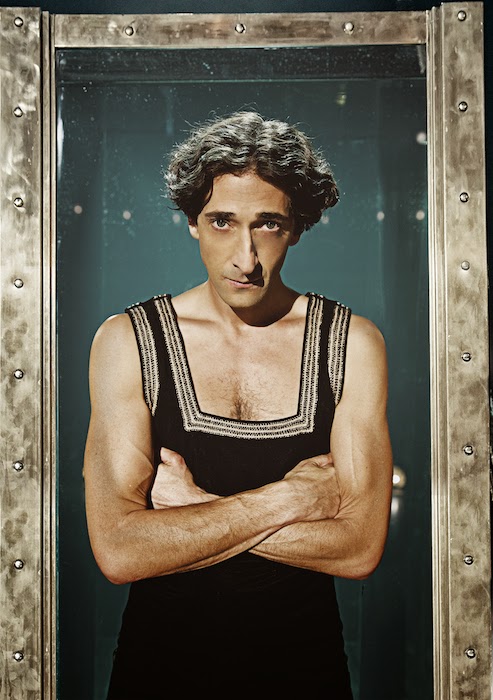
Houdini star Adrien Brody.
Anyone who has spent any time reading this blog knows that I am forgiving to a fault about inaccuracies in Houdini biopics. I love the 1953 Tony Curtis Houdini movie, despite the fact that Houdini biographer Milbourne Christopher correctly pointed out that, "If any phase of Houdini's life is shown on the screen you can be sure it didn't happen the way it's pictured." My favorite biopic is The Great Houdinis (1976), even though it invents a family triangle that made David Lustig, who knew Houdini personally, "feel nauseated."

I don't have a problem with these movies. Because at the end of the day, they still adhere to the basic superstructure of Houdini's life and career. Their dramatizations do not really change anything that is vital to our understanding of the Houdini story. A basic summary of these biopics will still give you the story of Houdini. That's because they had screenwriters who did their research, and even though they had to work within the Hollywood machine, and create conflict and drama, they showed respect for the notion of a biopic and respect for Houdini.

Screenwriter Nicholas Meyer is a hero of mine. He wrote what I consider to be the best Sherlock Holmes novel, The Seven-Per-Cent Solution. He wrote and directed the best Star Trek movie, Star Trek II: The Wrath of Khan. And don't even get me started on the awesomeness of Time After Time and, yes, I even kinda LOVE Volunteers. So when I heard he was writing the Houdini biopic, I was very excited. Sure, it would have fictionalizations, but that's the nature of the medium, and like the screenwriters who came before, Meyer would find a balance. I spent a better part of a year pre-explaining this.

Screenwriter Nicholas Meyer.
Well, it kills me to say that if any screenwriter can and should be sued for malpractice, it is Nicholas Meyer for his work on Houdini (at least in the first night). Meyer's script is not "artistic license," it's negligence, and at times Houdini is so bad it's actionable (I will explain later). When Houdini's life doesn't fit his fictions or lazy assumptions, he changes the life. How, when, and where Houdini finds fame and success -- a key component in the life story of any entertainer -- is completely thrown out the window for a version that is straight out of Meyer's imagination. Here, Houdini rockets to worldwide fame via a single "Johnson County" jail break in 1896. That's it. No Martin Beck. No trip to Europe. No Alhambra debut. No Scotland Yard challenge. Houdini springs fully formed (complete with Water Torture Cell) and is already the "most famous man in America" by 1900. This is so far from the truth it's shocking.

Now, I don't think I'm being nit-picky here. I'm not counting rivets on the Milk Can. I'm talking about something that is as fundamental to the story of Houdini as Pearl Harbor is to a story of World War II. Some things you cannot change, and it doesn't matter if you're the guy who made Star Trek II. Doing so shows a brazen disrespect for the subject and for the audience, and you will lose the world's most forgiving and supportive Houdini fan -- me.

Meyer's other offenses are more fundamental and just plain sloppy. He misspells Houdini's real name as Erich (it's Ehrich). He portrays a deep rift between Ehrich and his father, but never explains it. He presents the Water Torture Cell as Houdini's first major escape ... in 1900! Not just horrendously wrong, but it effectively erases the entire progression of Houdini's art and career. He places Houdini's home in Brooklyn instead of Harlem, seemingly for no reason other than personal taste? Houdini was a cinema pioneer. Meyer makes him a cinema holdout. Houdini was a famous teetotaler. Meyer shows him drunk. Houdini created an act and an identity for his brother as Hardeen in 1900. Meyer shows Hardeen performing successfully in the 1890s while Houdini is still struggling to make his own name. What kills me is Meyer just seems to take the approach that the truth doesn't matter. The truth is what works for him at the moment. The entire thing feels lazy, arrogant, and even amateur.

But it soon becomes clear why Meyer so badly mangles the facts of Houdini's early life, and to be fair, he may have been forced into this by producer Gerald W. Abrams, who bears as much responsibility for what we see here as Meyer. Because at minute 40, Washington D.C. comes a'calling and sends Houdini off to Europe as a secret agent! Now, this 2006 theory that Houdini did "spy" work for the U.S. and UK is HIGHLY dubious (and more so with each passing year of total silence on the subject from the authors who first proposed it) and should never have been included in something that purports to be a biopic. But Hollywood cannot resist a spy movie, and it dominates Night One. Suddenly, Houdini's career is sidelined and the miniseries turns into "Harry Houdini of the Secret Service," with Brody taking orders from "M" (get it?), running across embassy rooftops, and using his magic act only as a "cover." What was that about feeling nauseated?

Once the floodgates have been opened, more fictionalizations come pouring forth, supplanting real events in Houdini's life that would have provided much better drama. Instead of standing trial in Germany and proving himself by performing escapes in a courtroom (as really happened), Meyer substitutes a scene of Houdini doing a bullet catch for the Kaiser (never happened). Instead of his dramatic escape from the Siberian Transport Prison Van in Russia, we get a magic performance for the Royal family and a disapproving Rasputin (who, by the way, would not arrive on the scene for another two years). We also get to see Harry having a kinky affair with British painter Lady Butler which, of course, is pure kinky fiction. This all threw me so badly that I found Night One pretty hard to watch, even though it was nice to see things like Houdini's aviation career finally included in a Houdini movie (notice I didn't use biopic).

However, as I said, much of Meyer's machinations are so the silly spy elements will fit the narrative. This is why Night Two, which is finally free of the spy element (thank you, World War I!) is MUCH better. In fact, Night Two shows us what could have been, and goes a long way toward redeeming the disaster of Night One. Sure, artistic license and time compression are employed, but there finally seems to be an effort to tell Houdini's story accurately and respectfully. Meyer even resists the temptation to go directly from Mama's death (incorrectly dated as 1914 -- a year Meyer assigns to just about everything) to spiritualism, and therefore is able to give Houdini's movie career its due. This is the first time any biopic has done so and what a joy to see Harry and Bessie sitting in a Hollywood screening room watching The Grim Game with Brody dangling from the plane.

The best scenes in the miniseries are among the last -- Houdini's death in Grace Hospital in Detroit. Here the actors finally get to play dramatic scenes without the incessant voice over and hyperactive editing effects (more on that later). Houdini's bedside conversation with his doctor is right out of real life. The details of Houdini's death, while dramatically time compressed, are largely accurate. Houdini does not die in the Water Torture Cell in HISTORY's Houdini, which is a first. This shows that Meyer did do his research and, yes, might even care. And if you've made it to the very end without throwing a shoe through your TV screen, there is real footage of Houdini's graveside funeral that has never been shown before, including a look at the large "Mother Love" floral arrangement. Wonderful.

Meyer also has his moments of brilliance. After failing to seduce Houdini in his hotel room, Margery, nicely played by Megan Dodds, turns to him and says, "When you die, we will make you say whatever we like." That's a great piece of dialogue and shows just how good a Houdini biopic can and should be. I just wish whatever hand guided this second night was present during the first.

Producer Gerald W. Abrams.
Stylistically, Houdini is a very mixed bag. Producer Gerald W. Abrams said his inspiration was the Robert Downey, Jr. Sherlock Holmes (oh, why could it not have been Boardwalk Empire?). So Houdini strains to ape director's Guy Ritchie's filmmaking style with hyperactive speed ramping and frenetic editing. This works well ... when it's done by Guy Ritchie. It doesn't work here. It feels desperate, dated, and distracting. So does much of John Debney's bombastic score. Also, the entire 4 hour miniseries (3 without commercials) uses Harry's voice over to explain motivation and make transitions. There's some nice dialog in here -- "Most people escape life, I escape death" -- but voice over is a lazy narrative device that generally works to keep the viewer removed from the drama. It all feels like exposition. You keep waiting for the real story to start. Superimposed titles are used throughout to locate the action, yet not a single one is accurate. Why use locators if they are not identifying something real? It's just all part of the masquerade of a biopic.

The beautiful breakout talent of Kristen Connolly (House of Cards) is criminally under-used as Bess. Meyer writes Bess as somewhat dim and present largely to nag Harry into doing things like giving up his escape career (which, of course, never happened). At one point she even blurts out, "I'm just a dumb girl who married a Jew." This is a horrendous thing to put into Bess's mouth and disrespectful to her memory. Nevertheless, Connolly is still able to punch her way through this surprisingly chauvinistic script and deliver a feisty, funny, and very likable Bess. She also delivers heartbreakingly honest moments, such as the aforementioned scene when she talks Houdini out of performing escapes, and her death bed scene with Brody is perfection.

Speaking of the women in Houdini's life, call me crazy, but is there a weird sexual energy between Mama, played by Eszter Ónodi, and her son from their first scene to their last? More than once an object of Harry's sexual interest morphs into his mother. And mama's fixation on her son, both in human and spirit form, comes off as downright creepy. Is this the unstated problem between Houdini and his father? Even the official press material teases: "Houdini and his mother Cecelia had a close and loving relationship, some would say too close." Hmmm... Let's change the subject.

Magic! The magic and escapes in Houdini are beautifully recreated and staged, especially the cannon escape, and Houdini could only wish his own Vanishing Elephant was as effective as it is here. Kudos to technical advisor David Merlini. But its also here that Houdini commits its worst offense, and this is no joke. Houdini freely and cavalierly exposes secrets for no plot reason whatsoever. And these aren't small tricks: Metamorphosis, the Milk Can, the Bullet Catch, Walking Through A Brick Wall (although in this case it does serve the narrative and I would give it a pass). This is the first Houdini biopic to cross this line, and it's a shame to see cinema betray the art that was part of its birth. This is especially distressing as Adrien Brody started out as a magician and still has a deep interest in the art of magic. You'd think the Oscar winner could have had some say in stopping this. I'm hoping that the S.A.M., IBM, and AMA officially condemn this miniseries for this serious transgression.

On the topic of actionable issues, while the movie credits as its source Houdini: A Mind In Chains by Bernard C. Meyer (screenwriter Nicholas Meyer's father), it clearly isn't. There's nothing here about Leo and Sadie Weiss which is key to the Meyer book. Instead, Houdini is clearly adapted from The Secret Life of Houdini: The Making of America's First Superhero by William Kalush and Larry Sloman. Houdini's "spy" activities and Bessie's marijuana use (sigh) are only found in the Kalush/Sloman book. And there are dozens of other examples. Possibly the inclusion of Lionsgate as a producer means some kind of deal was made to use this exclusive material (they acquired the book when they bought Summit Entertainment in 2012), so maybe the only offense here is that on-screen credit was denied Kalush and Sloman so it could be given to the screenwriter's father. But this just adds to an overall feeling that something untoward is going on at the screenwriting level.

Okay, the script has problems, but what about the other aspects of the film, Mrs. Lincoln? Well, that is also a heartbreaker, because the technical work on Houdini is simply breathtaking! Shot entirely in Budapest, Houdini had a talented crew who clearly gave it their all. Costume and production design by Patrizia Von Brandenstein is phenomenal. The almost 300 special effect shots give the movie scale and scope. Uli Edel did a find job directing, and all the supporting cast deliver excellent performances. Even Adrien Brody, a poor physical match for Houdini, delivers a pitch perfect performance and projects a charisma that he surely shares with The Handcuff King. He's a great Houdini.

In fact, if you make your peace with the inaccuracies and watch this as Houdini fiction -- a tale told by an unreliable narrator "with just enough truth to make you believe the lies" -- it can be very enjoyable indeed. And I think it will be just that for general audiences. Because it's possible that I'm now Milbourne Christopher, watching the Tony Curtis movie and finding it impossible to see the value of something that doesn't follow the facts. And it's also just as possible that there is a 10-year-old version of me out there who will watch this miniseries, as I watched the Curtis movie, and find themselves captivated by the story of Houdini and will want to discover for themselves the truth of this amazing man. And in that way, this modern version of Houdini might just be magical after all.

Thank you and goodnight.

Read my Fact Checks of NIGHT ONE and NIGHT TWO. Houdini will be released in an extended edition (26 additional minutes) on DVD and Blu-ray on October 7.

Monday, January 13, 2014

Sony conjures a new screenwriter for 'Houdini'

Looks like Sony's Houdini movie is still alive with Deadline Hollywood reporting that Chronical screenwriter Max Landis (son of director John Landis) has been hired to work on a new draft of the film being produced by Jimmy Miller.

Deadline says the the story is being told "with an H.P. Lovecraft influence" and that "this gives new momentum to the pic." I revealed last year that the Sony project included a large element of the supernatural with Chung Ling Soo playing a pivotal role. It's unclear if Francis Lawrence is still attached to direct.

Curiously, Deadline also says that Summit/Lionsgate is still moving forward with their own Houdini project based on the Kalush/Sloman book, The Secret Life Of Houdini, and that "there were rumors Johnny Depp was interested." But with Lionsgate co-producing this year's Houdini miniseries with A&E and HISTORY, I would be surprised to see them launch a second Houdini project that would compete with themselves (Lionsgate and Summit merged in 2012).

Of course, the Sony/Columbia Houdini movie has been in development for many, many years (45 to be exact), so I wouldn't get excited about this just yet.

Click here for a list of all the Houdini projects currently in development in Hollywood.

Related:

Thursday, December 12, 2013

Alternate endings to Houdini (1953)


Our friend Joe Notaro at Harry Houdini Circumstantial Evidence is branching out from his focus on all things Grim Game and has now uncovered two alternate endings to the 1953 biopic Houdini with Tony Curtis. Interestingly, at one point the dressing room punch was to have been included. Joe discovered this in an early script summery by Dorothy Harrington dated 4-30-52, which he transcribed in part below:


While the film was always meant to end with Houdini drowning in the "Pagoda Torture Cell," there were at least two proposed scenes with Bess following the tragedy onstage. The ending as shot accomplished much the same thing more efficiently (they always wanted to end on the image of Houdini's early magic poster), but it would have also been nice to have a beat with Bess as the lonely window in waiting. Still, maybe the movie was sad enough!

Here are the links to the two Bessie endings:


I love this kind of stuff. Way to go, Joe!

Related posts:

Friday, June 28, 2013

When Houdini escaped the belly of the beast


In the late 1990s Columbia Pictures planned to make a big-budget Houdini movie starring Tom Cruise. The film was to be directed by Paul Verhoeven (later Ang Lee) from a screenplay by Stephen Rivele and Christoper Wilkinson. Had that movie ever been made, it would have started like this:

Cape Cod, Halloween 1924: We are at a masked ball at a Cape Cod mansion. A young couple steals away from the party and walks down to the beach, holding hands. At the breakwater's edge, they kiss -- oblivious to the fact that something large and bulbous is racing towards them, its dorsal fin slicing through the surf...

Suddenly, a large wave heaves the creature onto the beach. It spills out onto the sand beside the startled couple where it lays unmoving in the moonlight. The frightened woman asks, "What is it?" As they step closer, the creature suddenly rolls over, its jaws opening with a death rattle. The woman's scream brings us...

Hippodrome Theater, Boston: The beached creature -- a narwhale -- is now center stage, flanked by men with axes. Its belly is convulsing, as if it's about to give birth. The audience watches, mesmerized, as the beast suddenly breaks open with a sucking ripping sound and THE GREAT HOUDINI emerges from within, covered in viscera and holding chains. "Liberated, commanding, radiating primal power. Like a figure from mythology. Like a god."

Not a bad way to start a Houdini movie. What makes it even better is this is all based on fact. Houdini did indeed escape from the belly of a beached sea creature at Boston's B.F. Keith's Theater on September 26, 1911. It remains one of Houdini's most famous and bizarre challenges.

The "freak sea monster" was news in New England even before Houdini became involved. The carcass had either washed up on shore or was caught by local fisherman, depending on the newspaper account. The press claimed it weighed 1500 pounds and was "estimated to be about 500 years old." Papers struggled to describe it. One called it a "turtle-tortoise-fish or whatever it is." Soon the press simply dubbed it the "What is it?"

What exactly the "What is it?' was is still a mystery today. Houdini called it a "mongrel breed of whale and octopus." Ken Silverman in Houdini!!! The Career of Ehrich Weiss suggests that it could have been an elephant seal. For the purposes of their screenplay, Rivele and Wilkienson decided it was a narwhale. But Patrick Culliton in Houdini The Key says it was actually a giant leatherback turtle. From the existing photo, it does appear to resemble a turtle more than a whale or octopus.


Houdini was playing the B.F. Keith's Theater in Boston when the "What is it?" was discovered, and soon it was announced that ten prominent Boston businessmen (one of them a taxidermist) had devised a challenge in which Houdini would be shackled in "extra strong handcuffs and leg-irons from police headquarters" and sewn up inside the belly of the beast. References to Houdini as Jonah were not discouraged.

The drama of the challenge was teased out for days. Newspapers reported that "[Houdini] concedes that it will be the most difficult test he has ever attempted." One paper noted that "Houdini has received a telegram from his family in New York telling him not to enter the monster." Houdini's only condition was that he be provided ventilation inside the creature. In turn, he signed a waiver releasing the ten challangers of any responsibility.

On the day of the challenge, "several thousand people" lined the streets of Boston to watch as the "What is it?" was carried through the streets. The journey took it from Long Wharf to the Keith's stage entrance on Mason street. Originally the challenge was to have taken place during the evening performance, but was changed to the matinee because "of certain conditions which have presented themselves." (Perhaps the carcass was not going to keep until evening in a warm theater?)

Massachusetts Lieutenant-Governor Louis Frothingham was watching from the wings as Houdini took the stage at Keith's where the sea monster and his ten challengers awaited. The auditorium was said to be "choked to the doors." It's not recorded what Houdini was wearing, but one would think a bathing suit would have been his uniform for this challenge. Houdini was shackled hand and foot and then climbed with "much difficulty" into the creature, sprinkling perfume where his head would lay. The carcass was then laced up tightly with chains run through steel eyelets three inches apart. It was then wrapped entirely with chains and concealed inside a curtain cabinet.

After 15 minutes, Houdini stepped forward, "greasy but grinning." The sea monster was then revealed to be still laced and chained exactly has it had been. Houdini is reported to have asked for a window to be opened so he could take some fresh air. What the audience didn't know was that Houdini had almost been suffocated by fumes from the arsenic used to embalm the carcass. What Houdini and press had exploited as a dangerous escape turned out to be just as dangerous as they promised.

That evening the Lieutenant Governor invited the Houdinis to his home. The next day the papers delighted in pointing out that Houdini had bested Jonah himself -- "[Houdini] took only 15 minutes to gain freedom while it took the old sailor of the Bible three days to get free."

Years later Houdini claimed in an article for Colliers that he had actually escaped from the sea monster underwater. In this version, said to have taken place before the Keith's test, Houdini said that in his struggle to get free he overturned the creature and the full weight of the carcass pinned him. Quick thinking on the part of his assistants, who started raising the carcass, took the weight off, allowing Houdini to escape. It's a great story. But like Houdini's under the ice adventure, it's doubtful it really happened.

In 2010 Patrick Culliton published in Houdini The Key the method he believed Houdini used to escape from the Sea Monster at Keith's that day. It's ingenious (even obvious), but I don't reveal Houdini's secrets here.

However, I am happy to reveal Hollywood's secrets. So here are the opening two pages from the never-made Houdini movie by Rivele and Wilkinson. A little overwrought and overwritten in my opinion, but I suspect Houdini (and Mr. Cruise) would be fine with that.

Click to enlarge

Here are some other articles online about Houdini and his Sea Monster:

Translate