Showing posts with label World War I. Show all posts

Tuesday, May 20, 2025

Top Gun Houdini

We all know that Houdini registered for the draft when the United States entered the first World War. We also know he never called due to his age. The draft would have likely sent him into the Army, but the clipping below shows Houdini was gunning for another branch of the military.

The Jersey Journal, Aug 21, 1915.

Yes, the world's worst sailor envisioned himself as a Navy man. I guess he'd be okay as long as he stayed in the air. Fortunately or unfortunately, we never got Top Gun Houdini.

Friday, December 6, 2024

Off to see Harry...


I'm going to wrap up 2024 with a speculative journey. I often think about time travel. Well, more specifically, I think about time traveling to see Houdini. I know I'm not alone in this. So if time travel were possible, and, say, you could select 3 specific days in the past in which to see Houdini, what days would those be? Here are the 3 days I would program into my flux capacitor:

Saturday, May 14, 1898
On this day, the Welsh Bros. Circus was playing in Harrisburg, Pennsylvania. The young Harry and Bess Houdini were traveling with the circus performing Metamorphosis in the circus concert tent, where Bess would also do her seriocomic songs. It's also possible I could find Harry doing his King of Cards act in the sideshow. While all this would be enough, this day marked Houdini's debut as a "clown on bars" in the Big Top show. "Went big and funny," he wrote in his diary. So, yeah, a chance to see so many aspects of the young Houdini and Bess and experience the entire Welsh Bros. show... What a day! Also, if the rules of time travel allow, it would be easy to approach and talk to him.

For my second date, it's very hard to not select March 17, 1904, as that was the day of the famed Mirror Handcuff Challenge in London. Very hard! But the Mirror Challenge was just one performance, and I want to maximize my Houdini time. Besides, I know Joe Notaro will choose the Mirror Challenge, so I can learn all about it from him. Instead, I'm going to...

Saturday, March 2, 1918
This time, I'm landing in New York City to see Houdini vanish his elephant and escape from an underwater packing case at the Hippodrome. In fact, I could see it twice as the Hippodrome had a matinee (at 2:15) and an evening show (at 8:15). After the evening show, I could zip over to Martinka's magic shop and, using a 1918 S.A.M. card borrowed from one of my collector friends, I could attend the 174th regular meeting of the S.A.M. which Houdini presided over as President. But there's more! This was the week Houdini was giving World War I soldiers lessons on how to escape from German handcuffs. So, disguised as a soldier, I could get a lesson in escapes from the Handcuff King himself! Although, a 60-year-old private might seem a bit suspicious. He might think I'm an imitator come to steal his secrets! Maybe I need to rethink this one.

My last choice has to be a performance of the 3 Shows in One. But which one? While it is tempting to see Houdini's final show in Detroit, I think it would be too upsetting. So I'll leave that to others. Instead, I'm going to...

Thursday, September 30, 1926
This was when Houdini was playing his 3 Shows in One in Worcester, Massachusetts. This is also the day of the Summerfield's Department store test, in which he was sealed in a glass casket for an hour propped up on view. Unlike his other outdoor stunts, which were over relatively quickly, this is one I could savor. I'd get to stand and look at the 52-year-old Houdini for an hour! Heck, maybe I could even strike up a conversation with Jim Collins. Maybe get a backstage pass to the show that night! And speaking of that show, Houdini was doing the onstage Buried Alive in Worcester at this time. So I can see exactly how he presented this still largely mysterious escape. Yes, this means I would not see the Water Torture Cell, but I want to learn during each jump. I would also get to see all the new and improved magic for the 1926-27 season, including Slicing a Girl. And how poetic to see Houdini at age 52 doing his King of Cards routine, just as I had seen him do it three days and 28 years earlier.

How about you? What would your three days with Houdini be? Let us know in the comments below. I've also launched a POLL on my Patreon.

Thank you for your patronage and support this year. It was a big year for centennials and celebrations, and I expect more of the same in 2025. Happy holidays. I'll see you all in the future!
The Houdinis 1924 Christmas Card.

2024 in Review:
January (23 posts)
February (20 posts)
March (20 posts)
April (20 posts)
May (21 posts)
June (19 posts)
July (11 posts)
August (18 posts)
September (19 posts)
October (22 posts)
November (19 posts)
December (8 posts)

Most Viewed New Post of 2024

Friday, August 11, 2023

Heroics and hijinks in Atlantic City


I admit I always cringe when I hear someone call Houdini "the first superhero." It just feels too much like a pander to Hollywood's current obsession with superhero movies, etc. But, gosh darn-it, there are times when it appears people really did think of Houdini as a superhero! This is a case in point.

The below comes from when Houdini was playing Keith's Garden Pier Theater in Atlantic City during the week of July 26, 1915. For context, the U.S. had not yet entered the war in Europe, but there was plenty of news about German U-boats lurking in the Atlantic. So in this environment of war nerves, I'll let these two stories speak for themselves.

Atlantic City Review, July 27, 1915.

You gotta love that the frightened vacationers thought Houdini might be the only man who could get the bottom of this. And as it turns out, that's exactly what happened! Check out the follow-up story below. (Sorry this one's a little hard to read.)

Atlantic City Daily Press, July 30, 1915.

So was Houdini a dupe or part of this publicity stunt? It's hard to tell from the story. But we can imagine what would have happened had this turned out to be a real German sub!


Houdini clocked a lot of stunt time on the Garden Pier. He did an overboard box escape during this same engagement in 1915 (post on that coming soon); a suspended straitjacket escape from the pier tower in 1916; and a manacled leap in 1917. No wonder he was seen as [*cringe*] a superhero.

Thursday, March 23, 2023

Houdini's overboard box footage identified at last!

Here's one that has stumped me for years. The below footage is the only surviving film of Houdini doing his overboard box escape. But the date and location of this stunt has long been a mystery. Now thanks to a clue buried in a Houdini-Harry Kellar letter at David Copperfield's International Museum and Library of the Conjuring Arts (where I am typing this), I finally know when, where, and why Houdini did this escape.


This escape took place on June 30, 1917 in Westport (Saugatuck), Connecticut, during a special Red Cross charity drive at the home of Frederick E. Lewis II. Houdini is being lowered into Long Island Sound here. The below from the June 27, 1917 Bridgeport Times announces the event and Houdini's escape.


At the moment, this is Houdini's last known public overboard box escape.

Thanks to David Copperfield and the Westport Museum for History & Culture for their help solving the mystery of this famous footage.

Related:

Friday, January 6, 2023

Houdini meets the Red Baron

Here's bit of Houdini fiction that slipped past me last year. Der Rote Baron und der Anschlag auf Houdini (The Red Baron and the Assassination of Houdini) by Tomos Forrest is a German language novel that pairs Houdini with the Red Baron. This is not as far out as it might sound. Here's a translation of the book's description:

Manfred von Richthofen, a fighter pilot in the First World War, is known to everyone not least because of the honorable nickname "Red Baron" that his enemies gave him. The most successful German fighter pilot had the idea of painting his Fokker D 1 triplane bright red to challenge all opponents. But it was a long, sometimes rocky road to his first mission as a fighter pilot, which took him from the dangerous mission as a dragoon reconnaissance aircraft on the Russian border to Verdun and finally to Ostend. There he meets a lovely lady and the uncanny escape artist Harry Houdini. Through him, he is drawn into a strange and extremely dangerous story...

So did Houdini ever meet Richthofen in real life? Maybe! In 1909 Houdini made a deal with the commander of German army troops stationed at Wandsbek near Hamburg. In exchange for using the Hufaren parade grounds to practice flying his new Voisin biplane, Houdini would give flying lessons to the German soldiers. It's been suggested that von Richthofen might have been among those soldiers.

With the outbreak of World War I, Houdini expressed regret at teaching the Germans to fly. He destroyed all photos taken of him with the soldiers, except for one that slipped through below. So is the young Red Baron in this shot?


You can buy Der Rote Baron und der Anschlag auf Houdini at Amazon.com and Amazon.co.uk.

Related:

Monday, May 30, 2022

Houdini and his doughboys take a dunk


Here's a wet one for this Memorial Day.

You'll often hear the story of how Houdini taught World War I soldiers the secrets of escaping from German handcuffs and restraints. This is true. Houdini was provided with his own "class room" on the promenade level of the New York Hippodrome Theater where he gave his lessons to a regular rotation of doughboys.

While this did generate publicity, it wasn't a publicity stunt. Houdini's classes were actually sanctioned by the War Department, as you can see in the below.

The Evening World, Feb. 27, 1918.

Recently I found there was another class that Houdini gave to soldiers from Camp Upton (where he had entertained a few weeks earlier). But this time the lesson was given in the famous Hippodrome water tank. Check it out.

The Standard Union, March 8, 1918.

The Hippodrome water tank, which was under the stage and would be opened for special aquatic performances, was equipped with several secret underwater diving bells. I wonder if these came into play here -- maybe showing the soldiers how to survive inside pockets or air within a sunken ship? Below is a photo of the bells from the blog New Yorker State of Mind


By the way, Houdini did some notable underwater challenge escapes in the Hippodrome tank doing his lengthy Cheer Up engagement, once from a straitjacket. I suspect he may have utilized these bells as well. But that's a different story.

Have a Safe and Happy Memorial Day

Top image: "Soldiers Swimming and Playing in the Water during World War I" from MondovisionsClippings: Newspapers.com.

Thursday, May 26, 2022

Houdini's gibbet and the Hippodrome war float


On April 20, 1918, a War Stamp and Liberty Loan parade snaked its way through New York City starting at 6th Avenue and 45th Street. Among the marching bands and dignitaries were three large floats created by the New York Hippodrome. One float featured star Belle Story costumed as Joan of Arc. A second carried a browning machine gun. And as for the third float, well, you can read for yourself:

New York Tribune, April 13, 1918.

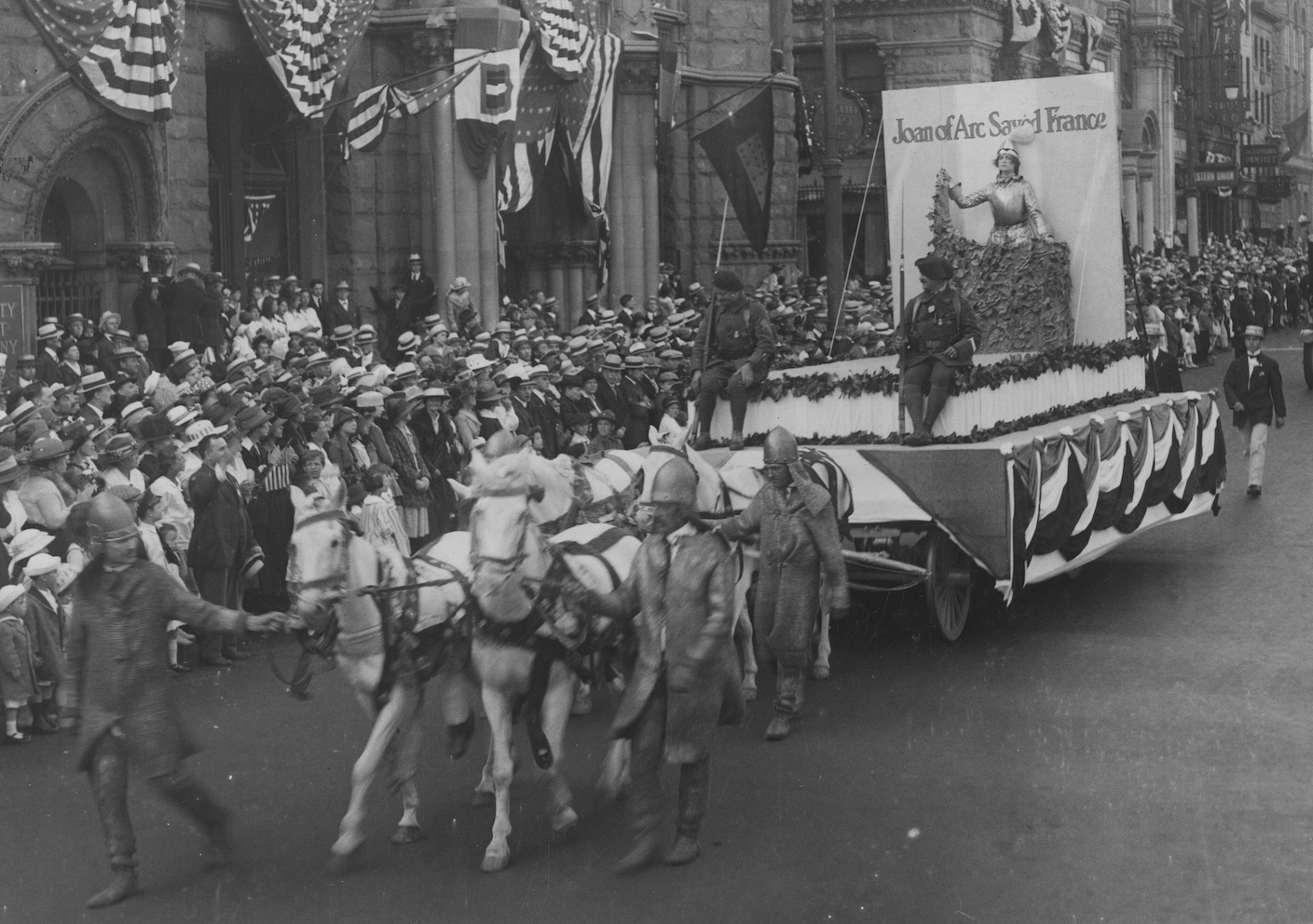
Houdini was playing the Hippodrome as part of the revue show Cheer Up at this time. I've not been able to find a photo of this float, but the photo at the top of this post will give an idea of what it might have looked like (this is from a later War Stamp parade in Newark). But what were these "German instruments of torture"? A follow-up story provides the answer:

New York Tribune, April 21, 1918.

I'm pretty certain what crowds saw that day was Houdini's own gibbet. This is sometimes called an Iron Maiden, but that is not technically correct. (At least according to this guy, and I'm not about to argue with him!) Houdini's gibbet was made by blacksmiths in Scotland as a challenge escape in 1909. Houdini would repeat the gibbet challenge on occasion and frequently display the macabre device. He even once set it out on a Baltimore street during a suspended straitjacket escape.

So how fair was it to present the gibbet as a "German torture device"? As you might expect, this was pure war time propaganda. Gibbets were not unique to Germany. They had been used throughout Europe and even in America. But the practice of gibbeting, in which freshly executed corpses would be put on display until they decayed, ceased by the 1840s.

Sidney Radner acquired Houdini's gibbet from Hardeen and displayed it at both the Houdini Magical Hall of Fame and the Houdini Historical Center in Appleton. In 2004 David Copperfield acquired the gibbet in The Great Houdini Auction for $65,000. He then re-created the original frame using period wood. Another fun fact: this frame is the actual "gibbet." The iron cage hanging inside is called the gibbet irons, gibbet cage, or sometimes a crows cage. (Again, this guy.)

Today Houdini's gibbet resides happily in Copperfield's International Museum and Library of the Conjuring Arts in Las Vegas, where it still looks ready for use!

Wednesday, May 11, 2022

Taking aim at Houdini's abandoned bullet catch


Most Houdini biographies contain the story of how Houdini announced he would perform the infamous bullet catch trick shortly after the onstage death of magician William Robinson, a.k.a. Chung Ling Soo, in 1918. But magician Harry Kellar wrote Houdini a heartfelt letter talking him out of it and Houdini cancelled the performance. Turns out that scenario isn't strictly accurate. But we will get to that.

Milbourne Christopher in Houdini The Untold Story was the first to identify the event at which Houdini proposed to do the trick as a gala S.A.M. benefit for the Showmen's Hospital Fund at the New York Hippodrome on April 21, 1918. It's said the bullet catch was widely advertised. However, I've never been able to find any advertisement that confirms this. Below is a typical advert for the benefit that mentions "his new death defying sensation." But this could be the Water Torture Cell.

The New York Sun, April 20, 1918.

Likewise, the program for the event itself--an original of which is in the Harry Ransom Center--makes no mention of the bullet catch. It only shows that Houdini would perform his Water Torture Cell that evening.

I began to consider the possibility that famous cancelled bullet catch might have been a back engineered Houdini myth. But while searching for something completely unrelated, I finally found the smoking gun!

New York Tribune, April 21, 1918.

So, yes, it appears Houdini did intend to do the bullet catch at this Hippodrome show. A fantastic new detail here is that Houdini's firing squad would be made up of real doughboys from the 71st Regiment using regulation army rifles. What a terrific modern piece of staging. I'm actually sorry this didn't happen. But why didn't it happen?

Here's where the truth diverges from the familiar telling. While Kellar did indeed write a heartfelt letter of warning to Houdini, he wrote that letter after the benefit (on May 1st). So the reason Houdini dropped the bullet catch wasn't Kellar. He dropped it on the request of the Hippodrome management.

The following is from an account of the benefit that appeared in the April 1918 issue of MUM:

Houdini had been advertised in the leading newspapers through reading notices, as intending to do the Bullet Catching Act. He was dissuaded by management of Hippodrome from taking up this dangerous feat, for he announced his famous Chinese water torture cell, which is probably just as, if not more, dangerous than the bullet catching business, as in either, the slightest error means a tragedy.

(To give credit where it is due, Bill Kalush in The Secret Life of Houdini was the first and so far only biographer to present the correct chronology of the bullet catch and Kellar letter.)

It's been suggested that Houdini never actually intended to perform the bullet catch and that he just announced it for the publicity. Maybe. But Houdini felt strongly about doing what he advertised and not "breaking faith" with his audience (a prime example here). Also, this was a prestigious S.A.M. event for charity that Houdini himself emceed. Doesn't seem like the kind of event in which you would want to be disingenuous in any way. But it is a possibility.

It's also worth pointing out that in the weeks following Chung Ling Soo's death there was gossip in magic circles that the magician may have been murdered. Joe Hayman, who informed Houdini of Robinson's death, offered some dark speculation that Houdini shared with Harry Kellar. Hence Kellar's warning that the same fate could befall Houdini -- "some dog might 'job' you." But an inquest into Soo's death discovered faulty equipment was the culprit.

So there we go. We've confirmed when and where Houdini planned to do the bullet catch. We've learned how he intended to stage it. And we know why he didn't. There's also the possibility that Houdini did the effect early in his career, but that's another story.

Thanks to Joe Fox at the Magic Castle Library for the MUM clipping and Eric Colleary at the Harry Ransom Center for a look at the original program.

UPDATE: Could this have has something to do with the cancelation of the stunt? Read: Accident at the Hippodrome

Saturday, January 16, 2021

Hidden Houdini in Creed II

Last night I was watching Creed II and was excited to spot a hidden Houdini! It happens when Ivan Drago (Dolph Lundgren) comes to see Rocky (Sylvester Stallone) at his bar. As Drago leaves, he motions to the wall and says, "Is good picture." We then cut to this shot at 00:24:17.


We can assume Drago is talking about the photo of Carl Weathers' Apollo Creed, which is in sharp focus. But right beside Apollo is a photo of Houdini! Even out of focus you can see this is the well-known photo of Houdini being playfully restrained by lightweight champion Benny Leonard while heavyweight champ Jack Dempsey winds back for a punch. (Another photo taken at this time shows Houdini refereeing a "bout" between Leonard and Dempsey.) I'm still not sure what this photo is all about nor when it was taken (I've seen 1920), but it's likely this was some kind of a war benefit as we see armed doughboys watching the antics.


Of course, Houdini was a boxer in his youth, so you might say there are three famous boxers in this photo! Worthy of Rocky's wall of fame.

Click the related links below for more hidden Houdinis.

UPDATE: It appears this photo is related to the 1920 New York City Police Field Day Games held on August 21 & 29. Houdini, Dempsey, and Leonard were all present at the event (Houdini did a suspended straitjacket). I also think the men may have served on the games "Athletic Committee", and that is what we are seeing in the photo below. There is still some discrepancy as to the exact day the photos were taken. It's possible they were taken before the games to help promote the event.
 

Thanks to Joe Fox for helping crack the case!
 

Friday, April 24, 2020

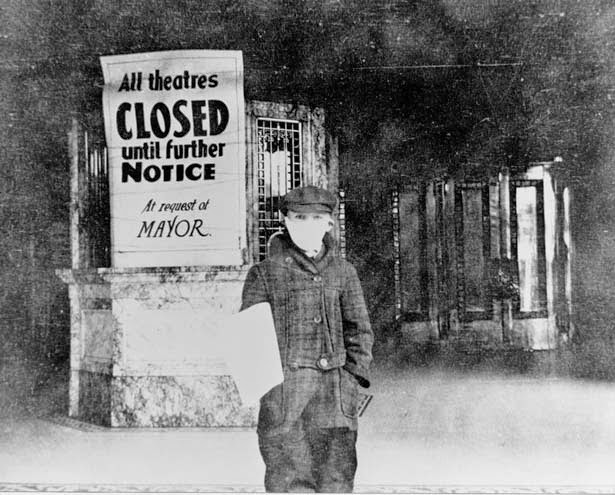
Houdini and the 1918 flu pandemic

I'm reviving this post from January 2015 as it certainly has taken on new meaning in this time of Covid-19.

Our friend Leo Hevia has found an interesting nugget of information about Houdini and the 1918-19 Spanish Flu pandemic. Between 1918 and 1920, the flu infected 500 million people across the world and killed 50 to 100 million of them, making it one of the deadliest natural disasters in human history. Says Leo:

"I just finished reading David Ben's captivating bio of magician Paul Fox [in Magicol No. 188] and encountered an interesting tidbit on Houdini. Fox caught the virus near the end of 1918 and was discharged from the Army in December 1918. In January of 1919, his application for membership in the S.A.M was approved at the 182 regular meeting of the Parent Assembly at Martinka's magic shop on 493 Sixth Avenue, New York. Houdini was there and signed Fox's application card. According to Dr. Wilson of The Sphinx, Houdini had also contracted the flu.
He must have shrugged it off fairly quickly because there is no mention of it in any of the bios I know. The virus mainly attacked healthy young men because their strong immune systems overreacted to the viral infection and would kill them. The young and middle-aged survived better because of their weaker immune systems. Houdini was about middle-aged by then. Could this have saved him?"

So it looks like we can add the 1918 flu virus to Houdini's death-defying escapes. One wonders if Bess also contracted it? She was not as strong as Houdini health-wise, and had bouts with illness her entire life.* Luckily, both Houdinis seemed to come through this frightening time.


* UPDATE: I recently discovered that Bess did contract the flu in early October 1918.

Related:

Monday, November 11, 2019

In 1919 Houdini was tied to a cannon for veterans (twice)


In England in 1911 Houdini accepted a challenge in which he was tied to the mouth of a cannon with a lit fuse. While no photos of this escape have ever surfaced, the cannon challenge is iconic enough to have been depicted in two Houdini biopics. Most biographies record this as being the only time Houdini ever did this stunt. But I recently discovered that he repeated the cannon challenge in Los Angeles in 1919...twice!

The first occurred on April 26, 1919, just a few days after Houdini arrived in the city to begin work on The Grim Game. Houdini was part of a troupe of Famous Players-Lasky artists who gave a charity performance at the "Victory ship" in downtown's Pershing Square. This was part of a nationwide effort to raise funds for The Victory Liberty Loan, a drive to help returning soldiers from World War I. Below is an ad for the campaign.


This ad is pretty wild and emblematic of the drive. The Liberty Loan was an aggressive campaign that was not above shaming people into donating. Newspapers actually printed the names of wealthy or prominent citizens who had not contributed as "Liberty Loan Slackers" (a "slacker" was a draft dodger). But this particular ad is notable on that it mentions the Lasky Stars and advertises Houdini's escape:


Below are details of the upcoming escape as reported in the Los Angeles Herald on April 25, 1919:


What exactly was the Victory ship? Try as I might, I could not find any photos of it. But from a later newspaper account about its dismantling, I'm assuming it was a temporary stage set up in Pershing Square made to resemble a battleship perhaps?

A few weeks later, the Lasky stars were back at the Victory ship, including Houdini's future Terror Island co-star Lila Lee. Houdini repeated his cannon challenge, as reported in the May 10, 1919 Los Angeles Herald:


Unfortunately, I couldn't find any photos or news accounts of how either challenge played out. Presumably he made it! But many stars performed at the Victory ship, including Charlie Chaplin, and I could find no account of what they did either. I believe it would have been considered bad form to use a charity event to promote oneself. This was about veterans, and even Houdini was restrained. But that leaves us to only guess what this escape looked like.

At the top of this post is an illustration of Houdini tied to a cannon which is the only depiction of the challenge I've ever seen. (This comes from The Original Houdini Scrapbook by Walter B. Gibson.) The illustration appears to be based on the 1911 escape, which is well described. But this could also have been how he was restrained in 1919. Unless...

Below is a photo of Houdini tied to the wheel of a cannon. Could this have been taken at the Victory ship? This is Houdini in 1919, and the cannon he is roped to is clearly a piece of World War I ordinance. While this isn't how the challenge was advertised, the cannon may have been too large for him to be tied to the mouth, so maybe this is how he actually did the escape? Or this photo was taken after the fact. The edifice behind him does appear to be some sort of temporary structure which could be the Victory ship.


When I first uncovered these two challenges, I had hoped to do what I did for his 1915 suspended straitjacket and his 1923 Ambassador Pool escape. But I came up short in my research. So I'm offering up what I have in the hopes it will unlock more info. But at least we now know that it happened. Houdini was tied to a cannon in Los Angeles' Pershing Square in 1919...twice!

Site of Houdini's escape today.

Honoring all who have served on this Veterans Day.

UPDATE: Turns out an account of this escape (one of them, at least) appears in The Grim Game pressbook. Thanks to Joe Notaro.


UPDATE 2: Our great friend Bill Mullins has come through with a photo of the Victory Ship! As suspected, it's a stage made to look like a ship. This is from the May 3, 1919 Los Angeles Times.

Click to enlarge.

Related:

Monday, November 4, 2019

Harry Houdini's War is at peace with the facts

Big Finish has released their Doctor Who audio drama Harry Houdini's War on CD in the UK. This is the conclusion of a trilogy of adventures with the Sixth Doctor (Colin Baker) and features Houdini played by John Schwab.


I thoroughly enjoyed this audio play, and while I don't think I'm versed enough in Doctor Who to compare it to other Who adventures, I can review its use of Houdini.

It's clear writer Steve Lyons and all involved have done their homework. Peppered throughout the production are snippets of authentic Houdini history, kicking off with the first lines of dialogue which are a recreation of Houdini's Water Torture Cell patter taken from his only known voice recording. John Schwab nicely imitates Houdini's super syllabic enunciation ("Lay-dees and gen-tell-men"). Thankfully, he doesn't keep this up or we would never get through this! Schwab's Houdini does feel deliberately contemporary (reminiscent of Michael Weston in Houdini & Doyle), but that works for the story and nicely highlights Harry as a man ahead of his time and a good fit with the Doctor.

The story opens with Houdini performing in New York City in September 1917, which is accurate (although he was only doing War benefits at this time). Houdini teaching doughboys how to escape German restraints gets a nod. His history and skills as an aviator comes into play in a major way. We also hear mention of his movie work, his handcuff escapes in Germany "a decade before", and after a Tardis time warping makes him a day older (or is he younger?), Houdini quips, "I'll have to change my birthday...again." Hey, we get that!

Also mentioned is Houdini being turned down as too old to enlist, although John Schwab sounds younger than Houdini's 43 years at this time. The Water Torture Cell gets a lot of attention. We even get to hear "Asleep in the Deep" during the performance. Okay, Houdini used "The Diver" for the Water Torture Cell and "Asleep in the Deep" for the Milk Can, but it's creative license and "Asleep in the Deep" works better. The fact that they used any authentic Houdini music gets a big thumbs up from me.

The CD also includes 10 minutes of interviews in which Houdini is discussed by the producer, director, and stars Colin Baker, Nicola Bryant, and John Schwab.

I'm not generally a fan of Houdini fiction, but this is a case where it is all done right. They frame their fiction with facts instead of bending Houdini history to fit their story. It's a class act by Big Finish.

Alt cover with Colin Baker era DOCTOR WHO logo.

You can purchase Doctor Who: Harry Houdini's War audio CD at Amazon.co.uk. In the U.S. you can buy direct from Big Finish.

Thanks to Athena Stamos.

Related:

Tuesday, September 10, 2019

Doctor Who: Harry Houdini's War

Houdini and The Doctor are once again in action in a new audio drama by Big Finish Productions, Harry Houdini's War. This is the conclusion of a trilogy of adventures featuring the Sixth Doctor (Colin Baker). Harry Houdini's War is written by Steve Lyons and features John Schwab as Houdini.

The world is at war, and Harry Houdini wants to fight for his adoptive country. He might get the chance, when an old friend crashes his New York show. 
The Doctor is on the trail of a Central Powers spy ring, which has somehow acquired unearthly technology. But he is also keeping a dangerous secret… 
Finding himself on the run behind enemy lines, the world’s greatest escape artist has to work out who he can trust – and fast.

Doctor Who: Harry Houdini's War will be released this month and can be purchased at Big Finish.

UPDATE: This can now be pre-ordered as an Audio CD at Amazon.co.uk. Release date October 31 (of course!).

UPDATE #2: Review: Harry Houdini's War is at peace with the facts.

Related:

Saturday, March 2, 2019

When Franz kept the faith


Today marks the anniversary of Houdini's hiring of Franz Kukol on March 2, 1903. So what better day for a Franz-themed post! But this story has a story behind it.

When I was a young "Houdini Enthusiast" [a moniker I should really start using again], I corresponded with various magicians, and even wrote a column for a small magic magazine called The Magician Again. Recently I discovered some letters from that time, and one from Magician/Mentalist Ron Oliver from New Lowell, Ontario, contained a curious story about Houdini and Franz Kukol that I had completely forgotten about.

The story concerns a gold watch that Houdini presented to Franz on the stage of the Finsbury Park Empire in London on March 2, 1913, as a gift for 10 years of service. But Ron's story suggests there might have been more to this gift.

 Below is an excerpt from the letter Ron wrote me on December 16, 1980.


The story of the Kukol watch was told to me by a man whose father worked at the Finsbury theater in London from 1910 to 1915. He was a stage manager for the various acts that came in and, several times, saw Houdini. The full story is like this: 
"One afternoon, after the matinee performance, Kukol received a telegram from his Mother, saying that she was very ill and wanted to see him. He conferred with Harry, who allowed him to go. Kukol left the theater, headed for the train. No one saw him again for about eight days. 
When he finally returned, Harry was somewhat incensed at the fact that Franz had been gone so long. They retired to Harry's dressing room and a rather loud quarrel ensued. Apparently, Kukol wouldn't reveal where he had been, but did say that his mother was well. That was a week before the anniversary. The next day, Harry received a telegram from the Austrian army, from some high ranking official, asking for military help. The Austrians had heard that war was in the air, but in the future. They wanted Harry to give some of his secrets so they could be prepared....ie: handcuff slipping, cell escapes, etc. 
As to whether or not Harry divulged the secrets, no body knows. But Franz and Harry had a long talk behind closed doors and emerged very good friends again. Everyone assumed the argument was over, but the guy I spoke to said that his father always felt that Franz had been asked to reveal the secrets of his boss to his old employers, the Austrian army, and refused. The would explain his being missing for almost a week. It would also explain the inscription, in Austrian, on the back of Kukol's gift watch...roughly translated, it supposedly says "To Franz Kukol...for keeping faith....Houdini." 
How much of this is true, I really don't know. The guy says that his father used to tell the story whenever someone would bring up the name Houdini. He delivered all the telegrams and kept tabs on who came and went in the theater, so it seems logical that he would know. 
Franz Kukol was, as you know, an ex-army officer. And the Austrian army was correct in its assumption that a war was coming soon. About 17 months after the little thing with Kukol, Franz was called back into active duty with the army. War had begun.

Of course, we now believe Kukol never returned to Austria and instead continued to work with Houdini under the name of Frank Williamson, but that is another story.

Thank you Ron Oliver for this story and memory from the past.

Related:

Sunday, February 18, 2018

Houdini in World War I exhibition in Richmond

A pair of Houdini handcuffs can be seen as part of an exhibition devoted to World War I at the Virginia Museum of History and Culture in Richmond, Virginia. The display commemorates Houdini's various war efforts, such as teaching soldiers heading overseas the secrets of escaping from German handcuffs and restraints (yes, he really did that).


The exhibition runs February 17 through July 29, 2018. For more information visit the museum website.

Related:

Sunday, November 5, 2017

100 years ago: Houdini hangs in Times Square

It was 100 years ago today the Houdini performed a suspended straitjacket escape in New York's Times Square. For the occasion, here's a rarely seen image that gives us a completely different perspective on the escape than the more familiar photos.


Houdini had attempted to stage a suspended straitjacket escape in Times Square (still sometimes referred to by its original name, Longacre Square) a year earlier to promote his appearance at the Palace Theatre. But the police stepped in and stopped it. He did the escape the next day in Battery Park (a story I recently shared HERE).

This time Houdini, who had committed himself to the war effort, was looking to promote a benefit he was organizing at the Hippodrome for families of the 67 victims of the SS Antilles, an Army transport ship that was torpedoed by a German U-boat the previous month. Houdini reached out to the politically connected Elsa Maxwell, who was able to help him secure permission to perform the escape "for the purpose of advertising a patriotic performance."

Houdini performed the escape on November 5, 1917 dangling 60 feet above Broadway and Seventh Avenue (Silverman reports the cross streets as Broadway and 46th St.) from a crane being used to construct the new Times Square subway station. In return for the favor of permission, Houdini made a short speech in his support of New York's incumbent Mayor John Purroy Mitchel who was facing reelection the following day. Handbills announcing the Antilles benefit were distributed among the crowd and wives of S.A.M. members sold Thrift Stamps and War Bonds as Houdini completed his escape in 10 minutes.

The next day, The New York Tribune reported the feat:


Houdini's Antilles benefit was held on November 11 and raised $10,000. Houdini would not do another suspended straitjacket escape in New York until 1922.

Related:

Sunday, January 1, 2017

Houdini in 1917

Welcome to another year of WILD ABOUT HARRY. Let's kick off 2017 with a look back at what Houdini himself was up to 100 years ago.

Quick! Name a significant Houdini escape, piece of magic or performance associated with the year 1917?

One can easily do this for nearly every year of Houdini's life: 1903/Carette; 1908/Milk Can; 1914/Walking Through A Brick Wall. But 1917 is tricky. That's because for the first time in many years, Houdini didn't invent or perform any new escape or feat of magic. In fact, his act was basically the same one he had been doing since returning to the U.S. in 1914. Of this period Silverman writes: "Much of what had brought Houdini to this height he was now preparing to downplay or abandon."

This post is now retired. 
You will be able to enjoy the story of Houdini in 1917 in my upcoming book.

    Thursday, May 26, 2016

    Haversat & Ewing auction June 3-4

    Haversat & Ewing Galleries upcoming "Spring Into Summer Auction" on June 3-4 will include several interesting Houdini rarities among their 190 lots.

    Two items specifically relate to Houdini in New York. The first is a program and ticket stubs for Houdini's 1917 S.A.M. benefit for the families of the Antilles disaster, in which he shared the stage with Harry Kellar among others (Lot 145). To promote the patriotic event, New York officials finally granted Houdini permission to perform a suspended straitjacket escape in Times Square. There's also a program for Houdini's first appearance at The Palace Theater, in which he shared the bill with Fanny Brice (Lot 136). The Palace was a collaboration between Martin Beck and B.F. Keith and became the preeminent vaudeville house of the golden age.

    Also at auction are eleven typed pages about the Davenport Brothers compiled by Oscar Teale for Houdini (Lot 146). An article called "The Idolatrous Dog" signed by Houdini to Will Goldston: "W.G. Knowing your love of your pretty little Greyhound - know this will interest. Regards, Houdini" (Lot 137). And two keys from Houdini's personal collection owned by Jerry Metallo, who was once Houdini's metal worker (Lot 160).


    You can view the full online catalog HERE. Active bidding on all lots begin at 11:30 AM EST - Friday, June 3, 2016. The first lot closes Saturday, June 4, 2016 at 5:00 PM EST.

    Related:

    Translate