Related:
- Home
- Life
- Escapes
- Magic
- Movies
- Houdini's Movies
- Les merveilleux exploits de Houdini à Paris (1909)
- The Master Mystery (1918)
- The Grim Game (1919)
- Terror Island (1920)
- The Man From Beyond (1922)
- Haldane of the Secret Service (1923)
- Velvet Fingers (1925-26)
- Medium Well Done (1937)
- Religious Racketeers (1938)
- Houdini Picture Corp.
- Film Developing Corp.
- Filming locations
- Unmade Movies
- Deconstructing Houdini '53
- Spiritualism
- People
- Beatrice Houdini
- Theo Hardeen
- Cecelia Weiss
- Mayer Samuel Weiss
- Jim Collins
- Franz Kukol
- Martin Beck
- Sir Arthur Conan Doyle
- Margery
- J. Gordon Whitehead
- Edward Saint
- Jacob Hyman
- Leopold Weiss
- Carrie Gladys Weiss
- Bernard M.L. Ernst
- Charmian London
- Jess Willard
- H.P. Lovecraft
- Sherlock Holmes
- Assistants
- Imitators
- Other magicians
- Media
- Full Bibliography
- By Houdini
- Biography
- Fiction
- Foreign
- For Kids
- Methods
- Wild About Harry Bookshelf
- Houdini His Life Story (1928)
- Houdini The Man Who Walked Through Walls (1959)
- Houdini The Untold Story (1969)
- The Life and Many Deaths of Harry Houdini (1993)
- Houdini!!! The Career of Ehrich Weiss (1996)
- The Secret Life of Houdini (2006)
- The Metamorphosis: The Apprenticeship of Harry Houdini (2012)
- The Witch of Lime Street (2015)
- The Life and Afterlife of Harry Houdini (2019)
Showing posts with label 1906. Show all posts
Friday, September 4, 2026
LINK: 120 years ago, Harry Houdini and a pair of handcuffs created controversy in Salem
A nice article here by Oliva Deng about Houdini's 1906 visit to Salem and the handcuffs that caused a bit of controversy at the Peabody Academy of Science (today the PEM). Click the headline or the handcuffs below to read.
Related:
You can view the Houdini handcuffs at the PEM's special exhibition, Houdini on Salem, on show now. The museum will also host a special "Houdini Halloween Magic Show and Curator Talk" on Oct. 31, 2026.
Related:
Wednesday, August 26, 2026
Houdini exhibit at the PEM in Salem
In April 1906, Houdini visited the Peabody Academy of Science, now PEM, before performing that evening at the Salem Theatre. Onstage, the master showman claimed museum curators had misdated a set of handcuffs and offered $1,000 to charity if anyone could prove otherwise.Decades later, those same handcuffs resurfaced in another Houdini story. When the annual Official Houdini Séance was held in Salem in 1990, a PEM curator brought them along in hopes they might help summon Houdini’s spirit. No luck.
Now, "Harry Houdini in Salem," on view September 3–November 2, brings the handcuffs and other objects connected to Houdini into the spotlight for the centennial of his death on October 31, 1926.
PEM will mark the anniversary on Halloween with Houdini Halloween Magic Show and Curator Talk, featuring magician Anton Andresen recreating some of Houdini’s magic for a limited audience.
Sunday, March 9, 2025
Take a Sweet Escape at the Magic Castle
The world famous Magic Castle in Hollywood has created a specialty cocktail in honor of Houdini's birthday this month. It's called Houdini's Sweet Escape.
The souvenir Houdini mini poster is his famous "Europe's Eclipsing Sensation" lithograph. Certainly one of the most beautiful Houdini posters. Only two originals are said to exist. One is in David Copperfield's International Museum and Library of the Conjuring Arts in Las Vegas and the other is in private hands. You can buy a stunning reproduction at Nielsen Magic.
Thanks to Mark Willoughby for the tip and Lupe Nielsen for the poster info.
Wednesday, April 10, 2024
Houdini, Ragtime, and the Valentine
![]() |
| Toledo Blade, March 11, 1907. |
But it gets better! The Valentine has a stunning mural by Paul Geiger in its lobby featuring famous performers who have graced the Valentine stage. Houdini is beautifully represented, as you can see in the top image above. So that's a must-see as well.
You can get more information and buy tickets to Ragtime via the Toledo Opera website. For more information about the Valentine and details about its mural, check out their website valentinetheatre.com.
Coincidently, I recently shared on my Patreon a post about a packing case challenge at the Valentine with a photo of Houdini in front of the theater that I've never seen before. You can see that by clicking below.
Tuesday, November 8, 2022
'Houdini March Two-Step' sheet music (update)
This 1906 sheet music entitled HOUDINI March Two-Step For Piano by Harrie A. Peck recently sold on eBay for $285. This was published by the White-Smith Music Co. and on the first page is written: "Dedicated by permission to Mr. Harry Houdini."
There is a photo of this sheet music in the Ken Silverman book, Houdini!!! The Career of Ehrich Weiss, credited to the Morris Young Collection. But I don't recall ever seeing one for sale and I've never seen it in color. It's a beauty and really speaks to Houdinimania of the day (I can see this selling in Boston). I'd love to hear the tune itself.
Thanks to Kevin Connolly at the Conjuring History Facebook group for the find.
UPDATE: Here's the winner of this mega rarity; the mighty Arthur Moses! Says Arthur, "Been looking for that for 20+ years."
Sunday, July 25, 2021
Salem will rename street "Houdini Way"
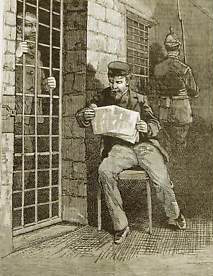
The City of Salem, Massachusetts, will rename Front Street to "Houdini Way" in honor of Houdini's jailbreak from the Front Street police station on April 16, 1906. Below is the motion from the Office of the City Clerk.
Houdini performed with his own vaudeville touring company in Salem from April 16-18, 1906. This was his only appearance in Salem (as far as I know). The building that stands at the site of Houdini's jail break is the original.
Thanks to Erik Bartlett at TheMagicDetective Group for the alert.
Monday, March 29, 2021
Houdini stops off in Lowell (update)
![]() |
| The Lowell Sun, November 19, 1918. |
Note that Houdini says he had made three previous visits to Lowell. I can identify two of those. The first was in 1896 when Houdini played with the American Gaiety Girls in Lowell for three days in late March (23-25). The second is when Houdini played the Lowell Opera House for the week of February 12, 1906 (my sourcing on this is a little loose so this isn't a lock).
The article also mentions a jailbreak from the Market street police station "five or six years ago." I don't have any record of this. Possibly it happened during that third yet undiscovered appearance? But a jailbreak would also fit with his 1906 appearance as that was his standard publicity stunt at that time. * Hardeen also played Lowell on occasion.
It's surprising the Sun article doesn't mention The Master Mystery as Houdini was there expressly to promote it playing at the Merrimack. And what a day at the Merrimack that was! Not only could you see the first episode of The Master Mystery and Houdini in person, but you also got Charlie Chaplin and William S. Hart movies!
The Merrimack Square Theater was located at 146 Paige Street from 1909 to 1953. You can see a photo of the theater as it appeared in 1950 HERE. Today the site is a parking lot.
* UPDATE: I've now confirmed that Houdini did indeed do a jailbreak during his 1906 appearance in Lowell. You'll be able to read about in my upcoming book, Handcuff King: The Conquests of Harry Houdini, 1900-1909.
Tuesday, February 23, 2021
A word from our sponsor...
This ad appeared in the Boston Globe during Houdini's appearance in that city in March 1906. Houdini always went over big in Boston, and this ad really speaks to that. I don't know if Houdini had anything to do with it, but I'm sure he was happy with the free publicity, despite being a non-drinker. Cheers!
Below are some more examples of Houdini (and Bess) in advertising.
Related:
![]() |
| Boston Globe, March 31, 1906. |
Friday, February 19, 2021
Off-script in Cincinnati
By 1906 Houdini had pretty much established his official show business
biography. It always begins with his birth in Appleton, spins colorful tales of
his childhood gift with locks, and finds the fully formed Handcuff King making
an all or nothing bet on himself by traveling to Europe where he takes the
continent by storm. Notably absent are his many years of toil in the lower rungs
of show business and the critical role of Martin Beck. But it played well in
newspapers and pitchbooks, and to use political parlance, Houdini had control of
the narrative.
That's why the following from the November 19, 1906 Cincinnati Commercial Tribune is so striking. It's decidedly off-script by not only crediting Martin Beck
with Houdini's discovery and early success in America, but also by
saying Houdini was born in Budapest! While you can find mentions of Houdini's
Hungarian birth during his early career, I've never seen it mentioned anywhere
after his tours of Europe when he firmly established himself as "The
Elusive American." Enjoy this rare blast of truth from 1906.
About HoudiniEight or ten years ago, says Burns Mantle, Harry Houdini, who was seen on the local stage a week or two ago, was a poor unknown, doing twelve shows a day in a cheap western museum. His specialty was to release himself from handcuffs and other manacles.The same eight or ten years ago Martin Beck was a rising vaudeville manager with about a third of the prestige and a sixth of the fortune that he now draws checks on. Beck saw Houdini, and Houdini talked with Beck. I believe it was Beck who gave Houdini his stage name, though the lad was born in Budapest and may have come honestly by it.Beck signed a contract with the handcuff breaker which was extended over a period of several years, and Houdini was taken away from the museum and put into vaudeville proper. At the shrewd manager's dictation he visited police stations in Los Angeles and San Francisco, where he invited the officers to hold him with their manacles. He was not a confident performer in those days. Every time he was manacled he was frightened to death for fear he would not be able to get away and that his "act" would be ruined.He made his first big sensation in San Francisco, after a committee of policemen had put four pairs of handcuffs, an Oregon boot, and a few balls and chains on him, and then fastened them all together. Just to make certain that he did not have a key concealed in his mouth with which he might unlock the cuffs, they sealed his lips with court plaster. Then they put him in the center of the "third degree" room and locked the door.Houdini told me seven years ago, before he was as famous as he is now, that as soon as the door was closed he began his struggle to free himself and was working as though the devil was after him when he heard the labored breathing of some one. He glanced around the room. There was nothing that could conceal a man. Again he started to release his hands. Again he was certain he heard the breathing. And as he looked up quickly he saw a large oil painting on the wall quiver slightly. Slits had been cut in the canvas and he was being watched from that point of vantage.The boy was clever enough to outwit the trickster, however. He edged his way slowly to the corner of the room farthest from the picture, turned his back on the spy, and in something like twenty-seven minutes was free. The feat was exploited in all the coast papers, and the "Handcuff King" was started on his career.No one has been able to explain Houdini's system up to date. Every one is inclined to gasp, sniff and then declare him to be a fakir. Perhaps he is. But he is certainly one of the cleverest that ever lived, for he has fooled thousands of experts.
I don't know who Burns Mantle was, but from the sound of this he
knew Houdini and maybe even Martin Beck. Houdini had played two weeks at the
Columbia Theater in Cincinnati and was in Chicago when this story appeared, so it's
possible he never saw it. If so, he may have felt the need to bring his friend Burns back on-script.
Houdini woodcut illustration from Waterloo Daily Courier, February 19,
1906.
UPDATE: Burns Mantle was a prominent theater critic and the founding editor of Best Plays. He first met Houdini in Denver in 1899 during his first stint as a reporter and Houdini's first tour on the Orpheum circuit. After Houdini's death, Mantle once again wrote about his friend and once again showed rare candor. The below is from the New York Daily News, November 14, 1926, and makes an excellent companion to the above.
Friday, September 11, 2020
Did Hardeen really discover the full view straitjacket escape?
I've always found this perplexing. How could Houdini, who knew full well the power of rope escapes done in full view of the audience, fail to see this himself? Nevertheless, here's proof positive that as late as November 12, 1904, Houdini is still doing the straitjacket escape inside his "red velvet tent." This is from the Birmingham Daily Gazette:
![]() |
| Click to enlarge. |
From this it appears the escape is still effective ("the applause was tremendous"), so maybe that's why Houdini never felt the need to experiment. I should add that I've found another cabinet straitjacket escape on December 2, 1904, at the Pavilion Theatre in Newcastle (with a carpet laid on the floor to ensure no traps), but the above clipping makes better reading.
So if Hardeen really did make this seminal discovery, exactly when and where did this happen? Turns out that is NOT an easy question to answer. There are conflicting claims and not one of them commits to a date. But we know Houdini is still in his cabinet in November-December 1904, and it's said he did his first full view escape in Paris in March 1905. So we can assume Hardeen made his discovery sometime between those dates.
Thanks to my recent deep dive into the British Newspaper Archive (which I've re-upped for another month), I have Hardeen's schedule at this time. So with this in hand, let's examine the major candidates:
Christopher:
In Houdini The Untold Story, Milbourne Christopher says Hardeen made his discovery at the Swansea Empire in Wales. He does not provide a date, but Hardeen played Swansea the week of December 26, 1904, which is within the timeline. Christopher says Dash sent Houdini a newspaper clipping. That makes me suspect his source is a letter. I wish I knew for sure, because Christopher is also the sole source for Houdini doing his first full view escape in Paris in March 1905. (The first account I can find is April 14, 1905 in Cardiff.) This is two months after Swansea, so either Hardeen took his time telling him or Houdini took his time in adopting it. Or maybe there's a better candidate...
The pitchbook:
I believe everyone, including Christopher, uses Hardeen's pitchbook, The Life and History of Hardeen, as the primary source for the dramatics of this event. And why shouldn't they? The pitchbook contains what appears to be a detailed newspaper account (which, unfortunately, is undated and unattributed). It even has a photo of the theater announcing the re-challenge on a huge outside banner.
The pitchbook identifies the events as having played out at the "London Empire." Now, when I hear "London Empire", I think of the Empire Theater in Leicester Square. But Hardeen never performed there. So this could be a reference to greater London, and Hardeen did play Empires in Hackney, Holloway, and New Cross in late November 1904, which are (just) within the timeline. [UPDATE: The photo is the Holloway Empire.]
But here's the problem. Elsewhere this pitchbook photo is credited as being 1906. This is well after Houdini is doing the straitjacket in full view. In fact, I have found numerous accounts of Hardeen being called out of his cabinet to repeat his straitjacket escape all throughout 1906. It appears to have been a standard (staged) re-challenge, similar to how Houdini would be "re-challenged" to do his packing crate escape. In fact, Hardeen becomes so associated with this, the English press dubbed him "the straitjacket man." Here is one such account from the Empress Theater in Hartlepool on April 7, 1906:
![]() |
| Hartlepool Northern Daily Mail. |
I now believe everything in the pitchbook is referencing one of these later staged escapes. It's also possible the story in the pitchbook is not even an actual newspaper clipping, which is why it is unattributed and suspiciously vague. So the pitchbook is pure misdirection.
Does this mean the entire story of Hardeen discovering the full view straitjacket escape is manufactured mythology? Did the brothers discover it in some other way, maybe even seeing an imitator do it? When going down one of these Houdini rabbit holes the "it never happened" option always has to be considered. But before we jump to that conclusion, there's one more candidate to hear from...
Hardeen (Himself):
In the March 1941 issue of The Sphinx, Hardeen provided a lengthy article called "Houdini-Hardeen Strait-Jacket Escape". In it he states he made his full view discovery at the "Bedford Music Hall, Camdentown, London." He also says the escape took a full "grueling hour." He doesn't give a date (why make it easy on us?), but I've discovered Hardeen at the New Bedford Palace of Varieties in Camden Town on March 24, 1905. Presumably Dash played the full week which began on March 20.
![]() |
| Music Hall and Theatre Review, March 24, 1905. |
This engagement fits like a glove! It is within the timeline and, better yet, it is while Houdini is in Paris. So Christopher's claim that Hardeen told Houdini about the escape via letter and that Houdini first tried it in Paris works beautifully. We also know Dash joined Houdini in Cardiff for his battles with Frank Hilbert during the week of April 12, and it's on April 14th that Houdini does the first documented full view escape that I can find.
(By the way, Hardeen states in this same article that he and Houdini saw their first straitjacket in Berlin in 1900, which cannot be right. But that's a can of worms for another time.)
While I'm still not sure we have this is 100% locked down, I do feel pretty good about the March 1905 New Bedford engagement as being the time and place Hardeen discovered the full view straitjacket escape. I also still believe the core claim; that it was Dash who made this discovery and not Houdini. The primary reason are the 1906 staged re-challenges. Only Dash did these, and that suggests he had some ownership over this particular twist on the act. Not to mention he was able to put the story in his pitchbook.
So, yes, I think we are safe leaving this one in Hardeen's column. Feel free to let me know what you think in the comments.
Thanks to Joe Fox for providing me with a copy of the original Hardeen Sphinx article. It is also reprinted in Pat Culliton's Houdini The Key and Hardeen: Monarch of Manacles by William V. Rauscher.
Sunday, September 6, 2020
Beat the heat with Hardeen
Today is going to be a hot one in Southern California. It's forecast to be 114℉ in my own Burbank. Even Catalina "Terror" Island shows 107℉, which I didn't think was possible. Coincidently, yesterday I stumbled on this ad from almost exactly 114 years ago. Despite being "the hottest day of the summer" in the UK, people still packed the non-air conditioned Ealing Hippodrome to see Hardeen! Imagine what they would have endured for Houdini?
![]() |
| Music Hall and Theatre Review, Sept. 7, 1906. |
Notice this ad shows Hardeen was also managed by Harry Day in the UK. I love the inclusion of "my pal." That seems very Dash.
Stay cool.
Sunday, August 9, 2020
Confirmed: 'Houdini Defeats Hackenschmidt' did exist!
Back in 2010 I went wild for the new book Disappearing Tricks: Silent Film, Houdini, and the New Magic of the Twentieth Century by Matthew Solomon. This excellent book contained several revelations about Houdini's film work, foremost of which was the discovery that something called Houdini Defeats Hackenschmidt was shown during Houdini’s March 1906 engagement at Keith’s Theater in Boston. This is significant as it pre-dates his 1907 Rochester bridge jump footage, which Houdini claimed to be his first appearance on film. Also, the idea of film of Houdini and the famous Russian wrestler George Hackenschmidt, a.k.a. "the Russian Lion", was incredibly intriguing. Unfortunately, Solomon was unable to provide any further details.
For ten years I've searched in vain for more information on Houdini Defeats Hackenschmidt. I've also searched for confirmation of the Boston screening. Solomon's source was a single notation in an unpublished managers report for the week of March 26, 1906, housed in the Keith/Albee Collection at the University of Iowa Library. Houdini's Boston engagements were very well covered in the newspapers, but I've never been able to find a single mention of any film in any notice for that or any other week.
Doubts began to set in. Was it even a film? Could it have just been a lantern slide? Or maybe it was a parody that had nothing to do with the real Houdini or Hackenschmidt? As the years wore on, evidence for Houdini Defeats Hackenschmidt became as nonexistent as evidence of Houdini's "spy work" (ahem). I began to suspect that it never existed, at least not as we imagined. I even cut it from my recent talks on Houdini in cinema.
But all that changed yesterday when I made one of those accidental discoveries that researchers live for!
On March 22, 1905, the Burnley Express reviewed a variety show at the Empire Music Hall in Burnley, England. This was not a show featuring Houdini, who was performing in Paris at this time. The headliner was "Herr Fritz, Illusionist and conjurer," who delighted the audience with tricks that included "the flying lamp" and "catching of gold fish in the audience."
At the very end of the review is this bombshell:
The performance is closed by the Empire Biograph, by which are reproduced "An office boy's revenge" and Houdini extricating himself from manacles placed on him by Hackenschmidt, who appears to enjoy the fun immensely.
There can be no doubt that this is the same film that played in Boston, here playing a year earlier in England. This confirms that it existed, that it was indeed a film, and, most excitingly, it featured Houdini doing an escape at the hands of challenger George Hackenschmidt. Wow!
This also tells us the footage is older than first thought. But how much older? The companion film on the bill, "An Office Boy's Revenge", is from 1903 (it actually has an IMDb page), so the "Empire Biograph" was not exhibiting new films. It's unclear when Houdini first came to know Hackenschmidt, but there are reports of them together in London in 1904. This means Houdini could be in his 20s in this footage. Again, wow!
So it's time to once again get excited about Houdini Defeats Hackenschmidt. This is currently the earliest known film footage of Houdini (and likely of George Hackenschmidt). Maybe within the next ten years we can uncover a photo or the film itself. That would be the biggest "wow" of all!
UPDATE: Looks like this post has made news in Burnley!
Saturday, March 21, 2020
Listen to Houdini's 'The Right Way to Do Wrong'
If you're stuck at home (and who isn't these days), here's a nice time killer. The good folks at Bookflix on YouTube have posted a full read of Houdini's 1906 book, The Right Way to Do Wrong. Enjoy.
Related:
Related:
Monday, January 13, 2020
Revisit Houdini's Conjurers Monthly Magazine No. 1
Our friend Jack Coray has taken on an exciting project at his recently revived blog Houdini & Hardeen. Jack is deep diving into every issue of Houdini's Conjurers' Monthly Magazine, which ran from September 1906 to August 1908. There's gold in these issues, and Jack intends to mine it all! Below are links to his posts covering issue No. 1:
Individual issues of Conjurers' Monthly Magazine are rare (the above scan is from my own collection). In 1991 Kaufman and Greenberg published all the issues in a two volume set. That is also now rare and expensive. At the moment there is a copy on Amazon.
Thanks Jack. Looking forward to more issues and more discoveries!
Related:
Conjurers Monthly Magazine 1906 September Vol. 1 No. 1 – Part 3
Conjurers Monthly Magazine 1906 September Vol. 1 No. 1 – Part 4
Individual issues of Conjurers' Monthly Magazine are rare (the above scan is from my own collection). In 1991 Kaufman and Greenberg published all the issues in a two volume set. That is also now rare and expensive. At the moment there is a copy on Amazon.
Thanks Jack. Looking forward to more issues and more discoveries!
Related:
Sunday, September 15, 2019
LINK: The complete account of Houdini's visit to Salem, Massachusetts
The website for Black Cat Tours in Salem, Massachusetts, has a very well researched post by co-owner Lara Fury about Houdini's appearance in that city in 1906. Lara has uncovered details about his escape from the Front Street jail (right), as well as an untold story about his visit to the "Peabody Academy of Science" (a precursor to the Peabody Essex Museum) and a controversy over a pair of mislabeled handcuffs.
This is great stuff, so click the headline and have a read at Black Cat Tours.
Related:
This is great stuff, so click the headline and have a read at Black Cat Tours.
Related:
Friday, July 26, 2019
Houdini in 1906
While Houdini boasted of his American success at the end of 1905, the truth was he was still competing with a sea of Handcuff Kings, some of whom were better known in the U.S. at this time. But all that was about to change.
This post is now retired. But you will be able to enjoy the story of Houdini in 1906 in my upcoming book.
Monday, December 10, 2018
When things went wrong
Houdini cultivated good relationships with both police and the press, which certainly helped in his escapes from jails and the subsequent news coverage. But here's a case where it all appears to have gone wrong. The resulting coverage is unflattering (and a bit bizarre), but it does give us a different picture of what sometimes occurred during a Houdini jail break.
![]() |
| Click to enlarge. |
Thanks to Harry Houdini.
Related:
Tuesday, November 27, 2018
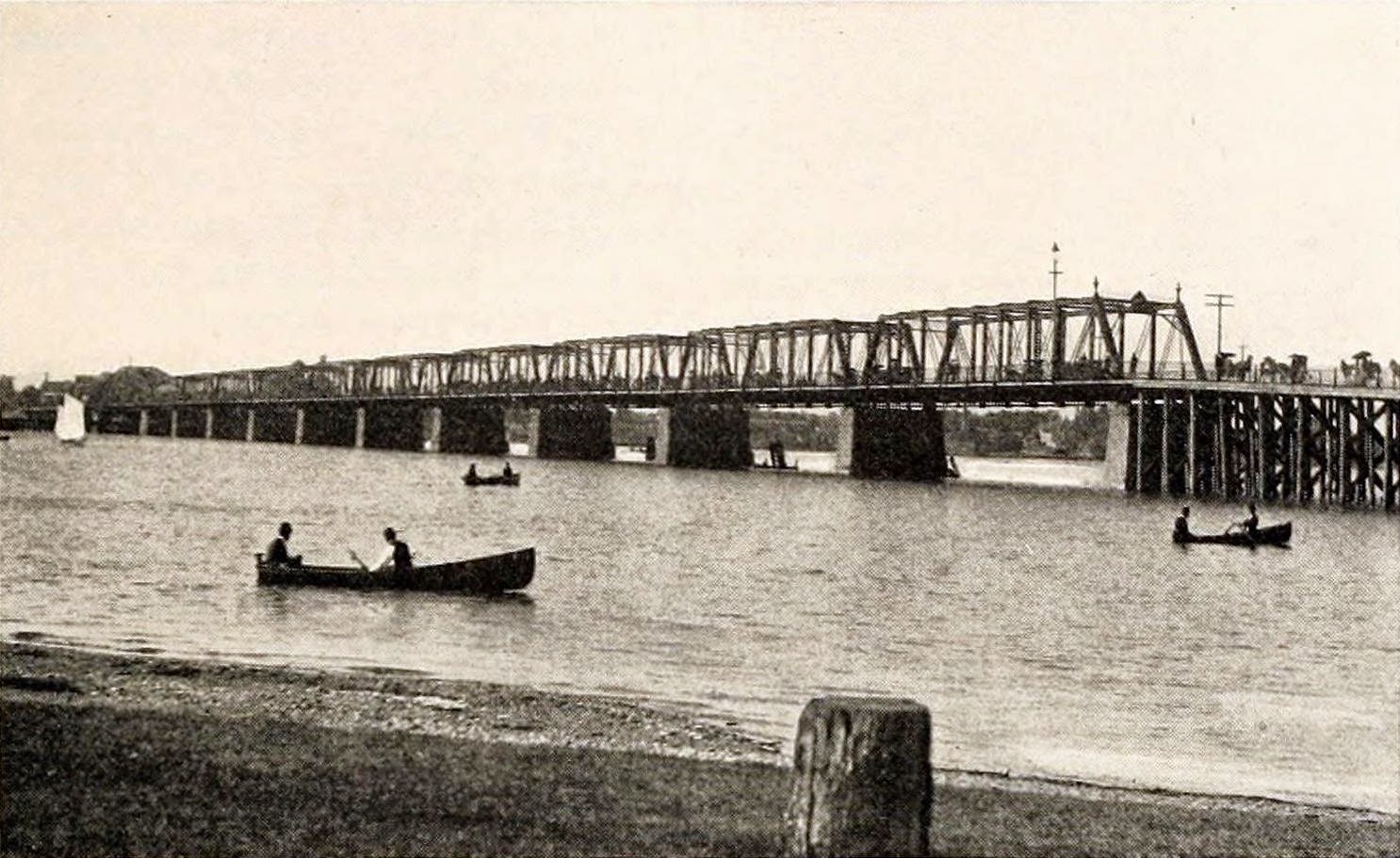
LINK: The Belle Isle Bridge jump
Today marks the 112th anniversary of Houdini's jump from the Belle Isle Bridge in Detroit on November 27, 1906. This has become one of his most mythologized stunts. Click the headline to revisit my post from 2015 for the facts behind this famous feat.
Below are some more posts about notable Houdini bridge jumps.
Related:
Sunday, September 3, 2017
The Prison Cell & Barrel Mystery...or misfire?
The "Prison Cell & Barrel Mystery" has to be the least discussed original Houdini effect. In most biographies it receives only a few lines, if it's mentioned at all. In fact, if it weren't for the often reproduced UK poster (right), I think this effect might have become lost to Houdini history. Why is that? Is it because Houdini didn't do it for long? Or is it because the Prison Cell & Barrel Mystery was a rare case of a Houdini misfire. Let's explore.
The origin of the Prison Cell & Barrel Mystery goes back to Houdini's earliest days as a performer. Harry's first partner in The Brothers Houdini, Jacob Hyman, left the act and was replaced by Houdini's real brother, Theo. After a short stint in the army, Hyman got back into show business as J.H. Houdini. Having co-created the name, Jacob believed he had as much right to use it as Harry. His feature was an escape from a barrel that he called The Barrel Mystery.
When Harry began achieving great fame in Europe, Jacob continued to tour small time American Vaudeville as "Houdini". This caused confusion in the press and with the public (and can still trip up researchers today). By 1903, the idea of two Houdinis became intolerable to Harry. After waging a war of words in the press, Harry dispatched his brother Leopold and a lawyer to confront Jacob. Exactly what was worked out is not known, but from that day forward, Harry became the only Houdini and also acquired Jacob's featured barrel escape. It seems likely Houdini simply bought out his former partner, as Jacob would go to medical school and become a Beverly Hills physician. (He and Harry remained good friends.)
Now in possession of Jacob's barrel, Houdini developed a new effect to replace Metamorphosis. The effect would see him locked in the barrel and then "triple-locked" into a portable prison cell. In "less that 2 seconds", Houdini would make his escape and his assistant, Franz Kukol, would be discovered inside. It's interesting that it was not Bess who played this substitution role as she had for 10 years with Metamorphosis. But it appears Bess was ready to leave the act, at least as a regular participant. The Prison Cell & Barrel Mystery offered her that...escape.
The first performance of the Prison Cell & Barrel Mystery was at the Regent Theatre in Salford during the week of October 3, 1904. Houdini offered £100 to anyone who could find trap doors within the jail cell. (The barrel is apparently not part of the deal.) But a review of his act the following week at the Empire Palace of Varieties in Bristol describes the effect is being performed with a curtain cabinet instead of the jail cell, much in the style of Metamorphosis. Perhaps there was a problem with the cell that night. Or might this be the first sign that something wasn't quite working?
On paper, the Prison Cell & Barrel Mystery seems like a winner and an improvement over Metamorphosis in every way. First off, a barrel seems even more confining than a large steamer trunk. Instead of a curtain cabinet, meant only to conceal the exchange, a locked prison cell adds another layer of difficulty, while also nicely evoking Houdini's famous prison breaks. And the appearance of an assistant in the barrel provides the same surprise finale as Metamorphosis.
However, it's clear from the notices that the new feat did not pack the same punch as Metamorphosis. Newspapers frequently praised Metamorphosis as "clever" and a "neat trick." But descriptions of the Barrel Mystery tend to be somewhat dispassionate, such as this November 15, 1904 review of Houdini’s act in Leeds:
So what was wrong? The Prison Cell & Barrel Mystery had it all. But maybe that was the problem. Was it an escape or a magic trick? It seemed designed to be both, but in doing so, it becomes neither. The set-up is pure escape, and a sacred one at that. This is "The Jail Breaker" after all. But the appearance of an assistant at the end reveals it to have been "just a trick" all along. One could see this as being confusing for the audience. It could have the unintended effect of undercutting the legitimacy of all of Houdini's escapes. Because if Houdini could secrete an assistant inside his escape apparatus whenever he liked, well...
It's also been suggested that the appearance of a male assistant lacks the poetry of man into a woman, husband into wife. Hardeen himself noted the improvement in Metamorphosis when Harry replaced him with Bess. Said Dash, "The exchange of one young man for another who looked a lot like him could not be as dynamic as the virtual transformation of a woman into a man."
This is probably why, despite the posters he had made touting the exchange, Houdini appears to have dropped the substitution element, at least on occasion. The Sunderland Echo on May 23 1905 describes the Prison Cell & Barrel Mystery as a straightforward escape, with Metamorphosis back in the act as the closer. But even as an escape, it doesn't seem to have always wowed the crowds. As Houdini explained the workings of his prison cell one night in Hastings, someone in the upper part of the house repeatedly shouted, "It is faked."
Nevertheless, Houdini took the Prison Cell & Barrel Mystery to America and featured it during his triumphant return tour of 1906. Despite having a fresh poster created that now billed it as "The Prison and Barrel Transposition" (right), he again appears to have presented it as a straight escape, as suggested in this April 19, 1906 review in the Hartford Courant:
But not all the reviews were dispassionate. When Houdini played the American Theater in New York in May 1906, the NY Clipper records:
Houdini was doing the Prison Cell & Barrel Mystery as late as December 1906 (when the above photo was taken), so it's likely it continued as a periodic feature right through his 1907 tour. But with the coming of his next original invention in 1908, the undeniably successful Milk Can escape, the Prison Cell & Barrel Mystery vanishes from the record. Metamorphosis returns as Houdini's preferred substitution illusion, and never again would Houdini so mix magic and escape into a single effect.
There is no known photo of Houdini performing the Prison Cell & Barrel Mystery, and none of the apparatus survives (as far as I know). One can see the barrel in photos of Jacob Hyman, and it's likely its secret is revealed in Walter Gibson's Houdini's Escapes (page 212). Unfortunately, there are no photos or even a sketch of the prison cell. That part of the effect remains a mystery.
Today Metamorphosis stands as Houdini's great substitution trick, and is still performed to acclaim. The legacy of the Prison Cell & Barrel Mystery remains a poster, and perhaps a rare example of when Houdini got it wrong.
Information critical to my understanding of the Prison Cell & Barrel Mystery appears in Derek Tait's terrific new book, The Great Houdini: His British Tours. Also thanks to Joe Posnanski and Bill Mullins for finding me reviews in America. The photo of Jack Hyman with the barrel is from The Secret Life of Houdini Laid Bare. The original belongs to Roger Dreyer. U.S. poster pic comes from HHCE.
Related:
The origin of the Prison Cell & Barrel Mystery goes back to Houdini's earliest days as a performer. Harry's first partner in The Brothers Houdini, Jacob Hyman, left the act and was replaced by Houdini's real brother, Theo. After a short stint in the army, Hyman got back into show business as J.H. Houdini. Having co-created the name, Jacob believed he had as much right to use it as Harry. His feature was an escape from a barrel that he called The Barrel Mystery.
| Jacob Hyman a.k.a. J.H. Houdini |
Now in possession of Jacob's barrel, Houdini developed a new effect to replace Metamorphosis. The effect would see him locked in the barrel and then "triple-locked" into a portable prison cell. In "less that 2 seconds", Houdini would make his escape and his assistant, Franz Kukol, would be discovered inside. It's interesting that it was not Bess who played this substitution role as she had for 10 years with Metamorphosis. But it appears Bess was ready to leave the act, at least as a regular participant. The Prison Cell & Barrel Mystery offered her that...escape.
The first performance of the Prison Cell & Barrel Mystery was at the Regent Theatre in Salford during the week of October 3, 1904. Houdini offered £100 to anyone who could find trap doors within the jail cell. (The barrel is apparently not part of the deal.) But a review of his act the following week at the Empire Palace of Varieties in Bristol describes the effect is being performed with a curtain cabinet instead of the jail cell, much in the style of Metamorphosis. Perhaps there was a problem with the cell that night. Or might this be the first sign that something wasn't quite working?
![]() |
| Advert in the Houdini Museum of New York. |
However, it's clear from the notices that the new feat did not pack the same punch as Metamorphosis. Newspapers frequently praised Metamorphosis as "clever" and a "neat trick." But descriptions of the Barrel Mystery tend to be somewhat dispassionate, such as this November 15, 1904 review of Houdini’s act in Leeds:
Houdini, in addition to his handcuff business, at which he is a past master, showed a packed house at the Tivoli last night a model of a prison cell. Enclosed and locked in a sort of barrel, he was duly placed in the cell, which was triply locked outside. In a minute or so, he was outside the cell and the barrel, when opened, contained an attendant.
So what was wrong? The Prison Cell & Barrel Mystery had it all. But maybe that was the problem. Was it an escape or a magic trick? It seemed designed to be both, but in doing so, it becomes neither. The set-up is pure escape, and a sacred one at that. This is "The Jail Breaker" after all. But the appearance of an assistant at the end reveals it to have been "just a trick" all along. One could see this as being confusing for the audience. It could have the unintended effect of undercutting the legitimacy of all of Houdini's escapes. Because if Houdini could secrete an assistant inside his escape apparatus whenever he liked, well...
It's also been suggested that the appearance of a male assistant lacks the poetry of man into a woman, husband into wife. Hardeen himself noted the improvement in Metamorphosis when Harry replaced him with Bess. Said Dash, "The exchange of one young man for another who looked a lot like him could not be as dynamic as the virtual transformation of a woman into a man."
This is probably why, despite the posters he had made touting the exchange, Houdini appears to have dropped the substitution element, at least on occasion. The Sunderland Echo on May 23 1905 describes the Prison Cell & Barrel Mystery as a straightforward escape, with Metamorphosis back in the act as the closer. But even as an escape, it doesn't seem to have always wowed the crowds. As Houdini explained the workings of his prison cell one night in Hastings, someone in the upper part of the house repeatedly shouted, "It is faked."
Nevertheless, Houdini took the Prison Cell & Barrel Mystery to America and featured it during his triumphant return tour of 1906. Despite having a fresh poster created that now billed it as "The Prison and Barrel Transposition" (right), he again appears to have presented it as a straight escape, as suggested in this April 19, 1906 review in the Hartford Courant:
In Salem, Mass, he was locked in a stout barrel with four locks and many straps, and placed in a facsimile of a German cell. In a few moments he was free.
But not all the reviews were dispassionate. When Houdini played the American Theater in New York in May 1906, the NY Clipper records:
His "prison cell and barrel substitution" was new to most of the audience, and was a tremendous success, being one of his best offerings.
Houdini was doing the Prison Cell & Barrel Mystery as late as December 1906 (when the above photo was taken), so it's likely it continued as a periodic feature right through his 1907 tour. But with the coming of his next original invention in 1908, the undeniably successful Milk Can escape, the Prison Cell & Barrel Mystery vanishes from the record. Metamorphosis returns as Houdini's preferred substitution illusion, and never again would Houdini so mix magic and escape into a single effect.
There is no known photo of Houdini performing the Prison Cell & Barrel Mystery, and none of the apparatus survives (as far as I know). One can see the barrel in photos of Jacob Hyman, and it's likely its secret is revealed in Walter Gibson's Houdini's Escapes (page 212). Unfortunately, there are no photos or even a sketch of the prison cell. That part of the effect remains a mystery.
Today Metamorphosis stands as Houdini's great substitution trick, and is still performed to acclaim. The legacy of the Prison Cell & Barrel Mystery remains a poster, and perhaps a rare example of when Houdini got it wrong.
Information critical to my understanding of the Prison Cell & Barrel Mystery appears in Derek Tait's terrific new book, The Great Houdini: His British Tours. Also thanks to Joe Posnanski and Bill Mullins for finding me reviews in America. The photo of Jack Hyman with the barrel is from The Secret Life of Houdini Laid Bare. The original belongs to Roger Dreyer. U.S. poster pic comes from HHCE.
Related:
Monday, February 15, 2016
The Guiteau cell
The other night I watched the excellent American Experience documentary, Murder of a President, about President James Garfield and his assassination just 200 days into office in 1881. I really knew nothing about Garfield and the documentary was extremely enlightening.
The documentary also covered the troubled life of the assassin, Charles Guiteau, and I sat up when this reenactment of Guiteau in his prison cell came on screen. Why should this be of interest to Houdini buffs?
You can watch the American Experience Murder of a President online at PBS.org.
Here are a few more links to enjoy on this Presidents Day.
The documentary also covered the troubled life of the assassin, Charles Guiteau, and I sat up when this reenactment of Guiteau in his prison cell came on screen. Why should this be of interest to Houdini buffs?
In 1906, Houdini famously escaped from the United States Jail in Washington, D.C. The "Murderers Row" cell he was confined in was the same cell that had held Guiteau while he awaited execution. The United States Jail is long gone and I've never seen a photo of the Guiteau cell, so it was fun to see it in this reenactment, although I have no idea how accurate this is.
For a detailed account about Houdini's Washington D.C. jail escape, check out my blog from last year:
You can watch the American Experience Murder of a President online at PBS.org.
Here are a few more links to enjoy on this Presidents Day.
Obama replaced Houdini with Gordon
UPDATE: Here are some other, potentially more accurate depictions of the Guiteau cell (thanks to Perry Reed).
Handcuff expert Joe Fox shares another Houdini-Guiteau association. The photo below was taken by Mark Lyons at the 2004 Great Houdini Auction in Las Vegas and show "Guiteau" cuffs in a Houdini display case (now in the David Copperfield collection).
Subscribe to:
Posts (Atom)