Showing posts with label William Rauscher. Show all posts

Tuesday, November 11, 2025

Unpublished Houdini book by William Rauscher will appear in 2026

One of the exciting pieces of news to come out of the 99th anniversary celebrations was Thomas Ewing's announcement that next year he and David Haversat's 1878 Press will publish a hitherto unknown Houdini manuscript by the late William V. Rauscher. The book is called Houdini Revealed and was written by Rev. Rauscher in the 1990s. Here's a preview:

How did Houdini become the magical folk hero, the symbol of escape from the chains of oppression, poverty and rejection? What circumstances brought him into the final spotlight of world prominence? What was the force behind his aggressive personality? Can we really understand the mind of the driven master mystifier? In exhausting efforts to sculpture his own image, did he leave us the mystery of himself?

You are invited to journey back in time, to a different way of life to grow up living as he did, searching for opportunity in an era we may have forgotten. His countless escapes and magic tricks on and off stage were but the surface of a whole world of happenings. We may never know all the hidden side of Houdini’s mind but in this book, I will attempt to reveal some workings of his inner self.

Houdini Revealed joins a growing list of new Houdini books scheduled or released for 2026 (12 by my current count). It's going to be a big year!

Wednesday, July 3, 2024

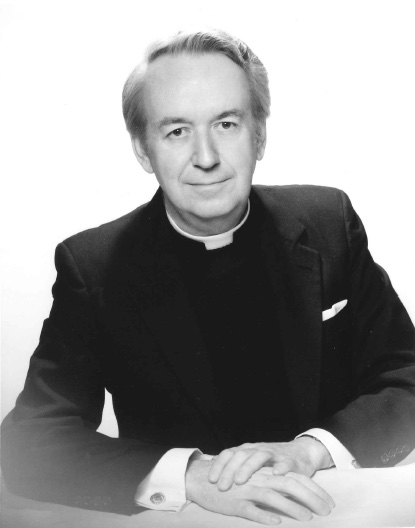
William V. Rauscher (1932-2024)


David Haversat reports that William V. Rauscher has died. Below is the email David sent out moments ago.

William V. Rauscher (1932-2024)  

The Reverend Canon William V. Rauscher was a magician, a psychic researcher, a biographer, and an Episcopal priest who served as rector of Christ Church in Woodbury, New Jersey, for 36 years. For four years Bill served as president of Spiritual Frontiers Fellowship (SFF), an organization focused on the implications of psychic phenomena for religion. At its peak SFF had 6000 members.

Bill was a member of the International Brotherhood of Magicians, Order of Merlin Excelsior. He was also a collector of magic and owned and performed the Flight of Time, the last illusion invented by Harry Houdini. He wrote 17 biographies of magicians. Bill maintained friendships with psychics, debunkers, fraudulent mediums, and the sixth man who walked on the moon, Edgar Mitchell, of whom he wrote a biography. He had psychic experiences himself but also exposed fraud in Spiritualism. He played a key role in publication of The Psychic Mafia, a most amazing exposé in the history of Spiritualism.

Rauscher received five writing awards from The Linking Ring, the magazine of the International Brotherhood of Magicians (I.B.M.) and had been a member of the organization for 75 years. He was elected to the Society of American Magicians (S.A.M.) Hall of Fame. In 1996 the New England Magic Collectors Association honored him for his many contributions to the art of magic. In 1991 he received the Milbourne Christopher Foundation award for his contributions to magic, noting his performing and writing, and in 2007 he was honored with the Christopher Literary Award. In 2023 he received the Lifetime Achievement Award from the Magic Castle’s Academy of Magical Arts in Hollywood. That same year he was honored with the prestigious John Neville Maskelyne Prize for noteworthy contributions to the art or literature of magic from London’s Magic Circle.

Today we remember our friend Bill, an amazing person who touched the lives of so many.

Rauscher the Magician performing Houdini's Flight of Time.


Houdini buffs will know Bill Rauscher as the author of The Houdini Code Mystery, Hardeen: Monarch of Manacles, and co-author of Arthur Ford: The Man Who Talked With The Dead. Bill knew Arthur Ford well. He also lectured on the Houdini Code and controversy.

I'm honored to have known Bill. He was always generous with his time and information. He was one of the rare Houdini truth seekers. He will be missed.

UPDATE: You can now read his full obituary in The Philadelphia Inquirer.

Related:

Friday, January 13, 2023

Houdini's nurse and a new case for murder?


Over the holidays I was privy to some new information, backed by documentation, that has me re-examining my long-standing skepticism when it comes to the question of whether Houdini was murdered. I now believe there is a possibility Houdini was a victim of foul play. But before I get into it, let's look at the problems I've always had with past murder theories.

Past theories

Houdini died from streptococcal peritonitis, an infection caused by leakage or a hole in the intestines. In Houdini's case, his appendix had ruptured, either because of a blow to the stomach or a case of appendicitis that was not treated in time (not debating that here). Before the discovery of antibiotics, peritonitis was almost always fatal, and it was for Houdini who died on Halloween 1926.

Most of the Houdini murder conspiracies have focused on the possibility of poisoning. When the now infamous exhumation was proposed in 2007, the reason was to test for poisoning. But as I understand it, there is no poison that can cause appendicitis.

To get around this inconvenient medical fact, murder theorists must shift to a post-operative poisoning. They claim Houdini's own doctors conspired to murder him, and in his final days injected him with a toxic mystery serum. (This despite the fact that he would have died from peritonitis anyway.) None of this is fact based. It's pure conspiracy theory that might make for good television, but it's bad history. As for the idea that J. Gordon Whitehead was a "ninja" who knew exactly how to deliver a "death blow" to Houdini...well, if you believe that one you should be running the History channel.

Poisoning possibilities

Now, I have no problem believing Houdini had enemies who wanted to see him dead. His campaign against fake spirit mediums was getting hot in 1926. He was provoking both criminals who feared for their rackets and religious fanatics who felt he was driving a wedge between the human and spirit world. Certainly among these people would have been individuals dangerous enough to cause Houdini harm.

I also have no problem believing they might have tried. While in Providence, Bess came down with a bad case of ptomaine poisoning after a meal at the Waldorf Hotel. There are also reports of Houdini appearing ill before the punch from Whitehead. So is it possible a cabal of spiritualists were spiking Houdini's food at every opportunity? Maybe not enough to kill him, but enough to make him ill and cancel his tour? Yes, I think that's absolutely possible.

But all this doesn't mean anything because, again, there is no poison that can cause appendicitis. So here we are back facing a medical fact that doesn't allow us to move forward on any fact-based murder theory. And that is why I have always been a skeptic.

Then I had a conversation with William Rauscher.

Enter Houdini's nurse

William V. Rauscher is a name that most will be familiar with. He is a reverend, magician, paranormal investigator and the author of many books, including a biography of Arthur Ford, The Man Who Talked With The Dead, a recent book about Hardeen, and The Houdini Code Mystery. He even did a guest blog here on WILD ABOUT HARRY. Bill Rauscher is a legend in the world of magic and the paranormal. So when a mutual friend, Tom Ewing, suggested I give Bill a call to learn the details of an amazing meeting he had many years ago, I was happy to! Here's the story Bill told me.

In 1973, Bill gave a lecture on Houdini at the 5th annual Spiritual Frontiers Fellowship retreat at Carleton College in Northfield, Minnesota. After the lecture he was approached by a woman who was excited to speak with him as she had first-hand knowledge of Houdini's final illness. Her name was Helen Mable Bacon (maiden name Costello) and she was a student nurse at Grace Hospital when Houdini arrived there in 1926. In fact, she was in the operating room!

Helen shared a handful of recollections, such as that Houdini "kidded a bit when he was brought in for surgery." Bill typed up notes on their conversation and shared those notes with me. They consist of seven paragraphs. Some of the information is familiar, some of it is new. But it was this sentence that really caught my attention:

Mrs. Bacon recalled that he had in addition to his ruptured appendix a ruptured pancreas.

Wait, in addition to a ruptured appendix, Houdini had a ruptured pancreas??? This I have never heard before, and if we accept her recollection as accurate, it's an entirely new medical fact to work with.

Now, I'm not a doctor and I admit I'm just going off what I can find online, but a ruptured pancreas can cause peritonitis in the same way as a ruptured appendix. So if Houdini had a ruptured pancreas, this would have contributed to his fatal infection. But what causes a ruptured pancreas? Let's ask Google!


So it's conceivable that Whitehead's blows (abdominal trauma) could have caused the rupture. But people have enough trouble believing Whitehead's blows could have ruptured Houdini's appendix. To believe it ruptured both his appendix and pancreas is an even further stretch, ninja or not!

But also notice that pancreatitis can cause a rupture to the pancreas. This seems more plausible. I also found a 2016 case report from the Digestive Disease Research Centre at Tehran University of Medical Sciences that suggests appendicitis can be "a complication of acute pancreatitis." So if Houdini had a ruptured pancreas, it is conceivable that his root illness was actually pancreatitis.

Here's the obvious question. Can poison cause pancreatitis? It doesn't take much of a Google search to come up with that answer:


So here we have a path, paved with medical evidence, that Houdini's final illness could have been brought on by poisoning. Had I known about this in 2007, I might have felt very differently about the proposed exhumation. Arsenic was one of the poisons they were going to test for as traces of it can be found in bones and hair.

I'm sure you all have the obvious questions. Why would Houdini's death certificate not mention his ruptured pancreas? I don't know. Are there any hospital records that say Houdini had a ruptured pancreas? No hospital records survive, so we don't know. Why has no one mentioned this until now? Actually, Bill Rauscher did mention this on page 114 of his book The Houdini Code Mystery, a book I read on release in 2000. But at that time I didn't grasp the significance, and I'm betting it slipped past others as well.

I should also note that when Bill told me about his meeting, we didn't talk about murder. For Bill, the existence of this nurse was the real story. I'm the mad man who picked up on the ruptured pancreas as a revelatory piece of information. I should also point out that in his book Bill says he doesn't believe Houdini was murdered, "though a few careful students of the subject disagree."

So there we go. We now have a theory that doesn't involve homicidal surgeons, mystery serums, or ninjas. It's a theory based on an eyewitness and supported with medical facts. I'm not arguing for it. I just wanted to lay it out as best I can. Unless we again want to talk about exhumation, this may only be another theory that can never be proven. But it is one I can get behind.


Want more? William Rauscher has graciously given me permission to share his original notes from his meeting with the nurse on my Patreon, so you can read all she remembers about her encounter with Houdini in October 1926. I've also included some assorted research. This is for "Scholar" members and up. Just click below.


Thanks to Bill Rauscher and Tom Ewing for making WILD ABOUT HARRY a bit more wild today!

Saturday, September 28, 2019

Dorothy Dietrich & Dick Brookz receive Milbourne Christopher Award

Our great friends Dorothy Dietrich and Dick Brookz of the Houdini Museum in Scranton will be honored with a Lifetime Achievement Award at tonight's Milbourne Christopher Awards at the Garde Arts Center in New London, CT.


The Milbourne Christopher Awards were established by Maurine Christopher in 1989 to perpetuate her husband's memory and spotlight the best magic has to offer in performing, writing, publishing and invention.

Congratulations to Dorothy and Dick on this well deserved honor!

Tickets to the 2019 Christopher Awards can be purchased HERE.

UPDATE: David Haversat has shared a photo of the 2019 Milbourne Christopher Foundation Award Winners!

Left to Right: William Rauscher (Chairman), Chuck Jones, Jan Jones,  Gil Eagles,
Steve Cohen, Daniel Roy, Dorothy Dietrich, Dick Brookz, Bill Herz

Related:

Tuesday, January 8, 2019

Bill Rauscher on Arthur Ford and the Houdini Code

Today marks the 90th anniversary of the infamous Arthur Ford seance in which he revealed the coded Houdini message before Bess and assembled press at 67 Payson Ave. in New York.

I've never really tackled the Houdini Code and its controversy here on WILD ABOUT HARRY, but I wanted to put up something for this anniversary, so below is a full lecture by William V. Rauscher who wrote the book The Houdini Code Mystery and knew Arthur Ford personally. What he has to say about Ford and events of 1929 is pretty interesting. Enjoy.


Related:

Friday, January 19, 2018

William Rauscher's Hardeen book released

William V. Rauscher's new book about Houdini's brother, Hardeen: Monarch of Manacles, is now available from David Haversat's 1878 Press Co. The hardcover runs 150 pages and is the first book ever devoted to Dash.

This book is a tribute to one of the world's greatest escape artists. He traveled the world defying police authorities to shackle his body in handcuffs and leg irons, or to lock him in the darkest jail cells, all of which could not hold him. He nightly escaped from a giant padlocked and water-filled milk can. During the day he freed himself from an ironbound wooden crate as it sank to the bottom of murky rivers and swift oceans. Metal "Crazy Cribs" used on the murderously insane could not hold him. The inescapable steel "Tramp Chair" was child's play to "The Monarch of Manacles." 
Beyond escapes he performed on vaudeville stages, appeared in movies, was a Broadway star and experts considered him a wonderful magician. In fact, he was a much better magician than his brother, and well-liked and admired by the conjuring community. 
Now, for the first time, best-selling author, magic historian, and magician William V. Rauscher brings you the revealing story of this wonderful entertainer who, for the first time, justifiably steps out from the shadow of his brother to take his rightful place in the pantheon of prestidigitators. Meet Theodore Hardeen-the sensation of two hemispheres-brother of Houdini!!

Click to purchase at 1878 Press Co.

Related:

Saturday, August 19, 2017

Hardeen biography coming in Fall

Big news! A new book about Houdini's brother, Hardeen: Monarch of Manacles by William V. Rauscher, will be published by David Haversat's 1878 Press in the Fall. Afraid I don't have any more details, but this is exciting as there has never been a book written about Hardeen. Long overdue.


Author William V. Rauscher was close friends with Hardeen's successor Douglas Geoffrey ("Hardeen Jr."), and carried on performing some of the Hardeen/Houdini effects he inherited from Geoffrey. In 1973 he co-authored the book Arthur Ford: The Man Who Talked With the Dead (he knew Ford well). He also penned the book The Houdini Code Mystery in 2000. In 2015 Bill provided us with an excellent guest blog about the Hippodrome Theater.

I don't yet have information on how to purchase or pre-order Hardeen: Monarch of Manacles, but I'll update as soon as I do. This is going to be a must buy!

Thanks to David Haversat.

Related:

Friday, July 3, 2015

Guest blog: William V. Rauscher on Houdini and the Hippodrome

Today I'm honored to share a contribution by noted magic historian William V. Rauscher, who takes us inside Houdini's historic New York Hippodrome. This first appeared in the journal of the New England Magic Collectors Association (Nov. 2014).

Houdini played many theaters during his illustrious career but none like the one he appeared in for 19 weeks beginning January 7, 1918, when he vanished Jennie the elephant on the stage of the colossal Hippodrome Theater in New York City.

In the history of conjuring great magicians have played many theaters throughout the world but the Hippodrome in size, technology, and sheer magnificence was beyond belief. People today are awed in Las Vegas when they see the Titanic sink on stage or watch the Christmas show at Radio City Music Hall.

At the Hippodrome they saw spectacle after spectacle that dwarfed today's theaters. If you're lucky enough to come upon a Hippodrome Theater program, it makes you wonder, "What was the Hippodrome like when Houdini performed there?" Few remember this enormous theater and even fewer realize its grandeur and elegance. It was advertised as the “Center of the Universe.” Leave it to Houdini to perform in the “center of the universe” and above all things to vanish an elephant. His appearance there made an impact at the time and it is still being discussed today. In size and effect alone the Hippodrome was probably the only theater that could accommodate such an illusion.

Two men deserve utmost recognition for creating and building the Hippodrome. They were the entertainment entrepreneurs Elmer "Skip" Dundy and Frederick Thompson. Described as "theatrical dynamite," they specialized in grand displays, lavish buildings and architecture and were entertainment giants. They thought and built big attractions such as Luna Park at Coney Island which opened in 1903. When they designed the Hippodrome Theater they thought beyond big – they thought gigantic.


Construction started in July 1904, and the architect was J. H. Morgan who created the building in the Beaux-Arts style with Moorish Revival themes. Dundy and Thompson wanted a theatre that would be the greatest in the world and they succeeded. It was to be the equivalent of a great theatrical temple and so it was.

The location was on Sixth Avenue between 43rd and 44th Streets. Exotic beyond belief, the planned seating capacity was 5,200. When finished, it had state of the art technology including hundreds of ingenious stage mechanisms. The electrical system was staggering and lit the theater with 52,000 light bulbs. There were 5,000 in the ceiling alone and another 9,000 lit the stage. A platform 30 feet high was required to work the light board.

The stage was 110 feet deep and 200 feet wide and each performance required 196 stage hands. The stage was equipped with hydraulics, counterweights, and traps that could be raised, moved or lowered. In the front of the stage beneath the covered floor was a glass tank 14 feet high and 60 feet in diameter. It held 8,000 gallons of water, could be flooded at a rate of 4,000 gallons a minute for water spectacles, and had the ability to be raised or lowered at will by a system of hydraulic pistons. It was so constructed that a bevy of chorus girls could descend the steps and into the water and never be seen again. A special air pocket allowed them to walk under the water and into the wings.

The main auditorium was designed in Roman style with red, gold, silver and ivory and the carpet offered the same colors. There were wall hangings, draperies and upholstery in red velvet with gold and silver embroidery and tassels. Carved stone and marble dignified the lobbies.

The opening night Hippodrome performance on April 12, 1905, and featured “A Yankee Circus on Mars” with a cast of 1,200 actors and dancers in beautiful costumes. Scenery for the Hippodrome was also grandiose and filled the stage. Overhead cranes shifted scenery that weighed up to ten tons. There were areas underneath the stage similar to a zoo for elephants, horses and other animals. It was twice the size of the Metropolitan Opera house and the orchestra pit accommodated hundreds of musicians. The great theater organ was created by the Wurlitzer Co.


As time went on financial problems escalated and the Hippodrome could no longer support the extravaganzas and spectacles it once presented. Many factors contributed to its demise. The coming of talking pictures, the decline of Vaudeville, the failings of Keith-Albee and Schubert management and troubles encountered by Dundy and Thompson. Producer Billy Rose was the last to try and bring back the heyday of the Hippodrome. He leased the theatre and presented its final spectacular production “Jumbo,” staring Jimmy Durante. The show played five months until the Great Depression brought it to an end. The Hippodrome closed August 16, 1932, and was demolished seven years later.

One great theatre capable of staging spectaculars still remains in New York. It opened on December 27, 1932, with a seating capacity of 5,933. It features an Art Deco interior with a sunburst ceiling and it is still capable of presenting grand productions. Known as "The showplace of the nation," theatergoers know it as the famous Radio City Music Hall. We can be sure that if Houdini were alive today he might be presenting the vanishing elephant there but probably with the help of the many hydraulic lifts that raise and lower the stage sections that might make the illusion even greater than it was in his day.

Just as Houdini stood on the stage of the Hippodrome and fired a pistol to make Jennie the elephant disappear, so to did the Hippodrome disappear to the sounds of demolition. When you think of Houdini and his elephant Jennie you might also fondly recall of the mighty Hippodrome. They are both wonders now gone and only memories.


Thanks to William Rauscher and Tom Ewing for allowing me to share this here at WILD ABOUT HARRY. If you have your own piece of Houdini research that you'd like to share as a "guest blog," please get in touch via my Contact Page.

Related:

Friday, July 5, 2013

Hardeen's Flight

Here's a July 1935 issue of The Sphinx featuring a nice cover photo of Hardeen performing The Flight of Time. This was a signature trick in Houdini's 1925-26 full evening roadshow and is said to be the last illusion he invented. To my knowledge, there is no photo of Houdini performing the effect, but I suspect this shot of Hardeen gives us an excellent idea of how Houdini staged it. Like much of Houdini's magic, we can see the apparatus was very minimal, emphasizing that there was nothing (or nowhere) to hide.


Hardeen inherited the Flight of Time from his brother and continued to perform it in his act, including during his engagement with the Olsen and Johnson hit, Hellz-a-Poppin. A review of Hardeen's show at the Belasco Theater in New York on January 21, 1945 said of the illusion: "To the audience at large, this effect was perhaps the most startling of the entire evening."

Hardeen passed the Flight of Time onto his successor, Douglas Geoffrey a.k.a. Hardeen Jr., who performed it for many years. William Rauscher received the original apparatus from Geoffrey in 1977 and also performed it for a time (there's a nice photo of him performing the effect in the November 1993 Genii). Rauscher penned an article about the effect in Perennial Mystics (Vol. 11) in which he stated:

"Geoffrey personally taught me the method of performing the effect. It was a temperamental pieces of apparatus and needed a great deal of work. There were times when it failed. According to stories by Geoffrey, it also failed upon occasion even for Houdini. Houdini would simply say "Take it away!" Even though there were incidents of failure, Houdini considered the trick a winner."

In 2011 one of the original Houdini-Hardeen Flight of Time alarm clocks sold for $1600 as part of Potter and Potter's auction of magic memorabilia from the collection of Ken Klosterman.

From The Original Houdini Scrapbook.

Sunday, May 22, 2011

The untold story of Hardeen Jr.


Recently I had the pleasure of speaking with the nephew of Douglas Geoffrey aka "Hardeen Jr." Despite the fact that Geoffrey was the official successor to the Houdini-Hardeen show, precious little is known about him. Most think he only performed for a couple of years, but this is incorrect. Douglas Geoffrey performed as Hardeen Jr. well into the 1950s, and then under his own name until 1988! But let's start his story at the beginning.

Born on May 19, 1907, Douglas Geoffrey Mackintosh fell in love with magic at the age of 8 when he received a Gilbert's Mysto Magic set from his Aunt Lucie. At the age of 12 he saw Thurston perform, and was even invited onstage to assist in a trick. He later took magic lessons from magician Fred Estelle of Brooklyn. One bit of information that the nephew shared with me -- something I've never seen printed anywhere -- is that Geoffrey actually worked briefly with Houdini! At age 19 he got a job in Houdini's full evening roadshow. Unfortunately, his tenure was brief as Houdini died that same year.

Geoffrey assisting Hardeen in 1943
Geoffrey performed his own magic act until he met Houdini's brother, Theo. Hardeen, in Atlantic City in 1932. Hardeen had revived his own career after inheriting the Houdini show. Geoffrey became one of Hardeen's assistants, working alongside Jim Collins, James Vickery, and Dolly Spence. He eventually become Hardeen's Chief Assistant, and may have been the man who rescued Hardeen when he had his mishap in the Milk Can.

Geoffrey was initiated into the Society of American Magicians on May 19, 1944. Then on May 29, 1945, during his final show at the RKO Madison Theater in Ridgewood, New York, Hardeen named "Doug" his official successor. Hardeen would die a short time later -- it was Geoffrey who broke the wand over his casket in the S.A.M. ceremony -- and Geoffrey went on to perform as "Hardeen Jr", the professional name bestowed on him by Hardeen.

Along with the "Heir to the Throne of Magic" title, Douglas Geoffrey inherited the Houdini-Hardeen show props. Thankfully, Hardeen did not stipulate in his own Will Houdini's instructions to "burn and destroy" all his props following his death. The props Geoffrey decided not to use -- including most of the escape apparatus -- he sold off in the July 1945 issue of The New Conjurer's Magazine on behalf of Elsie Hardeen. Among the items listed was Hardeen's original Milk Can with an asking price of $500. (I believe this is the can currently on display as part of the Houdini Art and Magic exhibition.) One personal memento Geoffrey held onto was the monogramed pocket from the pajamas Houdini was wearing when he died. (Today it's in the collection of Arthur Moses.) He also wore Hardeen's masonic pin during performances.

The Hardeen Jr. show, first billed as Houdini Lives Again! and co-starring magician Bob Sherman aka "Sherms", toured vaudeville and with the USO starting in 1945. Featured in his act was The Flight of Time (advertised as "the last illusion invented by Houdini"); Mummy Case; Houdini Card Star; Nest of Boxes; and the Book of Life (the last effect invented by Hardeen). Even though his newspaper adverts sometimes featured escape imagery, the only "escape" he did was the substitution truck with handcuffs. At one point he was (unintentionally?) billed as "Houdini's nephew."

Two Hardeen Jr. ads: One for his show and the other for a "magic battle".

Hardeen Jr. specialized in "challenge" magic contests, at one time holding his own in a card manipulation contest with Cardini. He also succeeded Hardeen in the Olson and Johnson Broadway show Hellzapoppin, playing a remarkable 80 weeks. Hardeen Jr. took his show international, performing in such far off locations as India and Saudi Arabia. While performing at Union City's Capital Theater, he was assisted by Hardeen's daughter, Gladys Hardeen.

Reviews where good. The Richmond News Leader noted that "the Hardeen act has all the flair of 'big time'. He moves with a clocklike precision, and an evenness that is so often missing in these performances that hit the road."

Hardeen Jr. in 1980
However, when it came to publicity, Geoffrey was modest, a trait he certainly didn't share with Houdini and Hardeen. This is probably why so little is known of his career today. He even turned down an invitation to appear on the Ed Sullivan Show. Instead he enjoyed performing smaller venues, and in a home theater which he built behind his house in Queens that he called the "109th Street Playhouse." Here he would perform magic during parties, which he threw often.

Geoffrey continued performing until he physically couldn't manage the coin and cards manipulations. He gave up the stage in 1988 and died on January 14, 1990 at age 82. The S.A.M. performed a Wand Breaking ceremony and buried him with his magician's baton. His close friend, William Rauscher, who penned the book The Houdini Code Mystery, conducted the funeral. Rauscher would carry on performing many of the Houdini-Hardeen magic effects he received from Geoffrey, including The Flight of Time.

Douglas Geoffrey did not formally pass on the Houdini-Hardeen-Hardeen Jr. show to any successor. But he carried the torch admirably for many years, and his life and name should definitely be celebrated as part of the larger legacy of Harry Houdini.


My thanks to the nephew of Hardeen Jr. for the information and the use of his photos.

Translate