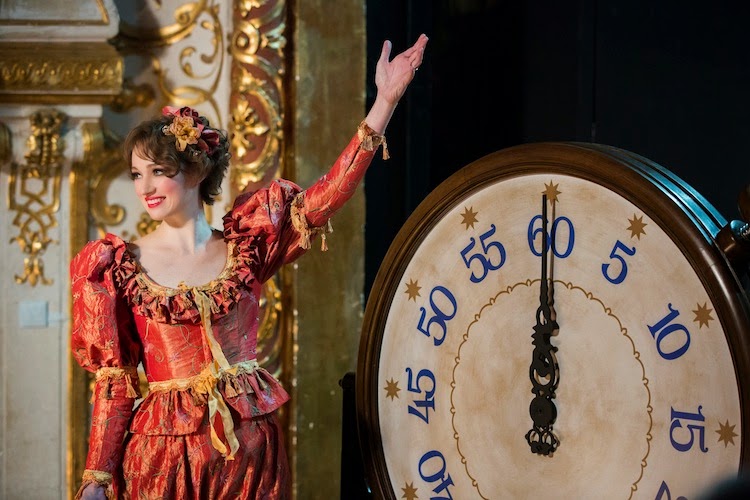
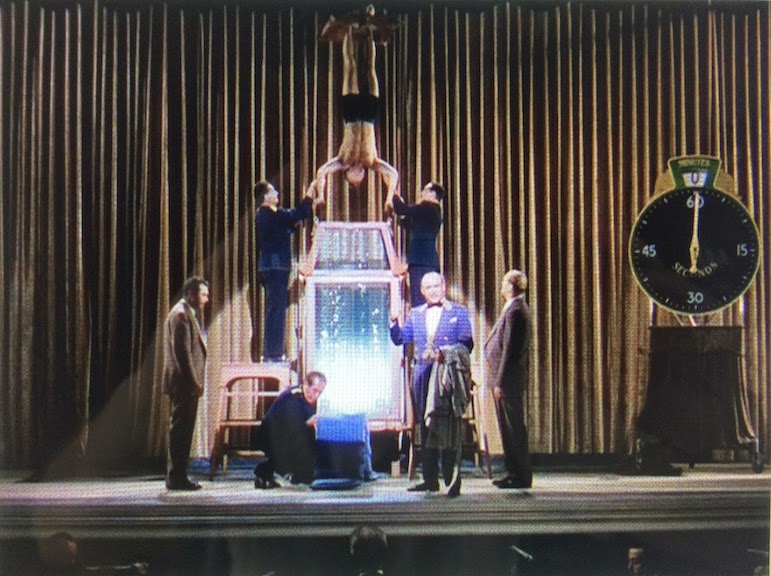
When reading modern descriptions of Houdini's act, it's often noted that a gigantic clock sat on the side of the stage counting off the seconds of his confinement. This is most typically associated with his Milk Can and Water Torture Cell. It's a dramatic idea, and the giant clock has appeared in nearly every cinematic recreation of Houdini's feats. But is it true?
There's a detailed description of Houdini's Water Torture Cell performance at the New Cross Empire in London on May 14, 1913. This can be read in
The Original Houdini Scrapbook by Walter B. Gibson (page 108). It describes all the apparatus Houdini used, right down to the "ornamental cauldrons" filled with heated water. It doesn't mention a giant clock.
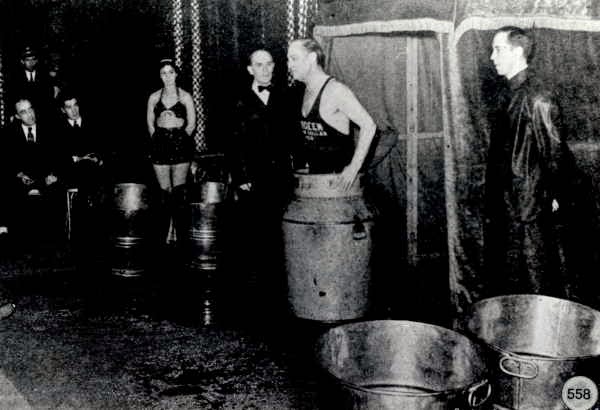
In fact, I'm not sure there is any mention of a clock in any description of Houdini's act from the time (although I admit I've not mounted a very aggressive search). Also, if this major prop existed, what happened to it? A fair amount of Houdini's apparatuses survives and have traded hands over the years. But no clock. And if there was a giant clock, why is it not present in Houdini stage photos such as
THIS? We also have a nice photo of Hardeen performing the Milk Can late in his career on a decidedly clockless stage.
Again, I haven't dug too deeply into this, but I expect this giant clock idea originated in the Tony Curtis
Houdini movie of 1953. In that film we see a giant clock on stage counting down Harry's last moments as he fails to free himself from his "Pagoda Torture Cell." It certainly wouldn't be the only enduring myth generated by that film.
So have we all been lulled into believing the myth of the giant clock? Is it time to retire this timepiece? Clock in with your thoughts below.
UPDATE: Forget everything I wrote above. Our friend Joe Notaro has found solid evidence that this giant clock/stop-watch existed, or at least Houdini conceived of it. In his book
Houdini's Magicial Rope Ties and Escapes (1920), Houdini writes:
"My assistant is always supplied with a stop-watch; in fact for my under-water tests, I had specially made by a watchmaker in Glasgow, the largest stop-watch in the world, by means of which persons in the gallery who did not possess such watches themselves could see the second hand as it jumped around the dial, and thus share in the interest, for you should know that not every theatre-goer carried a stop-watch."
So if there was indeed a giant clock, as appears to be the case, the question remains; what happened to it?
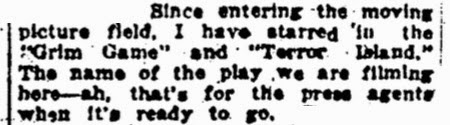
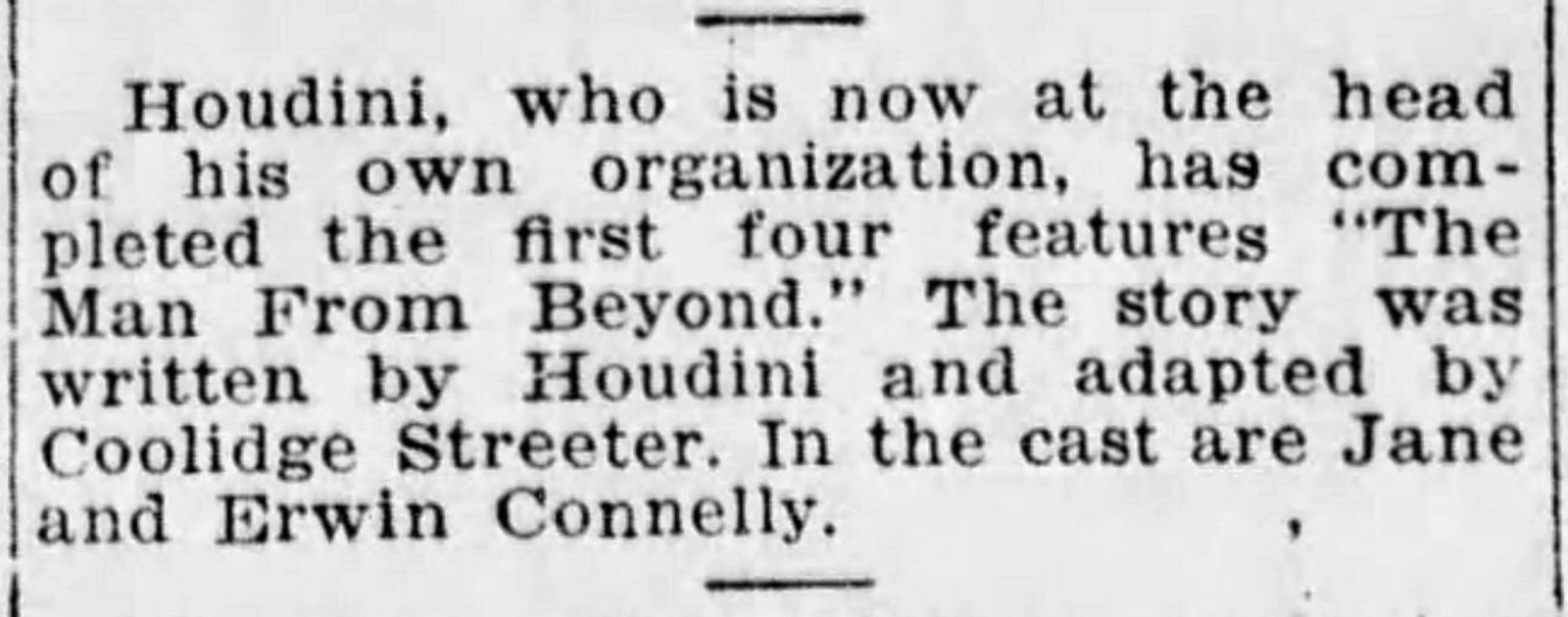
UPDATE 2: And now here's evidence of the clock in action, here referred to as "a huge chronometer."
 |
| The Guardian, July 20, 1909. |