Here is another video from Dan Cox's YouTube channel CoxysPicks. This one is about the Houdini Bell handcuff. Enjoy.
Showing posts with label Props (replicas). Show all posts
Showing posts with label Props (replicas). Show all posts
Monday, August 4, 2025

Friday, August 23, 2024
The very best steel
As promised, here's what was inside the mystery box that I posted on Tuesday. This is a beautiful reproduction of the famed Steel Straitjacket as seen in the Tony Curtis Houdini (1953) biopic. This was a gift from Richard Sherry and Dayle Krall of Sherry and Krall Magic. Richard made a small number of these working replicas. This one he painted for me to better match the jacket in the movie. I love it!


Dunninger owned the original Steel Straitjacket and provided it to the production. Today, it is in the collection of Rob Allen (who let me put it at last year's Milbourne Christopher Awards). Richard created his replicas earlier this year and still has a few left if you want to add one to your own collection. Details can be found HERE.
Thank you, Richard and Dayle! I will treasure this.
Wednesday, April 24, 2024
1971: Year of the Torture Cell(s)
Houdini's Water Torture Cell made its last public appearance on the night of October 11, 1926, in Albany, New York. This was the night Houdini broke his ankle. Despite plans to resume the cell in Detroit, Houdini died before that happened. After that, the famed prop remained out of sight for the next 45 years. Then, in 1971, two Water Torture Cells, both claiming to be the original, returned to public view.


Related:
In May 1971, the Water Torture Cell that Sidney Radner acquired from Hardeen in 1942 was put on permanent display at the Houdini Magical Hall of Fame in Niagara Falls, Canada. Some assume the cell was in the museum from the start (the museum opened in 1968), but it was actually a later addition, as we can see below.
 |
| The Holyoke Daily Transcript and Telegram, May 29, 1971. |
Later that same year, magician Abb Dickson announced that he had acquired Houdini's original Water Torture Cell and was making plans to display it. Abb claimed he found the cell in England and had even solved its secrets by having it x-rayed.
 |
| The Atlanta Journal, Sept. 6, 1971. |
In October, Abb's cell was revealed alongside a collection of other alleged Houdini ratites at the Dutch Square Mall in Columbia, South Carolina.
 |
| The Columbia Record, Oct. 25, 1971. |

Of course, Abb's cell was pure hokum—it was made of sheet metal with a shower drain at the bottom. One wonders if the arrival of the real cell in Canada had inspired Abb in this endeavor? Abb would tour his Houdini exhibit and cell for several years. The cell was also used in the 1976 television biopic, The Great Houdinis.
The real Water Torture Cell remained on display at the Houdini Magical Hall of Fame until a fire destroyed much of the cell in 1995. Today, the restored cell is back on display at David Copperfield's International Museum and Library of the Conjuring Arts in Las Vegas.
Abb Dickson's cell also survives today in the collection of Troy Milligan. On occasion, it has been offered for sale on eBay, but I'm not sure of its current status.
Want more? I've uploaded to my Patreon a collection of photos of the original Water Torture Cell on display at the Houdini Magical Hall of Fame throughout the years and what remained of it after the fire.
Related:
Monday, April 15, 2024
Houdini soars at new Diggers Rest Pavilion
A new Community Pavilion opened in Diggers Rest, Australia, last week. Inside, you can find this mural showing Houdni's Voisin biplane. Interestingly, this doesn't commemorate Houdini's famed 1910 flight but Ian Satur's model of the plane that flew during the 2010 centenary celebrations. Either way, it's good to see Houdini is still a star in Diggers Rest.
The Ian Satur model survives today and is still looking for a permanent home.
Friday, April 12, 2024
Own a replica Steel Straitjacket from Houdini '53

Now, our friend Richard Sherry of Sherry and Krall Magic has manufactured a beautiful reproduction of the Steel Straitjacket. He has produced a limited run of only TEN jackets that can be purchased gaffed or ungaffed. And, as Tony/Houdini says, I'm sure he used "only the very best steel."
If interested, you can find pricing and details on Richard's website or email him at richard@richardsherrysmagic.com.
 |
| "It looks like you have me all locked up." |
Thursday, November 2, 2023
Dave Powell's 1/6 scale Water Torture Cell replicas

Dave spent over two years researching articles and hundreds of photographs to create this highly detailed replica. Each cell is handcrafted in solid mahogany, as was the original, with custom cast handles, drain plugs, hasp, and hinges plated in nickel. Each cell holds over 450 screws. Even the size and configuration of the planks on the sides and back match Houdini's original apparatus precisely.
This is an actual working replica, meaning it contains the secret of Houdini's escape. Shhhh.
These are being offered as a signed and numbered limited edition of only 25. Each cell comes with a booklet describing Dave's process of creating the replica with over 50 photographs.
It's not cheap, but if you have the means, you can ORDER HERE.

Monday, June 6, 2022
Barry Spector recreates Houdini's Russian Manacle

Our friend and master woodworker Barry Spector has produced another amazing work of Houdini art. This time he has crafted a working replica of the famous Russian Manacle, one of Houdini's more elusive "super cuffs." The cuffs are made from mahogany and the key is made from the 278 wood Barry acquired back in 2019. I actually never realized until I saw this recreation that a panel slid down over the keyhole. Check out the images provided by Barry below.


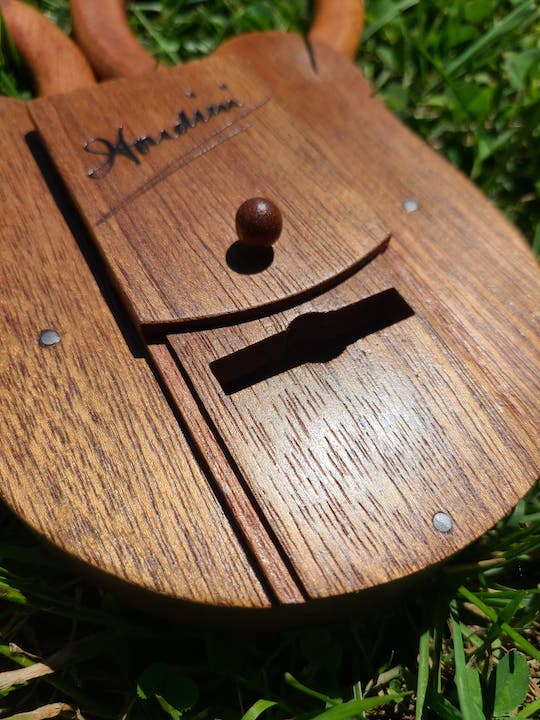
Barry also recently made a small-scale replica of Houdini's famous Double Fold Death Defying Mystery box. He even built into it what he believes is the secret (but we can't show you that). The real Double Fold box is owned by David Copperfield.

If you're interested in Barry's work he can be contacted at negrilman15@gmail.com.
Thanks Barry.
Related:
Tuesday, May 31, 2022
Model of Houdini's plane is safe for now
 |
| Ian and Janice Satur with the model Voisin. (Melton City Council) |
Unfortunately, despite a number of open-ended promises by Melton City Council to accommodate the model within a permanent setting, it’s understood that the model will be destroyed in the coming days.
The good news is Australian Aviation Historian Graeme Minns has stepped forward and will provide storage for the model until a permanent and hopefully public home can be found in Australia.
Diggers Rest resident David O'Connor, who has been spearheading the effort to display the plane, recently interviewed the 81-year-old Satur about making the model and what he discovered about Houdini's original plane. It's an excellent interview that you can listen to at ©Melton City Council.
Thanks to David O'Connor.
Tuesday, September 28, 2021
Phantasm Mama
Inspired by last week's post about "Hidden Houdinis", magician Ash Adams sends over this shot from the 1979 horror cult classic Phantasm. Look at this tombstone closely. Hello Mama!
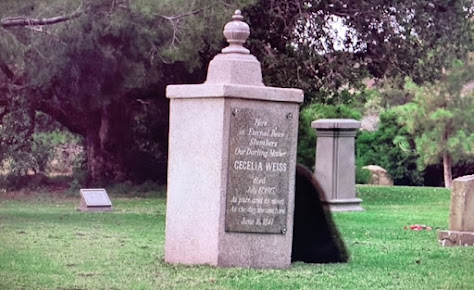
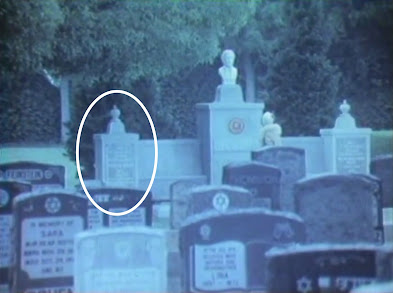

So is this a deliberate nod to Cecelia Weiss? Maybe not. This appears to be part of the exedra that was used in the 1976 television biopic The Great Houdinis. According to Ash, the production rented the tombstones from 20th Century Fox. The Great Houdinis was filmed largely on the Fox lot, although the graveyard scenes were shot at Home of Peace Memorial Park in East Los Angeles (you can tour that with me here). So the selection of this tombstone might have just been a happy accident.

I've always wondered what happened to The Great Houdinis mockup exedra, especially the bust of Houdini/Glaser. Now we know that it went to the Fox property depart and was still there in 1979. Would love to think it might still be there today!
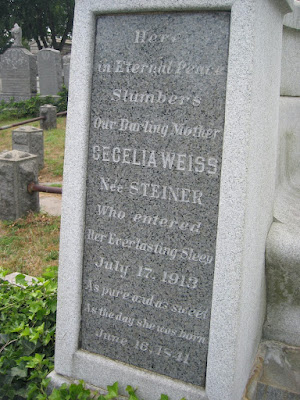
Below is the real exedra marker for Mama. This was her original standalone headstone from 1913 that was later incorporated into the exedra in 1916.
Thank you Ash!
Friday, May 21, 2021
'The Great Houdinis' Water Torture Cell in the wild
As long as we're on the topic of Houdini biopic props, here's an image I found of the Water Torture Cell from The Great Houdinis on display in a shopping mall in 1977. What's notable here is the cell still has the artificial front that the production added to conceal star Paul Michal Glaser's height and make the cell look a little more menacing. The cell survives today, but it has lost this front piece which made it so identifiable. This clipping is from the June 19, 1977 Cedar Rapids Gazette.
 |
| Click to enlarge. |
As you can read, the cell was being passed off as Houdini's original, which of course it is not. You can read more about that little deception here. Below is the cell as seen in the movie.

Saturday, February 6, 2021
Guest Blog: Chronicles of the Mystery WTC (Part 2)
It was one year ago that Richard Sherry & Dayle Krall made the remarkable discovery of a working Water Torture Cell in Canada. The cell resembled Houdini's original Water Torture Cell, which was destroyed in a fire in 1995, almost exactly. The appearance of this "Mystery WTC" sparked curiosity and controversy as to its origins and purpose.
Over the past year Richard and Dayle have been examining, restoring, and researching their discovery. Today I'm excited to share the second part of their two part Guest Blog that explains all they have uncovered. Enjoy!


 Years ago, Richard built what he thought was an exact working replica (right) of Houdini’s WTC from pictures and other information he had gathered over the years. This Mystery WTC is constructed slightly different than his previous understanding. Richard had contacted Dave Dorsett to verify the measurements of the Cell that sat in the Niagara Falls museum that was going to be sent out for restoration. From Richard’s understanding Dave Dorsett had bid on the contract to restore the WTC in 1991 and was therefore able to get all the measurements of the Cell that was in the museum at that time. The measurements that Dave Dorsett provided were essentially the same measurements as the working replica WTC Richard built years ago. These measurements do not match the Mystery WTC.
 Here is our theory, as crazy as it sounds. When the museum was being moved to the second location, a local farmer stored the WTC and other items from the museum as a favor. The items that had been stored were moved into the new museum location; everything except the WTC. Parts from this Cell had been removed (the two back handles, two plugs, one piece of the side hasp, etc). The Cell that was stored remained stored for decades – minus the parts mentioned. Over the years other magicians and collectors had been contacted regarding a sale but there were no buyers. A fellow performer from Nova Scotia had been approached but he was not in the position to purchase it at that time. We purchased the Cell when Dayle had been contacted by the seller and this was because they had found her as "The Houdini Girl" and thought she might be interested.


Chronicles of the Mystery WTC
by Richard Sherry & Dayle Krall
Part 2: Discoveries and Theories
During the process of reassembling (see Part 1), we have had many new discoveries which we would like to share.
When we removed the large hasp that locks the stocks, we discovered another set of screw holes behind it. We found this curious.

Another discovery that we found earlier and wanted to share again for those who had not seen it. As Richard took the brass plate off of one of the locks and was looking at the lock, he noticed that there was something wedged between the lock case and the cut out in the wood of the stocks. After removing it he found that it was a 1909 British coin. It looks like this coin was being used as a shim and would have been installed when the stocks were built. We wonder who put that coin there and why? The interesting part is that the WTC was built in Britain around 1910-1911.

It is also extremely peculiar that there are four Collins locks on the stocks. They add no additional functionality. Does anyone have any ideas why there would be four?
Lifting Ring Puzzle
The lifting ring is made from 5/16” thick, 1 ½” x 1 ¼” angle iron. It appears to be cast and weighs a ton. Richard has always found it curious why the lifting ring had cut outs in it to accommodate the large hasps that fasten the stocks to the Cell. The hasps are bent in a way that they will pass over the lifting ring so why the cut outs? It is Richard’s belief, that there was an error made during the construction and the thickness of the lifting ring was not considered. Richard believes this because the cut outs in the lifting ring are just a little bit deeper than the thickness of the metal of the ring. The slots were cut down 3/8” deep. Does anyone else have any other ideas why this would be the way it is?
Ring Hooks
One of the large ring hooks came off. It would not fit back into the hole in the lifting ring. It appears that the ring hooks were heat fitted – where the hole in the lifting ring frame was heated and the ring shaft was put into the hole and when it cooled down it was a perfectly tight fit.
Two exceptional discoveries
This picture shows how the panels are joined together using lap joints. It appears that there was some kind glue or sealant of some sort that was put in between the lap joints to help prevent water leakage.

When we were assembling the 5 panels on the right side of the Cell, Dayle noticed that the centre panel was different. Upon further inspection we noticed a couple of things. One, the lap joints were clean. There wasn’t any residue on the joint. Two, the corners of the joint were perfectly straight whereas the corners of the rest of the panels were ever so slightly rounded. This leads us to believe that this panel may have been replaced at some point in time.

Here we have a real bombshell. One day when Richard was polishing the glass inside the Cell he dropped the Windex bottle and noticed that the bottom back panel moved. After examining the bottom panel, it was discovered that between the lap joints was a metal tube. This tube could be lifted vertically and may be some kind of breathing tube. Of course, we do not know if this had ever been used.
The board was spring loaded so it would pop open if hit at the back. We won’t go into the complete description of it right now, but it is almost something out of James Bond.
In the picture, Richard replaced the steel spring that had decayed into two pieces just to see how this worked. He thinks this is how it would have worked.

This Cell has a working gaff and John Cox has the pictures to verify it but we will not be including those pictures for public release.
We tried to remove the wood rings that surround the drain valves but couldn’t. We had to remove the drain valves first because there was a membrane attached to the wooden rings. This, of course, made total sense to prevent leakage.
We also noticed on a couple of screws that there was steel wool wrapped around them. This was often used when a screw thread was starting to wear to tighten it.
The frames of the Cell were constructed with mortise and tenon joints. This was noticed because one of the joints had come loose.
It was also very curious that on the back panel of the Water Cell, the panel themselves were opposite. The lap joints were opposite compared to the other two sides because the screws of each panel were installed above the seam whereas they were installed below the seam on the other two sides.
There are also two diagonal gouges in the back panel. Both near the third bolt from the top on each side. These gouges are possibly from a chain that was wrapped around a Cell when moving it. We are not certain of this, but this explanation matches the gouges perfectly.
Missing Items
When we received this Cell we noticed that there were a few thing missing:
- 2 drain plugs
- 2 brass handles on the back of the stocks
- Upper section of right brass hasp near the front
- 8 bolts
- A few screws
After reassembling the Cell and having developed a much better sense of how it was built and works we are wondering, now more than ever, where this Mystery WTC came from.

With the discrepancy between the measurements Dave Dorsett provided of the WTC in the Niagara Falls museum and the measurements we had of the Mystery WTC we had no idea what the Mystery WTC was and where is came from. It wasn’t until Richard had discussed the Mystery WTC with Dean Gunnarson that new information came to light. Dean provided the precise measurements and dimensions of the WTC that James Randi had drawn up of the Cell that was first delivered to the Niagara Falls museum in 1971. These measurements and dimensions match the Mystery WTC exactly and they are not the same measurements that the Cell in the museum had after the museum moved locations.
Just to name a few discrepancies between the two Cells:
- The steel frame is a little over 3” in the WTC in the museum that everyone is familiar with, however the frame in the Mystery WTC is 3 ¼” which is the same as what Randi documented in 1971.
- The Mystery Cell is also 2” deeper which is the same as what Randi documented in 1971.

We are not certain, but we think that the Cell that went into the museum that Randi had measured had been left in storage when the museum moved, and a duplicate Cell was made using the parts removed from the original WTC. This duplicate was then put in place in the new museum location.
Maybe this is why no one really cared about the condition of the WTC that was in the museum and it was so neglected over the years? After the fire and the insurance claim was processed the Cell that was stored had to remain hidden.
After all the time and money invested, we still do not have any definitive proof of what this Mystery WTC is, BUT WE LOVE IT! These are some very wild ideas but what better place than Wild About Harry to discuss them?
If anyone has any information or questions, they would like to discuss that cannot be posted publicly on Wild About Harry, please feel free to contact us at richard@sherryandkrallmagic.com.

Thank you Richard & Dayle!
Thursday, February 4, 2021
Guest Blog: Chronicles of the Mystery WTC (Part 1)
It was one year ago that Richard Sherry & Dayle Krall made the remarkable discovery of a working Water Torture Cell in Canada. The cell resembled Houdini's original Water Torture Cell, which was destroyed in a fire in 1995, almost exactly. The appearance of this "Mystery WTC" sparked curiosity and controversy as to its origins and purpose.
Over the past year Richard and Dayle have been examining, restoring, and researching their discovery. Today I'm excited to share the first of a two part Guest Blog that explains all they have uncovered. Enjoy!


Chronicles of the Mystery WTC
by Richard Sherry & Dayle Krall
Part 1: Reassembly
We would like to thank those interested in our Mystery WTC for their patience. When we found time between projects, we pulled the WTC out of storage and discovered its worsening condition. We pulled the entire Cell apart to look for any further mold and mildew between the panels and the frame and in the process removed almost 700 screws and 65 bolts. Many of the heads of the bolts had been extremely stripped.
To preserve the Cell, we sent all metal and brass parts to be cleaned and clear coated to help preserve them. We applied a mold inhibitor (Concrobium Mold Control) to the inside wood to prevent further decay. We found an easy hack to clean the screws using Coca Cola.
To clean the outside wood sections of the WTC we used a heat gun to strip off the layers of old wax with a plastic putty knife. This process did not damage the wood in any way, and we were very happy with this, but it filled in a lot of the screw holes and interesting characteristics in the wood which we regret.
Here is a picture of the frame of the Cell after we had removed the panels, the glass and the wax had been removed with a heat gun.

Another picture we would like to share is of the Cell being prepared to be reassembled. We received the metal back and were beginning to re-attach the hardware to the panels prior to reassembling which can be seen in this picture.

Reassembly of the WTC
Following is a sequence of the manner that we reassembled the WTC. This picture is of the very bottom of the WTC. This is the outside bottom that would sit on the stage.

The inside bottom piece of wood sits on the outside bottom framework that was shown in the previous picture. This is the wood that would have been under water.
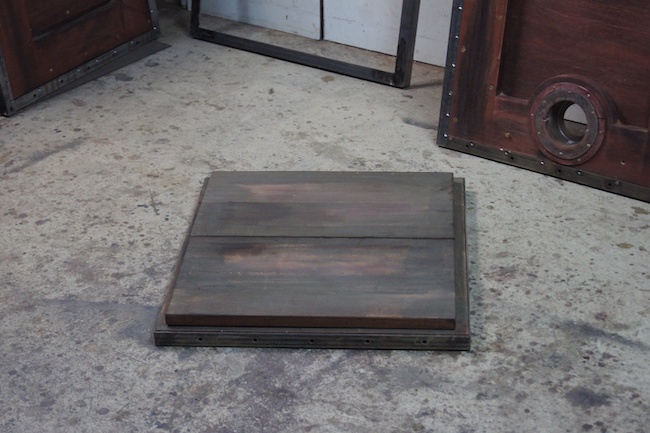
These two panels are attached together with bolts and then bolted to the base making a solid structure. The third panel is fastened in the same manner.

Here is another picture of the inside.

The 3/8” thick metal plate is attached to the top of the front. It is massive and heavy.

Here is a picture of another angle of the assembled Cell.

Here is a picture of the assembled Cell with the front glass, metal and stocks.

Here is another picture of the fully assembled Cell but from a different, often unseen, angle. The back of the WTC is even more rarely seen in photographs.

Thanks to Richard and Dayle for sharing these insightful images. In PART 2 they reveal their "Discoveries and Theories", including what they believe to be the truth behind this cell. Hold on to your rivets!
Wednesday, July 1, 2020
The Muller Mirror mystery key
On last Sunday's Magic Collectors' Corner ZOOM conference, Roger Dreyer gave a tour of his amazing Houdini Museum of New York at Fantasma Magic (which is now reopened for business). Among the many Houdini treasures Roger showed was a replica of the famous Mirror Handcuff made by Ian McColl. The cuff hangs in a display case with a key, and I was very surprised when Roger said he bought the key from the late Henry Muller who told him it was "the duplicate key."
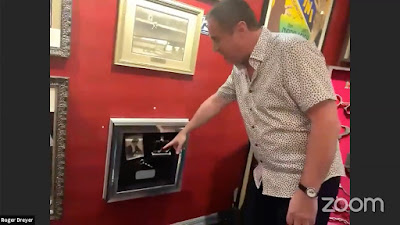
I immediately remembered this post from 2013 in which I shared a photo of Mirror handcuffs on display at Henry Muller's Houdini Magical Hall of Fame with two keys. This is significant as the Mirror cuffs are supposed to have only one key. Both keys eventually vanished from the display case.
Roger has been good enough to send over a nice photo of the mystery key, which he purchased from Henry in 2016.
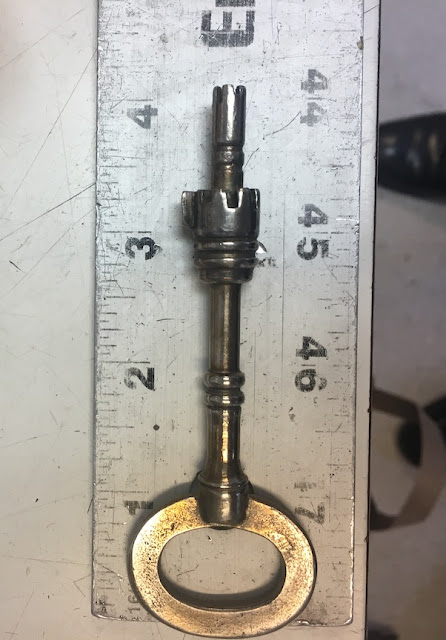
Now, before we get too excited and begin to speculate that this second key might have been used by Houdini to open the cuff during his famous 1904 challenge, Roger reports that David Copperfield tried this key on the original Mirror Handcuff and it did NOT work. So despite being a "reproduction not made by anyone modern", this doesn't appear to be the secret of the Mirror Handcuff escape.
But what is this key and why does it exist? I guess it's yet another Henry Muller Houdini mystery.
If you missed this latest Houdini-themed conference (#11) you can watch it on the Magic Collectors Corner Facebook Group.
Thanks Roger.
Related:

I immediately remembered this post from 2013 in which I shared a photo of Mirror handcuffs on display at Henry Muller's Houdini Magical Hall of Fame with two keys. This is significant as the Mirror cuffs are supposed to have only one key. Both keys eventually vanished from the display case.
Roger has been good enough to send over a nice photo of the mystery key, which he purchased from Henry in 2016.

Now, before we get too excited and begin to speculate that this second key might have been used by Houdini to open the cuff during his famous 1904 challenge, Roger reports that David Copperfield tried this key on the original Mirror Handcuff and it did NOT work. So despite being a "reproduction not made by anyone modern", this doesn't appear to be the secret of the Mirror Handcuff escape.
But what is this key and why does it exist? I guess it's yet another Henry Muller Houdini mystery.
If you missed this latest Houdini-themed conference (#11) you can watch it on the Magic Collectors Corner Facebook Group.
Thanks Roger.
Related:
Wednesday, August 7, 2019
Mystifier, Fourth Quarter 1998
Continuing my issue by issue look back at the Mystifier, the newsletter of the Houdini Historical Center that ran from 1991-2003.

The bulk of the Fourth Quarter 1998 Mystifier is taken up with a delightful Q&A interview with Houdini's niece Marie Hinson Blood. In it Marie shares many memories of her Uncle Harry and Aunt Bess. Some of the stories are familiar ones, but at the start she reveals some biographical details about Bess and the Rahner family that I don't believe have appeared elsewhere.
There's also this interesting exchange:
It's interesting how Marie and Dorothy Young, who both experienced the private Houdini, describe him as "quiet."
The newsletter also contains an article by Mick Hanzlik describing his work on a half-scale replica of the Water Torture Cell that's part a new Houdini display at The Magic Circle headquarters in London. The model was created by art design student Andrew White as a school project and purchased by The Magic Circle. Mick added special lighting effects and a motor that allows the feet of a figure of Houdini inside to move. Mick says the straitjacket Tony Curtis wore in Houdini (1953) is also part of the new display. Is that display still there, I wonder?
The museum shop then announces the arrival of new Houdini mouse pads and a 80-piece puzzle depicting the Water Torture Cell.
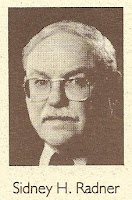 Sid Radner begins his "Backstage" column with a reproduction of a poem about Houdini by Sharon Olds. It's called "My Son the Man" and appears in the book The Wellspring (1996). Sid says it was brought to his attention by Ken Silverman.
Sid then reports on that year's Official Houdini Seance held in Las Vegas. Attendees included actor Johnathan Schaech and director Pen Densham who premiered their new TNT Houdini biopic at the seance. Sid says it was "very well received." As always, Sid is proud of the publicity the seance generated, noting that it got an "exceptional story in USA Today."
Sid closes with the news that a new play, The Great Houdini, is set to open at the Stella Adler Theater in Hollywood in April 1999. Sid reports that playwright Alan London spent 12 years writing the play. [!]

The bulk of the Fourth Quarter 1998 Mystifier is taken up with a delightful Q&A interview with Houdini's niece Marie Hinson Blood. In it Marie shares many memories of her Uncle Harry and Aunt Bess. Some of the stories are familiar ones, but at the start she reveals some biographical details about Bess and the Rahner family that I don't believe have appeared elsewhere.
Marie: Well, there were eight children, one boy. The father died when Bess was twelve years old, and my mother was 8 months old. The oldest child in the family was engaged to a young man that was a tailor. They married, and luckily he had a big tailor shop. All the girls, when they were old enough, worked in the tailor shop. Aunt Bess hated this. She hated sewing... it was to her advantage, because she made patterns and she designed them, and she was very, very good. Aunt Bess designed the clothes that [she and Houdini] had in the show. So it did help them. At the beginning she sewed the costumes, but later she had other people sew them.
There's also this interesting exchange:
Mystifier: What kind of person was your Aunt Bess? Was she optimistic and positive, or moody? Could you describe her?
Marie: Never moody. Oh, no. Very vivacious. In fact, he [Houdini] was the one who was quiet. I don't think I ever heard him tell a joke in his life.
It's interesting how Marie and Dorothy Young, who both experienced the private Houdini, describe him as "quiet."
The newsletter also contains an article by Mick Hanzlik describing his work on a half-scale replica of the Water Torture Cell that's part a new Houdini display at The Magic Circle headquarters in London. The model was created by art design student Andrew White as a school project and purchased by The Magic Circle. Mick added special lighting effects and a motor that allows the feet of a figure of Houdini inside to move. Mick says the straitjacket Tony Curtis wore in Houdini (1953) is also part of the new display. Is that display still there, I wonder?
The museum shop then announces the arrival of new Houdini mouse pads and a 80-piece puzzle depicting the Water Torture Cell.
 Sid Radner begins his "Backstage" column with a reproduction of a poem about Houdini by Sharon Olds. It's called "My Son the Man" and appears in the book The Wellspring (1996). Sid says it was brought to his attention by Ken Silverman.
Sid then reports on that year's Official Houdini Seance held in Las Vegas. Attendees included actor Johnathan Schaech and director Pen Densham who premiered their new TNT Houdini biopic at the seance. Sid says it was "very well received." As always, Sid is proud of the publicity the seance generated, noting that it got an "exceptional story in USA Today."
Sid closes with the news that a new play, The Great Houdini, is set to open at the Stella Adler Theater in Hollywood in April 1999. Sid reports that playwright Alan London spent 12 years writing the play. [!]
Mystifier
Volume 8, Number 4
Fourth Quarter, 1998
6 pages
Contents:
A Conversation With Houdini's Niece, Marie Hinson Blood
The Houdini Exhibit at the Magic Circle, London
Museum Shop News
The Houdini Exhibit at the Magic Circle, London
Museum Shop News
Backstage with Sid Radner
Related:
Monday, February 12, 2018
Replica Water Torture Cell at Austin Magic Museum
Magic's Theater & Museum in Austin, Texas contains a Houdini display that I was not aware of until now. As you can see, the display includes a remarkable reproduction of Houdini's Water Torture Cell. I wonder who made this?
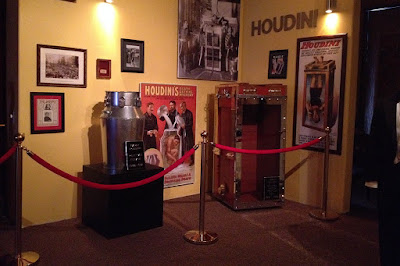
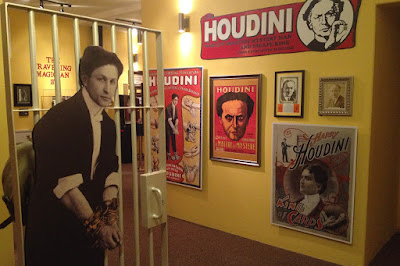
The museum is run by John Magic and is open Tuesday through Thursday from 11:00 a.m. to 3:00 p.m. Please call 512-289-4461 24 hours in advance for reservations. Entrance is $10 for all ages. For more info and photos visit the official website.
Related:


The museum is run by John Magic and is open Tuesday through Thursday from 11:00 a.m. to 3:00 p.m. Please call 512-289-4461 24 hours in advance for reservations. Entrance is $10 for all ages. For more info and photos visit the official website.
Related:
Thursday, July 20, 2017
LINK: Houdini's circus wagons in Budapest

Related:
Tuesday, July 11, 2017
A mini Mirror Handcuff mystery
A reader named Ian sends in these images of a mini (5.5cm) brass replica of Houdini's Mirror Handcuffs with a request for help in identifying them. These belonged to his late brother-in-law, Matthew Brown, who was a handcuff and Houdini collector. Ian points out they are the size of thumbcuffs, if one had very large thumbs. He has no idea how old they are or whether they are one-of-a-kind and he does not have the key. Ian sold his brother-in-law's collection, but says, "This is the last and most intriguing cuff which is why I kept it too last."


At first I was excited to think we may have found the mysterious Tatler cuffs, but these do not appear to be the same design.
If anyone has any idea what these are, please leave a comment below or contact me. I can also put you in direct touch with Ian.
UPDATE: So it appears these are one of several different working mini Houdini handcuffs made for fun by John Bushey of Minnesota and Ian McColl of Australia. These particular cuffs are said to have been made by McColl.
Thanks to Terry Roses.
Related:


At first I was excited to think we may have found the mysterious Tatler cuffs, but these do not appear to be the same design.
If anyone has any idea what these are, please leave a comment below or contact me. I can also put you in direct touch with Ian.
UPDATE: So it appears these are one of several different working mini Houdini handcuffs made for fun by John Bushey of Minnesota and Ian McColl of Australia. These particular cuffs are said to have been made by McColl.
Thanks to Terry Roses.
Related:
Subscribe to:
Posts (Atom)