Showing posts with label Orson Welles. Show all posts

Thursday, February 22, 2018

Into The Copperfield Zone, Part I

Last week I had the extreme honor of visiting David Copperfield's International Museum and Library of the Conjuring Arts in Las Vegas. David's collection is staggering. Imagine the world's largest magic collection, and then triple it. And when it comes to Houdini, well...in two hours I saw more authentic Houdini props and memorabilia than I've seen in my lifetime. But to share this experience right, I need to share it from the beginning.

A few weeks ago I had a telephone conversation with David and his Executive Producer Chris Kenner about Houdini's bookcase from 278. [I shared details here.] During the conversation, David invited me to Las Vegas to see his collection. He warned me "it was a mess" because he's currently working on a major expansion. But he was eager for me to see it now, and then come back when it is finished. Well, you don't say no to an invitation like that!

So on Tuesday, Feb. 13, I hit the road to Las Vegas where a room had been arranged for me at the MGM Grand Hotel & Casino. The view from my window was my first clue that I had entered The Copperfield Zone.


The plan was for me to attend David's 7:00 pm show. As I had a few hours to kill, I hopped over to the New York New York Hotel & Casino and paid a visit to Houdini's Magic Shop. This was the first store to carry the "Houdini's" name, and it's still my favorite. Not only do they have a life-size mannequin hanging from the ceiling in a straitjacket, but they also have Houdini (1953) playing on a loop out front. Houdini posters and photos cover the walls, and several display cases contain authentic memorabilia from owner Geno Munari's collection. Unfortunately, there's far less on display than in the past.

I was told by the helpful magician working the counter that the larger Houdini stuff was now at their main headquarters store on Dean Martin Drive. This was a location I wasn't aware of, so I resolved to see it before I left town. That's when I noticed high atop a shelf a slim wooden case stamped with Houdini's name. I was told this was the case that held the glass for the Water Torture Cell. It wouldn't be the only one of these I would see this day.


Show time came and I took my excellent seat inside the MGM's David Copperfield Theater. Now, David's Las Vegas show requires a full blog in itself, so I'm not going to be able to do it justice here. Suffice to say, it was awesome! The last time I saw David perform live was in 1997, so I was struck by the evolution of his show. It was surprisingly informal and very interactive--almost every trick involved the audience in part or whole--and even downright raucous at times! The pace of the show was breathtakingly fast and David's team of assistants were a marvel to watch. His climatic BLU production was quintessential David Copperfield in its mix of storytelling, magic, music and emotion. This is the stuff I really love. And, of course, there were several jaw dropping moments that have to be seen to be believed. A full alien spaceship appearing in the center of the showroom? Yep, that happened.

After the show, I went backstage with a small group of VIPs (you can get a ticket that allows you to meet David and take a photo). David's very nice assistant, Mikayla, told me to hang back, and after everyone left, I met David and Chris Kenner. Everyone seemed excited for me to see the collection, and the plan was for me to return to the theater after David's second show (meet at the lobby statue at 11:10 pm).

After dinner, I was in place at the statue, and with the same clockwork precision I enjoyed watching during the show, one of David's assistants whisked me back through the now empty theater and out through a stage door. There I joined David and Mikayla for the short drive to the museum. Along the way, David and I talked Houdini (what else!?). He asked how I became interested in Houdini, and we chatted about various collectors and collections (anyone's ears burn?). We discussed the merits of various biographies, and even some of the questions of the day, such as the notion that Houdini may have worked as a spy. I gotta say, I was instantly comfortable with him. He's a Houdini guy!

We arrived at the museum around 11:30 and entered via a false front made up to look like the tailor shop of his father. After seeing his show -- BLU is a moving tribute to his father -- I understood how much David loved his dad and understood the symbolism of how the entrance to his dreams would be via his father's work. That's when I realized how the museum itself was a massive David Copperfield production, combining magic with personal biography, meant to awe and inspire. Even more so than his show, I was entering a special world of his creation, and I understood why he's so proud of it and excited for someone to experience it for the first time. [The museum is not open to the public, but David gives private tours.]

Now, I should say up front that I took no photos inside (okay, one, but we'll get to that). This was not because I couldn't. I quickly discovered David would deny me nothing. I was able to handle and open anything I wanted (make sure you come back for Part 2 for more about that!). So I'm certain I could have taken photos had I asked. But I didn't want to. This was about experiencing the museum, not photographing it, and I wanted to give everything my full attention. But that means I have nothing to illustrate this blog going forward, so I've plucked down a few online photos to help, starting with one that shows the "shop" entrance.


We then entered the warehouse itself via the tailor shop's dressing room -- pull down on a shirt tie and the mirror pops open. Very cool. We then stepped into what could be considered the David Copperfield area. This is a massive open space housing all his famous illusions. Here stands the massive rack of spikes from his "Fires of Passion" escape. There's even a helicopter! The entrance to David's offices and museum are through an unmarked and innocuous side door. Inside I waited as David and Mikayla turned on the lights and display cases of the museum. Yes, this was all being opened just for me!

To explain all that I saw inside is just not possible, even in a two-part post like this. It was truly overwhelming! The entire museum is structured as a journey. It starts at the small magic counter from Macy's department store where David bought his first magic trick (which he performed for me). It then opens up and one travels deeper and deeper into the special world of magic. Room after room is filled with amazing artifacts. There's a room devoted to magic kits and apparatus in general, with ceiling high racks holding every version of every magic trick ever created by legendary magic manufacturers like Owens, Abbotts, and Thayer. I even spotted the magic table I had as a kid. There's a full size reproduction of the back room theater of Martinka's Magic Shop in New York with the original store cases filled as they were in the days of Al Flosso.

Every major magician is represented with displays made up of posters, props and personal memorabilia. David guided me through the worlds of Herrmann, Kellar, Thurston, Carter, Alexander, Blackstone, and even Doug Henning. Orson Welles has his own area, complete with the sub trunk he used with wife Rita Hayworth. The Chung Ling Soo display has one of the rifles used during his bullet catch. David doesn't know if it's the rifle that killed the magician, but it is one of them that Soo stood in front of on that fateful night in 1918. An unrestored 8-sheet Kellar poster bewitched me for some reason, and I was surprised when David told me it had belonged to Houdini and came from inside 278.

Robert-Houdin has his own standalone room filled with clocks, props, and automata from this earliest age of magic. I believe it's the only closed room devoted to one magician. This was one of my favorite rooms as it seemed to hold a special energy, not unlike how the Houdini Séance Room at the Magic Castle feels like a world apart. Here are the very seeds of modern magic; beautiful and exquisite apparatus that Houdini himself revered as treasures from the past. David said this will all be moved into an open area behind the new Houdini section, so I'm glad I got a chance to experience this room as is. There's something magical going on here.


Eventually we arrived at the famous Houdini area, and it's everything we've seen in photos and more. Here I was able to examine and touch Houdini's custom traveling library case, his Milk Can, Metamorphosis, straitjacket, iron gibbet, and Water Torture Cell. I was inches away from the Mirror Cuffs and Houdini's baby shoe. A stage jacket worn by Bess is so small you'd think it was made for a large doll. One-of-a-kind posters towered over me, and David paged through a scrapbook filled with photos I've never seen. The famous Houdini-Keller correspondence are in a book that one can flip through. And here too was a case made to carry the Water Torture Cell glass, identical to the case in Houdini's Magic Shop. (This is explained by the fact that Houdini always traveled with an extra pane of glass.)

The Water Torture Cell looks much like it did when I saw the unrestored original at the Houdini Magical Hall of Fame in 1990. That's because after buying the restored cell at auction, David and his team stripped it back to its original surviving elements (namely all the metal) and rebuilt it using antique wood and period accurate hardware. They also aged it so it appears exactly as if it had never been cleaned since Houdini's final performance. David and I seemed to share the philosophy that it's not always necessary to restore things to look brand new. Age and signs of travel are part of their stories.

David then showed me a rejection letter sent to the young Houdini from John Nevil Maskelyne dated March 24, 1898. He also had a small display devoted to the artist who created many of Houdini's posters, including his beautiful but perplexing 1911 Buried Alive poster, which stands behind the Houdini exhibit (I didn't even know David owned this poster until that moment).

For whatever reason, I did not think to play the snippet of Houdini voice recording that David has set up beside the original wax cylinders and Edison player. But David and I had a conversation about the recordings. I learned that he has not yet transferred all the cylinders to another media, but he plans to. He actually wasn't sure himself what's contained on all six cylinders, and that made me wonder if there's content on these yet to be discovered? [Watch for a dedicated post on this soon.]

It was here I decided to be a fanboy and asked if we could take a picture together. How could I not? David was very obliging and even took the selfie himself, working to get a good Houdini image in the background.


Now, you might think this was the grand finale, and it typically is. But then David said, "Just wait. You haven't seen anything yet."

Yes, I was about to go off the normal tour and deeper into this very special place to see things very few people have seen. But I'm going to save that for PART II (GO NOW).

Related:

Tuesday, July 19, 2016

Abb Dickson, R.I.P.

The S.A.M. reports that comedic magician, producer, and "force of nature," Abb Dickson, has passed away after a long illness.

Among his many contributions to the magic world, Abb will be familiar to Houdini buffs as the man who provided magic props, including the Milk Can and Water Torture Cell, to the 1976 TV biopic The Great Houdinis starring Paul Michael Glaser. In recent years we've had some adventures tracking down those original props, which have become iconic in their own right.

Abb was elected president of the I.B.M. in 1997. He was also close friends with Orson Welles and appeared in several of Welles' films.

You can read Abb Dickson's full obituary at The Magic Compass. A crowdfunding effort has been launched HERE to cover his funeral expenses.

Photo courtesy Joe Fox.

Related:

Tuesday, January 28, 2014

Houdini, the Hillstreet, and the birth of a ghostbuster

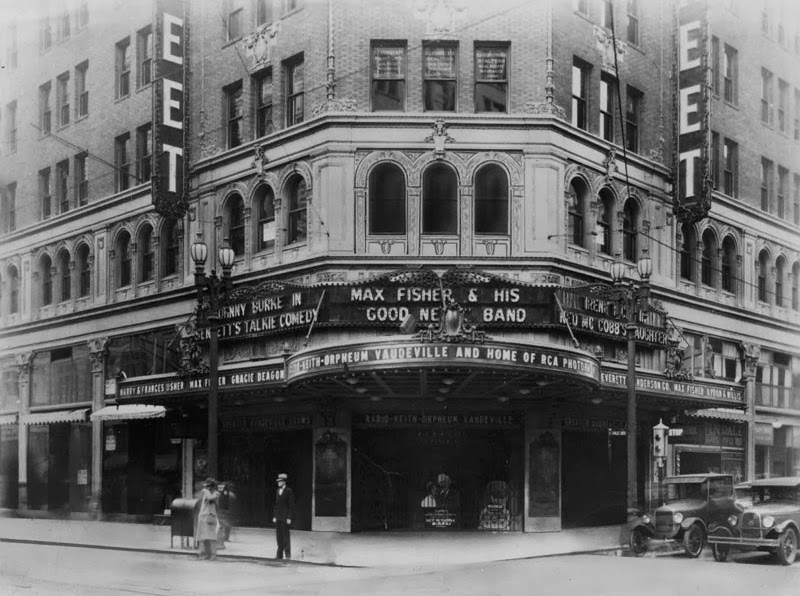
The Hillstreet Theater in 1928/9.

In 1923 when Houdini performed for a week at the Hillstreet Theater in Los Angeles. The Hillstreet was not a first run theater. It was a "Junior Orpheum," presenting 5 act vaudeville and films throughout the day instead of just twice a day as in more prestigious theaters. It was also said to have "the world's worst orchestra." Typically when in Los Angeles, Houdini appeared at the Orpheum Theater. So why was he playing this lessor venue?

Image from Houdini's Ghost.
Because it was at the Hillstreet on Friday, April 27, that Houdini would try out a new identity very different from the escape act. He presented his anti-spiritualist lecture for the very first time. [*Or not. See UPDATE.] According to Patrick Culliton, Houdini had "four-walled" the Hillstreet for this purpose. While he had engaged in debate with Sir Arthur Conan Doyle over the issue of Spiritualism in print, this was the day he truly launched his campaign against frauds by presenting a talk that was very much a counterpoint to Doyle's evangelical lecture touring the U.S. at that very time. (Doyle had undertaken his tour in part because his new spirit guide, "Pheneas," warned that the end of the world was imminent.)

Houdini had generated additional interest in his talk by becoming involved in a local news story. A medium by the name of Mrs. Fairfield McVickers had passed away, and during her funeral at the First Spiritualist Church of Los Angeles, photos taken of her casket showed spirits hovering above. The medium had predicted this would happen. Houdini attempted to recreate the photos under test conditions, and in his experiments he produced a photo with a mysterious streak of light. This photo that "Houdini couldn't explain" would be part of the Hillstreet presentation.

The Los Angeles Express reported on Houdini's lecture that day. Under the headline HOUDINI NOT CONVINCED OF SPIRITUALISM, the paper wrote:

It was probably the most unusual audience gathered in a local vaudeville house as the "king of handcuffs" showed 30 odd slides of mediums and seances, embellishing them with the result of 25 years investigation in the spiritualistic field. Most of the lecture dealt with the work of mediums and Houdini's investigations. The latter denied his being a sceptic, but contended that his observations prevented him from being convinced regarding the supernatural character of feats performed by mediums.

Interestingly, the paper reports that Houdini urged his audience to also attend Conan Doyle's lecture, which would be coming to Los Angeles at the end of May.

Houdini would continue to refine his anti-spiritualist lecture at colleges before signing with the Coit-Alber Lyceum lecture bureau in 1924 and embarking on a full lecture tour of the U.S. His lecture now included 50 lantern slides -- a set of which is owned today by collector Arthur Moses who reproduced Houdini's lecture in his excellent book, Houdini Speaks Out.

The Hillstreet Theater was renamed the RKO-Hillstreet in 1929, and offered a mix of vaudeville and films even after the main L.A. Orpheum switched to movies only. In 1941 the Hillstreet played host to another master of his medium, Orson Welles, when it was one of only two theaters in Los Angeles to play his Citizen Kane (the film had been blackballed by the powerful Hearst press).

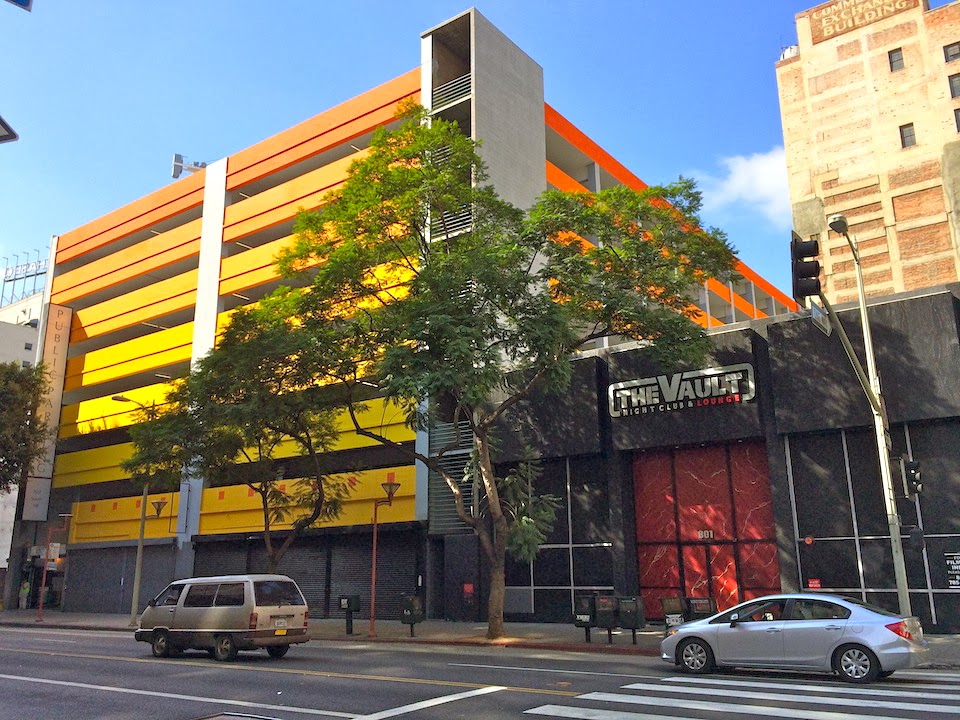
The RKO-Hillstreet closed in 1964 and was demolished in 1965. Today the location is a parking lot and largely forgotten, even by Houdini buffs. But that really shouldn't be. Because it was here on the morning of April 27, 1923 that Houdini launched the last act of his life and career -- Houdini the ghostbuster.

Site of the Hillstreet Theater today | Map.

Related posts:

* UPDATE: Having continued to research this, I'm afraid I have to throw out the idea that Houdini's spiritualism lectures began here in Los Angeles. I've found evidence that Houdini had given his lecture in San Fransisco the previous week. It also appears he gave talks on spiritualism as part of his The Man From Beyond roadshow in 1922. But this Los Angeles lecture appears to be the first one that was widely advertised as a standalone event.

    Tuesday, May 7, 2013

    The Great Houdini reappears as an eBook

    In 1999 The Great Houdini by Alan London played a limited run at The Stella Adler Theater in Hollywood. The London Theater Works production starred Jim Bentley as Houdini and Kim Lores as Bess. I was fortunate enough to see this play and I enjoyed it very much. I especially enjoyed seeing Jim perform the Milk Can -- the only time I've seen the Milk Can performed live (it's pretty harrowing).

    Now you can discover (or rediscover) The Great Houdini as an eBook available on Amazon. Here's the description:

    THE GREAT HOUDINI
    A Play in Two Acts

    The newspaper headlines are being barked, "Extra! Extra! Read all about it! Houdini dies! Death ends career of the King of Magic". At least that's what the headlines read. What they didn't tell you is that on this very day, the Eve of Halloween, as his body is being prepared for his final resting place, the irate spirit of Houdini wanders the stage of his last performance before his untimely death. He's not expecting much - after all he's dead. But a scruffy young runaway he encounters is not. The lad is evading a thug he swindled while performing a con. Houdini's last challenge is to unlock the young boys imagination and set him on the straight and narrow. He must do this in order for him to be united with his dearly departed mother, which for years he had attempted to do by attending séances. However, the boy has other ideas. Houdini takes the boy through his struggles from early childhood, to performance in seedy vaudeville shows, to meeting and performing tricks and escape with his wife, and finally leading up to his final performance. The boy finally learns from his mentor, thus allowing Houdini to be united with his mother. The boy turns out to be another prominent figure that is only divulged at the end (Orson Welles).

    Purchase The Great Houdini eBook on Amazon.

    Speaking of The Great Houdini, check out the blog A Note From Paul Gross about the making of the props for this production.

    Saturday, April 6, 2013

    Orson Welles remembers Houdini

    Here's remarkable footage of Orson Welles talking about Houdini on his BBC television series, Sketch Book. The show originally aired on June 5, 1955. Orson's Houdini talk starts at 04:00.


    While it may be true that Orson met Houdini as a boy (I'd like to think that it is), his story about Houdini ringing the the bells of the Kremlin for Tsar Nicholas II is pure hokum. Houdini never performed before the Tsar. When Houdini toured Russia in 1903, he performed before the Grand Duke Sergei Alexsandrovich and the Grand Duchess at Palace Kleinmichel in Moscow. However, there is no evidence to support his ringing the bells of the Kremlin as part of his act. It appears this story was created by Orson himself.

    Thanks to David Saltman at The Houdini File for this find.

    Wednesday, February 27, 2013

    What if Houdini didn't die in 1926?

    Houdini in his last new suit suggests how he
    might have looked in the 1930s.
    Here's the scenario: J. Gordon Whitehead is on his way to the Princess Theater when an attractive young lady on the streets of Montreal turns his head. Whitehead decides to forgo his plans to return a borrowed book to Houdini (and ask those burning questions about the Bible and whether he can take a punch to the gut), and instead has coffee with the young lady. Houdini can wait.

    A few days later it's reported that Houdini, having cancelled his engagement in Detroit because of abdominal pain, has checked himself into the hospital to have his inflamed appendix removed before it could rupture.

    "Houdini Escapes Death Once Again" is the headline on October 31, 1926.

    Okay, now what? What if Houdini didn't die in 1926? What would his life and career have looked like into the 1930s and '40s or even longer? It's pure speculation, but one can play this game with some informed speculation. Here's what I think would have been Houdini's path had he survived beyond Halloween 1926.

    Houdini was already stepping into the next phase of his life and career, so it's not hard to invision what his future performance life would have been like. He had successfully transitioned out of vaudeville and into a full evening roadshow, much like his contemporaries Thurston and Blackstone. His roadshow would have continued as the "3 Shows in One" and continued to be successful for many years. Walter Gibson says Houdini intended to play his roadshow for 10 seasons. He would modified the show from time to time, ultimately replacing the Water Torture Cell with the Buried Alive or the curious shelf of boxes escape.

    It's said that Houdini was looking to wind down his spiritualist exposures and replace it with exposes of the techniques used by gamblers and other cheats. This changeover would prove to be very timely and successful in the 1930s when Houdini might have made headlines exposing the "smuggling methods of bootleggers" etc. All his career he enjoyed working with law enforcement, and I think he would relish this transition from "Ghost Buster" to "Crime Buster." Eventually this would be the new third act of his show. It's also possible that he would so cultivate this new identity as a "criminal expert" that he would be called in to consult on real-life high profile crimes, such as the Lindbergh baby kidnapping.

    I think one of the things that would be most surprising about the post-1926 Houdini is that he would be less and less associated with daring escapes. His publicity stunts would become endurance tests, not unlike what David Blaine does today. This evolution was already happening in 1926 with his buried alive tests and notably his Summerfield's department store test. Seeing Houdini displayed in his "air-tight casket" would become the new suspended straitjacket escape. He probably would have also perfected and performed his frozen in ice test. It's even possible Houdini might have cut escapology from his repertoire entirely by the mid 1930s and would firmly cement a reputation as THE master magician of the age.

    Houdini would take his roadshow to Europe and once again claim the title of "Europe's Eclipsing Sensation." I also believe he would have toured the Far East for the first time in his career to tremendous success, possibly the greatest success of his career. He might even have spent a year or more touring Asia, and would incorporate more "mysteries from the Far East" into his act on his return to the U.S.


    Houdini would continue to write and publish books at an accelerated rate. The Cancer of Superstition would be one. He was also committed to a revised edition of A Magician Among The Spirits. At the time of his death, Houdini was gathering material for a series of books, including a book about the lives of famous magicians and an encyclopedia of magic. He was also working on his autobiography. The book we now know as Walter Gibson's Houdini's Escapes and Magic would have appeared under Houdini's name. It's speculative, but I think he might have also penned a book about Sir Arthur Conan Doyle after the author's death in 1930.

    As he was never into the Stock Market, Houdini would have avoided ruin in the 1929 crash, although I think the depression would scuttle his plans to open a "College of Magic." But "Houdini" as a brand name -- connected with ever increasing books on magic and magic tricks -- would have kept him flush during the depression. Eventually he would have followed through with his plans to create a special theater of magic, as Hardeen later did with the Houdini Temple of Mystery in Atlantic City.

    Houdini definitely would have become more involved in radio, possibly as the host of a "Houdini Mystery Hour," and he would have dabbled in early television. At some point he would again appear in movies, although not as a producer or star; he would likely cameo as himself as Bess did in Religious Racketeers. One thing is for sure, we would have lots of sound footage of Houdini, maybe even a series of short films in which he demonstrates various techniques employed by fraudulent spiritualists or criminals. Even though he once said he would retire to California, I think he would have remained in New York. It was the hub of his universe. But he would have spent more and more time on the West Coast and might have even bought a vacation home in Hollywood at some point.

    Even though Thurston was celebrated as one of the greats of the era, I think Houdini's true rival at this time would have been Harry Blackstone Sr. Blackstone developed a Houdiniesq sense of self-promotion in the '30s and '40s, using new media like radio and comic books to brand his name as synonymous with magic, just as Houdini had done at the turn of the century. Houdini would have felt compelled to counter this. There would have been a Houdini version of Blackstone's "Super Magician" comic book, and Houdini would delight in boasting how it outsold Blackstone's comic book. Houdini vs. Blackstone would have been a real highlight of this era. They might even have engaged in a "battle of magic," which became popular in the '30s as seen with Hardeen Jr. vs. The Great Dagmar.

    Houdini certainly would have continued his association with magic organizations like the Society of American Magicians and The Magicians Club in London. He would eventually become THE grand old man of magic as Kellar was in his day, and would have certainly been named Dean of the SAM -- Dean Harry Houdini. But he probably would have at least one serious falling out with one or both organizations at some point. That was just his combative nature, which would have mellowed but not abated with age.

    Houdini would have become more philanthropic as he aged, and depending on his wealth, he would have dedicated some kind of library or building on a college campus named after himself or his father. He would have deemed this dedication as "the proudest moment of my life." During World War II he would have thrown himself into the war effort, selling Bonds and performing for the troops, as he did during the first World War. He might have even appeared with Hardeen in USO shows. How wonderful to see The Brothers Houdini reunited in 1941!

    It's interesting to think of the men Houdini might have associated with in the '30s and '40s. I believe one of those men might have been Orson Welles. One can easily imagine Welles traveling the few blocks from his Harlem based Federal Theater to 278 to meet with the great wizard of his boyhood. Welles might have even interviewed Houdini at length about his career in a mirror of Welles' own master-student friendship with Peter Bocdovich in the 1970s.

    I don't think Houdini would have ever stopped performing, although I think he would eventually franchise out his show (as Kellar had done with Thurston), and possibly would have selected a "successor". Who that successor would have been is anyone's guess, but I think Houdini would have plucked him (or her?) from relative obscurity. Without incident or accident, I think Houdini would have lived into the 1940s, mirroring the lifespans of Bess and Hardeen. But as one Weiss brother (Leo) lived until 1964 (and then died from suicide, not illness), Houdini might have had the genetic makeup to last even longer.

    Houdini himself had a vision of a long life. In 1926 he told his friend William J. Hilliar:

    "I am going to live as long as I want to and on my 100th birthday I am going to do my upside-down strait-jacket escape hanging from the tallest building in New York City."

    It's intriguing to imagine this scene; a 100-year-old Houdini doing his famous suspended straitjacket escape at a time when Doug Henning was appearing on Broadway in The Magic Show. It's even more intriguing when you remember that the tallest building in New York on Houdini's 100th birthday was the World Trade Center.


    So that's my take. How about you? What do you think Houdini's life would have looked like if he didn't die on Halloween 1926? Feel free to share your thoughts in the Comments below.

    Saturday, December 10, 2011

    New cover illuminates Luminaries

    Luminaries by Timothy M. Brenner, which was first published in June, is now available with this slick new cover (left).

    Luminaries is an "an alternate history mystery-thriller set in the early 1930's" that finds Houdini, Sir Arthur Conan Doyle, and Orson Welles tracking down a serial killer who murdered a member of the British Royal Family. The three famous protagonists are each gifted with supernatural abilities, with Houdini being "a master of telekinesis".

    Author Timothy Brenner tells me that he's currently working on a sequel tentatively titled, Luminaries: Black Dragon. While the first book is told mostly from Sir Arthur Conan Doyle's point of view, Book 2 will be told from Houdini's viewpoint.

    Luminaries is available as a paperback and Kindle eBook from Amazon.com.

    Tuesday, August 23, 2011

    The men who almost played Houdini

    The list of the men who have played Houdini on screen is impressive: Tony Curtis, Paul Michael Glaser, Harvey Keitel, Guy Pearce... But even more impressive is the list of actors who at one time or another have been considered for the role of the master magician, but ultimately never saw the inside of the straitjacket. Here is a list of actors who almost played Houdini.

    Paul Muni
    Paul Muni - Best known for the Howard Hughes hit Scarface, Paul Muni was considered for the lead in the 1932 RKO biopic, Now You See It, based on a story treatment by Houdini's friend and ghost-busting colleague, Fulton Oursler. Because the studio had acquired no life-rights, the script would call the main character Harry Pinetti, but it was clearly the story of Houdini, and even included a sequence in which Pinetti/Houdini gets trapped under the ice during a bridge jump (later used in Paramount's 1953 HOUDINI). Now You See It went through several drafts, including one that suggested "a musical treatment" before being shelved indefinitely in 1936.

    UPDATE: Actor Adolphe Menjou was signed to play Pinetti/Houdini when the movie came close to production in late 1932.

    John Calvert
    John Calvert - Magician and actor John Calvert knew Bess Houdini and Edward Saint when they lived in Hollywood in the 1930s. When Bess saw Calvert's show, she is reported to have said, "Calvert plays the part of a magician better than any actor I have ever seen, except for Harry, of course." Bess would send a letter to Calvert, who had a seven year contract with Columbia, saying, "In my opinion, you are the only actor capable of portraying the life of my late husband, Harry Houdini. Are you interested?"

    Calvert was interested. Unfortunately, the head of Columbia, Harry Cohn, was not, complaining that Houdini's story was "lacking in romance and needed a better ending than a punch in the solar plexus."

    Chester Morris
    Chester Morris - After years of effort, Bess Houdini and Edward Saint finally set-up a Houdini biopic at Paramount in 1936. The film would be based on Houdini His Life Story by Harold Kellock. Bessie is said to have insisted on a stipulation in the contract that no secrets would be revealed in the film. But who would star as Houdini?

    Not long after the sale, Arnold Furstenberg in The Linking Ring announced an "Exclusive Scoop" that Chester Morris was being considered for the lead role in The Great Houdini (later called Houdini The Great). Apart from being an actor, Morris was an amateur magician and a member of the IBM. "He is by far the most logical man for the role," said Furstenberg.

    Houdini The Great would languish in development for many years with drafts written by Frank O' Conner and Pierre Collins. Despite Chester's lobbying for the role ("He spent time and money" reported George Boston in Genii), the studio never gave the project the green light.

    Cary Grant
    Cary Grant, Joseph Cotton, Garry Moore - In 1944 producer David O. Selznick (Gone With The Wind) pitched the idea of a Houdini biopic to Alfred Hitchcock "with either Cary Grant or Joe Cotton" in the lead role. Said Selznick, "I think [it] can be an outstanding and enormously popular picture with very great opportunity for treatment by you."

    Hitchcock turned down Houdini, and Selznick eventually cast radio personality and future television star Garry Moore as his Handcuff King. But like so many other proposed Houdini biopics, Selznick's Houdini failed to materialize.

    Lee Cobb
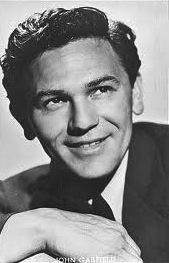
    John Garfield or Lee Cobb - In 1950, a former drug store operator, Joseph Raboff, and a real estate man, Earl Cohen, acquired the film, radio, and TV rights to Kellock's Houdini His Life Story. Teaming with a former Paramount executive, Endre Bohem, the indie producers announced production of The Life Story of Harry Houdini with "either John Garfield or Lee Cobb" in the lead role. There was also talk of a half-hour TV series following the film's release.

    It's unclear what happened to Film Producers, Inc. ambitious project, but it's likely Raboff and Cohen found they had bitten off more than they could chew and used Endre Bohem's connections to sell their valuable Houdini life rights to Paramount.

    Orson Welles
    Orson Welles - When Paramount announced renewed plans to make a Houdini biopic in 1951, names such as Edward G. Robinson and Glenn Ford were mentioned. But influential gossip columnist Hedda Hopper lobbied in print for Orson Welles to play the lead.

    Did the studio ever seriously consider Welles? This isn't known, but I agree with Hopper that Welles would have been an inspired choice, and it's somewhat amazing the actor, who was a magician and had seen Houdini in his youth, never played Houdini on stage or screen. However, Paramount did pretty well when they ultimately cast Tony Curtis in the part.

    Welles would later collaborate with Another Burgess on a Houdini stage musical, but it's not clear if he had plans to star in the show himself.

    James Caan
    James Caan - In 1974 producer Ray Stark, fresh off his success with Funny Girl (a musical biopic of Vaudeville star Fanny Brice), announced plans to make The Magic Man: The Story of Houdini based on William Lindsay Gresham's, Houdini: the Man Who Walked Through Walls. Stark teamed with producer John Houseman (who would also appear in the film a Sir Arthur Conan Doyle) and hired James Bridges to write and direct. Variety announced that James Caan, who had rocketed to fame in The Godfather, was the top choice to play Houdini.

    On the strength of the talent involved, Columbia Pictures agreed to distribute the film, which promised to be in production within a year (it was in a race with yet another Paramount Houdini project). Unfortunately, Stark's Houdini movie would never emerge from development hell.

    Robert Blake
    Robert Blake or Charles Bronson - In 1976 NBC developed a Houdini TV movie that would air on the 50th Anniversary of Houdini's death on Halloween. The project was called, The Heart Is Quicker Than The Eye, and would be produced by Playboy productions from a script by Jean Holloway. The network was actually in a race with rival ABC, who had similar plans to air their own Houdini TV movie written by Melville Shavelson.

    Patrick Culliton, who worked as a technical advisor on the project, says two names producer Bill McCutchen mentioned to him to play Houdini were Robert Blake and Charles Bronson. Bronson was a big movie star at the time so that was probably wishful thinking, but Robert Blake was a real possibility and pretty good choice. Blake was the star of the hit TV show Baretta at the time.

    The Heart Is Quicker The Eye never made it beyond the script stage and NBC lost it's race with ABC, which aired The Great Houdinis in October of 1976 with another TV star in the lead, Paul Michael Glaser.

    John Belushi
    John Belushi - In 1980 it was reported that comedy star John Belushi was the favorite to play Houdini in the big screen adaptation of E.L. Doctorow's bestselling novel, Ragtime. It's not known how close Belushi came to getting the part in the Milos Forman directed film (he was starting to branch out into dramatic roles at that point), but Belushi did bare a resemblance to Houdini and his intensity could have been interesting. However, Houdini's role in the movie would be greatly reduced from what it was in the novel, and when the film was released in 1981, Houdini was played by Jeffrey DeMunn in just a few cameo appearances.

    Tony Curtis in the '80s
    Tony Curtis - No, this isn't a mistake. While Tony Curtis did play Houdini in the 1953 classic HOUDINI, he almost played Houdini for a second time in a sequel of sorts called, Harry's Back! Written by David Simon & Michael Norrell for CBS, Harry's Back! was a comedy that had Houdini suddenly appearing in present day New York, where skeptics must decide if it's the real Houdini come back from the grave or just some nut.

    The project was announced for production in Fall of 1988 with Curtis reprising his famous role. Unfortunately, Harry never came Back.

    Don Ferguson - In 1986 it was announced in The Linking Ring that a new "Magical Music Show" called HOUDINI LIVES AGAIN! was headed to Broadway. With a book by Walter B. Gibson and music by Scott Joplin, the ambitious $2,500,00 musical would feature a cast of twelve "portraying forty-seven different roles" and star "magician-escape artist illusionist, Don Ferguson, in the title role as Houdini." Houdini Lives Again! never saw life, and Don Ferguson would later cause controversy when he claimed to be a blood relative of Houdini.

    Tom Cruise
    Tom Cruise - In 1992 Ray Stark and his Houdini project made a dramatic reappearance when mega-director Robert Zemeckis signed aboard what was now called The Great Houdini. The new movie promised to tell Houdini's story as "a magical special effects-laden adventure" and would be a Colombia/Universal co-production. Tom Cruise was the favorite for the lead.

    But Zemeckis would suddenly leave the project in September of '92, saying he wasn't "100 percent certain what direction the project needs to take". Director Paul Verhoeven signed aboard in 1997, but dropped out a year later, also citing difficulties with the script. Stark would continue to try and get his Houdini/Tom Cruise movie made until his death in 2004.

    Hugh Jackman
    Hugh Jackman - In 2008 development of a major Houdini Broadway musical was announced. The show would be produced by Scott Sanders and David Rockwell with music by Danny Elfman and a book by Aaron Sorkin. In 2009 Hugh Jackman confirmed plans to star in the play. He described his fascination with Houdini, saying, "He was a showman basically. He was probably the first rock star. A master manipulator of the media and a showman through and through."

    Periodically news about the Houdini Broadway musical surfaces, but as of yet, there is no firm date for when we might see Jackman's Harry. (UPDATE: Jackman dropped out of the project in 2014.)

    Jeremy Piven
    Jeremy Piven - In 2009 Entourage star Jeremy Piven said in an interview that he would like to play Houdini. "He was a fascinating guy," said Piven. "He was one of the first hard working artists and magicians. He was one of the first real icons, ever. And he died tragically and he just blew people away all over the world. There is a tremendous story there and I'd love to do that one day."

    With all the recently announced Houdini movie and TV projects in development (no less than five are currently making their way through the Hollywood machinery), maybe Piven will get his wish?

    Thanks to Bill Goodwin of The Magic Castle's William Larsen, Sr. Memorial Library for helping me nail down the date of 'Harry's Back'. And thanks as always to Patrick Culliton for the information on 'The Heart Is Quicker Than The Eye'.

    Friday, August 19, 2011

    When Orson met Harry

    Check out the article, Bits of Coincidence, on Meredith Grau's terrific blog, L.A. La Land: Fame, Fortune, and Forensics. It tells the story of when Orson Welles as a boy met Houdini, and the life lesson he took away from the encounter.

    Now, I knew Welles said he saw Houdini in his youth (commenting on how Houdini's show was filled with "German illusions"), but I've never heard this story of a personal backstage meeting. Of course, Welles was as much a teller of tall tales as Houdini, so maybe this didn't really happen (or maybe it wasn't Houdini). But, hey, it's still a cool story, so click on over to L.A. La Land and have a read.

    Welles and wife Rita Hayworth perform The Houdinis Metamorphosis.

    UPDATE: The above photo does indeed show Orson and Rita Hayworth performing the substitution trunk. This was part of Orson's USO Wonder Show. In the show Orson also performed Houdini's Needles.

    Wednesday, July 20, 2011

    Luminaries available in paperback

    Luminaries by Timothy M. Brenner is now available as a paperback from Amazon.com. It had previously been released only as a Kindle eBook.

    Luminaries is an "an alternate history mystery-thriller set in the early 1930's" that finds Houdini, Sir Arthur Conan Doyle, and Orson Welles tracking down a serial killer who murdered a member of the British Royal Family. The three famous protagonists are each gifted with supernatural abilities, Houdini being "a master of telekinesis".

    The Amazon listing notes the book as being "Volume 1", so might there be a sequel on the way?

    Tuesday, June 14, 2011

    Houdini among the Luminaries

    Some new Houdini fiction has been released. Luminaries by Timothy M. Brenner is an "an alternate history mystery-thriller set in the early 1930's" that finds Sir Arthur Conan Doyle hired by the British Government to track down a serial killer who murdered a member of the Royal Family.
    Conan Doyle, "who has the ability to touch objects and ascertain their history", travels to the United States to enlist the aid of Houdini, "a master of telekinesis," and Orson Welles, "who is gifted with the power of mental telepathy." Conan Doyle and Houdini "put aside their differences and work together for the greater good, but not without friction."

    It looks like Luminaries is currently only available as a Kindle eBook from Amazon.com.

    Tuesday, May 17, 2011

    Houdini by Anthony Burgess and Orson Welles (update)

    An article in The Guardian reports that at least 20 unpublished stories by Anthony Burgess, the author of A Clockwork Orange, have been discovered by researchers sorting through his papers at a research centre in Manchester, the city in which he was born.

    The paper reports that among the cache of new material are "unfinished or rejected scripts for television and film projects, including lives of Atilla the Hun, Sigmund Freud and Michelangelo and a play about Harry Houdini that he collaborated on with Orson Welles."

    Houdini by Anthony Burgess and Orson Welles, eh? Could the plan have been that Welles would play Houdini in the production? Unfortunately, the article doesn't provide a year for the collaboration, but if this was done in Welles prime, certainly that could have been the case. I've often wondered why Welles, who saw Houdini in his youth, never did a Houdini project. Now it appears he did. Or at least tried.

    It's worth noting that Orson Welles was Hedda Hopper's favored choice for the lead in Paramount's 1953 HOUDINI.

    The Guardian article does not say where this new material will be archived, but this would certainly be one to study.

    Thanks to MSW for the tip.

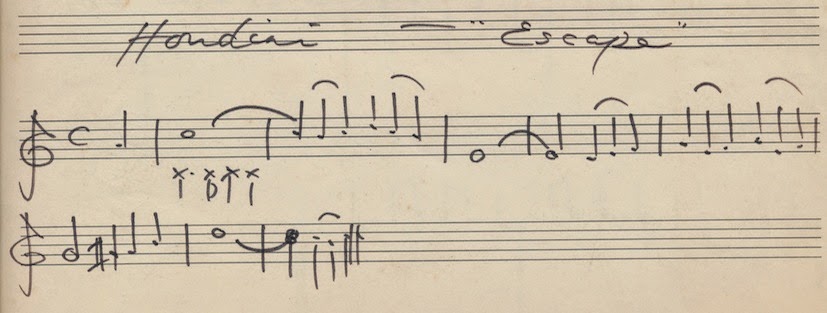
    UPDATE: So it appears this Welles-Burgess Houdini project was to have have been a musical film with Orson Welles in the lead. The Houdini musical material is now housed in the Anthony Burgess Foundation. Below is a scrap of music from unfinished score.

    Translate