Showing posts with label Gladys Weiss. Show all posts

Wednesday, March 29, 2023

ALL the Houdini wax cylinder audio has been saved!

This is news that I've long dreamed of being able to report. This may be the biggest news I've ever reported here on WILD ABOUT HARRY. Little did I dream that I would play a role in this moment of Houdini history, but a role I did play! But to share this news right, I need to tell the whole story.

One of the great treasures inside David Copperfield's International Museum and Library of the Conjuring Arts in Las Vegas are the original wax cylinders containing the only known recordings of Houdini's voice. These were discovered in 1970, and only two of the three Houdini cylinders were ever transferred to a playable media. (Only a short clip has ever been released.) The cylinder said to contain Houdini and his sister Gladys reading poetry written by their father was never transferred and has not been heard since 1970. There are also five other cylinders in the collection with no record of what's on them. So there's still a lot of mystery surrounding these cylinders.

For the past two weeks I've been doing work and research inside the museum. I shared some of my adventures here. But I was keeping a secret this whole time. Mike Caveney was also at the museum. Years ago Mike and I pitched David on the idea of making new digital transfers of all the wax cylinders. The purpose was to finally hear the fabled poetry cylinder, document what's on the mystery cylinders, and digitally preserve all the recordings for the future. David tasked us with investigating how this could be done safely.

It's been a long journey, years in fact, but all roads lead to Dr. Michael Khanchalian, aka "The Cylinder Doctor," who just happens to live 20 minutes from Mike. Not only can Michael repair damaged cylinders, but he has developed a player that can safely play old recordings. He was clearly the man for the job. So we once again pitched the idea to David.

Any reluctance on David's part was understandable. He has the original cylinders and the original tape transfers from 1970 (which, ironically, may no longer be playable), so why risk damaging the cylinders or discovering they had gone bad or, worse, that some slippery collector in the 1970s had pulled a switcheroo and he actually owned nothing. The value of these cylinders could be wiped out entirely. But David Copperfield is dedicated to preserving magic history, and if there was a chance of capturing a new piece of Houdini's voice, he would take the risk. He gave us the go-ahead and trusted us to get the job done.

Lifting the heavy glass off the display case in the museum to retrieve the cylinders was pretty nerve-wracking. And it was about to get worse. Mike had left the museum by the time all the arrangements had been made, so it fell to me to bring the cylinders to Los Angeles. Without revealing what I was doing to anyone besides those in the museum, I loaded all eight cylinders into my car and made the trek back to LA, battling a three-hour traffic jam and two hellacious downpours along the way. But I made it!
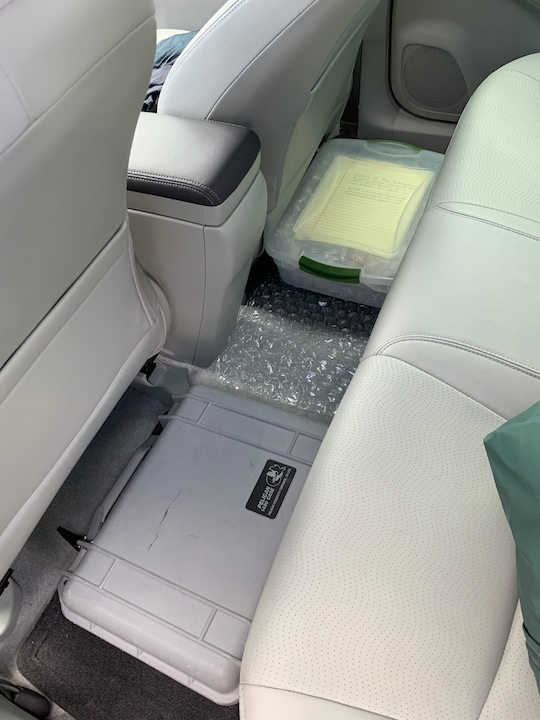

The next day (March 16, 2023) Mike and I arrived at Michael Khanchalian's beautiful home. He has an amazing collection of players and cylinders and is clearly an expert and enthusiast in this field. "He's the John Cox of wax cylinders," joked Mike. After a fabulous tour of his collection, we got down to work in his "lab."


The first three cylinders, which had come from David's vault and were labeled as containing Houdini's voice, did not contain Houdini's voice. Michael knew this instantly as he could tell they were commercial recordings and not the type of "blank" cylinders one would use for recording. Instead what we heard were vaudevillians Will Oakland ("When You and I Were Young, Maggie"), Billy Murray & Ada Jones ("Whistling Coquette") and a musical march (Queen of Sheeba). It was fun to hear these sounds from the past, but it was a little disconcerting, and the switcheroo theory was dancing in my head. But we still had five cylinders to go.

The cylinder labeled "Pa's Poems" (in Houdini's handwriting) was up next. Michael was encouraged by what he saw. At least this was the correct type of "blank" cylinder. This was the moment of truth. Houdini history was about to be made, for better or worse.


Michael slid the cylinder on his player, carefully calibrated the needle, hit the record button (we were making direct transfers to CD, no computers or hard drives involved), and lowered the needle. Then this happened.


Houdini's powerful voice boomed out over the room in a recording that had not been heard in 53 years. He introduces "an original German recitation" of poetry written by his father, "Reverend Doctor Mayer Samuel Weiss," to be spoken by his sister, "C. Gladys Weiss." There is a fantastic candid moment when Houdini is about to state his father's birthday and he has to ask Gladys, "What was the year?" It's very faint, but it's there, and we all looked at each other in delighted disbelief at what we had just heard.

Gladys then recites the poem in German. Gladys was blind, so she's doing this from memory. As Houdini says on the recording, the poem was "taught to her" by their father. I believe she makes a mistake and starts over after a small gap in the recording. Houdini then comes back on and says he will repeat the poem "in case you did not understand it." This seems to be his true speaking voice and not the "presentational" voice he uses on the other recordings. He then proceeds to recite the poem also in German. He speaks faster and, to my ear, more confidently in German, with great flair and rolling R's. Gladys signs off with the date, October 30, 1914, which is a day after the other recordings were made. The fact that this recording was made on a different day has never been documented.

Next up were the two full recordings of Houdini's Water Torture Cell patter. As with the poetry cylinder, each of these run just over four minutes. The quality of these transfers is much clearer than what exists currently. For years I believed Houdini says "I, Houdini" as his sign off. I've been wrong. "Harry Houdini" is now sparkling clear. There was also a big surprise waiting at the end of the first speech. After Houdini signs off, the cylinder seems to end. But then Gladys comes back on and "certifies" that she heard her brother "make this record" on October 29, 1914. This certification was never transferred in 1970 nor have I ever seen any mention of it. It's possible it was missed or the machine they used couldn't pick it up.

Speaking of the machine(s) from the 1970s, our expert Michael said he was amazed the recordings weren't destroyed back then, as you can't play these Edison Blanks on a regular machine. They are much softer and the weight of the needle can wipe them clean. Several times he said it was miraculous that the recordings survive and in such great fidelity.

The final two cylinders were commercial recordings of German songs. It was still exciting to hear these as all the cylinders belonged to Houdini and it's wild to hear the music he played at home for pleasure.

Over the next few days I prepared notes and transcriptions of all the cylinders and reunited them with their correct cases. I was helped in this by magician Jessica Jane Peterson who became the fourth lucky person to hear the poetry recording.


I then drove the cylinders back to Las Vegas and played the new recordings for David. He was thrilled by what he heard. He instantly picked up on all the same moments that had so excited us in LA, especially the moment when we hear Houdini's more natural speaking voice. Even before the recordings ended he was working on the next steps. Audio work will be done to clean up the recordings and the German will be translated. It was mission accomplished and everyone was delighted and relieved!

I took myself out to dinner that night and thought about what had happened. Not only had I finally heard the "Pa's Poems" cylinder, but I now understood it was always the most precious and personal recording of them all. Houdini loved and and honored his father and you can hear that. He loved his sister and you can hear that. The family language was German and you hear that. If Houdini ever came back, this would be the cylinder he would want to hear. Preserving it was more important than I ever understood. I felt like I had done a service for both Houdini and David Copperfield, and I was overwhelmed with gratitude at the amount of trust that had been placed in me.

I then sent David a text with one last request. Could I share this momentous news? His response came back quickly: "Sure."

As I said, David didn't need to do this. This headline could have easily read, "The Houdini wax cylinders are no more." But this is what makes David Copperfield a titan of magic. He took the risk, extended extraordinary trust, and now deserves the credit for saving this important piece of Houdini history. Maybe even the most important piece. When and where the general public might hear these I can't say. But the fact that we can now hear them was the purpose of this incredible journey.


Thanks to David Copperfield, Mike Caveney, Michael Khanchalian, Jessica Jane Peterson, Glenda Wellendorf, and everyone who helped bring Houdini (and Gladys Weiss) back to life. 

Want more? You can view additional images from this adventure as a "Scholar" member of my Patreon by clicking below.
Saturday, September 17, 2022

Houdini in the bank


I'm working hard on the next installment about my visit to the Harry Ransom Center and planning to share it next week. In the meantime, here's a taste of things to come. I included this as part of my special part 2 preview for patrons, but it drew enough interest that I decided to break it out into its own post.

Among the papers in the Ransom Center are documents related to Houdini's finances. Here is Houdini's––or rather, Ehrich Weiss'––balance sheet for 1911. This shows his total income for that year was $117,851.27. According to the CPI Inflation Calculator, this is equivalent to $3,675,421.35 in 2022. And this is before there was such a thing as income tax. Not too shabby, Ehrich!

Click to enlarge.

I'm curious what kind of "House Maintenance" cost $7,912.13 ($246,667.73 today). I know at some point Houdini added a new heating system to 278. Maybe this is that?

If you're curious about the names at the bottom of the expense column: W.G. Weiss is Houdini's brother, Bill; Mrs. Cecelia Weiss is his mother; Miss Carrie Weiss is his sister; and Mrs. Rahner is Bess's mother.

Monday, August 29, 2022

Gladys and Leopold headstones return to Machpelah


Fantastic news today! The headstones for Houdini's brother Leopold and sister Gladys have returned to the family plot in Machpelah Cemetery in Queens. This is thanks to Dorothy Dietrich and Dick Brookz of the Houdini Museum in Scranton, PA, who worked with David Jacobson at the cemetery to make this happen.

The original headstones were badly damaged by vandals in 1994 and have remained absent all these years. These are new headstones in the style of the originals. They look great! While the headstones are in place now, a formal dedication will be held at a later date.


Gladys and Leopold were the last family members to be interred at Machpelah. Both were cremated. Gladys died on December 31, 1958 and was buried January 21, 1959. Leopold committed suicide on October 6, 1962. His ashes were buried on February 3, 1963.

You'll recall that Dorothy and Dick also restored Houdini's bust to the exedra in 2011. They have continued to be caring custodians of the Machpelah plot. In fact, Dorothy was recently named chairman of the S.A.M. Houdini Gravesite Committee.


Tuesday, November 19, 2019

Here is that remarkable Houdini mystery footage

Earlier this year our friend Leo Hevia discovered 30 minutes of largely unseen Houdini footage buried in a YouTube video of random magic clips. It was an exciting find! A few weeks ago the clip and channel disappeared. It's still not clear who ran this channel, nor where this footage originated.

But this footage was just too remarkable to let vanish, so I've taken the liberty of uploading four of the most complete and interesting clips to my own YouTube channel. (Hopefully I'm not stepping on any toes by doing this.) I have also embedded the clips below along with a description of what they show. As you can see, the quality is poor, but the content is incredible. Enjoy!

1. Visiting sister Gladys: This appears to be unedited home movies of Houdini visiting his sister Carrie Gladys on a snowy day. After several shots outside of Houdini leaving the house (the footage is not in sequence), we cut inside the house to find Gladys playing the piano as Harry and Bess enter. Gladys then greets Houdini's assistants one by one: Franz Kukol, James Vickery, Jim Collins, and an unidentified assistant. Two more men are greeted by Gladys and Houdini, but I don't know who they are. After everyone leaves, Houdini returns to pick up and kiss a photo of his mother. We then see Houdini hugging and kissing Bess outside in the snow. Incredible.


2. Houdini Coin and Card handling: A real mystery is this one minute of footage showing Houdini doing coin sleights and card manipulations in slow motion. It's tempting to think this is a lost fragment from Velvet Fingers, but Houdini is dressed in a suit instead of a tuxedo, so this appears to be something entirely different. Whatever it is, it's a remarkable minute of film and breathtaking to watch Houdini's hand movements.


3. Monk Table Tie Escape: This footage shows Houdini doing an escape on the set of Haldane of the Secret Service. But this is not from the movie itself. The scenario here appears to be that he's being challenged by monks (played by actors and his assistants). This footage has appeared in documentaries, but it always cuts off as Houdini is being tied. Here the footage is complete and uncut, showing the full escape and Houdini being raised up on the shoulders of the ecstatic monks.


4. The Man From Beyond cliff stunt: While maybe not as spectacular as the above clips, this is every bit as interesting. This shows Houdini filming his cliff fight and his stunt of hanging off the edge. Shot from a distance, we can see the cameraman and also the geography of the stunt, showing Houdini was not as high off the ground as it appears in the movie. A rare piece of behind the scenes.


Also part of the original clip was the first few minutes of Houdini's 1909 movie, Les merveilleux exploits de Houdini à Paris. But this is something I'm going to save for a later time as part of a larger restoration project.

Related:

Sunday, March 24, 2019

The Houdini birth year conundrum

Houdini buffs have long discussed the question of Houdini's two birthdays. While Houdini celebrated it on April 6, his birth certificate shows he was actually born March 24 (today!). In a letter to Hardeen, Houdini admitted that he celebrated his birthday on April 6 because that's when their mother would write to him. "As SHE always wrote me on April 6th, that will be my adopted birthdate."

But there's another mystery around Houdini's birth that never seems to get discussed. It's the question of why Houdini for the first half of his life claimed he was born in 1873 instead of 1874. When I first started encountering this 1873 date, I would chalk it up to a misprint or isolated error on Houdini's part. But I now see there is consistency in Houdini both using this date and calculating his age during these years. So it appears Houdini really believed he was born in 1873.

This has some interesting implications. Houdini thought he was a full year older during his formative years. So when he made the decision to leave his tie cutter job and begin a career as a magician, he thought he was 18. But he was 17. When he married Bess in 1894, he believed he was 21. He was 20.

So when did Houdini learn the truth?

On his May 26, 1900 passport application, Houdini records his birth year as 1873. But on his application for renewal filed April 15, 1903, he writes 1874 for what appears to be the first time. So what happened between these dates? One pretty significant thing; he went to Budapest.

I think it's possible Houdini discovered his true birth year from records or from relatives during his weekend visit to Budapest with his mother in 1901. However, in his pitchbook, The Life, History and Handcuff Secrets of Houdini, and in his first book, The Right Way To Do Wrong, both published in 1906, he once again gives his birth year as 1873.

The Right Way To Do Wrong (1906)

But the bigger mystery in all this is why Houdini believed his birth year was 1873 in the first place.

Before I get too deep into the weeds, I need to acknowledge that it could be just an honest mistake. I know it's hard for us to conceive this kind of mistake today, but the Weiss family grew up in a very different world, one without easily accessible records, and dates would be what one recorded yourself or could remember. And when having a child a year, birthdays and even birth years could be confused. Or it could be Houdini, who we know was famously bad at recording dates, was even worse than we think!

But if it was an honest mistake discovered in 1901, why does Houdini continue to use the wrong date in his publicity material? This suggests there might be something more to this.

Now, I do have a theory that gets us into some pretty provocative territory. These are thoughts I've had for a while, but have not shared. This is pure wild speculation on my part, but hear me out.

Houdini's sister Gladys once stated that Houdini/Ehrich was named after an earlier baby who had died. This remarkable claim appears in a letter she wrote to Bess in 1936, reproduced in full in The Houdini Birth Research Committee's Report (1972). She writes:

There was an infant son Ehrich of our household, at that time. This babe through a fall, died and broke the hearts of both our parents. Both of them said, if ever another son were to be their blessing, his name would be Ehrich.

No other evidence of this earlier Ehrich has surfaced, and in the next sentence Gladys says Houdini was born in Appleton. So she might be doing some myth making here. But it seems odd for her to be doing so with Bess, and she also writes, "I'm sure you have heard mother tell you all this before." So this seems like information that was well known among family members.

So if we take Gladys' word for it, could this earlier Ehrich have been born in 1873? Could he have been born on April 6, 1873!? Could Houdini's mother have confused the birth years of the two Ehrichs? Or, and this is where it starts to get strange, could the heartbroken Cecelia have been such a believer in reincarnation (as Houdini later said he was) that she decided her new Ehrich was the old Ehrich and that he was spiritually "born" in 1873 and wanted to honor that.

In the same letter that Houdini admits to April 6 being his "adopted birthday", he writes: "It hurts me to think I can't talk it over with Darling Mother." Could his mother's clinging to the trauma of the earlier Ehrich and her strange transference onto Houdini be what they needed to "talk over"?

This also helps explain the pitchbook and The Right Way To Do Wrong. Having discovered the truth in 1901, Houdini recorded his real birth year in official records. But for the public record, one that his mother might read, it remained 1873 for HER. Tellingly, the 1914 edition of his pitchbook, published after her death, his birth year is updated to 1874.

Is your head swimming yet? Here's one final bit of Freud for you.

If there was an earlier Ehrich who died in an accident, might it explain the extreme attachment Cecelia had for her second Ehrich. Might it also explain Houdini's drive to become a "death defier" -- compulsively acting out his own death and resurrection to delight his mother and heal the grief caused by "his" original failure to escape death. Recall his famous diary entry after his Rochester bridge jump in 1907: "Ma saw me jump!" Might this be the key to Houdini's psyche?

Anyway, on his 145th birthday today (or is it 146?), I just thought I'd share my thoughts on yet another delightfully mysterious aspect in the delightfully mysterious life of the great Harry Houdini.

Happy birthday Harry!

Related:

Thursday, January 3, 2019

Holy smokes! Thirty minutes of largely unseen Houdini film surfaces

We may only be three days into the new year, but our friend Leonard Hevia has made what might be the find of 2019! While browsing the Sleight of Direction YouTube channel, Leo found 30 minutes of Houdini film footage, much of it unknown! It's contained in a video clip posted on New Years Eve titled "Various TV Magic Clips from the US - 1970s to before." Curiously, the video description doesn't even mention Houdini. But oh baby!

The quality is very poor, but the content is incredible. Below is the embedded clip set to begin at the Houdini footage at 59:48 (you might want to mute the sound).


UPDATE: As you can see, the original video has been removed, but
selected clips can be viewed HERE.

Here's a breakdown of what I consider the most remarkable footage seen here. Timecodes show where the clip is located in the above video.

Houdini Visits Gladys (01:21:14): The most mind blowing footage for me is what appears to be unedited home movies of Houdini visiting his sister Gladys during a snowy day. After several shots outside of Houdini leaving (the footage is not in sequence), we cut inside the house to find Gladys playing the piano as Harry and Bess enter. Gladys then greets Houdini's assistants one by one: Franz Kukol, James Vickery, Jim Collins, and an unidentified assistant. Two more men are greeted by Gladys and Houdini, but I don't know who they are. As everyone leaves, Houdini takes a moment to pick up and kiss a photo of his mother. We then see Houdini hugging and kissing Bess outside in the snow. Incredible.


Houdini's Paris Movie (01:23:52): This next clip is of huge significance to Houdini movie history. It's the first three minutes of Houdini's 1909 movie Les merveilleux exploits de Houdini à Paris, complete with the original French title cards. The key here is that includes the opening incident in which Harry and Bess help a drunk man on the street and are arrested. With this footage, a restoration is now doable (although we are still missing the very opening in which we see the Alhambra decked out in Houdini posters).


Houdini Coin and Cards (01:14:48): A real mystery is this one minute of footage showing Houdini doing coin sleights and card manipulations in slow motion. It's tempting to think this is a lost fragment from his 1925 Marvels in Motion appearance (later released as Velvet Fingers). But Houdini is dressed here in a suit instead of a tuxedo, so this could be something entirely different. Whatever it is, it's a remarkable minute of film and breathtaking to watch Houdini's hand movements.


Monk Table Tie Escape (01:27:10): This is footage of Houdini doing an escape on the set of Haldane of the Secret Service. This is not from the movie itself. The scenario here appears to be that he's being challenged by monks (played by actors and his assistants). This footage has appeared in documentaries, but it always cuts off as Houdini is being tied. Here the footage is complete and uncut, showing the full escape and Houdini being raised up on the shoulders of the ecstatic monks.


This compilation also includes several unfamiliar clips of suspended straitjacket escapes; behind the scenes filming of The Man From Beyond; the familiar footage of Houdini outside a Kansas City theater and the Rochester bridge jump; Harry Kellar visiting Houdini, Dash and Bess at Hardeen's Flatbush home (where Houdini was living at the time); and several clips from The Mastery Mystery with original title cards and some footage not seen in the Kino DVD.


So where the heck did this film come from? I'm afraid I don't have any answers, and I don't know who runs this YouTube Channel (it appears they may be outside the U.S.). But this channel includes a treasure trove of rare magic clips, and I can't help but wonder if we are somehow seeing part of the recently auctioned Bill McIlhany collection? But wherever it came from, what a way to start the new year!

Thank you Leo for sharing this fantastic find.

Related:

Friday, June 22, 2018

To Gladys from Bess Houdini

Fifteen years ago Bill Bremer, a postcard collector in Texas, unearthed a cache of 36 postcards sent to Houdini's sister, Carrie Gladys Weiss. All this week I am sharing select cards from this remarkable collection. [Read the full story of Bill's find here.]

Today I wrap things up with three incredible cards from Bess Houdini herself. This is appropriate as today is Harry and Bess's anniversary (I didn't even plan it that way). There is so very little written by Bess during Houdini's lifetime that anything in her hand is gold, and these cards have some great content. So let's get at 'em.

The first card is from Kansas City on Sept. 8, 1915. It's addressed to Gladys at 315 West 98th St. in New York, where she and Leopold now resided. The card was written while Houdini was on a coast to coast vaudeville tour that year.

Kansas City - MO
9-8-15
Lots of love to you both. I wish I was in Flatbush where I belong
Ever your sister
Bess

When Bess speaks of "Flatbush," she is taking about home. Harry and Bess had moved out of 278 and in with the Hardeens in Flatbush the previous year. So she appears to be homesick. Or maybe her comment here has something to do with the date. Sept. 8, 1915 was the day Houdini performed what is believed to be his first suspended straitjacket escape. So perhaps her wish to be elsewhere is a sign of her nervousness that day?

Bess seems to have found peace a month later in Seattle, Washington, where she sent this card on October 20, 1915.

Hello Gladys
I've got a lovely little flat here and am some busy.
Lots of love to all
Bess

It's interesting that she says I've got a lovely little flat, not we. This card was sent while Houdini was playing the Orpheum Theater at 3rd & Madison in Seattle.

In Bill's collection there is a third card from Bess, this one sent to Leopold from Denver, Colorado, on December 30, 1915.

Dear Doc
Merry Xmas and a very Happy New Year.
Harry is doing his outside stunt to-morrow (Thurs.) and Friday this state goes dry, two historical events. Say isn't it too bad Bro. Bill doesn't live here now.
Lots of love
Bess

Bess seems to have recovered from any nervousness about Houdini's suspended straitjackets escapes, at least enough to be able to quip that his upcoming escape (from the Denver Post building on Dec. 30) was a "historical event." Of course, she turned out to be right about this!

Her mention of the state going "dry" refers to a prohibition on alcohol that Colorado and six other states (Iowa, Oregon, Washington, Idaho, Arkansas, and South Carolina) instituted on December 31, 1915. Bess mentioning brother Bill in this context is likely a joke as Bill was said to be quite a drinker (his nickname was "Lobster Bill").

Please join me in thanking Bill Bremer for sharing with us his incredible find. Below are links to all the posts.

Related:

Thursday, June 21, 2018

To Gladys from Franz Kukol

Fifteen years ago Bill Bremer, a postcard collector in Texas, unearthed a cache of 36 postcards sent to Houdini's sister, Carrie Gladys Weiss. All this week I am sharing select cards from this remarkable collection. [Read the full story of Bill's find here.]

Today's card is unique among Bill's collection and one of the most remarkable of the entire batch. This card was sent to Gladys from Houdini's trusted chief assistant Franz Kukol while he was on vacation in Austria in July 1911. Seems everyone loved Gladys! What's especially interesting here is that he addresses her as "Miss Gladys Weiss Houdini."

JULY 3. 1911. 
Am spending my vacation with my familiy at home the weather is very bad rain every day, so am indoors all day long.
On Friday I'm going to my mother to Vienna & shall stay a few days & expect to be back in London July 15 or 16th.
With kindest regards to all. 
I beg to remain
Respectfully yours
Franz

Tomorrow I'll conclude my look at this incredible collection with three knockout cards from Bess Houdini herself. You won't want to miss these!

Related:

Wednesday, June 20, 2018

To Gladys from Hardeen

Fifteen years ago Bill Bremer, a postcard collector in Texas, unearthed a cache of 36 postcards sent to Houdini's sister, Carrie Gladys Weiss. All this week I am sharing select cards from this remarkable collection. [Read the full story of Bill's find here.]

Today we have two postcards sent to Carrie Gladys from brother Theo Hardeen while he was on tour in 1913. The first is from Salem, Massachusetts, postmarked Nov. 28, 1913. The other is from Lowell, Massachusetts, postmarked Jan. 31, 1913. The cards are signed Dash and (untypically) Theodore. Both are addressed to Gladys at 278. As you can see, Dash is a man of few words!


Tomorrow I'll share a postcard to Gladys from an unlikely sender. This one will wow you!

Related:

Tuesday, June 19, 2018

To Gladys from brothers Leopold and Nathan

Fifteen years ago Bill Bremer, a postcard collector in Texas, unearthed a cache of 36 postcards sent to Houdini's sister, Carrie Gladys Weiss. All this week I am sharing select cards from this remarkable collection. [Read the full story of Bill's find here.]

Today we have a two postcards sent to Carrie Gladys from her brothers Leopold and Nathan Weiss. The first card from Leo was sent from the White Mountains in New Hampshire and is postmarked Sept. 1, 1912. Leo addresses it to Gladys at 278, where she and Leo were living at the time. As you can see, "Doc" enjoyed his nature hikes.


This next card from Nathan is the only correspondence I've ever seen from him. It's sent from Jacksonville, Illinois, and postmarked April 8, 1914. This one is addressed to Gladys at 250 West 54th St. in New York. This appears to have been her workplace, Zieglers Magazine, a monthly periodical written in Braille for the blind. (The E. Matilda Ziegler Foundation still exists today). Not sure what the reference to Nesselrode Pudding is all about. I suspect Gladys was a fan!


Tomorrow I'll share postcards to Gladys from the "Monarch of Manacles" himself...

Related:

Monday, June 18, 2018

Gladys Weiss postcard collection turns up in Texas

Recently Bill Bremer, a postcard collector from Texas, contacted me with a remarkable story. Years ago Bill unearthed a collection of 36 postcards sent to Houdini's sister, Carrie Gladys Weiss, from various members of the Houdini family (but none from Harry himself). This is the kind of story that makes collectors drool, so I'll let Bill tell it himself:

With time to kill and my wife Pat at work on a Saturday afternoon about 15 years ago, I drove to an antique mall outside of town to do a little shopping.
This is the card that caught my eye while wandering the aisles. What drew my attention was the Jefferson Theatre return address. For many years my grandfather managed vaudeville at the Majestic Theatre, so I naturally felt some affinity to vaudeville performers.
While thumbing through the cards I saw one with the name “Houdini” as addressee. I thought to myself, “Yeah, right. Houdini.” and skeptically tossed it aside. The cards didn’t seem especially interesting to me but I bought a few anyway. On the drive home I began to think about the “Houdini” name and decided to check on it when I got home. This was the era after the internet but before smartphones.

At home, perhaps using Goggle, but more likely Alta Vista, I quickly discovered that Weiss was Houdini’s real name and that Gladys was his sister. Soon after this discovery, Pat (who shares my love of postcards) returned home from work. Turning to her, I said, “We have to leave NOW! There is a POSTCARD EMERGENCY! We drove back to the mall, went through every card in that booth, buying all we could find from the set. The result was the 36-card set I’ve had for the past 15 years.
Before this event, I never had a particular interest in Houdini. Since then, I’ve learned much more about him and his family but remain primarily a general postcard collector, Houdini collecting being a bit beyond our budget. In spite of this, we continue to search for more random Houdini cards, but, so far, without success.

Bill has sent me a dozen postcard images with permission to share them here on WILD ABOUT HARRY. These have never been shown before, and some of the content is pretty interesting. So ALL THIS WEEK I will devote the blog to these remarkable cards. I think you will enjoy them.

Thank you Bill for the story and the cards.

UPDATE: Our great friend Tom Interval believes the sender of this card, "Beaty Moreland", is likely vaudeville actress Beatrice Moreland (1877-1958). Houdini mentions her on p. 256 of A Magician Among the Spirits. She and Houdini also played at Fairmount Park (Kansas City, Missouri) on the same day in 1899. Moreland got top billing.

Related:

Thursday, March 15, 2018

Do we only know half of what's on the Houdini voice recordings?

On October 29, 1914, Houdini recorded his voice to six wax cylinders using an early Edison recording machine. Those cylinders wound up in the collection of magician John Mulholland. But according to Milbourne Christopher, Mulholland misplaced them and had no idea where they were. It wasn't until after Mulholland's death in 1970 that they were discovered in a carton of odds and ends, hidden in a large rolled up photograph.

Christopher and a group of three other Houdini enthusiasts brought the cylinders to the Edison National Historical Site in West Orange, NJ. After failing to play on two machines, they found success with a third. For those in the room, it was a remarkable historic moment to be the first men to hear Houdini's voice in 44 years.

Two of the cylinders contained Houdini reciting the stage patter for his Water Torture Cell with slight differences. In one he offers his $1000 challenge "to anyone who can prove it is possible to obtain air inside the Torture Cell." An edited and greatly condensed combination of these two recordings is all that is publicly available. (Arthur Moses played both recordings in full at the Magic Collectors Weekend in Chicago in 2012.)

But newspapers at the time also reported what was heard on a third cylinder, which has never been released to the public and is little discussed. The full AP story by Henrietta Leith even provided a few tantalizing excerpts.


I have seen the original reel to reel master transfers of the Houdini voice recordings along with transcriptions of what they contain. The transcriptions show only the two Water Torture Cell speeches. This suggests the poetry cylinder was never transferred. In fact, if it weren't for the mention in the AP article, I don't think we'd even know about it! (Some papers, including the Los Angeles Times, cut the paragraph about the third recording.)

That brings me to an even bigger point. There were six cylinders total. We know what's on three of them. So what about those other three? Are they copies? Or is it possible we only know half of what Houdini recorded that day in 1914?

David Copperfield owns all six original cylinders and says he has not yet transferred them. But it is something he intends to do. Even if we were just able to hear the poem (which I don't believe even David has heard), that would be incredible. It's now been 48 years since Christopher and the others first heard Houdini's voice in that room in West Orange. Maybe there is another historic moment just waiting to happen.

Saturday, October 1, 2016

The Houdini-Weiss exedra turns 100


It was 100 years ago today that Houdini unveiled the exedra that fronts the Weiss family plot at Machpelah cemetery in Queens. Houdini dedicated the monument in a special ceremony on Sunday, October 1, 1916.

The creation of the exedra (resting place) had taken over a year. Houdini entrusted the task to Oscar Teale, a past president of the Society of American Magicians whom Houdini employed as a private secretary. Teale worked throughout 1915-16 while Houdini was on tour. The job was not an easy one. The contractors deviated from Teale's model, a marble seat developed a crack, and faulty drilling broke large slabs of stone which had to be replaced. In the end, it cost Houdini a whopping $40,000 (that's close to a million dollars today).

The finished exedra was cut from a thousand tons of Vermont granite and ornamented with figures hewn from Italian marble. The original headstones for Houdini's parents were placed inside each end of the exedra. On the back was etched:

Erected By
HOUDINI
1916
In Sacred Memory
Of His
BELOVED PARENTS

About 250 people attended the dedication ceremony, which was conducted by Rabbi Bernard Drachman and Rabbi A.B. Tinter. Newspapers from as far away as Pittsburgh covered the event. The new plot had the Weiss family laid out under uniform headstones made from the same granite as the exedra, with Houdini's headstone in place beside his mother.

The exedra that was unveiled 100 years ago is slightly different from the one we know today. It did not have the bust nor the cut glass mosaic emblem of the Society of American Magicians. Those would be added a year after Houdini's death and unveiled during a special memorial service attended by Bess. I've never seen a close-up image of the original exedra, but glimpses of it can be seen in photos taken during construction and Houdini's funeral. (Which you can see below.)

Houdini's ambition to build a lasting monument to his family (and himself) can be counted as one of his great achievements. The Houdini grave site and exedra have become a place of pilgrimage for many, and each year the S.A.M. conducts a wand breaking ceremony at the grave near the anniversary of Houdini's death.

However, the grave site has also seen rough times and controversy. In April 1975, the grave became the focus of attention when escape artist and Houdini provocateur Norman Bigelow claimed to have "deciphered a complex code" that revealed Houdini had hidden his secrets inside the exedra. That same month, cemetery revelers, high on PCP, dislodged and broke the original grave bust. The timing lead some, including James Randi, to believe Bigelow had committed the vandalism in an attempt to prove his theory.

The bust was replaced by the S.A.M. in a special ceremony on March 24, 1976, in time for the 50th anniversary of Houdini's death (Saturday Night Live would do a "broadcast" from the gravesite that year). However, the second bust was stolen in 1983. After two more replacements were stolen, the S.A.M. decided it was best to leave the monument headless. Then, on May 25, 1994, the entire gravesite experienced extreme vandalism with the destruction of two stone benches and the headstones of Leopold and Gladys Weiss.

With help from magicians, including generous donations from David Copperfield and James Randi, the S.A.M. repaired the gravesite (although Gladys and Leopold's headstones have yet to be replaced). In 2007, the site once again became of the center of controversy when a plan to exhume Houdini's body to test for poisoning drew nationwide attention. It was later dismissed as a publicity stunt.

In 2011, Dorothy Dietrich, Dick Brookz and Steve Moore of the Houdini Museum in Scranton took it upon themselves to restore the long missing Houdini bust with a reproduction made at their own expense. They also oversaw the upkeep of the gravesite during a time of dispute between the S.A.M. and the cemetery over costs.

But all disputes have now been settled, and the S.A.M. has resumed the upkeep of the grave of their "Most Illustrious" past president. In fact, this past May, the S.A.M. concluded a major cleaning and restoration of the entire exedra, just in time for its 100th anniversary today.

Below are photos of the exedra throughout the years.

Houdini takes a seat during construction.
The dedication on October 1, 1916.
Houdini's funeral, November 4, 1926.
Hardeen and Bess in the 1930s.
Elsie Hardeen, Gladys Weiss, and Marie Hinson in 1954.
On Saturday Night Live, October 30, 1976.
Me with the headless exedra in 2005.
The bust is restored by the Houdini Museum in 2011.

Last Monday, September 26, our magical friend Colleen Bak visited the gravesite and took these beautiful photos (as well as the image at the top of this post), giving us a nice look at the 100-year-old Houdini-Weiss exedra as it proudly stands today.


Background on the building of the exedra from Houdini!!! The Career of Ehrich Weiss by Kenneth Silverman.

Timeline:
  • 1904: Houdini buys plot for $450. Moves grandmother, father, and half-brother Herman.
  • 1916: Houdini dedicates exedra in memory of his parents on October 1st.
  • 1926: Houdini is buried on November 4.
  • 1927: S.A.M. holds memorial service and unveils Houdini bust and S.A.M. emblem.
  • 1975: Houdini bust is smashed by vandals on night of April 8-9.
  • 1976: S.A.M. replaces Houdini bust with replica on March 24.
  • 1983: Second Houdini bust is stolen on August 14. Replaced by S.A.M. with replica.
  • 1987: Machpelah Cemetery goes into bankruptcy. State takes ownership.
  • 1988: Third Houdini bust is stolen. Replaced.
  • 1990: Fourth Houdini bust is stolen in November. Not replaced.
  • 1994: Benches are smashed and Gladys/Leopold headstones damaged on May 25.
  • 1996: Grave is restored with funds raised by S.A.M. with help from David Copperfield and James Randi. Bust and Gladys/Leo headstones are not replaced.
  • 2002: Police recover bust stolen in 1983. (Returned to S.A.M. in 2011 and now on display at the Houdini Museum of New York.)
  • 2007: S.A.M. stop paying for the upkeep of the plot over dispute with cemetery owners.
  • 2007: Book authors announce plan to exhume Houdini's body to check for poisoning.
  • 2011: Dorothy Dietrich and Dick Brookz replace Houdini bust with replica on September 29.
  • 2013: S.A.M. announces it will resume paying for the upkeep of the gravesite.
  • 2016: S.A.M. rededicates the cleaned and restored exedra on May 9.
  • 2016: Exedra celebrates 100th anniversary on October 1st.

Related posts:

Thursday, December 3, 2015

Houdini vs. the Pottawatomie Giant

Boxing has been given its worst black eye here to-day by none other than Jess Willard, heavy-weight champion who was so badly worsted to a wordy clash with Harry Houdini, a performer at the Orpheum Theater, last night, that the audience hissed him from the house.
- Los Angeles Record


It was 100 years ago this week that Houdini had his famous encounter with heavyweight champion Jess Willard at the Los Angeles Orpheum Theater. But this battle was not with fists or even handcuffs. It was an unscripted verbal joust that, in today's parlance, went viral.

Houdini had just begun a two week engagement at the Los Angeles Orpheum (which still exists today). On the night of November 29*, 1915, Jess Willard was in the audience. Standing 6' 7" and weighing 256 pounds, Willard was known as the Pottawatomie Giant. He had knocked out heavyweight champ Jack Johnson in the 26th round of a bout in Havana to win the title in April of that year.

During his performance, Houdini called for a volunteer committee to step on-stage during an escape (the Water Torture Cell?). After several men volunteered, Houdini came to the footlights and said, "Now I need three more gentlemen on this stage and there is a man here to-night who doesn't know I'm aware of his presence. He will be enough for three ordinary gentlemen if he will serve on this committee. He is Jess Willard, our champion." The audience broke into applause.

But Willard did not leave his seat. Instead he called out, "Awm g'wan with your act. I paid for my seats here." When Houdini tried to persuade him, Willard cut him off, barking: "Give me the same wages you pay those other fellows and I'll come down."

With the audience now uncomfortably quite, Houdini answered, "Sir, I will gladly do so. Come on down––I pay these men nothing." He then may have baited the boxer by adding, "Don't crawfish."

Willard got to his feet and roared, "Aw' g'wan with the show!" He then added insults which the Los Angeles Record reported sounded like "four-flusher" and "faker."

Willard's response jarred the audience from their silence. Some began to hiss. Houdini quieted them. By his own account, he was "white with rage." He then said to Willard:

"Look here, you. I don't care how big you are or who you are. I paid you a compliment when I asked you to be one of my committee. You have the right to refuse, but you have no right to slur my reputation... let me tell you one thing, and don't forget this, that I will be Harry Houdini when you are NOT the heavyweight champion of the world."

A great wave of applause erupted. Willard attempted a response, but was drowned out by "hoots and groans." Houdini delivered a final blow by turning to the audience and saying, "I made a mistake. I asked for GENTLEMEN to step on this stage and GENTLEMEN only."

The audience again roared their approval, during which Willard left the theater.

The incident at the Orpheum captured the imagination of the city. The front page of the Los Angeles Record was headlined: 2,000 HISS J. WILLARD. The story was picked up nationally, with the Washington Times reporting: CHAMPION WILLARD HOOTED BY CALIFORNIANS.

Three days later, on December 3, Willard tried to defend himself in an open letter to the Los Angeles Examiner, which he called "the one fair paper in Los Angeles." Refusing to acknowledge Houdini by name, he referred to his act as "moth-eaten" and stated:

When I declined to come down to the stage, this should have settled the matter and the stage "hero" should have gone about his work. The only reason in the world he "worked up a scene" was because he knew my name would be a boost for him.

The newspapers continued to hound Willard who eventually left town ("Driven out" the papers reported). Houdini gleefully wrote to his sister, Gladys, that he was now greeted in the streets with, "Hello Champion" and "How is the Champion today?" Even a local business got into the act by taking out an advertisement playing on the encounter:


In Houdini!!! The Career of Ehrich Weiss, biographer Kenneth Silverman offers up a different perspective on Willard's actions that night. He speculates:

Willard's grumbling may have been nothing more than a cover for stage fright. Although he had once killed another fighter, Bull Young, in the ring, he was known to have a peaceable disposition and to be embarrassed by his awesome size. Some even thought he lacked fighting spirit.

But Houdini expert Patrick Culliton speculates that Willard's words might have been more offensive than "four-flusher." Patrick thinks he might have hurled an anti-Semitic slur across the theater. In interviews, Willard expressed views consistent with white supremacy. This might help explain the intensity of the reaction against Willard.

Willard promised to turn the matter over to his attorney, Earl Rogers, saying, "I do not believe the laws of California permit of a theatrical management signaling out a patron for the abuse that I have had to stand." But there appears to have been no legal action taken. Houdini himself delighted in the avalanche of free publicity. "I have received at least a million dollars advertising space from this fray," he told his sister.


Jess Willard lost the heavyweight title to Jack Dempsey in 1919 in one of the most severe beatings ever in a championship bout. In 1923, at age 41, he made a surprise comeback by defeating Floyd Johnson at the newly opened Yankee Stadium. After being knocked out by Luis Ángel Firpo that same year, he retired.

Jess Willard died on December 15, 1968.

The poster image of Harry Houdini vs. Jess Willard is from the back of the book, The Pottawatomie Giant and Other Stories by Andy Duncan. The Huffman & Grant ad comes from Carnegie: Magic Detective.

* UPDATE: Many sources identify the date of this encounter as November 30, but I have found compelling evidence to support November 29 as the true date.

Related:

Translate