Showing posts with label Patrick Culliton. Show all posts

Friday, October 17, 2025

The Voyages of Patrick Culliton

Here's something special. These three videos by Mike Clark chronicle the story of our great friend and leading Houdini expert Patrick Culliton a.k.a. "Houdini's Ghost." While Patrick's Houdini activities do get a mention, these primarily focus on his acting career and relationship with producer Irwin Allen, especially his time working on Allen's Voyage to the Bottom of the Sea. These are very well done and really interesting. Enjoy.

PART I: THE HOLLYWOOD KID
PART II: INCREDIBLE VOYAGES
PART III: TO HELL AND BACK

Thank you, Patrick!

Wednesday, July 31, 2024

Wild while away

I've returned from my summer break, which was not a break from Houdini. In fact, there was an unusual amount of Houdini activity! I kept my patrons in the loop.

First up, the great Patrick Culliton, "Houdini's Ghost," married his sweetheart Calista Carradine at Brookledge, the historic home of the Larsen magic family and a spot Bess Houdini knew well. I've shared some photos below.


An unexpected trip to San Jose, California, brought me into contact with some well-known ghost hunters and some terrific Houdini history. I'll be sharing more in October, but patrons got the inside scoop.


I also unearthed a new assistant and a second Houdini-Boudini photo. I shared the first installment of The Master Mystery audiobook, a Houdini vs. Margery timeline, and Rob Zabracky provided us with a tour of Houdini's Pittsburg (which I will be posting as a guest blog next month).

Not a member of my Patreon? If you like Houdini and enjoy a peek behind the curtain, I think you will enjoy it. You will also be supporting my work and all that I do here on WILD ABOUT HARRY. You can try it out for as little as $5 a month. Just click below for details, and come hang with us!


Tuesday, November 28, 2023

Houdini's humor


Once, during a Q&A, someone asked me if Houdini used humor in his act. I told them I didn't think so. That Houdini took himself pretty seriously. In fact, he once kicked a comedian (hard!) in the leg when he began telling jokes as Houdini struggled in a straitjacket.

But Patrick Culliton later told me I was mistaken. Houdini did use humor in his act. From that moment, I've kept an eye open for evidence of this, and, by gosh, it's out there! Check out the below from Houdini's appearance at the Regent Theater of Varieties in Salford, England.


This point was further driven home when I was shown a remarkable document at the Harry Ransom Center last year. It's a typewritten page of all the jokes Houdini had at hand during his performances. The jokes are pretty corny, largely dependent on puns and colloquialisms, but they apparently worked on audiences of the time. It's a fantastic glimpse at a part of Houdini's act that is (almost) forgotten.

Where can you read this remarkable document? The Harry Ransom Center, of course! Or you can read it as a member of my Patreon by clicking below.


Thanks to my patrons for supporting my research and content like this.

Related:

Tuesday, July 25, 2023

The Master Mystery at The Silent Movie Theater

Here's an early photo of what became known as The Silent Movie Theater in Los Angeles, CA. As you can see, this photo was taken when the theater was playing Houdini's The Master Mystery.


Film buff John Hampton built The Silent Movie Theater in 1942. Hampton owned a near complete 16mm print of The Master Mystery containing far more material than what has ever been made commercially available. Patrick Culliton recalls seeing the complete serial at The Silent Movie Theater in the late 1950s and early '60s. The theater would also occasionally show The Man From Beyond and Haldane of the Secret Service.

The Silent Movie Theater closed in 1997 and John Hampton's print of The Master Mystery is today housed in the Packard Humanities Institute. It can be viewed at the UCLA Film & Television Archive, as I did in 2018.

You can read a history of The Silent Movie Theater, including details of its dark ending, at the excellent blog I Am Not A Stalker.

Hollywood Citizen News, May 3, 1947.

Saturday, January 8, 2022

Secrets of the new Houdini Seance by Jim Steinmeyer

Today we have a very special GUEST BLOG and a real treat. The great Jim Steinmeyer provides us with an exclusive insider's look at the new Houdini Seance Experience at the Magic Castle, the world-famous clubhouse of the Academy of Magical Arts in Hollywood. The show was written and produced by Jim Steinmeyer with new effects created by Jim and designed and built by John Gaughan and Mike Elizalde of Spectral Motion. The show was directed by Benjamin Schrader. The room was art directed and scenic painted by Jim Piper.

Enjoy this behind-the-scenes look at the new Houdini Seance. Your chair is waiting...

SECRETS OF THE SEANCE
by Jim Steinmeyer

The challenge of the show, of course, was “how” we bring Houdini back, if we successfully reach his spirit, and what, if anything, he has to say. The problem, of course, is that if we fail to reach Houdini’s spirit, the theatrical point of the seance is foiled. And if we manage to get a message from Houdini, we’ve sort of messed up anything that Houdini represented during his lifetime. And… of course, the Magic Castle might be expected to show a little respect for Houdini’s firmly-held beliefs. 

I can’t ruin the surprise, of course, but it’s fair to say that Houdini doesn’t come back from the dead, and Houdini ends up having quite a bit to say to us directly and offers us a gift. At one point, we actually hear Houdini explain that “anyone can be fooled in a dark room,” which turns the entire seance experience upside down and makes us question anything we’ve seen. I actually think that his message about eternity shows an understanding that only someone like Houdini would have been able to express. His insight is more enlightened than the usual ghostly messages or whispers in the dark. 
 
The new seance room is a mix of design and function, history and “new legends” in order to set up their show. For those that are interested in the real history, here are few secrets of the new seance experience. 


THE NEW SEANCE ROOM 

The room was completely rebuilt, right down to the studs, with new electrical wiring, improved air ducting for the air conditioning, and better soundproofing. We concealed a lot of this by designing the room with its own history. For example, the new fireplace is a small, elegant Victorian bedroom fireplace, now bricked up. The wainscoting around the room has been painted over. Although these are new elements, they suggests layers of changes and generations of use. We picked out a rich Victorian teal blue for the walls. It’s actually very close to an original color of the room, from about a dozen years ago, which was dark green. 
 
Disney art director, scenic artist and longtime Castle member Jim Piper added warm wood grained moulding around the ceiling. You’ll find that the theme of the woodwork and stained glass lighting fixtures is “roses.” There’s definitely a reason for that. We get a beautiful misty glow to the room when the rose colors play on the images and the walls. It feels haunted. Our lamps are all Edison bulbs, which flicker and flash at special moments of the seance. 

THE PICTURES ON THE WALLS 

We’ve added a number of interesting Houdini graphics to the walls, including authentic posters from his career, as well as a recent collectable reprint of the poster from his Grand Magic Revue. If you get a chance to look at the images, you may note some interesting nods to the Vanishing Elephant (including an antique Elephant lamp), images of Arthur Conan Doyle, Margery, her spirit guide Walter, and beautiful images of the Final Houdini Seance of 1936. Those 1936 images were kindly provided by Mark Willoughby. One of my favorite images in the room shows the assembled group on the Knickerbocker Hotel rooftop. The camera is pointed towards the Magic Castle (then, of course, the Lane Mansion). The Castle must be in the shot, although, at nighttime, it’s not illuminated. It’s a wonderful combination of “now” and “then." 

There’s also a small picture above the fireplace of an actual spirit medium, circa 1920, in Chicago. That medium is tied to my family history, a friend of my grandparents, and the picture provided a lot of inspiration for me. Let’s just say that, if elements of the seance feel weirdly authentic, it’s because of that particular medium and what he actually did during his Chicago seances. Does that sound mysterious enough? 

THE HOUDINI ROSES 

We’ve added a sweet new Houdini myth, about the dried roses that Mrs. Houdini kept in her house in Los Angeles. The mediums will tell you the story when you experience the seance. Those Houdini Roses gave me a chance to introduce a brand new effect to the room, a sort of spirit photograph experience for the audience. John Gaughan built the effect for our seance room. 


THE GHOSTS 

I don’t want to spoil the seance for those that are about to see it, but don’t be surprised if you now see a few ghosts. Mike Elizalde’s company, Spectral Motion, expertly sculpted the special ghosts for us. They’re ghosts of recognizable people, so the project provided a particular challenge to achieve the perfect mixture of reality and fantasy. Let’s just say that you’ll meet some friends, and some enemies, in the seance room. 

THE WATER TORTURE CELL 

Another newly designed effect is one that strangely, supernaturally, tells the story of Houdini’s famous escape, and gives an account of the accidents that plagued the great magician at the end of his life. The demonstration uses a beautiful little model of Houdini’s Water Torture Cell. The apparatus for this was created by John Gaughan and Freddie Wong. 

SOME CLASSIC EFFECTS 

We had a chance to reprogram the moments of the famous floating table, so now, when the Spirits take control, the table seems to vibrate and shudder before soaring into the air. Similarly, the famous tambourine still opens its case and rattles in the dark, and the Milk Can (the Irby Milk Can which was seen in the 1952 movie) rattles in the dark room. 


OUR MUSIC AND SOUNDS 

Fans of Houdini will get a chance to hear the 1936 Final Houdini Seance, played over Los Angeles radio and played through an antique radio set. They’ll hear Bess sing the actual Paul Dresser song, “Rosabelle,” that inspired the Houdini’s code; they’ll hear Houdini’s patter for The Water Torture Cell, recorded on a wax cylinder; they’ll hear from Arthur Conan Doyle, and his concern for Houdini. They’ll hear a snippet of “Souvenir,” Walter’s favorite song, a bit of “Pomp and Circumstance,” and a weird waltz—that the band played on the Titanic—that appears on the gramophone to welcome Walter into the room. 

OUR CAST OF VOICES 

One of the big secrets of our seance is that we’ve re-recorded every voice. Yes, every single voice! It was the only way to get the particular performances we needed. It means that, when the seance audience hears Houdini’s Water Torture Cell introduction, we are actually setting up the sound of his voice, so that we can control it. We can bring it back, with our own message, and the audience recognizes Houdini. We play tricks with that through the seance. It’s a very sneaky deception, especially because, to many people, the voice on the cylinder and the Final Houdini Seance recording will sound authentic. Here’s the celebrity cast that secretly took part in our production: 

  • John Cox (who occasionally has something to say about Houdini) at the beginning of dinner, the radio plays a number of 1920s songs. John is the announcer who promotes Houdini at the Garrick Theater in Detroit, then introduces the Detroit News Orchestra. 
  • Sara Ballantine (popular actress and AMA Board of Directors member) plays the part of Mrs. Houdini, who now explains the Rosabelle code during the Final Houdini Seance 
  • Neil Patrick Harris (star of stage and television, former AMA President) plays the part of Edward Saint, who serves as the medium imploring Houdini to return during the 1936 seance. 
  • Patrick Culliton (actor and Houdini author) plays the part of Arthur Conan Doyle, who explains that “Once you eliminate the impossible, whatever remains, however improbable, must be the truth.” 
  • Teresa Ganzel (comedy actress and voice-over talent) plays the part of Margery the Medium, who briefly returns in the darkened room to complain about Houdini and wrestle control of the seance away from the medium. 
  • Robert Clotworthy (actor and voice-over narrator who hosts Ancient Aliens and The Curse of Oak Island) plays the part of Walter, Margery’s brother and spirit guide, who returns with a wild, demonic laugh to challenge Houdini. 
  • Paul Reubens (the famous comedy star, Pee Wee Herman’s alter ego, and AMA member) plays the part of the radio announcer interviewing Houdini, who asks him about his pact with his wife to return from the grave. 

And the person who plays Houdini… Well, I’m going to keep that a secret. 

PUTTING TOGETHER ALL THE PIECES 

Then we were able to add the considerable talents of our Magic Castle mediums, special lighting effects, sound effects, and a few tales of Houdini’s spectacular career and his mysterious adventures in the seance room, and you have the new Houdini Seance! 

In January, the Magic Castle will begin booking the New Seance, with Rob Zabrecky in the medium’s chair. 

Thursday, September 30, 2021

Opening up 'Houdini's Lost Diaries'


The BBC produced Houdini's Lost Diaries appears to have been very popular with those who caught its debut on History's Greatest Mysteries last Tuesday. (Thanks to everyone who sent me kind words about my own small part.) If you're a cord-cutter like me and missed that initial airing, know you can now stream the episode free for one week at the HISTORY website. You can also buy the episode on Amazon Prime, which is exactly what I did last night.

Even though I'm not a fan of the quick-cut, sound-clipy style of HISTORY shows (and that bombastic music), I thought this documentary was cut above in every other aspect. It really does feel we get something new here. There are several photos I've never seen before. They eschew all the easy mythology and work to get their facts right. I especially liked how they characterize Ehrich Weiss as making a conscious effort to transform into the mythic HOUDINI. It's a well told story.

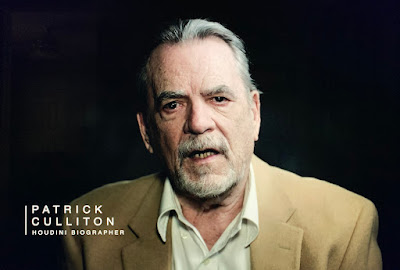
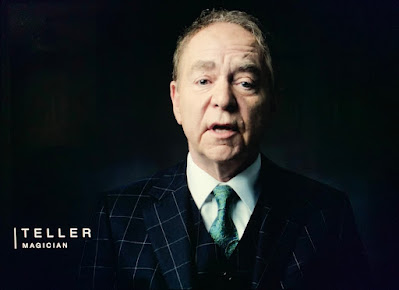
The line-up of talking head experts is also impressive. But it's Teller who steals the show by not only speaking on-screen for the first time in a Houdini documentary, but tearing up twice. It's also a joy to see the great Patrick Culliton, "Houdini's Ghost", back in front of the camera talking Houdini.


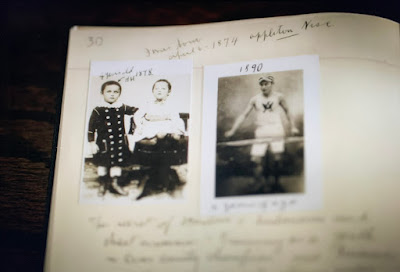
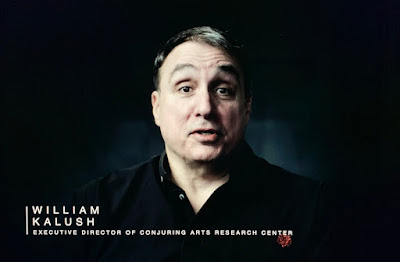
So what about the diaries? While offering no real bombshell revelations, there is still gold. The fact that Houdini paid some challengers isn't new, but I love that he apparently coded these payments in the diaries as "be quick." The diaries are really used more to provide the kind of deep character insight that you don't get in other Houdini documentaries. Many pages are shown on-screen, and you can bet I'll be doing some pausing! Bill Kalush, who also gives a rare on-screen interview, is described as "the custodian of the diaries."


I was a little surprised by the sparse use of film footage. Instead they relied heavily, maybe too heavily, on reenactment photographs. And where the heck is Bess!? They also fall into the familiar narrative trap of jumping from Mama's death to spiritualism, ignoring Houdini's war work and movie career. However, they do not conflate his mother's death with spiritualism and correctly root it in his relationship with Sir Arthur Conan Doyle. Spiritualism comes in for the harshest treatment of any Houdini documentary, with Penn Jillett taking off the gloves and likening it to organized crime. Sounds right.


In the end, they do amp up the sensationalism around Houdini's death and hint at possible murder, which I guess is just de rigeur for anything that airs on HISTORY. But they ultimately come down on the side of reason and discount any conspiracy.

Houdini's Lost Diaries is definitely one to watch. The option to stream free or buy on Amazon Prime appears to only be available to U.S. viewers at the moment. But as this was made by the BBC, I expect it will be getting a UK airing sooner than later. Below is an extended preview.

Friday, September 24, 2021

'Houdini's Lost Diaries' will be revealed Tuesday


This Tuesday, September 28, a major new BBC produced Houdini documentary by award winning filmmaker Simon George will debut as part of History's Great Mysteries on the HISTORY channel. It's called Houdini's Lost Diaries. As the title implies, the filmmakers were granted unique access to the diaries still held and tightly controlled by the descendants of Houdini's lawyer Bernard Ernst.

I was involved with this as an occasional consultant and will be appearing onscreen along with heavyweights such as Mike Caveney and Patrick Culliton (yes, "Houdini's Ghost" appeared for this one!). I've not seen the finished film, but I did see various incarnations of the script. So I know they did mine gold from the diaries! While I interpreted some entries differently from the filmmakers, I'm optimistic they will temper the sensationalism that HISTORY requires (and their promo suggests) and we'll finally get a Houdini doc that breaks new ground and provides fresh insight. Guess we'll find out together!

Houdini's Lost Diaries airs this Tuesday on HISTORY. I believe it will stream free on the website for a week. You'll also be able to buy the episode via Amazon Prime.

Below is a behind the scenes photo courtesy of actor and magician Paul Zenon who participated in several of the reenactments. What the heck is going on here? It's all in the diaries!


UPDATE: My review and where to watch: Opening up 'Houdini's Lost Diaries'.

Monday, February 22, 2021

Houdini's teacher?

Here's an intriguing tweet from the Magic Castle who are celebrating Black History Month with a look at Black History & Magic. Is this the man who taught Houdini?


According the expanded story, Houdini and Barclay met in a Boston Dime Museum in 1895. I admit I've never heard of Wilmont A. Barclay. But Houdini's first documented challenge handcuff escapes where in Massachusetts in late 1895.

In his book Houdini The Key, Patrick Culliton offers up two other possible origins of the Handcuff Act. The first is that Houdini purchased a set of keys, picks and tools from the Boston magic dealer W. D. LeRoy (which doesn't preclude the possibility that Barclay gave him the tip). The other is that Houdini acquired the act from Lewis Paul, an Australian who started doing escape work in America around 1881. This was suggested by ventriloquist Lewis Lester who worked with Houdini at Middleton's Dime Museum in Chicago.

UPDATE: Joe Fox provides the following from a profile of Barclay in the December 1983 Linking Ring. "Dick" refers to Lew Dick, who managed and assisted Barclay for many years.

The Linking Ring, December 1983.
 

Monday, December 7, 2020

Franz and Frank


For many years the great Patrick Culliton, a.k.a. Houdini's Ghost, has expressed his belief that Houdini's first chief assistant Franz Kukol did not leave Houdini's employment in 1914 to go fight for his native Austria during World War I, as was reported by newspapers at that time (some saying Houdini dismissed him because of his nationality). Patrick believes Houdini helped Franz "disappear" by fabricating the story and changing his name to Frank Williamson. As Williamson, Franz continued to assist Houdini for the remainder of his career.

As evidence, Patrick cites a letter written by Houdini in September 1924 to the Roosevelt Memorial Association. This is ten years after Kukol's supposed dismissal, yet in the letter Houdini states:

Mr. Frank Kukol will call you personally and give you further details about the group photographs in question.

This is pretty solid proof that Kukol is still around and going by the name of Frank in 1924. So he either never went to war or had returned. So this part of Pat's theory is, to my mind, confirmed.

But what evidence do we have that he became Frank Williamson? There are plenty of people named Frank in the world, and the 1924 letter still calls him Kukol. This part of Pat's theory had remained unconfirmed for me. But now a document has surfaced that that I believe provides the proof!


The above legal statement witnessed and signed by a collection of Houdini associates sold yesterday at Heritage Auctions for a healthy $718 (including buyers premium). It relates to Houdini's lawsuit with medium Arthur McNally in March 1926. The document is interesting in itself, but what caught my eye is that one of the 11 signatures is Frank Williamson (who gives his address as 38 Marcy Place, NYC).

I checked Williamson's signature against some known signatures of Franz Kukol. It you put them together, the similarities are striking! Especially the "F" and "r" in both names.


This is petty good evidence that Franz and Frank are indeed the same man. So I'm now happy to accept this second part of Patrick's theory. Franz Kukol became Frank Williamson.

The third part of Pat's theory is his identification of the man below as Frank/Franz. This man shows up in many photos assisting Houdini and is even in Haldane of the Secret Service. He's most clearly seen in the famous monk rope tie footage shot on the Haldane set in 1921. Thanks to the recently uncovered Sherman Grinberg footage, we can now see his features in detail.


I admit I'm still struggling to see Franz in this man, so I'm not yet 100% convinced of this last part of Patrick's theory. But the way things are going, I will not be surprised when we find evidence that proves Patrick correct once again. Because he's not just "Houdini's Ghost." He's also Franz!


Monday, November 2, 2020

Houdini Seances go virtual for 2020

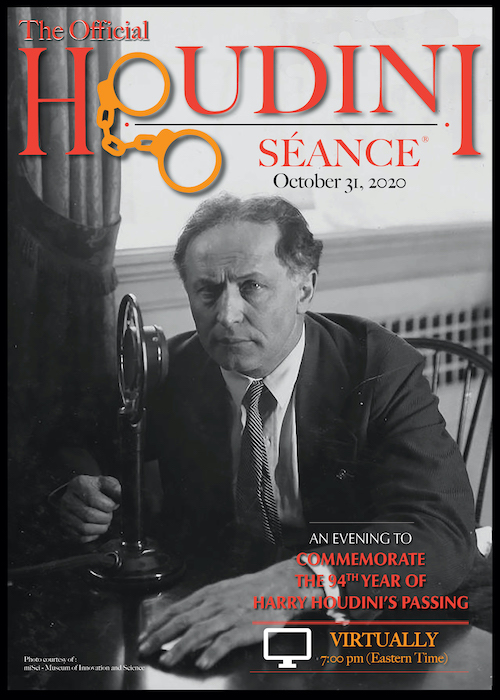
Due to Covid, The Official Houdini Seance and The Original Houdini Seance were both held virtually this Halloween. But this all-new stage seemed to finally rouse Harry with both seances claiming paranormal activity...if we Believe.

The first seance of the day was Dorothy Dietrich and Dick Brookz' Original Houdini Seance. This was held via ZOOM at 1:26 PM (the time of Houdini's death). The seance was open to the public, hitting a high of 201 viewers by mid seance. The S.A.M. hosted the event with Dorothy and Dick conducting the seance from Scranton, PA.

But it's what happened at 1:29 PM that has us all scratching our heads. A printers block that was used by Houdini toppled over on the seance table in a way that seemed utterly inexplicable. I spoke with Dorothy and Dick afterwards, and they assured me there was no trickery involved. Luckily, it was all captured on video. Below is the moment. The printer's block is propped against the photograph of Harry, Mama, and Bess on the right. This is pretty weird!


Next came The Official Houdini Seance run annually by Bill Radner and Tom Boldt. This was also conducted via ZOOM, but was a private invitation only event. Always a class production, the seance featured a performance by Benjilini, brief talks by myself, Gay Blackstone, George Hardeen, and David Muller. Bill Radner showed the seances cuffs and Tom Boldt hosted. Teller was also among the virtual attendees. The Official Houdini Seance always invites a professional medium to conduct their seance. This time it was Robyn Fritz, a "certified past life regression specialist" and author.

Unlike recent Official seance mediums, Robyn had no problem instantly contacting "Mr. Houdini," whom she said she had been "working with" all week in preparation. She explained Houdini was trapped in a grey area of the afterlife (her version of purgatory) and was searching for his wife. Roybn was able to bring forth Bess and reunite the two, who then traveled off together into what Roybn calls the "party."

Roybn seemed nice and I think she believes in her abilities. But I was far from convinced. At one point she asked the group if we had any questions for Houdini, and I volunteered a few test questions to verify it really was Houdini we were speaking to. I explained Houdini himself would understand this and demand it of any seance. But Houdini was unable or unwilling to answer a single question. 

This was the first Official Seance I've attended in which the medium actually claimed clear and unequivocal contact. But I don't think she appreciated my test. Or was it Houdini who didn't like it? Either way, I'm convinced no one was convinced.


Finally, while it wasn't a seance, another virtual highlight of this Halloween weekend was the Magic Collector's Corner #29, which focused on Houdini for the third time. I thought this was the best of the three Houdini specials, with appearances by myself, Fred Pittella, Dorothy Dietrich, Mike Caveney, and, best of all, Houdini's Ghost himself, Patrick Culliton! If you saw it I know you enjoyed it as much as I did. If you want to watch a replay (or see the full video of Fred Pittella's amazing collection), you can check it out by joining the Magic Collectors' Corner Facebook group.

Hope everyone had a Happy Halloween!

UPDATE: Dick and Dorothy have shared with me a photo of the phantom printer's block to show this was not a trick (not a Telekinetic Timber). This came out of 278 in 1980.

Wednesday, June 10, 2020

The Heart Is Quicker Than The Eye – the unmade Houdini biopic of 1976


It's not generally known that when Melville Shavelson was preparing his 1976 TV biopic The Great Houdinis for ABC, a rival Houdini movie was in the works at NBC called The Heart Is Quicker Than The Eye. Produced by Paramount and Playboy Productions, the aim was to air the film in October to commemorate the 50th Anniversary of Houdini's death. Of course, this was also the proposed air date for the ABC film.

When asked about the coincidence of two Houdini projects, Edward L. Rissien, executive VP of Playboy Productions said, "There are many instances where a personality lends itself to two different treatments. We are proceeding as announced for NBC."

Patrick Culliton, who worked as a technical advisor on the NBC project, says two names producer Bill McCutchen mentioned for the role of Houdini were Robert Blake and Charles Bronson. Bronson was a big movie star so that was probably wishful thinking. But Robert Blake was a real possibility and a good choice. Blake was the star of the hit TV show Baretta at this time. Actress Joan Hackett was mentioned as a possible Bess. While no casting was finalized, production was announced to begin March 15, 1976.

A copy of the screenplay by Jean Holloway resides at the The William H. Larsen Sr. Memorial Library at The Magic Castle. What's most striking is how close this script follows the Harold Kellock book, Houdini His Life Story. It's almost as though Holloway had the book opened in front of her and transcribed it beat for beat. But this means The Heart is Quicker Than The Eye would have been the most accurate of all the Houdini biopics. Hardeen, Martin Beck, Margery, and Sir Arthur Conan Doyle all feature in the film. And while Houdini does break his ankle in the Water Torture Cell, he does not die in it. In fact, his death is for the first time depicted accurately.

But somehow all this doesn't make for a better movie. The script is plodding, repetitive, and strangely dull. "I suffered through a treatment and three drafts of Jean Holloway's script as a research man," says Patrick. "I hated them all."

One original aspect Holloway introduces is the suggestion that Bess possesses true powers of extra sensory perception that she does not fully understand. But she is able to foretell events and successfully warn her husband off danger (when he'll listen). This is pretty interesting and I love the irony that Bess is the Houdini with the true powers. But it isn't developed far beyond the first act, and Bess's role in the film is largely to be a worried wife.

A fun detail is when Houdini is examined by a doctor for a burst blood vessel in his kidney (a regular source of pain for him in this script as it was in real life). The doctor's name is Larsen. Is this a nod to the famous Larsen magic family of Magic Castle fame? Could they have even considered having Bill Larsen Jr. play the role? Remember Bill was in Houdini (1953) as the S.A.M. head chopping magician, so this would have been a fun nod to this first Houdini biopic.

So what happened to The Heart Is Quicker Than The Eye? Despite Playboy's assurance that they were moving ahead, it appears the announcement of The Great Houdinis was enough to give the network cold feet. Says Patrick, "At that time, a decision to go with our Houdini movie took NBC a year, the decision for ABC to go with Mel Shavelson's project seemed to have been made in a week. Bill McCutchen was trying to save his project, but, it was over. We'd been scooped."

Patrick went on to work on The Great Houdinis, and even appears in the film as Franz Kukol.

The novelization for The Great Houdinis says it is a co-production with Playboy, so it's possible some kind of agreement was worked out between the networks and production companies. Whatever the case, The Heart Is Quicker Than The Eye was shelved and ABC's The Great Houdinis was the sole Houdini film to take to the airways that anniversary year.

Related:

Thursday, April 30, 2020

Patrick Culliton clarifies the price and purpose of Houdini–the Key

Patrick Culliton's Houdini–the Key is now sold out (but not impossible to still acquire, as you'll see below). Patrick has kept the book "in print" for 10 years to ensure those who wanted it as a research tool could always get it. (He was disappointed when his earlier work, Houdini Unlocked, was quickly bought up in bulk by collectors and speculators.) Patrick is using this moment to clarify his approach to producing and selling this important work:

"Ten years ago my book Houdini--the Key was published by me (and written, illustrated, and created, page by page, by me). 
I didn't want to print a big number of books because I considered it a book for the few, not the many. It did involve magic secrets and there are some good ones in there. I had a plan in case they all sold out. I printed 278 books, then, when it became obvious they were all going to sell, I did a second printing, without changing any of the contents, of 113 books. 
Because I didn't want my book taken over by scalpers -- it is a rare book. It's in the Rare Books Collection at the Library of Congress. It's well-made with a cover that I created that is eye-grabbing and contains little clues for serious Houdini aficionados. It has a slipcase in matching heavy duty library buckram. I knew if it got out of my hands it would completely sell out very fast. I had made a collectible, but, I didn't want collectors to have it if they weren't going to read it. I wanted people to have the book who would use it. 
So, now, ten years down the road. I have sold every one of the 391 numbered copies of Houdini--the Key
I limited the book to one per customer and I have the name and contact information of every person who bought one. Since each book was numbered, I have a complete list of the people who bought the book and which number they got. 
A bunch of my Magical heroes are on that list. And there hasn't been a single complaint."

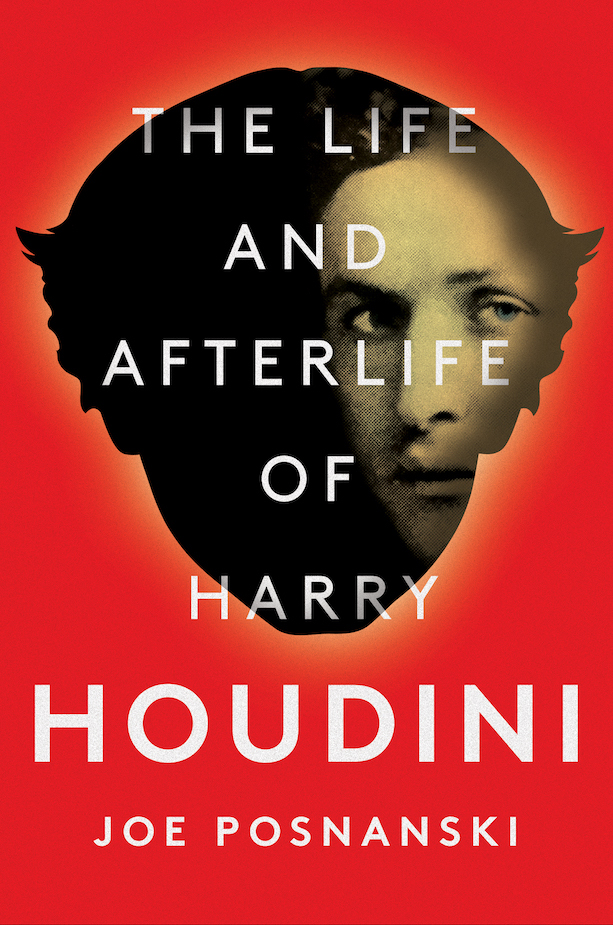
A serious inaccuracy about the price of the book appears in Joe Posnanski's recent book The Life and Afterlife of Harry Houdini. In the book the author states that he acquired the book from Patrick for $295. But this was never a price Patrick charged anyone.

"I published the book at $195.00 and I sold every book on the list for $195.00 (except the ones I sold to some very fortunate -- and canny -- folks who trusted me with their money and got an advance price). That includes the book I sold Joe Posnanski. Joe is given to hyperbole "J. Gordon Whitehead was a great big guy -- 6 ft. 6" -- and in his book, he makes quite a bit out of meeting me at the Magic Castle and paying me $295.00 for my book. He didn't. Joe bought #36 of the second printing from me for the same price everybody else did: $195. 
So for Joe to write that I charged him $295 is particularly hurtful."

But Patrick has good news for those who may have missed out in the run of 391 copies:

"But, sorry scalpers, I've got thirty books that were intended for libraries that I decided I wouldn't sell to libraries (the ones that count have them). They are available to serious students at the original price of $195.00. The book is still available, brand new and beautiful, for a few more months (or possibly years if they are slow to sell)."

So head over to houdinisghost.com and send Patrick an inquiry about purchasing one of the last 30 copies of Houdini--the Key.

Related:

Saturday, January 11, 2020

The A&E Houdini Biography

For some reason I'm feeling nostalgic for the documentary Houdini: The Great Escape, which first appeared as part of the popular A&E Biography series in 1994. But this doc, which was once so ubiquitous, is now among the hardest to see (unless you held onto your VHS machine).

Launched in 1987, A&E's "Biography" series offered up hour long profiles of famous figures in history. The series was hosted by Peter Graves and later Jack Perkins. It took them a while to get to Harry, but they finally did so with Houdini: The Great Escape, first airing on June 20, 1994.

The documentary is well written by Alan Goldberg and is narrated by Jack Perkins. It includes interviews with Patrick Culliton, Harry Blackstone, Jr., James Randi, John Bohannon, Charles Reynolds, Penn & Teller, Mark Edward, Dorothy Young, and Marie Blood. It's especially nice to see Marie as she did not do many onscreen interviews. There's plenty of Houdini footage and photos to enjoy. It's also interesting to see Ken Silverman in the credits as this was well before the release of his book. The documentary was dedicated to Manny Weltman, "In memoriam for his extraordinary archive and love for Houdini." Manny had passed away a month before the first airing.

A&E released select episodes of Biography on home video in the 1990s, and Houdini was among the first. I always felt the photo they used on the box (above) was an odd choice--certainly they could have found something more iconic? But I was also happy for this odd choice as it was a pic I had never seen. And if there's anyone out there who collects VHS, know there was an earlier release with a plain purple box with just Houdini's name on the cover.


With many repeats on cable and the home video always in stock in big bookstore chains like Barnes & Noble and Borders, Houdini: The Great Escape was inescapable. I suspect for many it was their introduction to Houdini's (non-fictional) story. It was later revamped with new narration for the Biography Channel's "Bio 4 Kids" series.

But the doc did not make the jump to DVD, and as far as I know, it has yet to appear on any streaming platform. And while some of the Biography episodes can be found on YouTube, Houdini is not among them. So now seeing this classic documentary is a magic trick in itself.

Here's a bit of related trivia. In a May 1998 interview in Movieline magazine, actor Jim Carrey was asked, "If you could dine with any group of people who have been featured on A&E's Biography, who would you choose?"

Carrey's answer: "Harry Houdini. Benjamin Franklin. Gandhi, I suppose. Jesus."

Related:

Tuesday, October 29, 2019

The ghost Houdini couldn't explain

Continuing my special Halloween week of resurrected GHOST POSTS, here's an updated post from August 10, 2014.

On April 11, 1923, Houdini visited the First Spiritualist Temple in Los Angeles to investigate a ghostly phenomena that had drawn recent headlines. It was here that he had an experience even he could not explain. If we believe him. Here's the story.

Mrs. Mary Fairfield McVickers was a well-known spiritualist who stated that when she died, a photo should be taken of her casket at 5 o'clock on the day of her funeral, and that she would appear. A year later, she died, and a photograph was taken precisely as requested during her funeral at the First Spiritualist Temple in Los Angeles on March 23, 1923. Sure enough, on the photo appeared several smudges of light that resembled faces hovering near her coffin.


Houdini was well aware of how "spirit photographs" were created using double exposure, and he believed this was what conjured the funeral ghosts. But he would give the spirits another chance. He travelled to the church with photographer Nathan B. Moss of the Keystone Press Illustration Service. He brought along a sealed package of 14 photographic plates purchased from the local Kodak representatives, Howland & Dewey. With Moss as his witness, and to ensure no trickery, he had asked a stranger who was standing next to him at the counter, Mr. Mat Korn, to select the package of negatives from the store's stock.

Under the exact same conditions as the McVickers photo, Houdini had Moss take ten photos of the altar (and a few of himself examining the church). Houdini and Moss then traveled to the Chamber of Commerce Building to develop the images in their darkroom.

Nine photos contained nothing. But one photo contained a mysterious streak of light across the same black curtain precisely where McVickers' "astral projections" had appeared. Even Houdini was forced to admit: "I cannot say that this is a spirit photograph of Mrs. McVickers, nor can I deny it. Photographers who examined the plate declare that the negative was flawless and that nothing was on it to cause this white figure. I am having the plates sent to Rochester for a final examination."


Houdini also sent the photo to Sir Arthur Conan Doyle for his opinion. Surprisingly, the man who was taken in entirely by the Cottingley Fairies photos expressed skepticism. 

"I am by no means convinced that it is a psychic effect," Doyle wrote back to Houdini. "The plate may have been scratched in some way–indeed the way the the line broadens out at the end suggests a scratch."

Houdini historian Patrick Culliton suggests Houdini may have faked the photo to draw attention to a lecture he would be giving that same week at the Hillstreet Theater (this was one of his first on the topic of fraudulent mediums). Publicity for Houdini's lecture did play up that he would discuss the mystery photo, and having the bystander pick out the plates does feel suspiciously like a magic trick. But would Houdini really want to launch his career as a serious psychic investigator by perpetuating his own fraud?

Houdini never discovered (or admitted) what caused the mysterious light streak, and it remains the one spiritualistic phenomena that he admittedly couldn't explain.


The First Spiritualist Temple still stands today at 906m E. 23rd St. The inside has been renovated, so the location where the photo was taken is no longer identifiable. However, the outside remains almost exactly as it appeared when Houdini visited in 1923 and might have had his one true encounter with a spirit.


Visit Patrick Culliton's website Houdini's Ghost to read newspaper accounts and Houdini's own written testimonials about exactly what happened that day at The First Spiritualist Temple of Los Angeles.

Come back tomorrow at 1:26 PM for another GHOST POST.

Related:

Saturday, October 26, 2019

You can still get Houdini The Key by Patrick Culliton

If you've read Joe Posnanski's The Life and Afterlife of Harry Houdini then you are now keenly aware of Houdini The Key by Patrick Culliton (and Houdini's Ghost). Joe spends a good chunk of his own book in search of this all-important work that reveals Houdini's most closely guarded secrets, including the Water Torture Cell.

But Joe made a few mistakes. First, the slipcase and cover of the book is not made of vinyl. It's made of a "bulletproof library cloth" called buckram. (That looks a lot like vinyl!) But more importantly, the book is not as hard to get as Joe believed. Patrick initially produced only 278 copies. But as those sold out, he quietly produced another 113, available only to those who missed the first run. Some of those are still available to buy direct from Patrick for the cover price of $195 (plus $12 postage), which is well below what the book sells for in auction. And Patrick will even sign it for you!

So if want Houdini The Key all you need to do is CLICK HERE.

Related:

Monday, October 21, 2019

REVIEW: A Houdini book for everyone

To date there have been more than 160 non-fiction books written about Houdini, and just as many that feature Houdini in fictional adventures. There have been books devoted to his entire life, to his psychology, and even to a single trick. So one can pretty much find a Houdini book to suit ones needs...as long as you don't mind sifting through some 300+ titles.

Or you can just read one book, The Life and Afterlife of Harry Houdini by Joe Posnanski. Because this is the first Houdini book that will appeal to everyone. And I mean everyone. If you love Houdini and think you know it all, this book will give you new insights. If you hate Houdini and have had enough of him already, you will find support and ammunition for your hatred. And if you just want to see what all the fuss is about, this book will tell you everything you need to know and just might hook you into Houdini World. And with the author's breezy observational style, it's just a great read!

The key here is that Joe Posnanski is an honest broker who approaches his subject as an outsider. He's also a sports writer with keen reporter instincts and an understanding of human nature and fame. The result is one of the most honest Houdini books ever written, one that treats Houdini mythology and biography with refreshing transparency. You always know where you stand with Joe. There's no manipulation of Houdini history for his own gain, no conspiracy theories or pseudo-history. Joe always lets the reader know when he's relating a myth, fact, or something that seems to exist in-between. In this way he's able to leave no compelling Houdini story untold, but also leaves no confusion in his wake. Bravo.

But one should understand going in that Joe is not out to break new ground as far as Houdini's life story is concerned. This is not a strict biography (although it still works as one and is factually solid). His real goal is to discover why Houdini continues to fascinate today. So a lot of this book is Joe's personal journey into "Houdini World", as he calls it. Along the way he meets a cast of characters both famous and unknown, including: David Copperfield, Jim Steinmeyer, Mike Caveney, Joshua Jay, Dorothy Dietrich, Dick Brookz, Jen Kramer, Andrew Basso, Jamy Ian Swiss, Kristen Johnson, Lee Terbosic, Juan Tamariz, Eric Mead, Paul Cosentino, Joe Notaro, myself, and most significantly, Patrick Culliton.

The Life and Afterlife of Harry Houdini is really a search for two enigmatic men; Houdini and Patrick Culliton. Patrick is a big part of this book. It even opens with a quote from him. Patrick has made no secret of the fact that he doesn't like his portrayal in the book. (Pat would like us all to know the cover of his book Houdini The Key is made of buckram, not vinyl.) But I think the book works beautifully as a tribute to this greatest of all Houdini historians and remarkable man. There's no "afterlife" of Harry Houdini without Patrick Culliton.

Some other highlights. Joe's description of going through the late Ken Silverman's research papers at Appleton's History Museum gives a real feel for how Ken himself struggled to discover Houdini. Joe's overview of the various theories and arguments about how Houdini may have escaped from the Mirror Handcuffs (or not) offers the most definitive examination of this escape ever put in print. Mike Caveney's unbridled dislike of Houdini is, yes, a highligh! Mike is one of the greatest magic historians alive and his take on Houdini is important and valid. But Mike doesn't write much about Houdini. Now, thanks to this book, we have Mike Caveney talking Houdini on the record. I'm also thrilled with what isn't in the book. Houdini a spy? Joe addresses this with a single word: Silly.

But this wouldn't be a proper review without a few criticisms. The notion that Houdini was a magician of limited ability gets a bit overstated and never properly refuted (and it can be). Joe allows Joshua Jay to tell the story of the punch and Houdini's death, which feels too important and subjective to be covered by someone other than the author himself. And while not really a criticism as it's a standout and somewhat heart-stopping moment, Jim Steinmeyer's partial exposure of the Water Torture Cell might be misunderstood by the layperson. (Without revealing anything, know Houdini could do the Water Torture Cell without an assistant in the building.)

But I keep coming back to the honestly. As to Houdini's spiritualism debunking, Joe admits: "I can't lie: It bores me. I prefer the escapes. I'd rather talk about the magic." It's this level of candor that makes this such a refreshing read. For me it feels cathartic, a clearing of the air. Sometimes it takes an honest outsider to show you the world that you've been living in. Joe Posnanski is that man and The Life and Afterlife of Harry Houdini is that book. And it's for everyone.

The Life and Afterlife of Harry Houdini can be purchased at Amazon.com and Amazon.co.uk.

Related:

Wednesday, October 9, 2019

And the WINNER is...

Okay, here we go! The winner of the early copy of The Life and Afterlife of Harry Houdini by Joe Posnanski is...

Keith Ahlstrom

Keith correctly identified Patrick Culliton as "a performer at the Magic Castle who calls himself Houdini's Ghost." Congratulations Keith! Your book will be mailed from the publisher.

My thanks to everyone who entered.

As promised, below are the answers.

In his search for Houdini, author Joe Posnanski encounters:
  1. A woman who runs away from home to chase her dream of becoming a magician. (Dorothy Dietrich)
  2. An Italian who revives Houdini’s most famous illusion every night. (Andrew Basso)
  3. A performer at the Magic Castle who calls himself Houdini’s Ghost. (Patrick Culliton)
  4. A man in Los Angeles whose sole mission is life has been to keep the legend’s name alive. (John Cox)

For those who didn't win, know you can still get the book on October 22 by pre-ordering at Amazon.com and Amazon.co.uk (UK release Oct. 31). Author Joe Posnanski will also be doing a book tour where you can get a signed copy. Click here for the schedule.


Thank to Avid Reader Press for allowing me to hold this giveaway.

Related:

Tuesday, August 27, 2019

Houdini Estate sees wedding of owner José Nazar

Earlier this month I had the great pleasure of attending the wedding of Kathleen Martinez and José Nazar at the magnificent Houdini Estate in Laurel Canyon. José is the owner of the property and the man responsible for restoring it and giving it new life and fame.

It was a magical wedding filled with whimsy and creativity around every corner. And a camel! There were also some fascinating and notable guests, including the great Patrick Culliton (who I hear partied until 3am). The bride had just come in from Egypt where she is currently searching for the lost tomb of Cleopatra. I'm not kidding.

It's always fun to get a peek inside this special place, so here are a few photos to enjoy. And congratulations to José and Kathleen!


The Houdini Estate is available to rent for all occasions. Visit the official website for details. For more on the history of the property, check out my post from 2012: Inside the Laurel Canyon Houdini Estate.

Related:

Translate