Showing posts with label Preservation. Show all posts

Monday, November 25, 2024

Houdini's house is getting a touch up

If you're heading to New York over the holidays and hoping to get a photo in front of 278, heads up that seeing the outside of the house is a little tricky right now. Our friends Vincent and Niro are having the exterior power washed, cracks repaired, the cornice is being repainted, and other cosmetic touch-ups. It's going to look as good as the day Harry bought it. Probably better!


While you can't see the outside of the house, remember you can see the inside. The owners offer tours. Check out their website house.278.nyc for details, or email Vincent at tours@278.nyc to schedule a time.

Friday, October 11, 2024

Ragtime restored 40th Anniversary Blu-ray

I don't know how I missed this, but in 2021, Paramount released a newly restored version of the 1981 film Ragtime on Blu-ray. The Blu-ray contains the restored theatrical cut, a recently discovered workprint featuring additional scenes, including the lengthy cut scene with Emma Goldman, and lots of extras. 

Layering fascinating characters with the riotous events of early 1900s America, the best-seller by E.L. Doctorow became a cinematic epic under the direction of two-time Oscar winning director Miloš Forman. From the emerging New York suburb of New Rochelle to the flashy spectacle of Atlantic City, a family faces racial tensions, scandals and violence that will test everything they believe in. Newly remastered from a 4K film transfer for its 40th Anniversary, RAGTIME features an unforgettable music score by Randy Newman, and an incredible all-star cast that includes/ James Cagney in his first (and final) role in nearly two decades, Donald O’Connor, Mandy Patinkin, Mary Steenburgen, Debbie Allen, Elizabeth McGovern, Moses Gunn, Pat O’Brien, Jeff Daniels, Fran Drescher, John Ratzenberger, Michael Jeter, Norman Mailer, and Samuel L. Jackson.

While Houdini plays a sizable role in the Ragtime book and stage musical, his role in the film is reduced to newsreel footage and a suspended straitjacket. However, I still consider it part of the larger Houdini filmography. There are no extra Houdini scenes in the cut footage, but I did learn from the commentary track that James Randi served as technical adviser for the straitjacket escape, which actor Jeffrey DeMunn performed himself.

I also learned that Robert Altman of M*A*S*H and Nashville fame was initially attached to direct Ragtime from a script by E.L. Doctrow himself. This is likely when John Belushi was in the mix to play Houdini, as the role would have been much larger. I have to say, I love the idea of a Robert Altman-directed Ragtime. He would have kept the ensemble and the sprawl. But I still enjoy the film that we have, especially the score by Randy Newman.

Purchase the Ragtime 40th Anniversary Blu-ray at Amazon.com.

By the way, I learned about this Blu-ray from the below interview with Charlotte Barker, Director of Film Preservation and Restoration at Paramount Pictures, who championed this release. It's a good interview worth a watch.

Sunday, June 16, 2024

Inside the Hulme Hippodrome

This video takes you inside the abandoned Hippodrome in Hulme, England, where Houdini performed in February 1909. Here's hoping it can be saved.


Music Hall and Theatre Review,  February 19, 1909.

For more on the theater and the effort to save it, check out the Save Hulme Hippodrome website.

Related:

Saturday, May 25, 2024

Houdini's grave is in trouble

There is an alarming situation unfolding at the Houdini gravesite. A crack in the exedra, which appeared a few years ago, is expanding. A large chunk has recently fallen off the back. The danger of cracks like this is water can get inside and freeze during winter, causing the cracks to enlarge. There is a very real danger that if left untreated, a large section of the exedra will break off. The photos below were taken by our friend Perry Reed a few weeks ago and should chill us all.


The good news is Dorothy Dietrich, owner of the Houdini Museum in Scranton, is now Chairman of the S.A.M. Houdini Gravesite Committee and is well aware of the situation. Dorothy, along with Dick Brookz, famously restored the Houdini bust and the headstones of Gladys and Leopold, so she has been a loving and proactive caretaker of Houdini's grave. Dorothy is working with the co-chairman Joe Devlin on a solution.

Cracks like these can be repaired, and the S.A.M. does have a Houdini Gravesite Fund they can draw from to help. But, as Dorothy points out, the repairs need to be done during the dry summer months—so that means now. Another winter will increase the danger of the exedra breaking, and fixing that might not be so easy.

You can help by making a contribution to the Houdini Gravesite Fund. Or you can contact Dorothy Dietrich directly at the Houdini Museum. Houdini always looked after the graves of fellow magicians, so it's time to do the same for him.

Sunday, May 12, 2024

Restoring Hardeen

This magnificent Hardeen poster is currently undergoing restoration at the Harry Ransom Center. Eric Colleary, our friend and Cline Curator of Theatre & Performing Arts, posted this image to the Magic Collectors Corner Facebook group along with this plea:

We're working on a major conservation treatment of this Hardeen poster, a variant of a similar Houdini poster that also includes various cuffs and similar hand positions. Does anyone else happen to have a print of this Hardeen poster? And if so, would you be able to share an image for reference? Many thanks in advance!

If you can help Eric, reach out to him via the Harry Ransom Center website or on Facebook.

I've never seen this poster myself, but the image of Hardeen appears to have been drawn from a photo that can be seen in Milbourne Christopher's Houdini's The Untold Story.

Wednesday, March 29, 2023

ALL the Houdini wax cylinder audio has been saved!

This is news that I've long dreamed of being able to report. This may be the biggest news I've ever reported here on WILD ABOUT HARRY. Little did I dream that I would play a role in this moment of Houdini history, but a role I did play! But to share this news right, I need to tell the whole story.

One of the great treasures inside David Copperfield's International Museum and Library of the Conjuring Arts in Las Vegas are the original wax cylinders containing the only known recordings of Houdini's voice. These were discovered in 1970, and only two of the three Houdini cylinders were ever transferred to a playable media. (Only a short clip has ever been released.) The cylinder said to contain Houdini and his sister Gladys reading poetry written by their father was never transferred and has not been heard since 1970. There are also five other cylinders in the collection with no record of what's on them. So there's still a lot of mystery surrounding these cylinders.

For the past two weeks I've been doing work and research inside the museum. I shared some of my adventures here. But I was keeping a secret this whole time. Mike Caveney was also at the museum. Years ago Mike and I pitched David on the idea of making new digital transfers of all the wax cylinders. The purpose was to finally hear the fabled poetry cylinder, document what's on the mystery cylinders, and digitally preserve all the recordings for the future. David tasked us with investigating how this could be done safely.

It's been a long journey, years in fact, but all roads lead to Dr. Michael Khanchalian, aka "The Cylinder Doctor," who just happens to live 20 minutes from Mike. Not only can Michael repair damaged cylinders, but he has developed a player that can safely play old recordings. He was clearly the man for the job. So we once again pitched the idea to David.

Any reluctance on David's part was understandable. He has the original cylinders and the original tape transfers from 1970 (which, ironically, may no longer be playable), so why risk damaging the cylinders or discovering they had gone bad or, worse, that some slippery collector in the 1970s had pulled a switcheroo and he actually owned nothing. The value of these cylinders could be wiped out entirely. But David Copperfield is dedicated to preserving magic history, and if there was a chance of capturing a new piece of Houdini's voice, he would take the risk. He gave us the go-ahead and trusted us to get the job done.

Lifting the heavy glass off the display case in the museum to retrieve the cylinders was pretty nerve-wracking. And it was about to get worse. Mike had left the museum by the time all the arrangements had been made, so it fell to me to bring the cylinders to Los Angeles. Without revealing what I was doing to anyone besides those in the museum, I loaded all eight cylinders into my car and made the trek back to LA, battling a three-hour traffic jam and two hellacious downpours along the way. But I made it!


The next day (March 16, 2023) Mike and I arrived at Michael Khanchalian's beautiful home. He has an amazing collection of players and cylinders and is clearly an expert and enthusiast in this field. "He's the John Cox of wax cylinders," joked Mike. After a fabulous tour of his collection, we got down to work in his "lab."


The first three cylinders, which had come from David's vault and were labeled as containing Houdini's voice, did not contain Houdini's voice. Michael knew this instantly as he could tell they were commercial recordings and not the type of "blank" cylinders one would use for recording. Instead what we heard were vaudevillians Will Oakland ("When You and I Were Young, Maggie"), Billy Murray & Ada Jones ("Whistling Coquette") and a musical march (Queen of Sheeba). It was fun to hear these sounds from the past, but it was a little disconcerting, and the switcheroo theory was dancing in my head. But we still had five cylinders to go.

The cylinder labeled "Pa's Poems" (in Houdini's handwriting) was up next. Michael was encouraged by what he saw. At least this was the correct type of "blank" cylinder. This was the moment of truth. Houdini history was about to be made, for better or worse.


Michael slid the cylinder on his player, carefully calibrated the needle, hit the record button (we were making direct transfers to CD, no computers or hard drives involved), and lowered the needle. Then this happened.


Houdini's powerful voice boomed out over the room in a recording that had not been heard in 53 years. He introduces "an original German recitation" of poetry written by his father, "Reverend Doctor Mayer Samuel Weiss," to be spoken by his sister, "C. Gladys Weiss." There is a fantastic candid moment when Houdini is about to state his father's birthday and he has to ask Gladys, "What was the year?" It's very faint, but it's there, and we all looked at each other in delighted disbelief at what we had just heard.

Gladys then recites the poem in German. Gladys was blind, so she's doing this from memory. As Houdini says on the recording, the poem was "taught to her" by their father. I believe she makes a mistake and starts over after a small gap in the recording. Houdini then comes back on and says he will repeat the poem "in case you did not understand it." This seems to be his true speaking voice and not the "presentational" voice he uses on the other recordings. He then proceeds to recite the poem also in German. He speaks faster and, to my ear, more confidently in German, with great flair and rolling R's. Gladys signs off with the date, October 30, 1914, which is a day after the other recordings were made. The fact that this recording was made on a different day has never been documented.

Next up were the two full recordings of Houdini's Water Torture Cell patter. As with the poetry cylinder, each of these run just over four minutes. The quality of these transfers is much clearer than what exists currently. For years I believed Houdini says "I, Houdini" as his sign off. I've been wrong. "Harry Houdini" is now sparkling clear. There was also a big surprise waiting at the end of the first speech. After Houdini signs off, the cylinder seems to end. But then Gladys comes back on and "certifies" that she heard her brother "make this record" on October 29, 1914. This certification was never transferred in 1970 nor have I ever seen any mention of it. It's possible it was missed or the machine they used couldn't pick it up.

Speaking of the machine(s) from the 1970s, our expert Michael said he was amazed the recordings weren't destroyed back then, as you can't play these Edison Blanks on a regular machine. They are much softer and the weight of the needle can wipe them clean. Several times he said it was miraculous that the recordings survive and in such great fidelity.

The final two cylinders were commercial recordings of German songs. It was still exciting to hear these as all the cylinders belonged to Houdini and it's wild to hear the music he played at home for pleasure.

Over the next few days I prepared notes and transcriptions of all the cylinders and reunited them with their correct cases. I was helped in this by magician Jessica Jane Peterson who became the fourth lucky person to hear the poetry recording.


I then drove the cylinders back to Las Vegas and played the new recordings for David. He was thrilled by what he heard. He instantly picked up on all the same moments that had so excited us in LA, especially the moment when we hear Houdini's more natural speaking voice. Even before the recordings ended he was working on the next steps. Audio work will be done to clean up the recordings and the German will be translated. It was mission accomplished and everyone was delighted and relieved!

I took myself out to dinner that night and thought about what had happened. Not only had I finally heard the "Pa's Poems" cylinder, but I now understood it was always the most precious and personal recording of them all. Houdini loved and and honored his father and you can hear that. He loved his sister and you can hear that. The family language was German and you hear that. If Houdini ever came back, this would be the cylinder he would want to hear. Preserving it was more important than I ever understood. I felt like I had done a service for both Houdini and David Copperfield, and I was overwhelmed with gratitude at the amount of trust that had been placed in me.

I then sent David a text with one last request. Could I share this momentous news? His response came back quickly: "Sure."

As I said, David didn't need to do this. This headline could have easily read, "The Houdini wax cylinders are no more." But this is what makes David Copperfield a titan of magic. He took the risk, extended extraordinary trust, and now deserves the credit for saving this important piece of Houdini history. Maybe even the most important piece. When and where the general public might hear these I can't say. But the fact that we can now hear them was the purpose of this incredible journey.


Thanks to David Copperfield, Mike Caveney, Michael Khanchalian, Jessica Jane Peterson, Glenda Wellendorf, and everyone who helped bring Houdini (and Gladys Weiss) back to life. 

Want more? You can view additional images from this adventure as a "Scholar" member of my Patreon by clicking below.

Tuesday, October 4, 2022

Wichita Orpheum celebrates 100 years


The Orpheum Theatre in Wichita, Kansas, celebrated its 100th anniversary last month. Houdini performed here during the week of November 26, 1923. As you can see, the theater is still in beautiful condition and still carries the Orpheum name.

During his run Houdini featured the Needles, Water Torture Cell, and escaped from a challenge packing case made by the George Innes Dry Goods Co. He also did a suspended straitjacket escape from the Wichita Beacon Building and spoke on WEAH radio. The Orpheum instituted a new policy that week, as you can read below:

The Wichita Daily Eagle, Nov. 25, 1923.

You can see on the Orpheum's official website that they are well aware of their Houdini connection. You can read about the theater's ongoing restoration at KMUW

Hey, how about a special event next year celebrating Houdini's 100th in Wichita?

Monday, August 29, 2022

Gladys and Leopold headstones return to Machpelah


Fantastic news today! The headstones for Houdini's brother Leopold and sister Gladys have returned to the family plot in Machpelah Cemetery in Queens. This is thanks to Dorothy Dietrich and Dick Brookz of the Houdini Museum in Scranton, PA, who worked with David Jacobson at the cemetery to make this happen.

The original headstones were badly damaged by vandals in 1994 and have remained absent all these years. These are new headstones in the style of the originals. They look great! While the headstones are in place now, a formal dedication will be held at a later date.


Gladys and Leopold were the last family members to be interred at Machpelah. Both were cremated. Gladys died on December 31, 1958 and was buried January 21, 1959. Leopold committed suicide on October 6, 1962. His ashes were buried on February 3, 1963.

You'll recall that Dorothy and Dick also restored Houdini's bust to the exedra in 2011. They have continued to be caring custodians of the Machpelah plot. In fact, Dorothy was recently named chairman of the S.A.M. Houdini Gravesite Committee.


Friday, April 29, 2022

Searching for Houdini in Bellefontaine

The city of Bellefontaine, Ohio, together with real estate developer Small Nation, are in the process of restoring a historic block of buildings that once housed that city's Grand Opera House. Check out the sign that hangs in the building's widow. I love this kind of stuff!


Unfortunately, I don't currently have a listing in my chronology for Houdini's appearance at the Grand Opera House in Bellefontaine. This doesn't mean he wasn't there. I've just yet to find him.

The Grand Opera House operated from 1880 to 1913. As far as I know, Bellefontaine was not on the Keith or Orpheum vaudeville circuits, so it's most likely Houdini appeared here in his early days (1893-1899). Opera Houses such as the one in Bellefontaine are where the American Gaiety GirlsCalifornia Concert Co., or Roger's Orpheum Stars would play, sometimes only for a single night.

So if can anyone help find Houdini in Bellefontaine, that would be great. That sign is too cool to not be true!

Thursday, January 13, 2022

Raising the Palace

An effort is currently underway to raise the historic Palace Theatre in New York's Times Square 30 feet above the street. This is to make way for more retail space at ground level. Not sure I'm in love with the idea of changing this iconic theater, but I do love the quote on the construction sign currently hanging in front of the theater.


This certainly isn't the first time Houdini's name has graced the Palace marquee. Built in 1913, the Palace Theatre was the brain child of Martin Beck and became the premier theater for Keith's vaudeville in New York City. Houdini played at the Palace in 1914, 1915, 1916 (2x), 1922, as well as making numerous appearances for special events. On January 5, 1922, he performed a suspended straitjacket escape from the theater's facade.

The logistics of this raising effort, which will take six to eight weeks, makes for an interesting read HERE. As to whether this should or shouldn't be done, Trav S.D. has his own take at his terrific blog Travalanche.

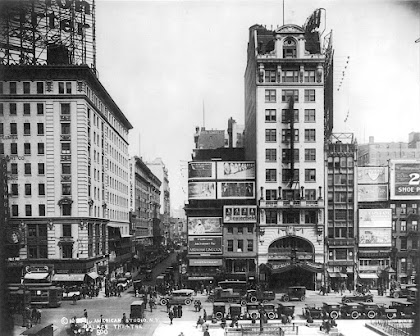
Below is a wonderful pic of the Palace as it appeared in Houdini's day.


Related:

Friday, October 15, 2021

Watch Posterfix restore Houdini posters

This fascinating video from Posterfix in New York shows their full restoration of a Houdini Master Mystery 1-sheet poster. I might have argued to leave the poster fragment as-is until I saw the final product. Pretty amazing. The video also shows the restoration of a Master Mystery lobby card and three Houdini handbills from 1902.


Posterfix also took on the task of restoring five Houdini window cards from the recent find in Warwick, Rhode Island. One of those restored cards sold last month in a Potter & Potter auction. That video below.


Thanks to Michael Mitnick for the alert.

Friday, August 14, 2020

Burnley Empire rewrites Houdini history

Here's a video of magician and actor Paul Zenon (you might remember Paul from his acclaimed one-man show Linking Rings) discussing this post from last Sunday about Houdini Defeats Hackenschmidt. One thing I didn't mention in that post is that the Burnley Empire building still stands!


As Paul mentioned, the Burnley Empire Trust is working to preserve this historic theater. To support their efforts and help make a new history for the Burnley Empire, please consider donating to their crowdfunding campaign HERE.


Sunday, June 21, 2020

Mystifier, Fall 2002

Continuing my issue by issue look back at the Mystifier, the newsletter of the Houdini Historical Center that ran from 1991-2003.


The Fall 2002 Mystifier celebrates the coming of the U.S. Postal Service's First Class Houdini stamp. This was a personal triumph for the HHC and Sidney Radner who had lobbied long and hard for this recognition. The newsletter contains photos and a report from the HHCs own dedication ceremony on July 5. For the occasion, Wisconsin-based escape artist Mike Schroeder performed a suspended straitjacket escape.

The newsletter continues with news of a second big event; the unveiling of John Gaughan's restored Water Torture Cell. The cell was displayed at the Center for Jewish History in New York from July 3 to August 5. The newsletter includes a photo of John with the USD, which for many was probably their first look at the restoration. It also has a Q&A with John. Below is a sampling:

Mystifier: Did you understand the mechanism in the Water Torture Cell before you began?
JG: I had reworked the Water Torture Cell in 1991. If I had not had that opportunity, it would have been impossible to restore the Water Torture Cell at all. I needed to be familiar with the whole piece since it was so totally destroyed in the fire. There were only fragments remaining of the original piece. 
Mystifier: What was the most difficult part of the project? 
JG: To be faithful to the original design. Not to cut corners but to use exact materials and methods of the original. The restoration used rare Honduras mahogany with a ribbon pattern, just as in the original. I used lap joints in the construction, as in the original to allow for the expansion and contraction that would occur when it was filled with water.

The newsletter continues with the sad news of the death of Ronald J. Hilgert, HHC member and author of Houdini Comes to America (1996). The museum shop announces new items related to the Houdini stamp, such a first day covers and pins. Recent donors are listed along with the staff of the HHC, which we now see is headed by Executive Director Terry Bergen who will prove controversial.

In his regular "Backstage" column, Sid (sporting a new column photo) talks about the HHC stamp event and the restored Water Torture Cell. He expresses disappointment that he was not invited to the official unveiling of the stamp in New York City. That ceremony featured David Copperfield (in a suit matching the one we see Houdini wearing in the stamp image) and Marie Blood. But Sid deems the Appleton ceremony as being the "much more impressive stamp dedication" and points out that it was covered by four TV stations.

Finally, it's worth pointing out that this issue introduces a few stylistic changes. No longer are the Contents listed on the cover. The font size is also increased (actually, the font sizes and styles are wildly inconsistent). This would also prove to be the last Mystifier printed in two colors.

Mystifier
Volume 12, Number 3
Fall 2002
6 pages

Contents:
U.S, Postal Service Recognizes Houdini!
The Water Torture Cell is Reborn!
R.I.P. Ronald J. Hilgert
Museum Shop News
Backstage with Sid Radner


Related:

Saturday, July 6, 2019

Checking up on the Examiner

Last month when I visited the historic Alexandria Ballrooms where Harry and Bess had their Silver Wedding Anniversary, I decided to swing by another downtown Los Angeles Houdini location, the Examiner Building. It was here on April 4, 1923 that Houdini performed a suspended straitjacket escape before a reported 20,000 people.


The building has stood empty since the Herald Examiner went out of business in 1989. In 2015 it was announced that the building would undergo a massive renovation and would open as a combination of creative office and restaurant space in 2017.


Looks like the renovation is taking longer than expected as the building is still covered in scaffolding. But work is clearly underway, and I look forward to the unveiling of this still very recognizable Houdini landmark.

You can see more photos of Houdini's Examiner escape via the links below.

Related:

Friday, May 24, 2019

Eric Olsen on restoring the Water Torture Cell

Here's an interview with Eric Olsen who worked with John Gaughan on the two restorations of Houdini's Water Torture Cell. The first was in 1991 to refurbish it. The second was to rebuild it after the catastrophic Houdini Magical Hall of Fame fire in 1995. His first hand recollections are pretty interesting. This also touches on some of the controversy surrounding that work.


The video ends with "To Be Continued", but I cannot find Part 2. Does anyone know if it exists?

The Houdini Picture Corporation (the name of Houdini's former company) was reincorporated in 1996 by Geno Munari, owner of Houdini's Magic Shops. This is the only thing I've seen credited with the company name.

Thanks to James Criswell.

Related:

Thursday, April 18, 2019

Wood lath from Houdini's 278 for sale

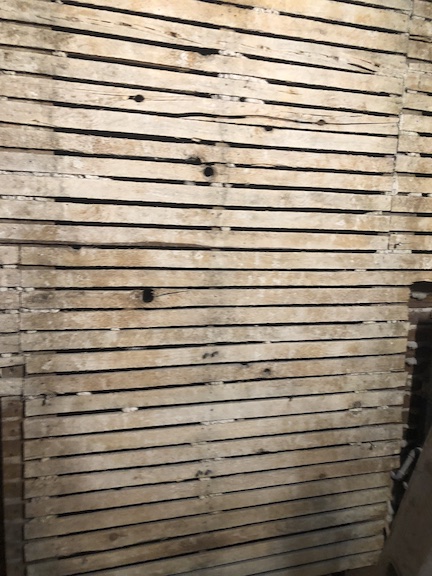
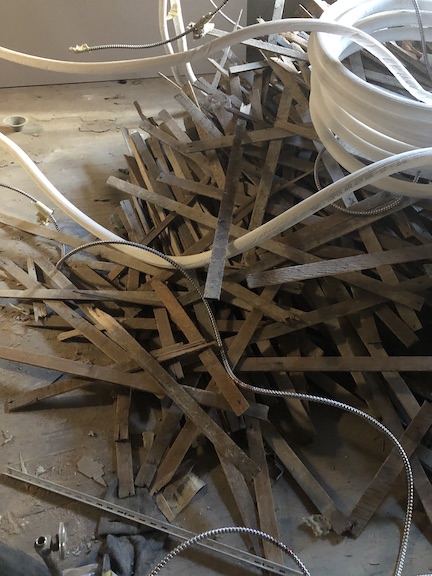
Attention Houdini fans and entrepreneurs! As part of the renovation of Houdini's New York brownstone, original wood lath has been removed to make way for new plumbing and HVAC. Before this goes into the dumpster, the new owners wanted to reach out to the Houdini community to see if anyone would be interested in buying it. You can "name your price", but they would like you to take away a minimum of 20 pieces to make it worth the trouble. Or you can take it all! All proceeds will go back into the renovation of the house.


Below is a pic of the lath before its removal.


I think these pieces could be cut up, heat stamped "Houdini's 278", and sold individually. If I lived in NYC, I would absolutely do this. But I'll leave it to others. You will need to go pick it up. But as a bonus, you'll get to see inside the house!

If interested, please contact me and I will put you in touch.

UPDATE: The lath is now gone, but this was a big success for fans and the home owners. And check this out.

Related:

Thursday, December 13, 2018

Houdini's Burnley Empire theater saved

The Burnley Empire Music Hall where Houdini appeared in December 1902 has been purchased by the Burnley Empire Theater Trust for £1. The theater, which was built in 1894, has stood abandoned for 23 years. The news was picked up my the UK's Daily Express and tweeted out by @jamesfspencer (coincidently on the anniversary of Houdini's opening day there).


Houdini appeared for a second time in Burnley at The Palace in 1911. According to the Burnley Empire Theater Trust, at one time the city had five music halls. The Empire is the only one still standing.

You can follow the good folks at the Burnley Empire Theater Trust and help out in the restoration via their Twitter and official website.

Related:

Saturday, October 27, 2018

Magicana acquires the McIlhany film archive

Here's some great news that could have an impact on Houdini film history. The below press release was recently issued by our friends at Magicana.

Magicana is delighted to announce the acquisition of the McIlhany Film Archive of historical magic film and videos.

In September, it was confirmed that we were the successful bidder for the collection through a sealed-bid auction conducted by The Magic Auctioneer David Goodman in cooperation with Owen Magic Supreme.

And what a collection it is!

With over 250 reels of 16mm film, nearly 100 reels of 8mm film, and over 75 cartons of videotapes, we are astonished and, frankly, overwhelmed with the sheer volume of what Bill McIlhany amassed over his years as an avid collector.

Always with the love of film at the heart of his magic-collecting passion, Bill collected magic featured in this medium from several notable sources, including Karrell Fox, Marvyn Roy, Ricki Dunn and John Booth. Bill was a frequent speaker at magic history conventions and took great delight in highlighting just how much magic was featured in early theatrical film and television. He was also a notable film and television consultant on magicians in the movies, and he shared his collection and expertise on several documentaries. Bill passed away in May 2017; he was 66.

While still stunned by the size of the lot, we are extremely pleased that we can, over time, add this treasure trove to The Screening Room. Soon we will be able to offer rare footage of performances, cameos, hand stand-ins and more of the great magical names listed above, among many others.

It will take some time to catalog, digitize and add this immense media load to our database, but we’re certain you will agree with us… it’ll all be worth the wait.

So what's the Houdini connection? I've long heard that Bill had a near complete copy of Houdini's 1909 film, Les merveilleux exploits de Houdini à Paris, on VHS. However, the last time I spoke with him (around the time of my Hollywood Heritage lecture), he was in declining health and couldn't find it. It's likely the film is on one of the vast amounts of unscreened tapes now in the possession of Magicana. So here's hoping they will turn up this lost Houdini gem!


Related:

Sunday, September 23, 2018

A Master Mystery UCLA update

Today I can offer an update on The Master Mystery print held at UCLA Film & Television Archive. If you recall, Joe Notaro and I recently visited UCLA's Powell Library and viewed the movie in their Media Lab. While the (almost) complete movie is a revelation, the old VHS viewing copies were in bad shape, with the machine eating one tape and the second not playing at all. There was also a question regarding UCLAs ability to license the print for any potential restoration, and the mystery of where the print came from in the first place. Happily, I now have answers

Last week Joe and I returned to UCLA and viewed brand new DVDs made from the old VHS tapes. Yes, that means these precious images are now preserved as digital files. I was now able to view Episode 11 (missing from Kino), and it proved to be another fantastic installment. Joe and I agreed that this episode had the best fight scenes of the entire movie, with Houdini squaring off in an extended battle with the lead thug who menaces him throughout the movie. I especially like that Houdini is dressed in tuxedo tails during the fisticuffs.

As to the origin of the print and the question of licensing, an old friend and rare magic book dealer John Cannon of Aladdin Books gave Joe and I the scoop over lunch following the Magic Castle swap meet in Hollywood a few weeks back. (He also sold me Edward Saint's own copy of Houdini's Paper Magic, so it was a good lunch!)


Turns out the 16mm print was part of the collection of John Hampton, who ran The Silent Movie Theater in West Hollywood for many years. It was here that Patrick Culliton saw the entire serial twice in the late 1950s and early '60s, an experience he never forgot. But Hampton contracted lung cancer from his hours working with the chemicals involved in film restoration, and mounting debt forced him to sell off 3/4 of his collection, including The Master Mystery, to David Packard of the Hewlett-Packard empire. John Hampton died in early 1990 at the age of 83.

But the movie had landed at an excellent home. David Packard is a passionate champion of film preservation via his Packard Humanities Institute. The Institute works with the UCLA Film & Television Archive, who hold hundreds of films on their behalf. A full list of those films on the Packard website shows The Master Mystery as one of their "works in progress." The film had also arrived not a moment too soon. The original 16mm print was showing signs of vinegar syndrome, so a preservation negative was created, saving the film.


So there doesn't appear to be any contractual impediment to using this print for the purposes of a full restoration, but one would need to approach the Packard Institute, not UCLA. I've also learned that the library of the Douris Corporation, who own the print used for the McIlhany/Kino restoration (which has two chapters missing from UCLA/Packard), was sold to Cohen Media Group in 2011, so there's a new player in the game.

However, the overall quality of the UCLA/Packard print is a reality that hit me on this second viewing. While it's true the print is free of significant film damage, it is from a 16mm source, so it is not nearly as sharp as what one sees on Kino, which I suspect came from 35mm. In fact, it could be that Bill McIlhany, who certainly must have known about the UCLA print, decided to use the less complete Douris print precisely because the image quality was so much better. So any combined restoration would require some serious work to improve the image quality of the UCLA print, and that might be a big job. So there would need to be the money, the will, and the expertise to take on this task.

But the good news is the negative is safe, the movie is available for anyone to watch at UCLA on DVD, and Houdini's complete Master Mystery survives as we approach its 100th anniversary. A happy ending.


Thanks to Maya Smukler of UCLA, John Cannon of Aladdin Books, Joe Notaro of HHCE, and Joe Fox. Also thanks to the helpful student staff at the UCLA Media Lab.

Related:

Friday, September 21, 2018

Let's nominate The Grim Game to the National Film Registry

Every year the National Film Preservation Board at the Library of Congress selects 25 films to showcase the range and diversity of American film heritage and increase awareness for its preservation. The public can suggest which films they think are worthy by nominating up to 50 films.

So let's get a Houdini movie in the mix! Heck, with 50 choices, we can nominate all of Houdini's movies. But let's at least be uniform in nominating what most consider his best film, The Grim Game (1919).

Here's how to do it:

  • Click to visit the 2018 National Film Registry Nomination Form.
  • You will be asked for your email address and how you heard about the site (feel free to say you heard about them from Wild About Harry).
  • You'll then have the opportunity to nominate up to 50 films, listing each by title and year.
  • Please enter The Grim Game as the title and 1919 as the year. 
  • If you'd like to list his other films, they are: The Master Mystery (1918);  Terror Island (1920); The Man From Beyond (1922); Haldane of the Secret Service (1923). I also entered the Tony Curtis biopic Houdini (1953), because there's a lot to recommend that film as choice example of American cinema.

Thanks for your support and feel free to spread the word! It would be terrifc to see The Grim Game or any Houdini movie make the 2018 list.

Speaking of The Grim Game, I will be showing the film along with giving a talk about Houdini in cinema at the Jewish Museum of Maryland in Baltimore on November 4. Click for details.

Related:

Translate