Friday, January 9, 2015

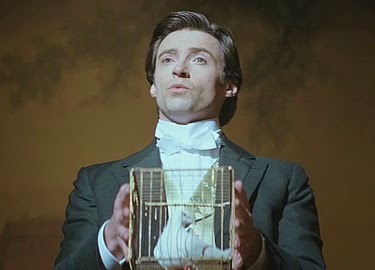
Houdini miniseries garners more award nominations

The Houdini miniseries has picked up more award nominations from the Hollywood Guilds. The Costume Designers Guild has nominated costume designer Birgit Hutter for Outstanding Made for Television Movie or Mini Series. Meanwhile, the Make-Up Artists and Hair Stylists Guild has nominated Gregor Eckstein in three categories: Best Period Character Make-up, Best Special Make-up Effect, and Best Period Character Hair Styling.


The Make-Up Artists and Hair Stylists Guild awards will take place Saturday, February 14 on the Paramount Pictures lot. The Costume Designers Guild Awards will take place on February 17 at the Beverly Hilton Hotel.

Good luck to the nominees!

UPDATE: Houdini lost to American Horror Story: Freak Show which swept all four categories.

Related:

Thursday, January 8, 2015

New York Times: What went wrong with Broadway's Houdini musical


The New York Times has an article by Patrick Healy all about the tortured development of the Houdini Broadway musical. The project, which was first announced in 2008, lost its star, Hugh Jackman, and composer, Stephen Schwartz, last year. This was after writer Aaron Sorkin left the project the previous year.

Below is a highlight from the Times piece which gives insight into what this production could have been:

[Aaron] Sorkin chose to set his story during Houdini’s final days, in 1926, with much of the action taking place in flashbacks. (A copy of his 2012 script, with Mr. Schwartz’s lyrics, was provided to The New York Times by a member of the production team.) The show centered on Houdini and Margery Crandon, who emerges as a complex character, by turns antagonistic and comforting, as she accompanies him in a dreamlike state as he relives moments in his life. (Jane Krakowski of TV’s 30 Rock and a Tony winner for Nine, played Margery in readings.) Some passages are funny, some tender, but many others are full of the long, brainy conversations that are a hallmark of Mr. Sorkin’s writing but less common in musicals. (Mr. Sorkin’s agent said that the writer would not comment for this article.)

Mr. Schwartz, meanwhile, wrote more than a dozen songs for the show, exploring Houdini’s relationship with his rabbi father (“Have a Little Faith in Me”) and the inherent deceptiveness within illusions (“It’s a Cakewalk”). But work sessions proved difficult to schedule; in 2011, for instance, members of the “Houdini” team flew to San Francisco to meet Mr. Jackman, who squeezed in meetings as he was rehearsing a concert that would soon become his smash revue “Hugh Jackman: Back on Broadway.” And developing thrilling moments of magic often seemed secondary to the plot about the spiritualists.

Kenneth Silverman, author of the biography Houdini!!! The Career of Ehrich Weiss, who has not been involved with the show, said the focus on Houdini and Margery was “an intriguing idea” for a musical but also potentially fraught.

“Houdini’s experience with her and the spiritualists was a very hostile one, but focusing on it risks taking away from the hugely entertaining moments of illusion and escape that defined his life,” said Mr. Silverman, a Pulitzer Prize winner in 1985 for his biography of Cotton Mather.

For those who worked on “Houdini,” the show remains a delicate, even painful subject. Most declined to comment on the record or would answer questions only by email through publicists. Many said they didn’t want to draw attention to the musical’s travails because its producers are trying to attract a new creative team and star to resuscitate the show. “We strongly believe ‘Houdini’ can be a remarkable theatrical experience,” said David Rockwell, one of the producers. “It’s not easy to create new work, yet the greatest rewards come from big thinking and creative risk.”


Thanks to Dave Sikula.

Wednesday, January 7, 2015

Hardeen's close call (updated)


In 1935 Hardeen had an accident while doing the Double Fold Death Defying Milk Can escape in New York. [See update.] He was saved by the quick actions of Jim Collins. Here is an account of the incident from The Gettysburg Times, May 6, 1935.

Click to enlarge.

UPDATE: I've now found a second account of this incident and, unless this happened twice, it appears this actually took place on March 30, 1935, during a matinee performance at the "Grand Congress of Magicians" at the Lyric theater in Allentown, PA. What's even more interesting is this was Hardeen's very first performance of the Double Fold Death Defying Mystery.


Related:

Tuesday, January 6, 2015

Houdini returns to Hollywood tonight

Just a reminder that I will be giving my "Houdini in Hollywood" talk at the Magic Castle tonight at 8:00pm in the Inner Circle. This will be an an expanded version of the talk I gave at Hollywood Heritage back in October. It's a Magic Castle "Members Only Perk." All AMA members are welcome. Hope to see you tonight!

Appleton Post Crescent, April 1, 1921.

Related:

Monday, January 5, 2015

The accidental collectible

This postcard of the Angel Hotel on Islington High Street in London (which still stands today) recently sold on eBay. This card would probably be long forgotten if it weren't for the fact that when the photograph was taken, a horse-drawn double decker bus happened to be passing by with an advertisement for Houdini on the side.


The auction dates this as 1904, so this would have been when Houdini was performing at the London Hippodrome and accepted the famous Mirror Handcuff Challenge. What a wonderful captured moment in time and a terrific accidental collectible.

Related:

Saturday, January 3, 2015

Norm Nielsen magic poster collection for sale


Word in the magic collecting community is that Norm Nielsen's formidable collection of almost 2000 magic posters is for sale. The collection, housed in Las Vegas, includes many Houdini sheets, including what might be the only surviving poster for his Overboard Box Escape (above).

The collection is being sold only as an entire lot and the asking price is said it be "seven figures." It will be interesting to see where this amazing collection eventually lands.

Thanks to the Thayer Magic forum. Photo by Zakary Belamy.

Thursday, January 1, 2015

Houdini in 1915

Welcome to another year of being WILD ABOUT HARRY! When a new year turns over, I always like to think about where Houdini was in his own life and career 100 years ago. So let's kick off 2015 with a look back at what Houdini was up to in 1915.

This post is now retired. 

But you will still be able to enjoy the story of Houdini in 1915 with the publication of my upcoming book.

Sunday, December 21, 2014

A look back at Harry's WILD 2014


2014 was a year jam-packed with Houdini events and news and a very busy and exciting year for WILD ABOUT HARRY.

We kicked off the year with an interview with Karen Mann, the daughter of Jacques Price, and also took looks back at Houdini at the Hillstreet, his rough ride at Niagara Falls, and his 3 Shows in One. A major new Houdini documentary, The Magic of Houdini, hit TV screens in England, while another new documentary appeared in Germany. In February, Briggs auctioned the Houdini collection of Pat Croce. In March we enjoyed a Haunted Houdini Tour of Los Angeles, which included a ghost Houdini couldn't explain. And while we officially lost the possibility of a Houdini Broadway musical, we did get Nothing On Earth by the Axis Theatre Company in New York, and Flim Flam by the talented troops at the Malibu Playhouse.

Spring saw us discussing slicing a girl in Worcester, Houdini's film lab (then and now), punches by Pickleman and others, and what Houdini thought about being Buried Alive ("I like it very much"). In July we celebrated the 100 year anniversaries of Houdini's Battery Park overboard box escape and his Walking Through A Brick Wall. The NYPL showed us a never-before-seen Houdini poster, and Potter and Potter hosted a major auction of Houdiniana that included what we thought was his long lost Double Fold Death-Defying Mystery (turns out it was just on tour). We also discovered that Houdini had some Velvet Fingers.

Fall was dominated by the arrival of the Houdini miniseries starring Adrien Brody and Kristen Connolly. The two-part movie played fast and loose with the facts and brought out some strong opinions. If only Ray Stark could have done it his way. In fiction, Houdini met The Shadow and Sherlock Holmes (thrice!), and we got three books offering revisionist versions of his death. We also met a Young Houdini, and took a fresh new journey under the pyramids. Back in real life, Houdini got a namecheck from The Pope (kinda), an important Bessie letter came home, and we learned that even Houdini can't escape the woes of commuting.

2014 also saw the sad loss of magician and escape artist Alan Alan, Houdini collector Larry Weeks, and Ragtime's first Harry, Bernie Yvon.

As always, attempts were made to contact the spirit of Houdini on Halloween, this time with seances in Danvers (the Official), Scranton (the Original), Las Vegas (the Annual), and the UK (the World Famous). I decided to mark Halloween 2014 with a look back at the Final Houdini Seance in 1936 with some unseen photos from the collection of our friend Mark Willoughby. And then there was that odd rain storm...

My own personal highlights were my Houdini event at Hollywood Heritage, a panel appearance at ScareLA, and interviews with On With Scott, NPR, The Chicago Tribune, and Ennyman's Territory. I also enjoyed my 50th birthday celebration in Houdini Seance Room at the Magic Castle.

Thanks to everyone for your support of this blog and your participation. I wish everyone a Merry Christmas and Happy New Year. Barring any breaking Houdini news, I'll be taking the rest of the year off and will see you all back here January 1, 2015 for what I expect will be another WILD year for Harry.

Saturday, December 20, 2014

Curious Houdini memento sells on eBay

A fragment of paper said to show Houdini's signature and a sketch for an unknown escape sold on eBay yesterday for $121. The story behind it is as curious as the fragment itself.


Pictured above is Harry Houdini's autograph and rough sketch of locks he used in his act as a master escape artist. The paper, autograph, and drawing is done in pencil and is in very rough condition. All is original work of Harry Houdini..nothing has been reproduced.

In 1923 Houdini was in Chicago. My great-grandfather was a plumber, mover and lock smith at the time. Houdini came to my great-father because he needed keys made. He drew my grandfather a rough sketch of types of locks he would be using in his next act so he had an idea of what Houdini needed. Its a very cool piece of Houdini memorabilia that my great-grandfather cherished for many years. He kept this corner piece between pages in a book for many years. It was exposed to the elements, grandchildren, and time. So it is also yellowed and faded too. It is time to pass it along to another Houdini fan who will cherish it for years... As did my great-grandfather.

Not sure what to make of this. The signature is questionable and the sketch is suspiciously like this famous shot. But it's acceptable if we believe the provenance. Koval's Illustrated Houdini Research Diary for 1923 shows Houdini in Chicago January 8-13 (Palace Theater) and May 14-19 (State-Lake Theater). I'm wondering what Houdini could have been doing in 1923 that involved locks and chains?

Friday, December 19, 2014

A scene from Ray Stark's 'Houdini'

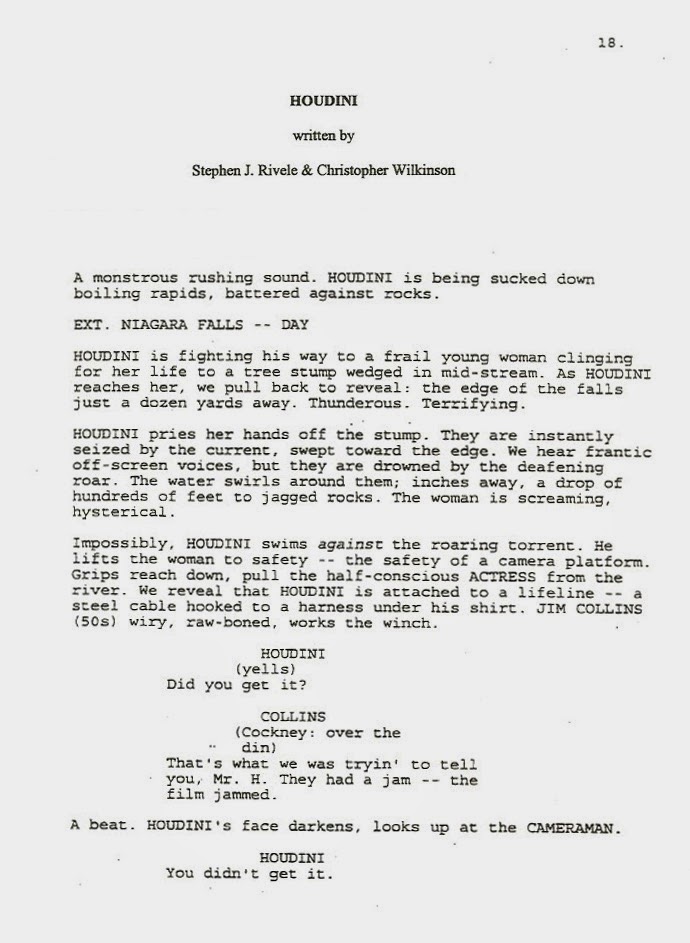
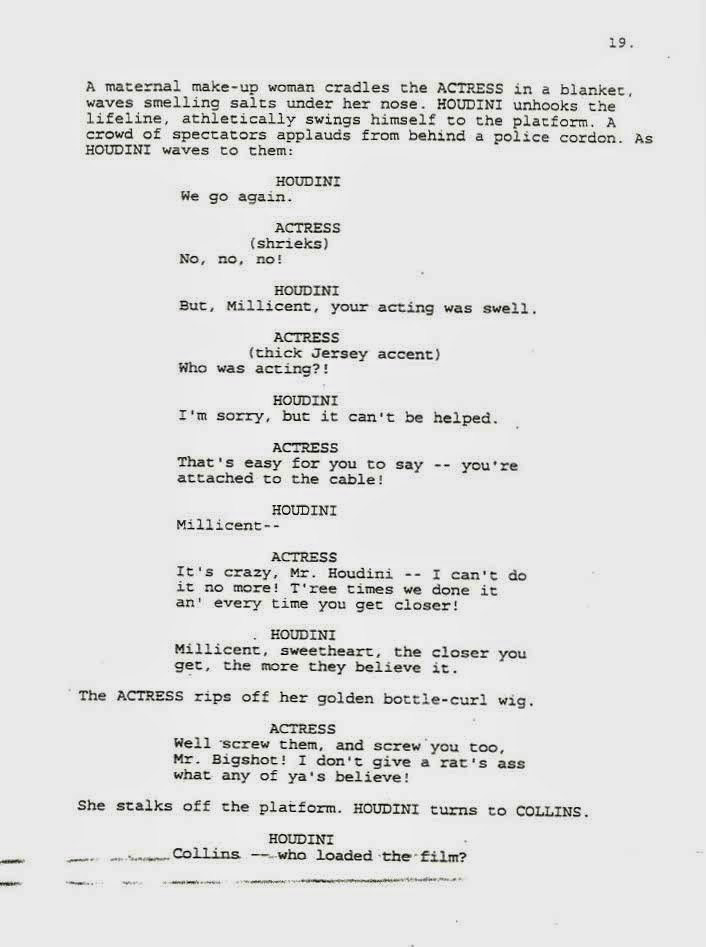
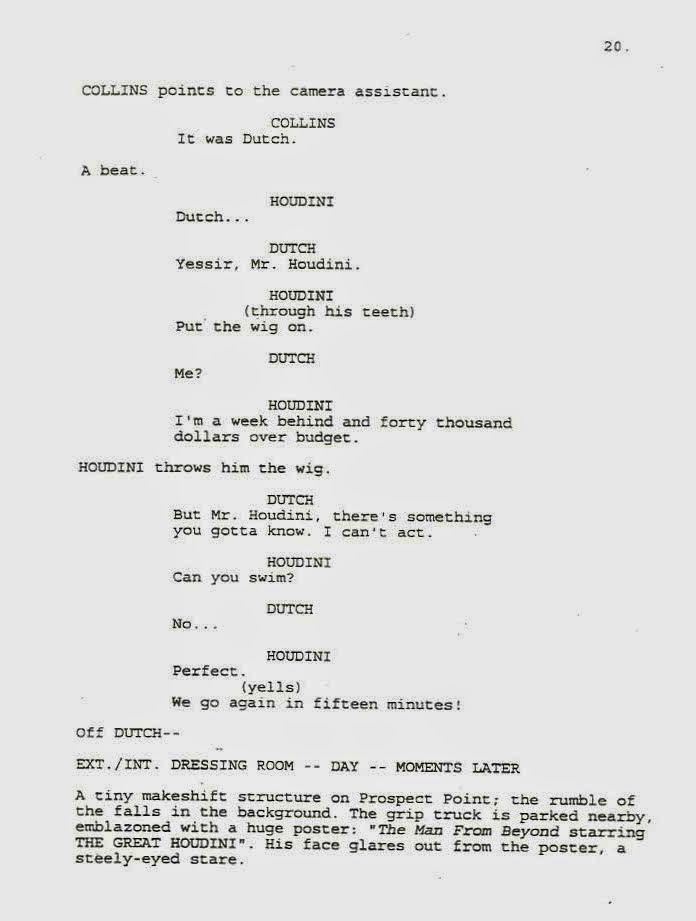
Until the Houdini miniseries aired earlier this year, no Houdini biopic had ever acknowledged his movie career. But that would have been different had the big-budget Ray Stark Houdini movie been made in 1998 as planned. That film, which may have starred Tom Cruise, featured a scene set at Niagara Falls during the making of Houdini's The Man From Beyond. Here is that scene from the original screenplay by Stephen J. Rivele and Christopher Wilkinson.


In real life, Houdini's leading lady was Jane Connelly, who gamely did all the Niagara stunts required of her. It is true that Houdini employed a safety line during shooting. Dummies were also used in some shots, and even sent over the falls in a canoe.

You can read more details about Houdini's Niagara Falls shoot and Ray Stark's unmade Houdini movie via the links below.

Related:

Wednesday, December 17, 2014

Ray Stark's 35 year Houdini conundrum

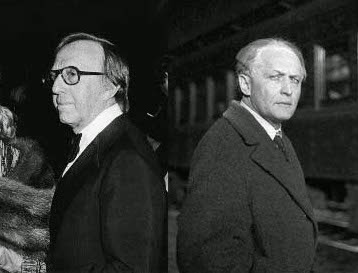
No Hollywood producer tried harder or longer to make a movie about Houdini than Ray Stark. For more than three decades, Stark struggled to bring Houdini back to life on the big screen. Because he never succeeded, Stark's efforts and various approaches have gone largely unrecorded. So I thought it would be interesting to share details of the Ray Stark-Houdini saga in this update of an article I first penned for the Houdini Historical Center's newsletter "Mystifier" back in 1996.


Ray Stark scored his first great success as a producer with the Broadway musical, Funny Girl, the story of Vaudevillian Fanny Brice (who happened to be Stark's mother-in-law). The 1964 musical jettisoned a then unknown Barbra Streisand to stardom. Stark would go on to produce a film version of Funny Girl (and a sequel, Funny Lady) and dozens of other acclaimed films, such as: The Way We Were, The Goodbye Girl, The Sunshine Boys, Robin and Marian, Smokey and the Bandit, Murder By Death, Annie, and Steel Magnolias. But one of the projects Ray Stark most wanted to make was a movie about Houdini.

Stark's first foray into the world of Houdini was in 1969 when he announced he would follow-up Funny Girl with a Broadway musical based on the life of Houdini called Hocus Pocus. Stark purchased the rights to William Lindsey Gresham's biography, Houdini: The Man Who Walked Through Walls, and commissioned Byron Cufnah to write a treatment and Bob Merrill to write the songs. Sam Denoff and Bill Persky would write the finished book. Stark called the production an "extravaganza" because of the size of the cast and complexity of the effects. It would even include a full size vanishing elephant. Then, as it was to do again and again, Ray Stark's Houdini project escaped the production charts. Hocus Pocus simply disappeared.

The '70s Houdini: James Caan.
Five years later, Stark was back. Buoyed by his recent film successes, Stark decided to abandon the Houdini stage musical idea and instead turn the magician's life into a major motion picture. Stark teamed with producer John Houseman, who hired writer-director James Bridges (The Paper Chase) to develop The Magic Man: The Story of Houdini. Anthony Burgess, who once developed a Houdini musical with Orson Welles, was hired to pen the screenplay. James Caan, fresh off his success in The Godfather, was touted as the lead. On the strength of the talent involved, Columbia Pictures agreed to distribute the film.

Stark's reappearance was not without its careful timing. Only a week before, Paramount Pictures had announced a plan to make their own Houdini movie. Called simply Houdini, the film was to be based on the Harold Kellock biography Houdini, His Life Story, as had been their 1953 star vehicle for Tony Curtis. This time the Paramount film would be produced by William McCutcheon and RSO Films; shooting was set for early 1975. On Sept. 18, 1974, the showbiz trade paper Variety announced the rival projects with the headline, "Col Joins Par in Houdini Pic Race." Both pictures promised to be in production within the year.

A year came and went, and Paramount's Houdini never materialized. Meanwhile, Stark was having his own troubles. The producer was unsatisfied with the Burgess-Bridges drafts of The Magic Man, so he turned to screenwriter Carol Sobieski. However, Stark found her efforts too similar to the other scripts, all of which told Houdini's story in linear terms. Looking to break out of this form, Stark hired William Goodhart, a Broadway playwright and screenwriter with an interest in theology and the occult. Goodhart delivered what was said to be the most unusual of all the Houdini scripts, The Death/Birth of Houdini. But the studio feared the new script was too similar to Bob Fosse's semi-autobiographical All That Jazz, then in development across town at 20th Century Fox. Stark also found Goodhart's script unsatisfying.

Stark then decided to take a bold new approach. He would abandon the biopic concept entirely and create a fictional Houdini adventure. To do so, Stark hired William Hjortsberg who turned in two film treatments. One was a metaphysical time travel fantasy; the other a murder mystery similar to the Sherlock Holmes vehicle, The Seven Per-Cent Solution. Neither of the Hjortsberg treatments were turned into full scripts. (In 1994 Hjortsberg published the book, Nevermore, in which Houdini and Sir Arthur Conan Doyle track a serial killer in New York.) Stark then returned to his original idea of doing a Houdini stage musical. He supplied test funds to New York-based director and choreographer Elizabeth Swados, but the results were discouraging.

Why was it not working? How could so many talented writers fail to break Houdini free of what Hollywood calls "development hell"? In a private memo, Stark confessed his fear that magic and escape artistry may not register alongside modern special effects. Journalist Jeffrey Wells -- hired by Stark to author a critical overview of the Houdini project -- suggested that maybe Houdini's life "simply doesn't add up to strong drama, or that his character is too prudish and Victorian to find favor among today's audiences."

But in a letter to the LA Times, James "the Amazing" Randi argued that finding an exciting plot in the life of Harry Houdini was "about as demanding as discovering a sports theme in the Babe Ruth story." He argued that Stark "would do well to represent the true story of Harry Houdini, a story that needs no Hollywood fabrications."

Stark and his efforts to make his Houdini movie went dormant for much of the 1980s. One writer-director Stark did meet with was Nicholas Meyer, who had scored great success with Star Trek II: The Wrath of Kahn. But Meyer told the producer he would only do his Houdini project if Stark optioned his father's book, Houdini: A Mind in Chains. Stark was not interested in the quid pro quo deal and nothing ever came of their meetings. (Meyer would eventually make that deal with producer Gerald Abrams and write the Houdini miniseries in 2014.)
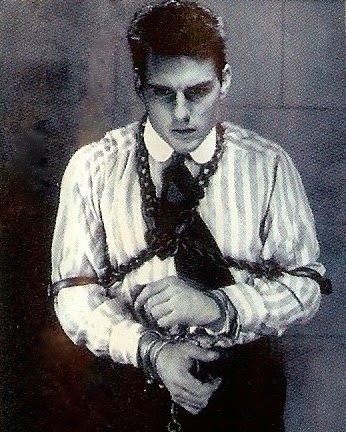
The '90s Houdini: Tom Cruise.
In the early 1990s, Ray Stark and his Houdini project made a dramatic reappearance when director Robert Zemeckis signed aboard what was now called The Great Houdini. Screenwriters Peter Seamen & Jeffrey Price would pen a new script that would tell Houdini's story as "a magical special effects-laden adventure." Tom Cruise was the favorite for the lead. The film's huge budget was to be split by Columbia Pictures and Universal -- Columbia getting the U.S. distribution, and Universal the foreign. The project at long last appeared on production charts as a "go" picture. It finally looked like Houdini was free.

But on September 23, 1992, a headline in Variety spelled out Stark's worst nightmare: "Houdini Eludes Zemeckis." Even though the director called the Seamen and Price script "the most interesting, dynamic, and most filmic of all the versions," he admitted he wasn't "100 percent certain what direction the project needs to take." Stark himself was less diplomatic: "We are not satisfied with the script that was developed, but I assume we will be working on a new draft very shortly with Zemeckis." His assumption was wrong. Zemeckis went on to direct Forrest Gump and win the Academy Award, while The Great Houdini went back to "development hell."

Variety: September 23, 1992.

Hoping to persuade Zemeckis to return, Columbia chairman Mark Canton made reviving the Houdini project a top priority. Sean Connery had just agreed to star as Robert-Houdin in the action/adventure-oriented Smoke & Mirrors, and HBO had purchased the new Ruth Brandon biography The Life and Many Deaths of Harry Houdini for possible adaptation. With rival projects looming, Stark's production company Rastar worked overtime to create a new Houdini screenplay. Eager screenwriters churned out Houdini "spec" scripts (scripts written without a contract in an attempt to make an outright sale) -- but none sufficiently captured the essence of the great magician for Stark. (Even I took a general meeting with Stark's company in my early screenwriting days. I recall a copy of the Silverman biography on their coffee table). Finally, screenwriter Anna Hamilton Phelan (Gorillas in the Mist) was commissioned to take a crack at the story.

After meeting with renowned San Francisco medium Carter Austremuhl, Phelan came back with an approach to tell Houdini's story as a battle with the mystical -- how his obsession with death and the unknown traced back to his strict rabbinical father, "who forbade discussion of all things magical." In August, Michael Fleming reported in his Variety "Dish" column that Phelan had "pulled a rabbit out of her hat and turned in a script that Stark and the studio execs love" and that a spring 1996 start was anticipated. But the truth was Phelan hadn't even turned in a draft. The article was just a clever bit of misdirection by Stark to scare away the competition and buy time for a fresh approach.

The writers who would eventually deliver that fresh approach, and a finished script, were Stephen J. Rivele and Christopher Wilkinson. The veteran scribes, who had tackled Nixon for Oliver Stone in 1995, focused their story on Houdini's famous confrontation with the medium Mina "Margery" Crandon. The thrilleresque script blended fact with fiction and offered some dramatic recreations of not only the Margery sittings, but also the Water Torture Cell, Buried Alive, and the Russia Transport Prison Van escape. The movie opened with a dramatic depiction of Houdini's famous sea monster challenge (below).

First pages of the Rivele and Wilkinson's Houdini screenplay.

The Rivele and Wilkinson script captured the attention of director Paul Verhoeven who signed aboard the project in September 1997 after two months of negotiations. "I'm not a fan of Houdini, but not an anti-fan, either," said the director. While it had been reported the studio would "go right to Tom Cruise to play the master magician," now it was said that studio was in discussions with "two or three major stars." An optimistic Columbia Pictures announced their intentions to begin production in early 1998 for a Christmas release that same year.

However, a year after Verhoeven joined the project, he suddenly departed, explaining to trades, "Houdini's spiritual life was all about his mother when she was alive and when she was dead, and I just couldn't solve that and make it a movie."

Undeterred, Columbia announced that Ang Lee was now at the top of their list to replace Verhoeven on the "high-profile biopic." However, a deal with Lee was never made. Meetings with screenwriter David Webb Peoples also proved unfruitful. But Stark was not giving up. In 2004, he was still talking about his Houdini movie and claimed that he still had Tom Cruise attached as the lead.

On January 17, 2004, Ray Stark passed away in his home in West Hollywood of heart failure. He was 89. With Stark went his dream of making a big budget Houdini movie.

Sources:
  • "Col Joins Par in Houdini Pic Race," Daily Variety, September 18, 1974.
  • Fleming, Michael. "'Houdini' makes escape," Daily Variety, August 24, 1995.
  • Fleming, Michael. "Verhoeven eyes 'Houdini'," Daily Variety, July 10, 1997.
  • "Houdini needs helmer," Daily Variety, June 2, 1998.
  • Marx, Andy. "Houdini Eludes Zemeckis," Daily Variety, September 23, 1992.
  • Petrikin, Chris. "Col may tie Lee to 'Houdini'," Daily Variety, July 15, 1998.
  • Randi, James. "The Magic Man" (Letter to the Editor) Los Angeles Times, October 1992.
  • Ray Stark Plans Broadway Musical On Harry Houdini," Hollywood Reporter, August 4, 1969.
  • Voland, John. "Verhoeven will helm 'Houdini,' Daily Variety, September 30, 1997.
  • Wells, Jeffrey. "Houdini, the Movie: Many Have Escaped Already," Los Angeles Times, October 11, 1992.
  • Tom Cruise mockup photo from Movieline May 1998.

Tuesday, December 16, 2014

Strange Detective Mysteries

Caliber Press presents a new original graphic novel Strange Detective Mysteries by Terry Pavlet and Sam Gafford with illustrations by Rosaria Battiloro. The book gathers together Houdini, H.G. Wells, Arthur Conan Doyle, and Nikola Tesla to solve the mysterious death of Edgar Allan Poe. Here's the plot description.

Strange Detective Mysteries is a science-fiction fantasy where several of the leading creative minds of the early 1900s are brought together to look into the death of Edgar Allen Poe and discover a conspiracy that threatens to destroy all time and reality in this techno science fiction thriller. The saga begins with famed Western lawman Bat Masterson summoned to a mysterious meeting in 1902 New York City. Upon arriving, he finds several others have been summoned. These men are some of the most brilliant minds of the new century; H. G. Wells, Arthur Conan Doyle, Harry Houdini and Nikola Tesla. When they are finally greeted by their aged host, Robert Tyler, they find that this rich patron has brought them together to solve the mystery of the murder of America’s foremost literary genius, Edgar Allan Poe.

Purchase Strange Detective Mysteries on Amazon.

Thanks to Arthur Moses for the tip.

Monday, December 15, 2014

Houdini books a return to Pawn Stars


An inscribed copy of Houdini's 1908 book The Unmasking of Robert-Houdin made an appearance on Pawn Stars tonight. The book was brought into the store by owner "Kevin" who wanted $5000. After Steve Grad, Principle Authenticator for PSA/DNA, authenticated the signature and estimated the value at $2400, Rick offered the owner $1500. The two men could not make a deal.

The episode was a nice showcase for Houdini. It even featured a Houdini quiz at one of the commercial breaks.


This marks Houdini's third appearance on Pawn Stars. Previous items that found their way into the Las Vegas based store were a pair of Houdini handcuffs and a straitjacket.

Related:

Nicholas Meyer's mind in chains

This interview with Houdini miniseries screenwriter Nicholas Meyer appeared on Collider back in October. The website was one of several invited to a special Houdini Seance press event with the screenwriter at The Magic Castle. It gives insight into why Meyer took the job (which had everything to do with his father's book, Houdini: A Mind in Chains), and also why he never became involved in any of the Ray Stark Houdini projects. Below is an excerpt:

COLLIDER: With this project you were adapting your father’s biography on Houdini. So, I have to ask, how was that experience?

MEYER: First of all it was a thrill, also somewhat daunting to adapt, or at least translate in some way, my dad’s book. The saddest part of this for everyone in his family is that he died in 1988, and the book – for which he had high hopes – was not a commercial success. And I think it’s a very good book and a penetrating study. The whole subject of biography has changed in the twentieth century. Up til then, Herodotus or Plutarch something could make a laundry list of what someone did. But post-Freud we want to know why he or she did it. So that opens up a whole new avenue of inquiry, and as my dad’s book said there are many book that will tell you about Harry Houdini, there are many books that will tell you what he did, and some will tell you how he did it, but I think that my dad’s book was the only one that got interested in the subject of why.

COLLIDER: So did they approach you with your dad’s book to get you interested in doing this project? 
MEYER: No my partner and close friend Gerry Abrams, who produced this movie, sold this to the history channel and when they asked who should write it, he said my name not knowing. When we spoke I said “This is a real coincidence because my dad wrote a book about the life of Houdini, you option the book and I’ll do the movie.” They’ve been trying to make a Houdini movie for years. Ray Stark tried for years to get one made and I used to have these conversations with him. I’d say “Option my dad’s book, and we’ll be in business.” For whatever the fifteen hundred bucks or whatever, but he couldn’t be bothered.

COLLIDER: Did you start on this when it was possibly a movie? 
MEYER: I only came to grips with it when they said a two night event. And in my mind and in the script it was called “Becoming Houdini” and “Being Houdini” but they didn’t use the two titles. Though the division is the same.

COLLIDER: In adapting your father’s material, did you feel closer to him? How much did you re-read the book? 
MEYER: I certainly re-read the book, I hadn’t read it in years. It was a bittersweet experience knowing that this was happening and he wasn’t there to see it. I’ve had a lot of conversations about it with my mother and my sisters. It’s strange, to be honest.

While this is the best Meyer interview I've read, it still doesn't answer the question of how The Secert Life of Houdini by William Kalush and Larry Slomon factored into his creation of his screenplay. The Houdini miniseries is clearly adapted from that book, much more so than Houdini A Mind in Chains. Still a mystery.

Translate