HISTORY will repeat their two-part Houdini miniseries starring Adrien Brody on Saturday, May 28 at 7:30 AM (part 1) and 9:30 AM (part 2).
The Houdini miniseries first aired in September 2014. For those who are discovering it for the first time, check out my review and fact checks below.
No shortage of Houdini on TV these days!
Related:
- Home
- Life
- Escapes
- Magic
- Movies
- Houdini's Movies
- Les merveilleux exploits de Houdini à Paris (1909)
- The Master Mystery (1918)
- The Grim Game (1919)
- Terror Island (1920)
- The Man From Beyond (1922)
- Haldane of the Secret Service (1923)
- Velvet Fingers (1925-26)
- Medium Well Done (1937)
- Religious Racketeers (1938)
- Houdini Picture Corp.
- Film Developing Corp.
- Filming locations
- Unmade Movies
- Deconstructing Houdini '53
- Spiritualism
- People
- Beatrice Houdini
- Theo Hardeen
- Cecelia Weiss
- Mayer Samuel Weiss
- Jim Collins
- Franz Kukol
- Martin Beck
- Sir Arthur Conan Doyle
- Margery
- J. Gordon Whitehead
- Edward Saint
- Jacob Hyman
- Leopold Weiss
- Carrie Gladys Weiss
- Bernard M.L. Ernst
- Charmian London
- Jess Willard
- H.P. Lovecraft
- Sherlock Holmes
- Assistants
- Imitators
- Other magicians
- Media
- Full Bibliography
- By Houdini
- Biography
- Fiction
- Foreign
- For Kids
- Methods
- Wild About Harry Bookshelf
- Houdini His Life Story (1928)
- Houdini The Man Who Walked Through Walls (1959)
- Houdini The Untold Story (1969)
- The Life and Many Deaths of Harry Houdini (1993)
- Houdini!!! The Career of Ehrich Weiss (1996)
- The Secret Life of Houdini (2006)
- The Metamorphosis: The Apprenticeship of Harry Houdini (2012)
- The Witch of Lime Street (2015)
- The Life and Afterlife of Harry Houdini (2019)
Friday, May 20, 2016
Houdini & Doyle on Mysteries At The Museum, May 27
If you're enjoying Houdini & Doyle on FOX, you might want to catch the real story on The Travel Channel's Mysteries at the Museum on May 27. The series will repeat their 2014 episode in which host Don Wildman travels to the Houdini Museum in Scranton to uncover the story of Houdini and Doyle's famous falling out.
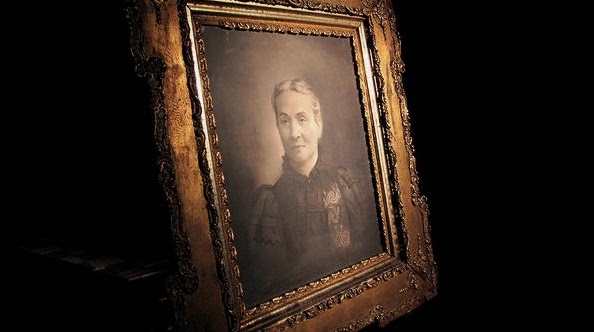
The show highlight's the museum's original portrait of Cecelia Weiss, which hung inside Houdini's New York home. Owners Dorothy Dietrich and Dick Brookz acquired the portrait (along with another of Houdini's father) at a 1980 auction of Houdini memorabilia in New Jersey.
"Doyle & Houdini, The Poison Squad, The Great Imposter" airs May 27 at 6pm/5c. Check out The Travel Channel for more details.
Related:
Thursday, May 19, 2016
Bill Kalush to receive 2016 Milbourne Christopher Award
William Kalush, co-author of The Secret Life of Houdini: The Making of America's First Superhero and founder of the Conjuring Arts Research Center in New York, will receive the Milbourne Christopher Award for Literature at the upcoming 2016 Milbourne Christopher Awards on June 25.
The Milbourne Christopher Foundation was established by Maurine Christopher in 1989, and was created to perpetuate the memory of her husband and his lifelong interest in encouraging excellence, originality, and leadership in the art of magic. The award categories reflect Milbourne Christopher’s own diversified career. Among his many works, Christopher wrote Houdini: The Untold Story (1969).
The 2016 Milbourne Christopher Awards will be held at 6:00 PM on June 25 at the Garde Arts Center, 325 State Street, New London, Connecticut. Tickets can be purchased here.
Related:
The Witch of Lime Street paperback in October
The paperback edition of David Jaher's The Witch of Lime Street: Séance, Seduction, and Houdini in the Spirit World will be released on October 11 according to a new listing on Amazon.
This non-fiction work examines Houdini's spiritualistic investigations and his famous battle with Mina Crandon aka Margery. The book was released last year to excellent reviews, including one from myself.
In December it was also announced that STX Entertainment had purchased the movie rights and had begun development on a film based on the book.
Related:
Wednesday, May 18, 2016
Houdini & Doyle stuntman injured in Torture Cell break
If you thought the Water Torture Cell glass breaking scene in Monday's episode of Houdini & Doyle looked frighteningly real, that's because it was! According to actor Michael Weston, the stuntman doubling him as Houdini was even injured and taken to the hospital.
The stunt man got really hurt in this scene!! It was terrible. He was okay but rushed to hospital bloody. intense stunt!! #HoudiniAndDoyle— Michael Weston (@_Michael_Weston) May 17, 2016
For those keeping score, we've now seen Houdini fail to escape from his Water Torture Cell in Houdini (1953), The Great Houdinis (1976), Houdini (1998), Houdini Miniseries (2014), and now Houdini & Doyle (2016). Of course, in real life, Houdini always made it.
Houdini & Doyle airs every Monday at 9/8c on FOX. You can also watch episodes at FOX NOW.
Related:
Tuesday, May 17, 2016
REVIEW: Houdini & Doyle (ep. 3): In Manus Dei
For my money, Houdini & Doyle episode 3, "In Manus Dei," is the best yet. The core mystery and personal storylines are very well integrated, making this episode both intriguing and moving (especially the end). For the first time, this series gripped me beyond just being a Houdini novelty.
This time Houdini (Michael Weston), Doyle (Stephen Mangan) and Constable Stratton (Rebecca Liddiard) investigate the sudden death of a man during a faith healer's ministry. Was he struck down by the hand of God for being a non-believer or was he murdered? Houdini, who is portrayed as the ultimate unbeliever in this episode, is himself struck down with a mysterious illness in the course of events. He even fails to escape from the Water Torture Cell (more on that later). Doyle also has a deeply personal experience that might be related to his own faith, as his wife, played by Stephen Mangan's real-life wife, Louise Delamere, suddenly revives from her coma.
The budding relationship between Houdini and Adelaide, set-up at the end of episode two, is only serviced with a few lines of dialogue this time. Will they or won't they? Something tells me it's going to take the entire season to find out. We again see Houdini's mother (Diana Quick) and Houdini's assistant Florrie (Jerry-Jean Pears), who has the honor of breaking the glass of the Water Torture Cell to save her boss. The faith healer, Elias Downey, is very well played by Nathan Stewart-Jarrett.
Spoilers ahead
This time the solution to the mystery was a nice surprise. However, the script employed a major cheat by withholding the fact that Downey's sister gave the victim "a refreshment" shortly before his collapse. This was later shown to the audience only in flashback, but Houdini and Doyle appeared to known it the entire time? Feels like a mystery series can only get away with something like that so many times (if ever). But, as I said, the personal aspects of this episode are what really drove it home. The ending, when Doyle's wife suddenly lapses back into her coma, is truly devastating.
Just the facts
Unlike episode two, in which the Houdini's attitude towards reincarnation is diametrically opposed to the real man, here his attitude towards faith healers is spot on. Houdini condemned them along with fake doctors and medicine show practitioners in his first book, The Right Way To Do Wrong (1906). But what about Houdini's own faith?
There's a moment in which Weston's Houdini express an opinion that would suggest he's an atheist: "God was invented to explain things we don't understand. Now we have science." While the real Houdini was not overly religious (I like to say his religion was Magic), he was not an atheist. He even reaffirmed his belief in God while under oath before Congress. However, he was frequently accused by spiritualists that he was "attacking religion" and even today there are those who equate his skepticism with atheism. But this was not the case.
Houdini being chopped free of his Water Torture Cell has been dramatized many times, most famously in the 1953 film Houdini starring Tony Curtis, which had him die in the escape (a myth that persists to this day). This never happened. Even if Houdini had been trapped in the USD, as he called it, its unlikely the axe would have ever been used. The cell had drainage valves at the bottom of the tank that could be opened in an emergency.
Only once, as far as we know, did Houdini have an accident while doing the Water Torture Cell. While performing in Albany in 1926, he broke his ankle as he was being raised above the stage. And speaking of broken bones...
At one point Doyle examines Houdini's x-rays and notes his history of many broken bones. Says Doyle, "You must be in agony every single day." This is more Evel Knievel than Harry Houdini. Apart from the aforementioned broken ankle and a broken wrist while doing a movie stunt, Houdini did not break many bones during his career. However, he did rupture a blood vessel in his kidney while doing a straitjacket escape, and that injury did cause him lifelong pain. But in 1901, when Houdini & Doyle is set, Houdini was in top physical shape.
Finally, there's what I thought was a missed opportunity when Houdini's mother feeds him chicken soup during his feverish illness. Houdini claims it was the source of his sudden cure. Wouldn't Farmers Chop Suey have been better? This was a favorite childhood dish that Houdini asked for during his final illness in Detroit. Not only would this have been a nice nod to the real Harry, but it would have spared the audience the chicken soup cliché.
Next Monday: Houdini and Doyle tackle the legend of "Spring-Heel’d Jack."
Houdini & Doyle airs every Monday at 9/8c on FOX. You can also watch episodes at FOX NOW.
This time Houdini (Michael Weston), Doyle (Stephen Mangan) and Constable Stratton (Rebecca Liddiard) investigate the sudden death of a man during a faith healer's ministry. Was he struck down by the hand of God for being a non-believer or was he murdered? Houdini, who is portrayed as the ultimate unbeliever in this episode, is himself struck down with a mysterious illness in the course of events. He even fails to escape from the Water Torture Cell (more on that later). Doyle also has a deeply personal experience that might be related to his own faith, as his wife, played by Stephen Mangan's real-life wife, Louise Delamere, suddenly revives from her coma.
The budding relationship between Houdini and Adelaide, set-up at the end of episode two, is only serviced with a few lines of dialogue this time. Will they or won't they? Something tells me it's going to take the entire season to find out. We again see Houdini's mother (Diana Quick) and Houdini's assistant Florrie (Jerry-Jean Pears), who has the honor of breaking the glass of the Water Torture Cell to save her boss. The faith healer, Elias Downey, is very well played by Nathan Stewart-Jarrett.
Spoilers ahead
This time the solution to the mystery was a nice surprise. However, the script employed a major cheat by withholding the fact that Downey's sister gave the victim "a refreshment" shortly before his collapse. This was later shown to the audience only in flashback, but Houdini and Doyle appeared to known it the entire time? Feels like a mystery series can only get away with something like that so many times (if ever). But, as I said, the personal aspects of this episode are what really drove it home. The ending, when Doyle's wife suddenly lapses back into her coma, is truly devastating.
Just the facts
Unlike episode two, in which the Houdini's attitude towards reincarnation is diametrically opposed to the real man, here his attitude towards faith healers is spot on. Houdini condemned them along with fake doctors and medicine show practitioners in his first book, The Right Way To Do Wrong (1906). But what about Houdini's own faith?
There's a moment in which Weston's Houdini express an opinion that would suggest he's an atheist: "God was invented to explain things we don't understand. Now we have science." While the real Houdini was not overly religious (I like to say his religion was Magic), he was not an atheist. He even reaffirmed his belief in God while under oath before Congress. However, he was frequently accused by spiritualists that he was "attacking religion" and even today there are those who equate his skepticism with atheism. But this was not the case.
Houdini being chopped free of his Water Torture Cell has been dramatized many times, most famously in the 1953 film Houdini starring Tony Curtis, which had him die in the escape (a myth that persists to this day). This never happened. Even if Houdini had been trapped in the USD, as he called it, its unlikely the axe would have ever been used. The cell had drainage valves at the bottom of the tank that could be opened in an emergency.Only once, as far as we know, did Houdini have an accident while doing the Water Torture Cell. While performing in Albany in 1926, he broke his ankle as he was being raised above the stage. And speaking of broken bones...
At one point Doyle examines Houdini's x-rays and notes his history of many broken bones. Says Doyle, "You must be in agony every single day." This is more Evel Knievel than Harry Houdini. Apart from the aforementioned broken ankle and a broken wrist while doing a movie stunt, Houdini did not break many bones during his career. However, he did rupture a blood vessel in his kidney while doing a straitjacket escape, and that injury did cause him lifelong pain. But in 1901, when Houdini & Doyle is set, Houdini was in top physical shape.
Finally, there's what I thought was a missed opportunity when Houdini's mother feeds him chicken soup during his feverish illness. Houdini claims it was the source of his sudden cure. Wouldn't Farmers Chop Suey have been better? This was a favorite childhood dish that Houdini asked for during his final illness in Detroit. Not only would this have been a nice nod to the real Harry, but it would have spared the audience the chicken soup cliché.
Next Monday: Houdini and Doyle tackle the legend of "Spring-Heel’d Jack."
Houdini & Doyle airs every Monday at 9/8c on FOX. You can also watch episodes at FOX NOW.
Monday, May 16, 2016
Magic Collectibles "Houdini Mania" sale May 18
This Wednesday, May 18, Jim Rawlins at Magic Collectibles will be launching a special "Houdini Mania" sale. From 8 to 10 PM eastern, Jim will be listing a new Houdini item every three minutes. There will be 40 items with prices ranging from $30 to $2900. These will be high quality items, many which have appeared in recent auctions and several that have not been seen before.
All prices will be fixed. No bidding, no buyers fee. Jim promises that prices "will be reasonable and generally lower than the latest auction values unless our item is superior in some way."
Set-up an account at magiccollectibles.com and get ready for Houdini Mania on Wednesday night.
All prices will be fixed. No bidding, no buyers fee. Jim promises that prices "will be reasonable and generally lower than the latest auction values unless our item is superior in some way."
Set-up an account at magiccollectibles.com and get ready for Houdini Mania on Wednesday night.
Houdini & Doyle episode 3 tonight
The third episode of Houdini & Doyle airs tonight at 9/8c on FOX. Here's a plot description for tonight's case: In Manus Dei.
"In Manus Dei" is written by Melissa R. Byer and Treena Hancock and directed by Daniel O'Hara. This is a standout episode. Watch for my review tomorrow.
Houdini & Doyle airs every Monday at 9/8c. You can watch earlier episodes for free at FOX NOW.
When a heckler is mysteriously struck down at a faith healer’s show, the team investigates whether the healer is truly channeling the power of God. And if so, can he work a miracle on Doyle’s dying wife?
"In Manus Dei" is written by Melissa R. Byer and Treena Hancock and directed by Daniel O'Hara. This is a standout episode. Watch for my review tomorrow.
Houdini & Doyle airs every Monday at 9/8c. You can watch earlier episodes for free at FOX NOW.
Related:
Sunday, May 15, 2016
A forgotten Houdini assistant?
Recently I received an email from Ruth Owen in the UK who tells me family lore claims her grandmother, Ellen Cook, assisted Houdini while he was performing in Yorkshire in 1914.
Had Ruth mentioned any other year, I would have been skeptical. As we know, Houdini primarily used male assistants or Bess during the bulk of his career. But 1914 was the year Houdini experimented with his "Grand Magical Revue" in the UK, and in that show he would have used female assistants for illusions such as "Goodbye Winter" and "The Arrival of Summer." So was Ellen Cook one of them? Here's what Ruth's mother recorded:
To investigate this further, I turned to Derek Tait, the true expert on Houdini in the UK (watch for Derek's The Great Houdini: The British Tours coming this year). Derek tells me Houdini did appear twice in Yorkshire in 1914. Between February 16 and 21 he played the Empire Theater in Leeds. Later he played the Palace Theatre in Hull from April 27 to May 2, where he did indeed present the Grand Magical Revue. However, there is no record of Houdini in Barnsley.
So we have the right time, the right region, the right type of act, but not the right theater. But that doesn't preclude the possibly that Ellen Cook is a forgotten Houdini assistant. We'll just need to keep digging
This has also set me to thinking about Houdini's Grand Magical Revue. The idea that Houdini would have had to have used new female assistants never occurred to me before. (Unless Bess worked each illusion with him?) Houdini may have hired his "box jumpers" regionally, so there may be a few Ellen Cook's out there.
Thanks to Ruth Owen and Derek Tait.
Related:
Had Ruth mentioned any other year, I would have been skeptical. As we know, Houdini primarily used male assistants or Bess during the bulk of his career. But 1914 was the year Houdini experimented with his "Grand Magical Revue" in the UK, and in that show he would have used female assistants for illusions such as "Goodbye Winter" and "The Arrival of Summer." So was Ellen Cook one of them? Here's what Ruth's mother recorded:
"Eventually Mum obtained a post at Barnsley Empire Theatre. She used to tell us that one of the highlights was when she assisted Houdini in his spectacular escapology feats. Photographs of her then show fine features and long, thick, black hair styled in a bun.
Lucky for me that she was in that place, at the time, or I would not be writing this! For it was at the Empire that my father, Christopher Musgrave, first saw her assisting Houdini."
To investigate this further, I turned to Derek Tait, the true expert on Houdini in the UK (watch for Derek's The Great Houdini: The British Tours coming this year). Derek tells me Houdini did appear twice in Yorkshire in 1914. Between February 16 and 21 he played the Empire Theater in Leeds. Later he played the Palace Theatre in Hull from April 27 to May 2, where he did indeed present the Grand Magical Revue. However, there is no record of Houdini in Barnsley.
So we have the right time, the right region, the right type of act, but not the right theater. But that doesn't preclude the possibly that Ellen Cook is a forgotten Houdini assistant. We'll just need to keep digging
This has also set me to thinking about Houdini's Grand Magical Revue. The idea that Houdini would have had to have used new female assistants never occurred to me before. (Unless Bess worked each illusion with him?) Houdini may have hired his "box jumpers" regionally, so there may be a few Ellen Cook's out there.
Thanks to Ruth Owen and Derek Tait.
Related:
Friday, May 13, 2016
Guest blog: The Houdini Museum of New York, Part I
Recently our friend and frequent contributor Neil McNally traveled to New York where he visited the remarkable Houdini Museum of New York in Fantasma Magic. Neil was able to interview owner Roger Dreyer about what is now one of the largest public displays of authentic Houdini memorabilia in the world. I'm very excited to share PART ONE of that interview today.
by Neil McNally
If you ever find yourself in New York City at the corner of 33rd Street and 7th Avenue look up. On the face of the towering Sports Plaza office building, you might just be able to make out the confidant visage of Harry Houdini staring down at you. Or more to the point, a row of vintage Houdini magic posters taking up one row of office windows. This impressive display is what greeted me one rainy December afternoon as I made my way to “Fantasma Magic,” home to the “Houdini Museum of New York.”
As the elevator doors open you are greeted by a vintage fortune telling machine. Inside his glass cage is Zoltan who is more than happy to share his wisdom with you…for a small fee of course. Push past two metal doors, and you will find yourself transported to a golden age of New York magic. It’s an age that harkens back to a simpler and more innocent time where legends like Al and Jackie Flosso would hawk their magical wares and educate those who were willing to learn.
Fantasma Magic is the brainchild of businessman and Houdini collector Roger Dreyer. After the bulk of his Houdini collection, second only to David Copperfield’s, was used in the travelling exhibition Houdini: Art and Magic he decided to set up a more permanent museum of his own in the foyer of his own magic shop.
It is here that I was able to meet with Mr. Dreyer and get a personal and insightful tour of his collection. It’s a collection that has to be seen to be believed. But, in the world of Harry Houdini you wouldn’t want it any other way.
Can you tell me a bit about your collection and the Houdini Museum of New York?
"Everything is from my personal collection with the exception of a lone item from the Society of American Magicians which is Houdini’s second bust that was created and then stolen in 1976...and then magically reappeared at the Nassau County Police Department. There’s another story unto itself right there.
Our whole goal (at the museum) is to motivate children to be the next legends of magic or the next Harry Houdini. We have a lot of inspirational talks and different lectures and performances where we even let the kids try on the actual Houdini handcuffs…We’re very proud of a lot of the unique items that we have on display. Many people say this is the largest permanent collection of Houdini items that is on display seven days a week where people can visit."
In terms of the museum setting itself, it’s very obvious that you were going for a very classic magic feel for the displays. Tell us a bit about that.
"The Houdini Museum of New York has only been in this current location for 2 ½ years. Fantasma Magic has had a small Houdini display since 2006. But, it really took off with the help of the architect David Rockwell (who had worked on the now defunct Hugh Jackman Houdini musical) who came in and designed our museum for us. It’s with customized, beautiful burgundy wall paper and gold sparkled floors with a really cool type of magic mini-theater."
What initially got you into collecting?
"In the past I was inspired by Al Flosso whom I used to work for as a kid (at Martinka Magic). From him, I would get paid a lot in antique magic which I would collect for years. When I started collecting Houdini in the 90s, I ended up trading a lot of this rare apparatus with other magicians. So, it was a lot of fun acquiring it from people who knew Houdini, relatives of Houdini, as well as through other magic collectors…
A lot of my items came from the estate of Jack Chanin. Many came from Bernard Ernst’s collection…and the Sidney Radner auction. Also, much of it came from Stanley Palm who knew Marie Hinson (Bess Houdini’s sister). So, we have been very fortunate."
As we began to walk throughout the museum, Roger excitedly began to point out the many highlights of the collection and how he obtained them.
"The initial pieces of our collection range from a Robert-Houdin letter, which of course was the inspiration of Jacob Hayman naming Houdini from that...We have the famous 1895 photo of Houdini as the King of Cards…We have pictures of Jacob Hayman as the Brothers Houdini doing the barrel escape. Over here is a picture of Houdini in Atlantic City when he was sixteen.
We have something rare. Not only do we have Houdini’s escape mailbag that we actually got from Jack Chanin. Jack Chanin’s father used to run a barbershop in Philadelphia and Houdini once left the mailbag there and never came to pick it back up after the show. During the Sid Radner sale, I was able to buy a whole bunch of Houdini’s picks and equipment. One of them was a mailbag bolt…so this is Guy Jarrett’s own bolt that he designed for Harry Houdini that Houdini used with the reverse thread (for the mailbag escape).
We also have the last trick that Houdini performed onstage for “The Whirlwind of Color.” Houdini collapsed at the end of the first act and this trick was actually finished by his assistants when Houdini was rushed to the hospital."
One of the more unique aspects of the Houdini Museum of New York are its interactive elements. Situated by the framed exhibits is an animatronic straight jacketed Houdini that drops from the ceiling upside down…only to magically escape moments later.
"What’s kind of cool about our venue is that we have Houdini coming down every fifteen minutes where kids can see him…Then at the end Houdini does in fact get out of the straight jacket. (Looking at the animatronic Houdini as it escapes from its straight jacket) And yes ladies and gentlemen Harry Houdini has escaped!"
Join us next time for PART TWO when Roger talks more about his thoughts about Houdini, magic history and collecting, and the renowned Houdini escape coffin.
Roger Dreyer photo from New York Daily News. All other photos by Neil McNally.
by Neil McNally
If you ever find yourself in New York City at the corner of 33rd Street and 7th Avenue look up. On the face of the towering Sports Plaza office building, you might just be able to make out the confidant visage of Harry Houdini staring down at you. Or more to the point, a row of vintage Houdini magic posters taking up one row of office windows. This impressive display is what greeted me one rainy December afternoon as I made my way to “Fantasma Magic,” home to the “Houdini Museum of New York.”
As the elevator doors open you are greeted by a vintage fortune telling machine. Inside his glass cage is Zoltan who is more than happy to share his wisdom with you…for a small fee of course. Push past two metal doors, and you will find yourself transported to a golden age of New York magic. It’s an age that harkens back to a simpler and more innocent time where legends like Al and Jackie Flosso would hawk their magical wares and educate those who were willing to learn.
It is here that I was able to meet with Mr. Dreyer and get a personal and insightful tour of his collection. It’s a collection that has to be seen to be believed. But, in the world of Harry Houdini you wouldn’t want it any other way.
Can you tell me a bit about your collection and the Houdini Museum of New York?
"Everything is from my personal collection with the exception of a lone item from the Society of American Magicians which is Houdini’s second bust that was created and then stolen in 1976...and then magically reappeared at the Nassau County Police Department. There’s another story unto itself right there.
Our whole goal (at the museum) is to motivate children to be the next legends of magic or the next Harry Houdini. We have a lot of inspirational talks and different lectures and performances where we even let the kids try on the actual Houdini handcuffs…We’re very proud of a lot of the unique items that we have on display. Many people say this is the largest permanent collection of Houdini items that is on display seven days a week where people can visit."
In terms of the museum setting itself, it’s very obvious that you were going for a very classic magic feel for the displays. Tell us a bit about that.
"The Houdini Museum of New York has only been in this current location for 2 ½ years. Fantasma Magic has had a small Houdini display since 2006. But, it really took off with the help of the architect David Rockwell (who had worked on the now defunct Hugh Jackman Houdini musical) who came in and designed our museum for us. It’s with customized, beautiful burgundy wall paper and gold sparkled floors with a really cool type of magic mini-theater."
What initially got you into collecting?
"In the past I was inspired by Al Flosso whom I used to work for as a kid (at Martinka Magic). From him, I would get paid a lot in antique magic which I would collect for years. When I started collecting Houdini in the 90s, I ended up trading a lot of this rare apparatus with other magicians. So, it was a lot of fun acquiring it from people who knew Houdini, relatives of Houdini, as well as through other magic collectors…
A lot of my items came from the estate of Jack Chanin. Many came from Bernard Ernst’s collection…and the Sidney Radner auction. Also, much of it came from Stanley Palm who knew Marie Hinson (Bess Houdini’s sister). So, we have been very fortunate."
As we began to walk throughout the museum, Roger excitedly began to point out the many highlights of the collection and how he obtained them.
"The initial pieces of our collection range from a Robert-Houdin letter, which of course was the inspiration of Jacob Hayman naming Houdini from that...We have the famous 1895 photo of Houdini as the King of Cards…We have pictures of Jacob Hayman as the Brothers Houdini doing the barrel escape. Over here is a picture of Houdini in Atlantic City when he was sixteen.
We have something rare. Not only do we have Houdini’s escape mailbag that we actually got from Jack Chanin. Jack Chanin’s father used to run a barbershop in Philadelphia and Houdini once left the mailbag there and never came to pick it back up after the show. During the Sid Radner sale, I was able to buy a whole bunch of Houdini’s picks and equipment. One of them was a mailbag bolt…so this is Guy Jarrett’s own bolt that he designed for Harry Houdini that Houdini used with the reverse thread (for the mailbag escape).
We also have the last trick that Houdini performed onstage for “The Whirlwind of Color.” Houdini collapsed at the end of the first act and this trick was actually finished by his assistants when Houdini was rushed to the hospital."
One of the more unique aspects of the Houdini Museum of New York are its interactive elements. Situated by the framed exhibits is an animatronic straight jacketed Houdini that drops from the ceiling upside down…only to magically escape moments later.
"What’s kind of cool about our venue is that we have Houdini coming down every fifteen minutes where kids can see him…Then at the end Houdini does in fact get out of the straight jacket. (Looking at the animatronic Houdini as it escapes from its straight jacket) And yes ladies and gentlemen Harry Houdini has escaped!"
Join us next time for PART TWO when Roger talks more about his thoughts about Houdini, magic history and collecting, and the renowned Houdini escape coffin.
Roger Dreyer photo from New York Daily News. All other photos by Neil McNally.
More by Neil:
- Guest blog: Houdini Reflected
- Guest blog: Mr. Houdini Goes to Washington
- Houdini haunts Famous Monsters of Filmland #276
Thursday, May 12, 2016
House Theatre of Chicago resurrects Death and Harry Houdini
The House Theatre of Chicago's 2012 hit Death and Harry Houdini is once again at The Chopin Theatre from today through July 24, 2016. The play is written and directed by Nathan Allen and features magician Dennis Watkins as Houdini. Below is the cool new poster for this latest revival.
The Chopin Theater is located at 1543 W. Division St., Chicago, IL. For more details and to buy tickets visit the House Theatre of Chicago.
A ringmaster leads us through the events of Harry’s life, all told through stunning magic, poignant dialogue and original music. We travel from the untimely passing of his father, through his first tent shows with his younger brother Theo, meeting his wife Bess, and beginning a journey towards fame on the Vaudeville circuit. All the while, Harry feels Death close on his heels and he won’t rest until he’s conquered him once and for all. Harry will walk on broken glass, swallow razor blades and risk his life in the Water Torture Cell, but will he pull off an escape from Death? Marvel with us as Houdini battles Death once more.
The Chopin Theater is located at 1543 W. Division St., Chicago, IL. For more details and to buy tickets visit the House Theatre of Chicago.
Related:
Wednesday, May 11, 2016
When Houdini threatened to sue Doyle
The new series Houdini & Doyle (Mondays at 9/8c on FOX) will not dramatize the famous falling out between the two friends. The show creators say they might tackle it should the show continue for more seasons. But for these initial 10 episodes, Houdini and Doyle will remain friendly competitors.
But the real Houdini and Doyle did have a nasty split over the issue of spiritualism. How bad did it get? In 1925, Variety reported that Houdini was considering suing Doyle, whom he called "a menace to mankind."
Houdini appears to have never followed through with his threat.
Thanks to Bill Mullins.
Related:
Tuesday, May 10, 2016
REVIEW: Houdini & Doyle (ep. 2): A Dish of Adharma
In Houdini & Doyle episode 2, "A Dish of Adharma," our heroes investigate the shooting of a prominent suffragette by a young boy who claims he is avenging his own murder in a past life. For Doyle, this could provide proof of reincarnation. For Houdini, it's a chance to prove Doyle wrong. (Except the real Houdini believed in reincarnation, but more on that later.)
This second episode felt much more like a classic TV police procedural. Maybe too much so. What felt absent was any notion that these are two famous men. Not once does anyone have any reaction to the fact that Harry Houdini and Arthur Conan Doyle are suddenly standing in their living rooms. So the fun of the premise is somewhat missing this time. On the other hand, Constable Adelaide Stratton (Rebecca Liddiard) continues to shine, and I couldn't help but think this series could stand up even if it was just about her.
This episode not only explores the idea of reincarnation, but also equal rights for women and female empowerment. It's a nice undercurrent, even if it all feels a little too contemporary to be challenging. Houdini is presented as being the more sexist of the two men...or maybe he's just trying to get under Adelaide's skin, which brings us to the next point.
There's a suggestion in this episode that Adelaide and Houdini might come together romantically (so that's why Houdini is single in this series). Throughout the episode, they probe each other with "truth trades." At one point Adelaide senses conflict in Houdini and asks, "What did your father do to you?" Houdini answers: "Nothing, I loved my father very much." But Michael Weston, a strong actor, plays the moment in such a way to suggest there clearly is something here. I'm excited to find out what that is.
As for who done it? Well, it turns out the boy is not a reincarnation, and once again Houdini is proven right and Doyle wrong. I'm thinking they'll need to change this up eventually. But what supernatural occurrence will turn out to be unexplainable? We'll have to keep watching to find out.
Just the facts
As mentioned above, this episode shows Houdini being skeptical of the idea of reincarnation. "It's mathematical," he says. "There's a billion more people on the planet than there was 100 years ago. Where's the giant soul factory?" (Good point.) This works well in the context of the show as it sets Houdini and Doyle at odds.
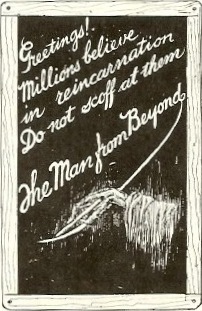
But in reality, Houdini was not only a believer in reincarnation, for a time he was a Doyle-like advocate. He even wrote, produced, and starred in a film, The Man From Beyond, which featured reincarnation as a core theme. It's been said Houdini believed he was the reincarnation of Friedrich von der Trenck, a German spy who had an uncanny ability to escape Prussian jails and who was executed in 1794. On the topic, Houdini wrote:
I should add that later in his life there's evidence that Houdini may have changed his mind about reincarnation.
Besides the mention of his father (whom Houdini did indeed "love very much") the only other factual morsel for us to chew on came during the final scene with Houdini and Constable Stratton having dinner. Here Weston's Houdini mentions his disillusionment with his boyhood hero, Robert-Houdin:
Houdini did indeed idolize Jean-Eugène Robert-Houdin and did name himself after the great French magician. It's also true that he later turned on his idol. But what disillusioned Houdini was his discovery that Robert-Houdin was not the great inventor he claimed to be; that other magicians were responsible for creating effects and establishing firsts credited to the Frenchman. In 1908, Houdini published The Unmasking of Robert-Houdin, an aggressive exposé of his former hero. It's not a book that was embraced by the magic world then or now, and Robert-Houdin's reputation as "the father of modern magic" remains intact. But Houdini never wavered in his belief that Robert-Houdin was "the prince of pilfers."
Interestingly, Houdini sent Conan Doyle a copy of The Unmasking of Robert-Houdin as a means of introduction in 1920.
Finally, what of Houdini's attitude toward women's suffrage and suffragette movement? While Houdini did not involve himself in politics, there is some evidence that he was sympathetic to the movement. In 1908, he accepted a challenge by a group of six Suffragettes to escape from sheets and ropes. After Houdini freed himself, he complimented the women on their abilities, noting that he had never been so securely tied and that it was one of his most difficult escapes.
Below is an original playbill from 1908 Suffragettes Challenge from my own collection.
This second episode felt much more like a classic TV police procedural. Maybe too much so. What felt absent was any notion that these are two famous men. Not once does anyone have any reaction to the fact that Harry Houdini and Arthur Conan Doyle are suddenly standing in their living rooms. So the fun of the premise is somewhat missing this time. On the other hand, Constable Adelaide Stratton (Rebecca Liddiard) continues to shine, and I couldn't help but think this series could stand up even if it was just about her.
This episode not only explores the idea of reincarnation, but also equal rights for women and female empowerment. It's a nice undercurrent, even if it all feels a little too contemporary to be challenging. Houdini is presented as being the more sexist of the two men...or maybe he's just trying to get under Adelaide's skin, which brings us to the next point.
There's a suggestion in this episode that Adelaide and Houdini might come together romantically (so that's why Houdini is single in this series). Throughout the episode, they probe each other with "truth trades." At one point Adelaide senses conflict in Houdini and asks, "What did your father do to you?" Houdini answers: "Nothing, I loved my father very much." But Michael Weston, a strong actor, plays the moment in such a way to suggest there clearly is something here. I'm excited to find out what that is.
As for who done it? Well, it turns out the boy is not a reincarnation, and once again Houdini is proven right and Doyle wrong. I'm thinking they'll need to change this up eventually. But what supernatural occurrence will turn out to be unexplainable? We'll have to keep watching to find out.
Just the facts
As mentioned above, this episode shows Houdini being skeptical of the idea of reincarnation. "It's mathematical," he says. "There's a billion more people on the planet than there was 100 years ago. Where's the giant soul factory?" (Good point.) This works well in the context of the show as it sets Houdini and Doyle at odds.
But in reality, Houdini was not only a believer in reincarnation, for a time he was a Doyle-like advocate. He even wrote, produced, and starred in a film, The Man From Beyond, which featured reincarnation as a core theme. It's been said Houdini believed he was the reincarnation of Friedrich von der Trenck, a German spy who had an uncanny ability to escape Prussian jails and who was executed in 1794. On the topic, Houdini wrote:"But there is something--of that I am convinced--in the theory of reincarnation. Just how much, I cannot say, nor do I believe it will greatly profit us to try and tear aside the veil. In due time it will be lifted, and we shall see beyond with Milton--'the bright countenance of Truth.'"
I should add that later in his life there's evidence that Houdini may have changed his mind about reincarnation.
Besides the mention of his father (whom Houdini did indeed "love very much") the only other factual morsel for us to chew on came during the final scene with Houdini and Constable Stratton having dinner. Here Weston's Houdini mentions his disillusionment with his boyhood hero, Robert-Houdin:
"There's somebody I admired. Idolized even. Robert-Houdin. Greatest magician who ever lived. I named myself after him. The more I studied his act the more I realized he wasn't employing any real skill. Just relying on cheap tricks, juvenile props. In short, he was a fraud."
Houdini did indeed idolize Jean-Eugène Robert-Houdin and did name himself after the great French magician. It's also true that he later turned on his idol. But what disillusioned Houdini was his discovery that Robert-Houdin was not the great inventor he claimed to be; that other magicians were responsible for creating effects and establishing firsts credited to the Frenchman. In 1908, Houdini published The Unmasking of Robert-Houdin, an aggressive exposé of his former hero. It's not a book that was embraced by the magic world then or now, and Robert-Houdin's reputation as "the father of modern magic" remains intact. But Houdini never wavered in his belief that Robert-Houdin was "the prince of pilfers."
Interestingly, Houdini sent Conan Doyle a copy of The Unmasking of Robert-Houdin as a means of introduction in 1920.
Finally, what of Houdini's attitude toward women's suffrage and suffragette movement? While Houdini did not involve himself in politics, there is some evidence that he was sympathetic to the movement. In 1908, he accepted a challenge by a group of six Suffragettes to escape from sheets and ropes. After Houdini freed himself, he complimented the women on their abilities, noting that he had never been so securely tied and that it was one of his most difficult escapes.
Below is an original playbill from 1908 Suffragettes Challenge from my own collection.
Next Monday: Houdini & Doyle investigate a faith healer in "In Manus Dei." Houdini & Doyle airs every Monday at 9/8c on FOX. Past episodes can be watched at FOX NOW.
Related:
- Houdini & Doyle episode 2 (clip)
- Unpublished Houdini: From Beyond (reincarnation)
- Unpublished Houdini: With his baby
- The real story of Houdini & Doyle
Monday, May 9, 2016
S.A.M. rededicates Houdini's gravesite
L-R The Jacobsons (caretakers) Dorothy Dietrich, Dick Brookz, Dave Bowers, Judy Bowers.
The Society of American Magicians, through the generosity of the S.A.M. National Endowment Fund, held a rededication of the Houdini gravesite today. National President Dave Bowers gave a speech praising the cemetery caretakers along with Dorothy Dietrich and Dick Brooks for their efforts to restore and preserve the gravesite. About 20 people were present, including officers and Past Presidents of the S.A.M. Also present were members of the Parent Assembly 1 and members from Philadelphia and Connecticut.
The S.A.M. will now concentrate their efforts on removing rust stains from the exedra and repairing and restoring the S.A.M. logo mosaic.
Past National President Bruce Kalver, who was kind enough to provide details of today's event and these photos, tells me: "You would have loved being there. It was historic and touching."
Bruce Kalver with Dorothy Dietrich, Dick Brookz, and a pair of Houdini handcuffs.
It was 100 years ago this October that Houdini dedicated the gravesite in the memory of his parents. Houdini was president of the S.A.M. from 1917 until his death in 1926.
Thanks to Bruce Kalver.
Related posts:
Subscribe to:
Posts (Atom)