 |
| Click to enlarge. |
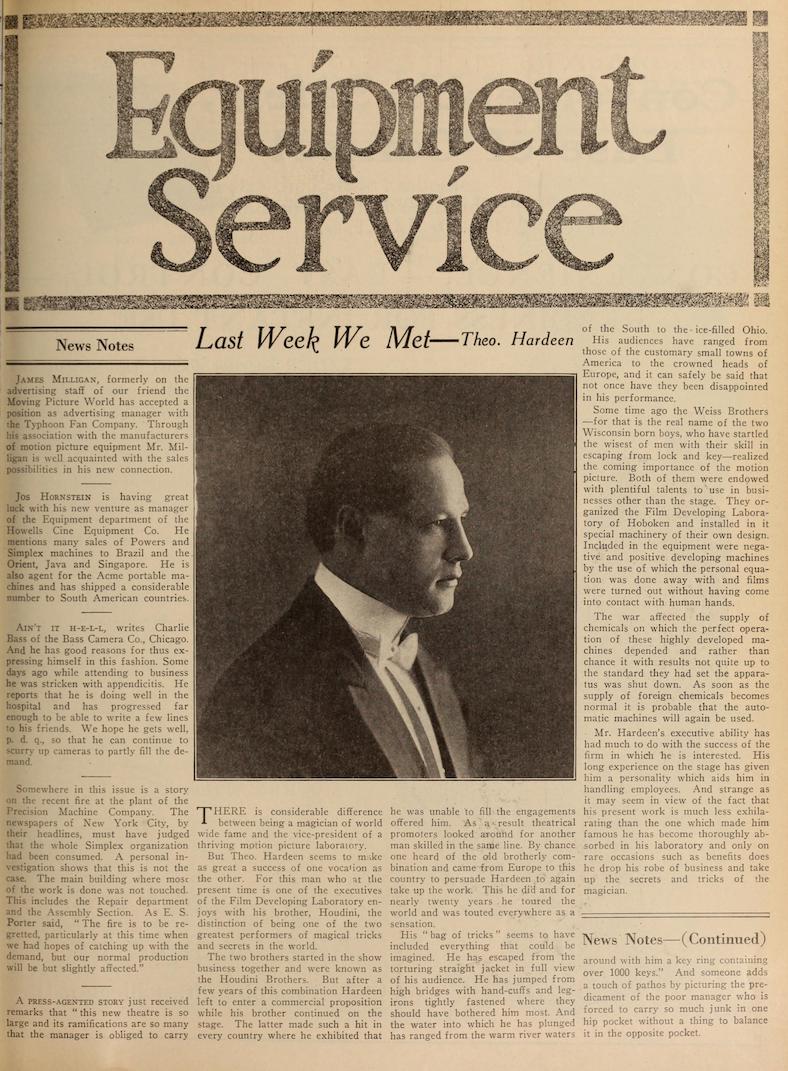
Stay tuned for a deep dive into the FDC, including some unique trade advertisements and a description of the working plant itself. In the meantime...
Happy birthday Dash!
Related:
|
| Click to enlarge. |

Woo hoo, @HoudiniWild soon will be showing the first look at the cover of “The Life and Afterlife of Harry Houdini.” It’s spectacular. And, oh, yeah, I should mention in case I haven’t that I’m writing a book on the remarkable impact of Harry Houdini.— Joe Posnanski (@JPosnanski) March 2, 2019


The story of the Kukol watch was told to me by a man whose father worked at the Finsbury theater in London from 1910 to 1915. He was a stage manager for the various acts that came in and, several times, saw Houdini. The full story is like this:
"One afternoon, after the matinee performance, Kukol received a telegram from his Mother, saying that she was very ill and wanted to see him. He conferred with Harry, who allowed him to go. Kukol left the theater, headed for the train. No one saw him again for about eight days.
When he finally returned, Harry was somewhat incensed at the fact that Franz had been gone so long. They retired to Harry's dressing room and a rather loud quarrel ensued. Apparently, Kukol wouldn't reveal where he had been, but did say that his mother was well. That was a week before the anniversary. The next day, Harry received a telegram from the Austrian army, from some high ranking official, asking for military help. The Austrians had heard that war was in the air, but in the future. They wanted Harry to give some of his secrets so they could be prepared....ie: handcuff slipping, cell escapes, etc.
As to whether or not Harry divulged the secrets, no body knows. But Franz and Harry had a long talk behind closed doors and emerged very good friends again. Everyone assumed the argument was over, but the guy I spoke to said that his father always felt that Franz had been asked to reveal the secrets of his boss to his old employers, the Austrian army, and refused. The would explain his being missing for almost a week. It would also explain the inscription, in Austrian, on the back of Kukol's gift watch...roughly translated, it supposedly says "To Franz Kukol...for keeping faith....Houdini."
How much of this is true, I really don't know. The guy says that his father used to tell the story whenever someone would bring up the name Houdini. He delivered all the telegrams and kept tabs on who came and went in the theater, so it seems logical that he would know.
Franz Kukol was, as you know, an ex-army officer. And the Austrian army was correct in its assumption that a war was coming soon. About 17 months after the little thing with Kukol, Franz was called back into active duty with the army. War had begun.
 Adolphe Menjou was almost the first Houdini
 'Houdini Unlocking His Secrets' on Amazon Prime
 Podcast: The Last Days of Harry Houdini


Houdini is enlisted by the US Ambassador to Great Britain to locate a missing American doctor and discovers a plot by a fanatical scientist hell-bent on unleashing a modern-day Black Plague on Vienna.
 The next book is called Houdini: Master Detective by Jonathan Kendrick, Jamie Allan Nicklin and Simon Mark Wheeler, with artwork by Rafael Broseta and David Belmonte. Sounds like it could be a sequel to the above (or visa versa).
A mystery criminal is committing a rash of diabolical crimes plaguing the city, so Scotland Yard reaches out to Harry Houdini and his wife, Bess Houdini, are called upon by Scotland Yard to help figure out who the evil perpetrator is. But no sooner are they on the case then the villain kidnaps Bess!
Before radio, TV, and the internet magician Harry Houdini was described as the world's first rock star. So when he died in Detroit after a performance here in 1926, people around the world took note. We unspool Houdini's death, and his various Detroit connections. That includes his 1906 leap off the Belle Isle Bridge. Veteran newsman Joe Donovan, a serious student of history, recreates that jump in classic CKLW 20/20 new style. We also talk with magicians Ming Louie, Michael Belitsos, and Ron Carnell, pop culture expert Tim Caldwell, and reporter Steve Neavling.


The studio was the first of its kind in that it featured stages, offices, labs, commissaries (large enough to serve lunch to hundreds of workers), dressing rooms, props houses, elaborate sets, and other necessities in one location. While the site was under construction, Ince hired the Miller Brothers 101 Ranch Wildwest Show, including many cowboys, horses, cattle, and a whole Sioux Indian tribe, who set up their teepees on the property. When construction was completed, the streets were lined with many types of structures, from humble cottages to mansions, mimicking the style and architecture of different countries. Extensive outdoor western sets were built and used on the site for several years.


